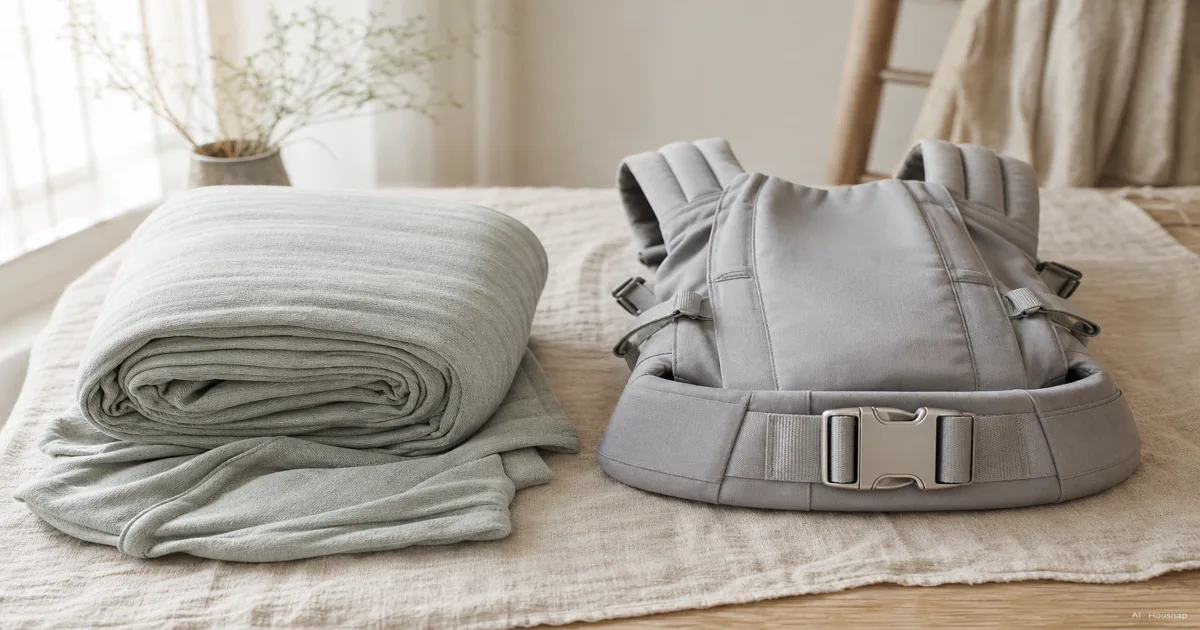
Check whether your baby can use it now
“Newborn” on the label is not enough. Compare the exact model’s minimum weight and fitting instructions: the Solly Wrap specifies 8–25 lb, while the Ergobaby Embrace specifies 7–25 lb. These are model-specific examples, not limits for every wrap or carrier. Being within the weight range does not replace the fit check.
Before choosing, read the instructions for your baby’s size and development, including any required newborn configuration. For a premature or low-birthweight baby, or one with breathing problems, ask your pediatrician about sling use first; CPSC highlights these higher-risk situations.
Choose the adjustment you can repeat confidently
A wrap is a length of fabric you tie; a soft structured carrier uses straps and buckles. Wraps include both stretchy and woven fabrics, so do not assume that every “baby wrap” has the same tying instructions or permitted carrying positions. Ergobaby’s comparison explains the two constructions.
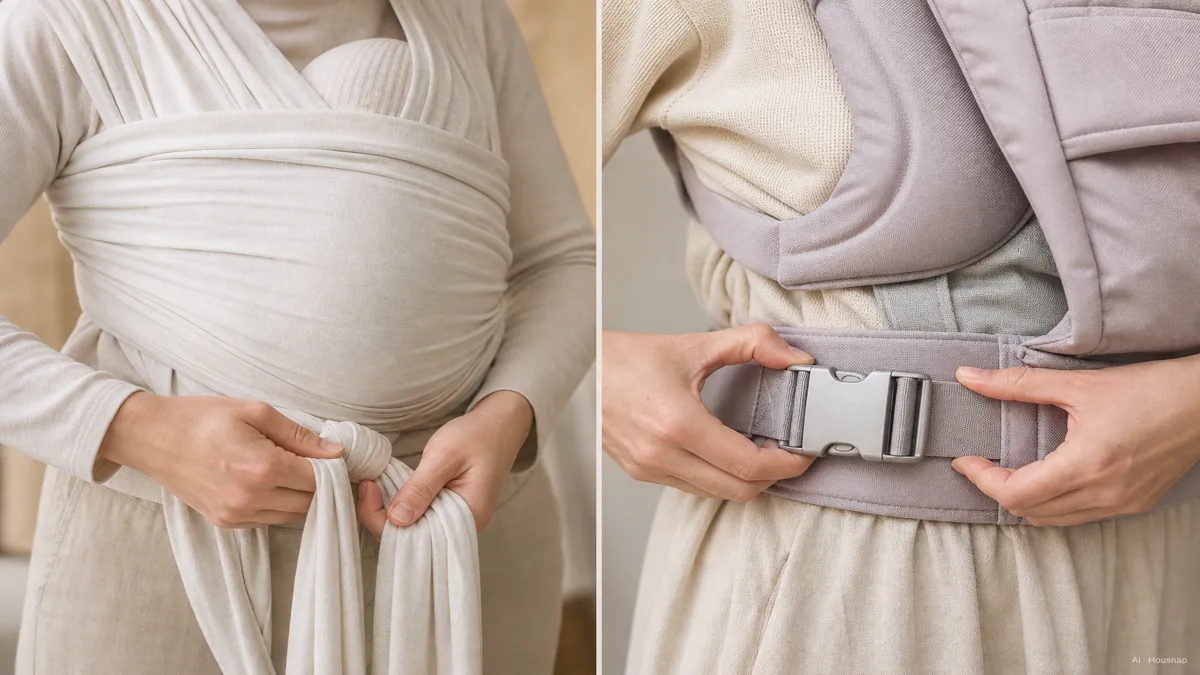
- Try a wrap first if you want a fabric fit you adjust by tying and are willing to practise the exact method. Watch the model’s tutorial before buying, not just a finished photo.
- Try a buckle carrier first if you would rather adjust straps and fasten clips. Check whether you can reach every fastening while following the instructions; ask every regular caregiver to try it.
- If both seem suitable, compare the fitting process with help from a babywearing educator. Choose the one whose steps you can repeat without guessing. Neither construction guarantees comfort for your body.
Check the fit, then plan for feeding and sleep
Use the NHS TICKS check: snug, face visible, close enough to kiss, chin clear of the chest, and back supported. Take the baby out to feed; do not feed hands-free while moving. Recheck the position after putting the baby back.

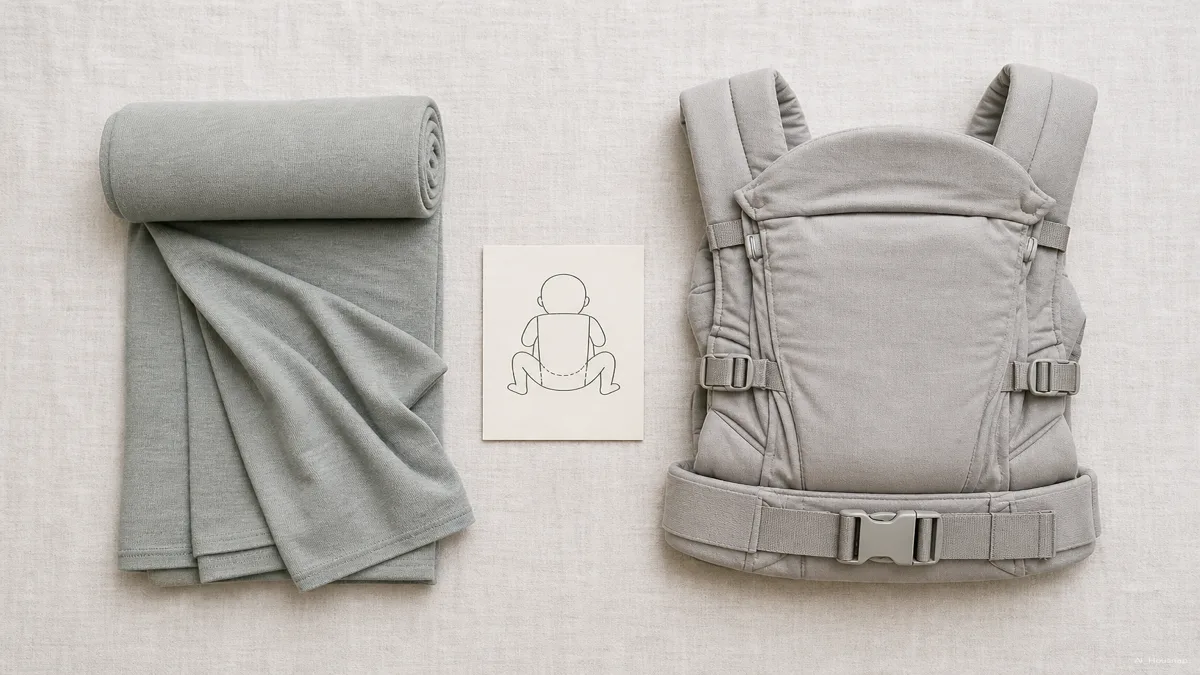
Look beyond the face, too. The IHDI describes supported thighs with bent hips and knees, knees slightly above the bottom. Match the seat to the baby rather than forcing the legs into a pose. Its product recognition is not safety certification or testing.
Neither option replaces a sleep space. If your baby falls asleep, CPSC advises moving them to an appropriate infant bed and placing them on their back. If that space is still undecided, compare a crib and a bassinet for the first months.
Buy one first; add another for a specific unmet need
Write down the first job: putting it on alone at home, sharing it with another caregiver, or carrying during an outing. Use that task for your fitting session. A comfortable demonstration by someone else does not tell you whether you can repeat the setup.
- Keep using the first option while it fits, meets its instructions and works for you.
- Recheck before replacing. If the baby slips lower or the carry becomes uncomfortable, stop and get fitting help. A birthday or a generic weight threshold is not a reason to switch every wrap to a buckle carrier.
- Add or replace only for a clear reason: the model’s limits, a fit that cannot be corrected, or a different carrying task. Inspect condition as well; Solly specifically warns against using a damaged wrap.
The two items pictured are alternatives, not a required starter set. If the real problem is spending an outing carrying the baby on your body, compare lightweight strollers and travel systems before buying another carrier.
Sources
- Manufacturer comparison of wraps and carriers
- NHS fitting and feeding guidance
- CPSC safe sleep guidance
Wie dieser Guide entstand
Written by Chexlow AI using manufacturer instructions and guidance from CPSC, the NHS and IHDI. The comparison focuses on first-purchase fit and use; the choice framework is editorial guidance, not a product test or an individual fitting assessment.
Vom Chexlow-Team redigiert · Die Bilder sind KI-generierte Illustrationen