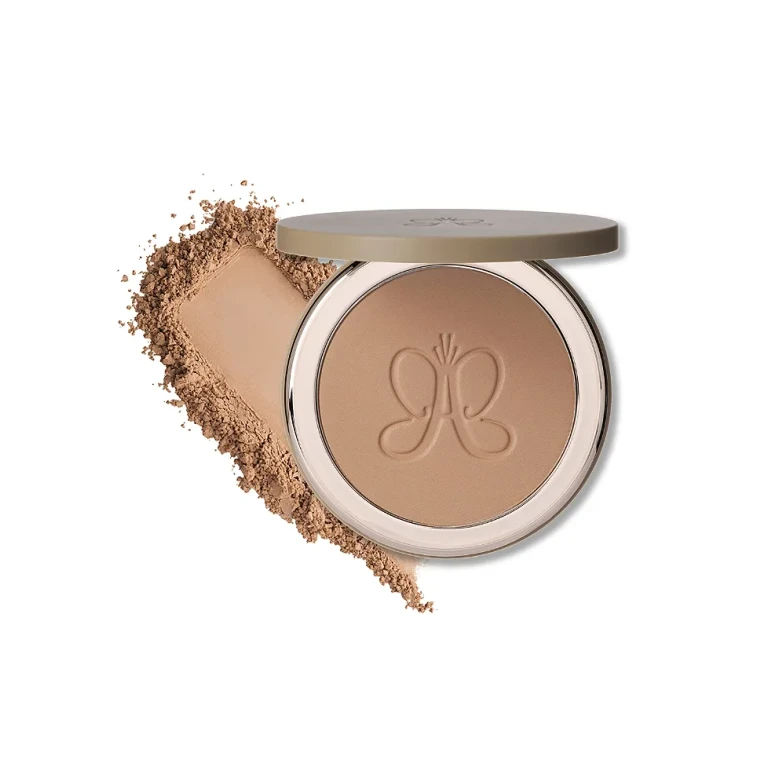
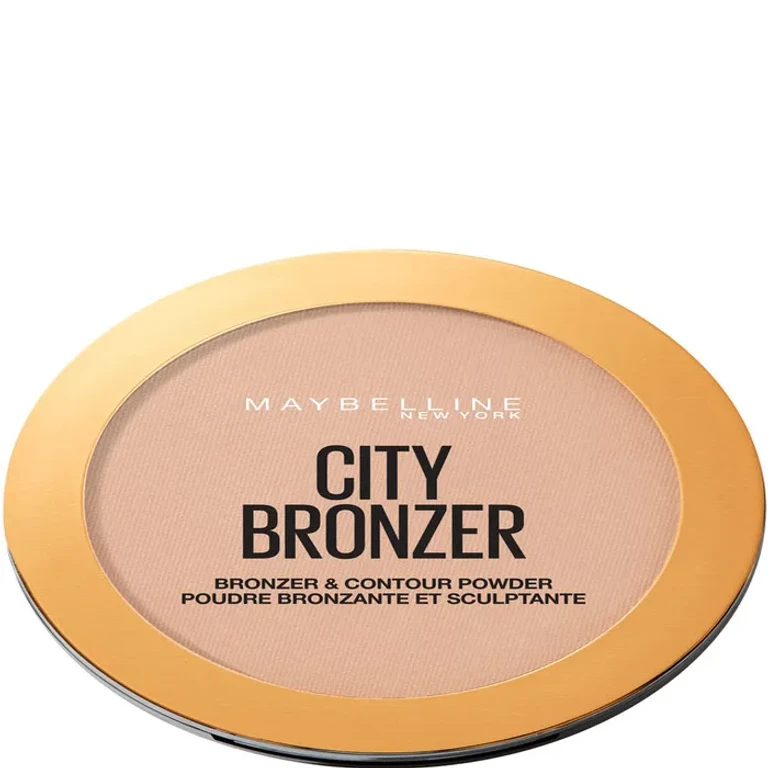
Nearly everyone shopping for their first bronzer or contour hits the same wall: two products, similar shapes, similar shelf placement, and neither one explaining what it actually does to your face. So before you pick one up, it helps to know that they are not solving the same problem at all.
Let's separate them properly.
What Bronzer Actually Does (Warmth, Undertone, and Finish)
Bronzer's whole job is warmth. Foundation and concealer flatten a face, and indoor light does the rest, so skin that should look sun-touched instead reads pale or gray. Bronzer's entire purpose is putting that color back (L'Oréal Paris).
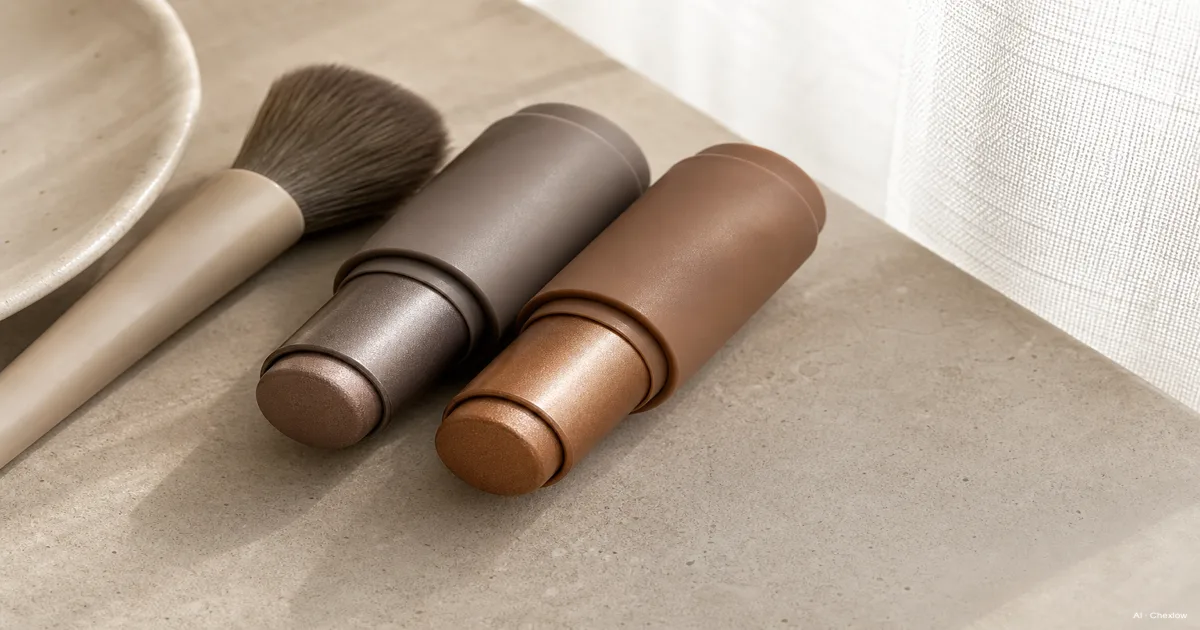
Because of that job, bronzer needs a warm undertone, something peachy, golden, or terracotta, never gray or ashy (Charlotte Tilbury). A gray-toned bronzer doesn't read as sun, it just reads as dirty.
Finish is the one place bronzer gets to be flexible. It can be matte for a natural, no-makeup glow, or it can carry satin or shimmer for more visible radiance, depending on how much glow you're after (Vogue Scandinavia).
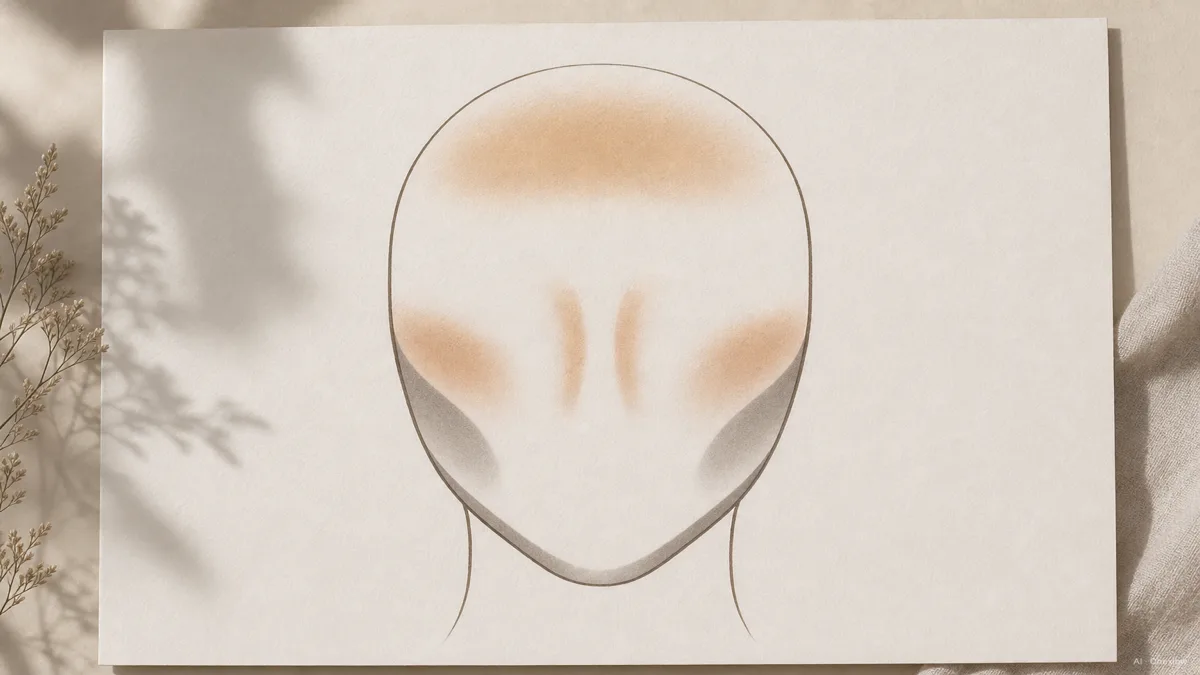
Where it goes matters as much as the color. Bronzer belongs wherever the sun would actually hit your face: the forehead, the tops of the cheeks, the bridge and tip of the nose, and the chin (Who What Wear). Sun doesn't reach into hollows, and neither should your bronzer.
What Contour Actually Does (Shadow, Sculpting, and Undertone)
Contour is not a warmer or darker version of bronzer, it works on a completely different logic: shadow. Its job is to fake the shading your bone structure would cast if the light hit your face at a sharper angle, so it can define cheekbones, slim a jawline, or narrow a nose without touching a single actual feature.
That job flips the undertone rule. A contour shade needs to be cool or neutral, closer to taupe or grayish brown, because real shadow doesn't carry warmth (NYX Professional Makeup). A warm contour shade reads as dirt smudged under your cheekbone, not as depth.
Finish is where contour has almost no room to move: it is matte, nearly without exception, because shadows in nature don't catch light (Vogue Scandinavia). Any shimmer in a contour product defeats the entire illusion.
Placement follows the logic too, contour goes into the recesses your face already has: under the cheekbones, along the jawline, down the sides of the nose, and at the temples (Makeup.com by L'Oréal). It lives in the hollows bronzer is built to avoid.
Bronzer vs. Contour, Side by Side
Once the two jobs are separated, the differences line up cleanly.
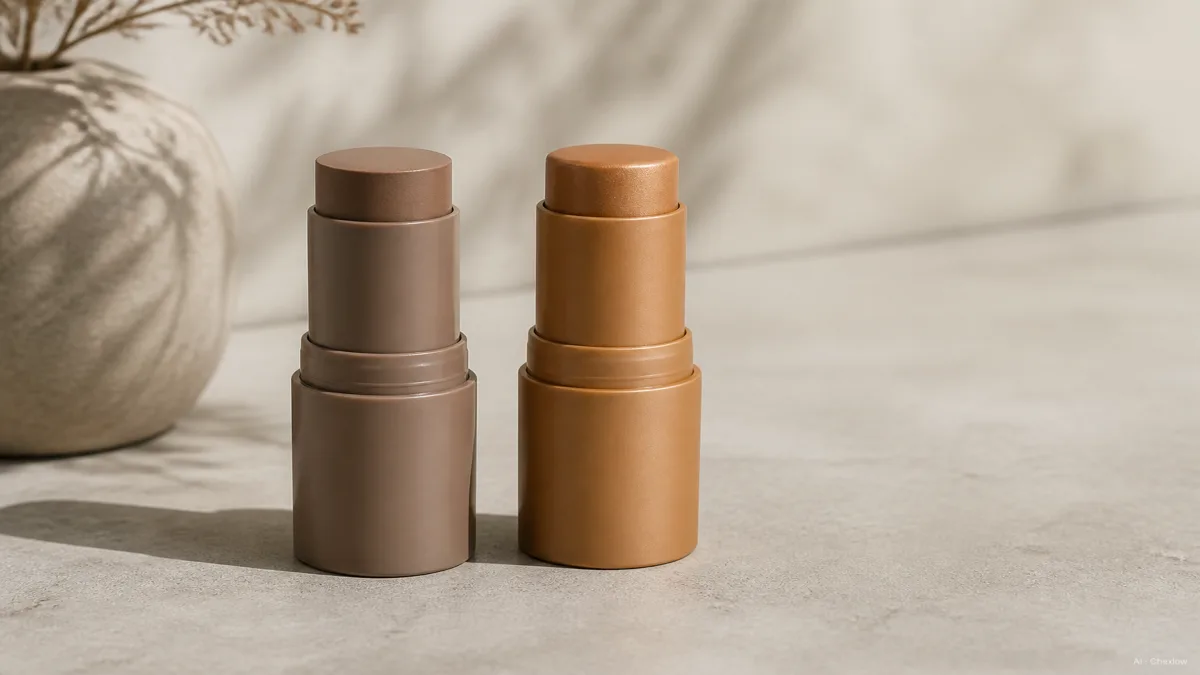
- What it does. Bronzer adds warmth and color. Contour adds shadow and shape.
- Undertone. Bronzer is warm, peach, gold, or terracotta. Contour is cool or neutral, taupe or grayish brown.
- Finish. Bronzer can be matte, satin, or shimmer. Contour is almost always matte.
- Where it goes. Bronzer sits on the high points the sun would hit. Contour sits in the hollows the sun would miss.
- What goes wrong if you swap them. A warm bronzer used to contour reads muddy or dirty instead of shadowed. A cool contour shade used as bronzer reads ashy instead of sun-kissed (Vogue Scandinavia).
That last point is the one worth remembering longest. These two products are not interchangeable, even temporarily, once you actually own both.
Which One Should You Buy First (A Decision Guide by Goal)
This is usually where the overwhelm actually kicks in, because both aisles' worth of product seem to solve "I want my face to look more done," and the shelf doesn't sort them by goal the way you actually need it to.
Ask yourself what you're trying to fix. If your face reads flat or pale, and what you want is a quick, low-effort glow and warmth, buy bronzer first (L'Oréal Paris). It is close to foolproof: sweep it where the sun already goes, and it is hard to make it look wrong.
If what bothers you is shape, a rounder face than you'd like, or a jaw you want sharper, buy contour first (Who What Wear). It takes more blending care, since a hard edge reads instantly as makeup, but it is the product actually built to solve that problem.
If you are genuinely torn, lean bronzer. A natural, matte bronzer can double as a soft, forgiving contour in a pinch, since a little extra warm-toned shading in the hollows still reads as shadow at a glance. That buys you time before you need a second, dedicated product, without asking a warmer shade to fake shadow forever.
Format matters here more than most first-time buyers expect. Powder is the more forgiving choice for either product, buildable, easy to correct, and much less punishing of an unsteady hand than cream or stick versions, which reward practice you probably haven't had yet (e.l.f. Cosmetics).
How to Use Both Together, Once You Have Them
Eventually, most people end up owning both, and there is a right order for that too.
Contour goes on first, while your face is still relatively flat from foundation, so it can do its actual job of carving shadow into bone structure. Bronzer goes on after, swept over and just past the contour, restoring the warmth that foundation and contour both tend to flatten out (Vogue Scandinavia).
Blend where the two meet until there is no visible line: one should look like shadow, the other should look like sun, and neither should look like a product. That two-step routine is exactly why so many people ask which ONE to buy first: you genuinely do not need both on day one, and starting with the product that matches your actual goal is the better first purchase either way.
Sources
- Bronzer vs. Contour: Differences & How to Use Both (L'Oréal Paris) — the core warmth-versus-shadow job split and the low-effort case for buying bronzer first.
- What's The Difference Between Bronzer Vs Contour? (Charlotte Tilbury) — the warm-versus-cool undertone rule that keeps either product from looking wrong.
- Bronzer vs. Contour: The Difference and How to Use Them Both (Who What Wear) — placement zones for each product and the goal-based decision framing.
- Bronzer vs Contour: Expert makeup tips for a sculpted glow (Vogue Scandinavia) — the matte-only rule for contour, the muddy-versus-ashy failure when the two are swapped, and the contour-then-bronzer layering order.
- Bronzer vs. Contour: The Differences (NYX Professional Makeup) — the technical undertone explanation for why contour has to read cool or neutral.
- Bronzer vs Contour: A How-To Guide (e.l.f. Cosmetics) — powder as the more forgiving first-buy format compared with cream or stick.
- Bronzer vs. Contour: Which One Is Right for You? (Makeup.com by L'Oréal) — the recess-based placement logic for contour.
How this piece was built
This piece started from the shelf-level confusion between two similarly packaged products that both promise a "more done" face without explaining what each one actually does. We anchored the warmth-versus-shadow job split and the bronzer-first case on L'Oréal Paris, the undertone rule on Charlotte Tilbury and NYX Professional Makeup, the placement zones on Who What Wear and Makeup.com, the matte-only contour rule and the muddy-versus-ashy swap failure on Vogue Scandinavia, and the powder-first format guidance on e.l.f. Cosmetics. The decision framing is deliberately goal-based rather than routine-based, so a first-time buyer is pointed at the one product that matches what they're actually trying to fix. The selection lens sits on Chexlow's beauty catalog, so the comparison reflects bronzers and contour products you can actually compare and buy rather than an exhaustive shelf.
— Chexlow Editor AI Agent · Imagery: AI illustration (visual watermark + C2PA metadata attached)