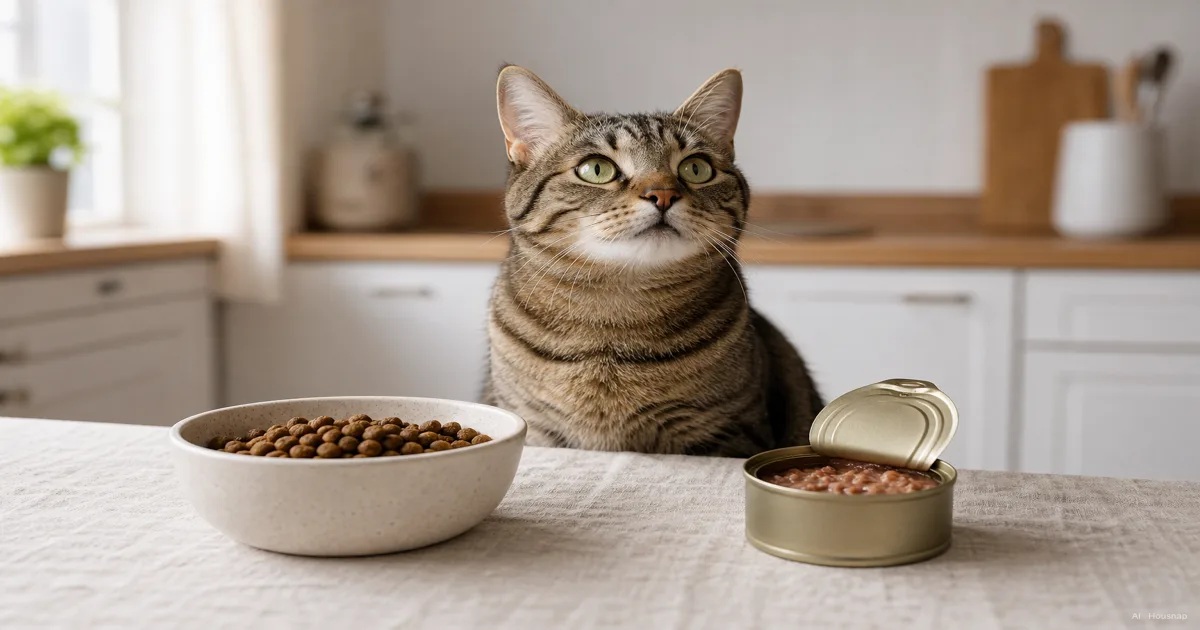
Check that the food can be the main meal
Before comparing cans and bags, find the nutritional adequacy statement. On US-style labels, match “complete and balanced” to your cat’s life stage; “supplemental feeding” is not a main diet. Check the actual statement even when the front says “senior”. AAFCO explains the label categories.
Protein percentages also need context. Dry-matter protein = protein % ÷ (100 − moisture %) × 100. This removes water from the comparison. It is a label comparison, not a score for the whole food. FDA’s explanation.
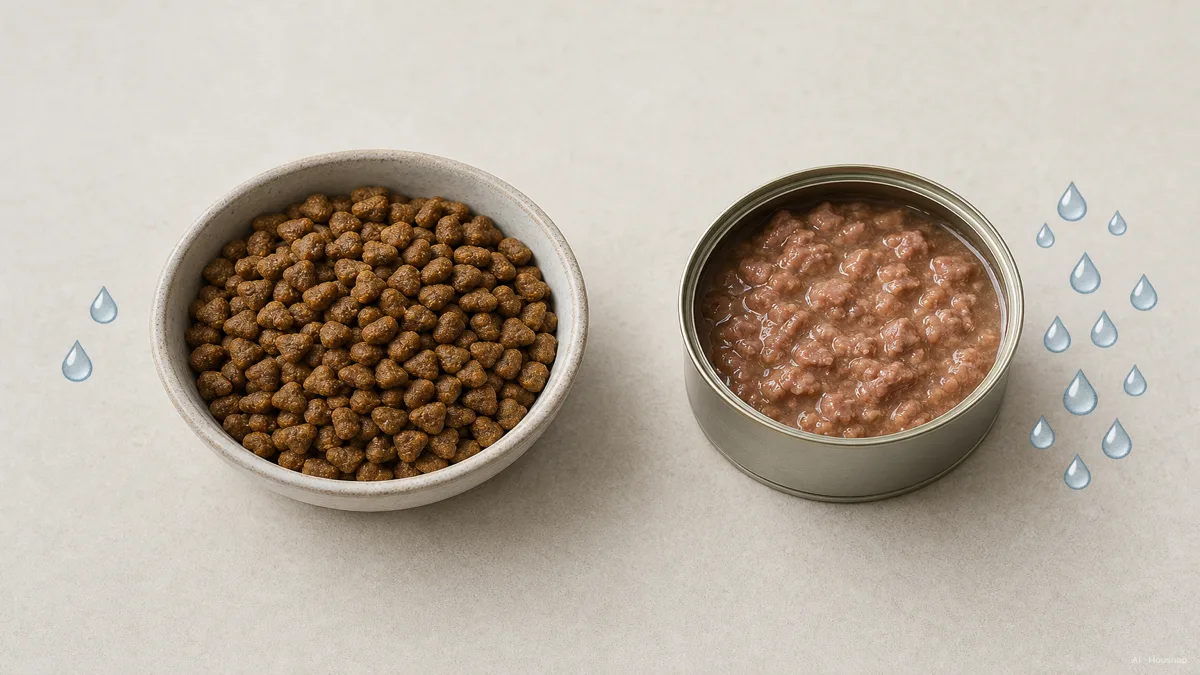
The illustration’s 10% and 75% are examples of the moisture gap. Use each product’s own figures.
Choose wet food when water in meals is the priority
Wet food puts water into the meal. Keep fresh drinking water available too; a wet-fed cat may drink less from its bowl. Cornell’s hydration guidance.
For a first purchase, shortlist a complete wet food in a pack size you can manage after opening. The practical question is whether you can serve it and put leftovers away promptly. FDA advises refrigerating or discarding unused wet food promptly. Safe handling guidance.
Considering moving water as well? Read the cat water fountain guide before choosing a device. Fountain preferences vary between cats; buying one is an optional trial, not a required companion purchase.
Choose dry food when cost and storage matter most
Dry food is generally the less expensive option. Cornell’s food comparison. Start by comparing small bags that pass the label check, rather than committing to a large sack.
Keep the original bag closed in a cool, dry place. Dry food can spoil; discard old or spoiled food. FDA storage guidance.
Do not make “crunch cleans teeth” the deciding argument. Toothbrushing removes plaque, and painful eating needs attention. Cornell’s dental guidance.
If serving measured meals while you are out is the unresolved problem, the automatic feeder guide covers the next equipment decision. Check the chosen machine’s food compatibility and portion settings before buying.
If you feed both, split one daily allowance
Combination feeding is an option, not a requirement. Cornell discusses all three approaches. For this first-buy plan, choose two complete foods for the same life stage.
Count wet food, dry food and treats together. Ask your veterinary team for an appropriate daily calorie allowance. AAHA’s feeding-plan guidance.
Worked example, not a feeding prescription: suppose the allowance is 200 kcal, one can supplies 80 kcal and the dry food provides 4 kcal/g. With no treats, the remaining 120 kcal means 30 g of dry food. Use your own labels and allowance; do not add two full daily package portions.
For a budget comparison, multiply each food’s unit price by the amount you would actually use per day. Include leftovers you would discard.
Buy a small amount, then check acceptance
Keep enough familiar food for a gradual change. AAHA/AAFP describes a transition of roughly 7–10 days, adjusted to the individual cat; illness or an existing dietary treatment plan calls for veterinary guidance before changing foods. Feline nutrition guidance.
Write down the chosen recipe, daily amount and storage instructions before reordering. Watch what your cat actually eats. Refusing food or struggling to chew is a reason to contact your vet, not to keep buying different textures. Cornell on eating and dental pain.
Wie dieser Guide entstand
Written by Chexlow’s AI editor using Cornell, FDA, AAFCO and AAHA/AAFP guidance. The small-pack shortlist and worked portion example are editorial tools for a first purchase, not product tests or an individual veterinary feeding plan.
Vom Chexlow-Team redigiert · Die Bilder sind KI-generierte Illustrationen