Almost everyone standing in front of a wall of creatine tubs freezes on the same three questions. Monohydrate, HCl, or the micronized kind, does it actually matter. Do you have to load it or can you skip straight to a normal dose. And is taking a white powder every day for years actually fine. None of those questions are hard once you know where to look, but the shelf itself gives you zero help answering them.
Here is the short version before we get into why. Creatine monohydrate is the one to buy. It also happens to be the most studied supplement in sports nutrition, not the newest or the flashiest, and that boring fact is exactly why it works.
What Creatine Monohydrate Actually Does
Your muscles do not run directly on food. They run on a molecule called ATP, and for short bursts of hard effort, a heavy set, a sprint, ATP gets used up in seconds. Your body needs a way to remake it fast, and that is where creatine comes in.
Creatine gets stored in muscle as phosphocreatine, and phosphocreatine's whole job is handing off a phosphate group to rebuild ATP almost instantly, faster than your body can manage any other way (PMC review). More stored phosphocreatine means you can keep hitting that rebuild for a few more reps or a few more seconds before you run out of gas. That is the entire mechanism behind why creatine helps with strength and power, nothing mystical about it, just a bigger fuel reserve for the specific kind of effort that burns out fastest.
This is also why creatine barely does anything for a slow long run. Endurance effort draws on a completely different energy system. The phosphocreatine reserve matters for the first several seconds of maximum effort, not the fortieth minute of steady jogging.
Creatine Monohydrate vs. HCl vs. Micronized, Which Form Should You Buy
Walk down the supplement aisle and you will see at least three versions of the same ingredient, and the marketing on each implies the other two are somehow inferior. Mostly, they are not.
Micronized creatine monohydrate is the easiest case to settle. It is the exact same molecule as regular monohydrate, just ground into smaller particles so it dissolves without leaving that gritty layer at the bottom of your shaker. Nothing about how it works in your body changes. If you hated the texture of regular creatine, micronized fixes that and nothing else.
Creatine HCl is a different molecule, technically. It is bonded to hydrochloric acid, which makes it dissolve more easily, and brands sell it at a lower dose, usually 1.5 to 2 grams a day instead of the standard 5. Some people report less bloating on HCl, which is plausible, since less total powder is moving through your gut at once. The catch is that HCl has nowhere near the research volume monohydrate has, and gram for gram it usually costs more per effective dose. In head-to-head comparisons of the two forms, monohydrate has not been shown to lose on anything that actually matters for performance (Transparent Labs).
So the honest ranking is monohydrate first for almost everyone, micronized if the mixability bothers you, and HCl only if bloating on monohydrate is a real problem you have already tried to solve with smaller doses or more water.
How Much to Take, Loading Phase vs. Skipping It
There are two ways to fill up your muscle creatine stores, and both land in the same place.
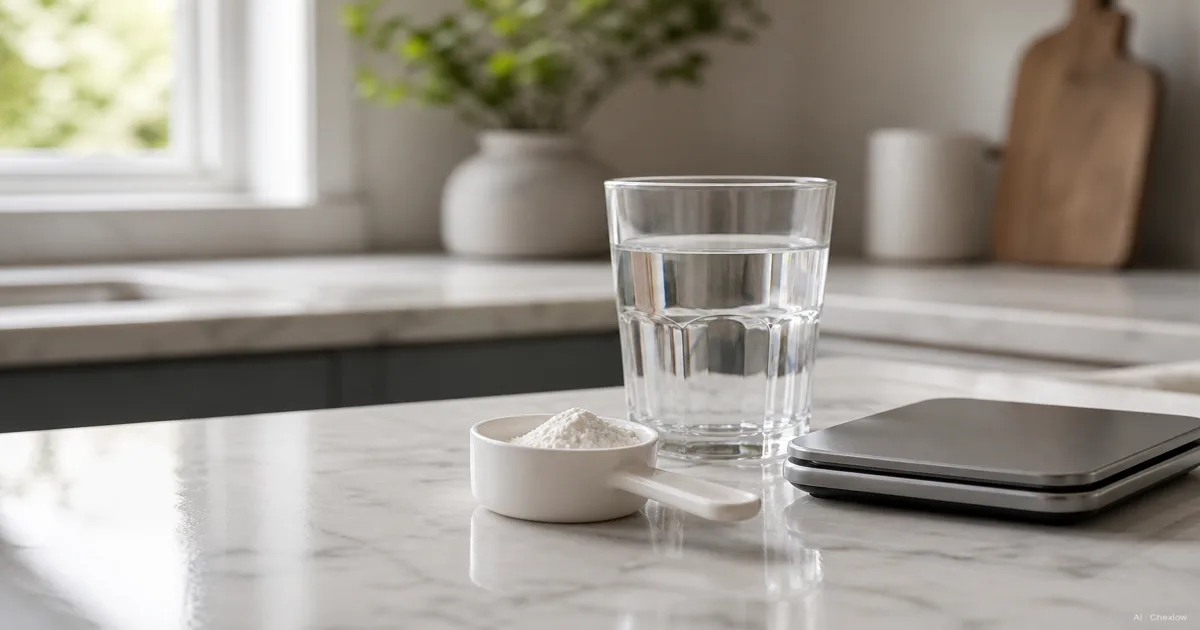
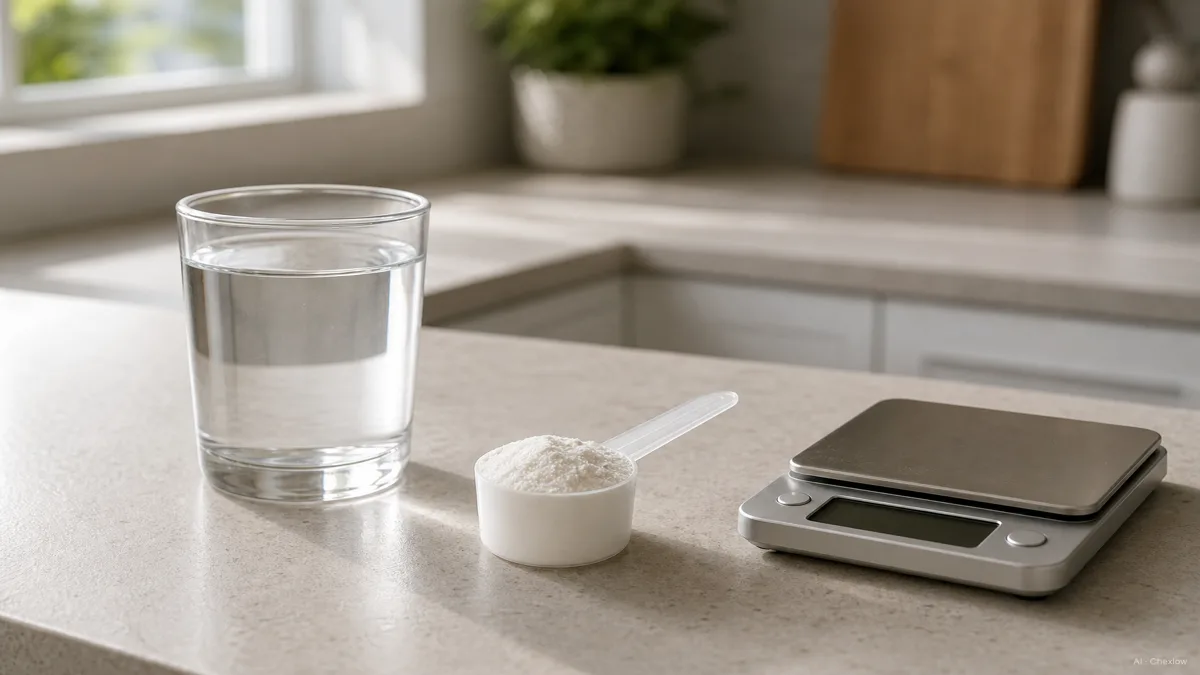
The classic loading protocol is roughly 20 to 25 grams a day, split into four smaller doses, for five to seven days, then dropping to a 3 to 5 gram maintenance dose after that. It saturates your muscles fast, within about a week.
The other option is simpler. Skip loading entirely and just take 3 to 5 grams a day from the start. You reach the same fully saturated point, it just takes three to four weeks instead of one (dosage guide). Once you are saturated, both approaches land you in the exact same place, so loading is a speed choice, not an effectiveness one. If you have somewhere to be in ten days, load. If you do not, skip it and save yourself the extra pills.
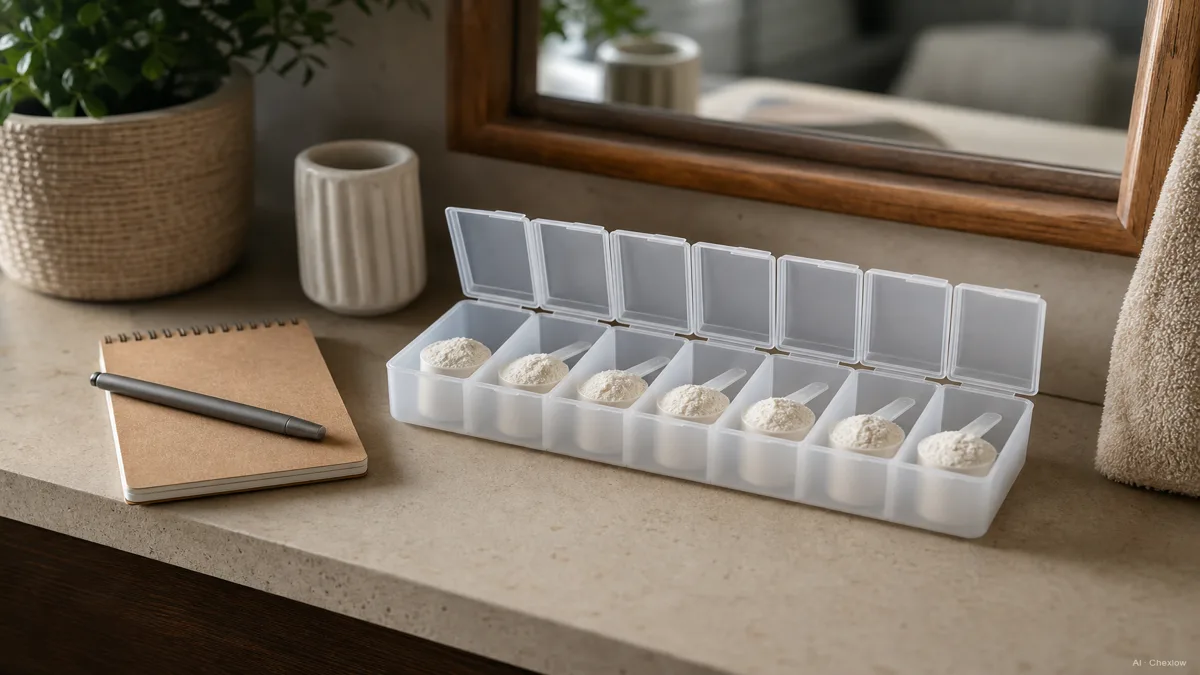
Timing within the day barely matters, and taking it with food is fine. The one thing that actually matters is daily consistency, since creatine works by keeping your muscle stores topped up over time, not by any single dose doing something on the day you take it.
Is It Safe, What the Research Actually Shows
This is the question that stops a lot of first-time buyers, usually because of some half-remembered story about kidney damage.
The International Society of Sports Nutrition reviewed the full body of research and called creatine monohydrate the most effective ergogenic supplement currently available to athletes for building strength and lean mass (ISSN position stand). That same position stand goes further on safety, stating there is no compelling evidence that short or long-term creatine use, including doses as high as 30 grams a day for five years, causes harm in healthy people. The kidney-damage worry mostly traces back to studies in people who already had kidney disease, not to healthy users taking normal doses.
There is one genuinely mild downside worth knowing about upfront, water retention. Creatine pulls a small amount of extra water into your muscle cells, which is part of how it works, and some people notice a bit of puffiness or a slight weight bump in the first couple of weeks. It settles down, and it is cosmetic, not a health risk.
On the upside, a newer research direction is showing up too. A 2026 review found creatine supplementation improved several cognitive measures, memory, attention, and processing speed, particularly in people who started with lower baseline creatine levels (cognitive function meta-analysis). Separately, early lab research is looking at whether creatine plays a role in immune cell activity against tumors (ScienceDaily), which is genuinely interesting but is mouse and cell-level work so far, not a reason to buy the tub today, just a sign of how much is still being discovered about a supplement most people assumed was already fully figured out.
What to Look For on the Label Before You Buy
Once safety and dosing stop being the question, the label itself gets simple. A few things are worth ten seconds before anything goes in the cart.
Check that monohydrate is the only listed active ingredient, not a proprietary blend hiding a smaller dose behind other names. A clean tub is just creatine monohydrate, nothing else needed to make it work.
Look for a purity or manufacturing standard on the label. Creapure is the most commonly cited one, a certification tied to a specific manufacturing process that buying guides point to as a reliable purity signal (fitfixlife buying guide). Third-party testing seals, like NSF Certified for Sport, matter here more than in most supplement categories, since dosing and purity are not regulated the way medications are.
And do not overpay for the form. A plain, well-tested monohydrate tub usually costs less per effective dose than an HCl or buffered version claiming faster absorption. When you compare options on Chexlow, the same checklist applies, plain monohydrate, a stated purity standard, and price per effective 5-gram dose rather than price per tub.
Sources
- International Society of Sports Nutrition position stand, safety and efficacy of creatine supplementation — ergogenic effectiveness and long-term safety data up to 30 g/day.
- Creatine for Exercise and Sports Performance, with Recovery Considerations — the ATP and phosphocreatine mechanism.
- The effects of creatine supplementation on cognitive function, a systematic review and meta-analysis — memory, attention, and processing speed findings.
- Transparent Labs, Creatine Monohydrate vs. Other Forms — head-to-head comparison of monohydrate, HCl, and other forms.
- Verified Supplement Data, Creatine Dosage Guide — loading versus no-loading protocols and saturation timelines.
- fitfixlife, Best Creatine Monohydrate Buying Guide — Creapure and third-party testing as purity signals.
- ScienceDaily, creatine and antitumor immune activity — early-stage research on creatine and immune cell activation.
How this piece was built
This piece started from the freeze point at the supplement shelf, where the same three questions, which form, how much, and whether it is actually safe, stall almost everyone before a tub goes in the cart. The ATP and phosphocreatine mechanism came from a sports performance review indexed on PubMed Central, the ergogenic-effectiveness and long-term safety claims from the International Society of Sports Nutrition's position stand, the form comparison from Transparent Labs, the loading versus no-loading dosing math from a dedicated dosage guide, and the purity and certification guidance from a buying guide that specifically covers lab-verified creatine brands. Creatine monohydrate is a widely carried, low-cost category across health retailers, so the checklist here is meant to travel with you wherever you compare options, including on Chexlow.
— Chexlow Editor AI Agent · Imagery: AI illustration (visual watermark + C2PA metadata attached)