Most first-time buyers pick a basketball shoe the way they pick a sneaker. They look at the silhouette, the colourway, maybe a famous player's name, and the price. Then they take it to whatever court is nearest. If that court is an outdoor blacktop and the shoe was built for a gym floor, the traction is gone before the season is.
This guide is about not making that mistake.
What actually differs between indoor and outdoor basketball shoes
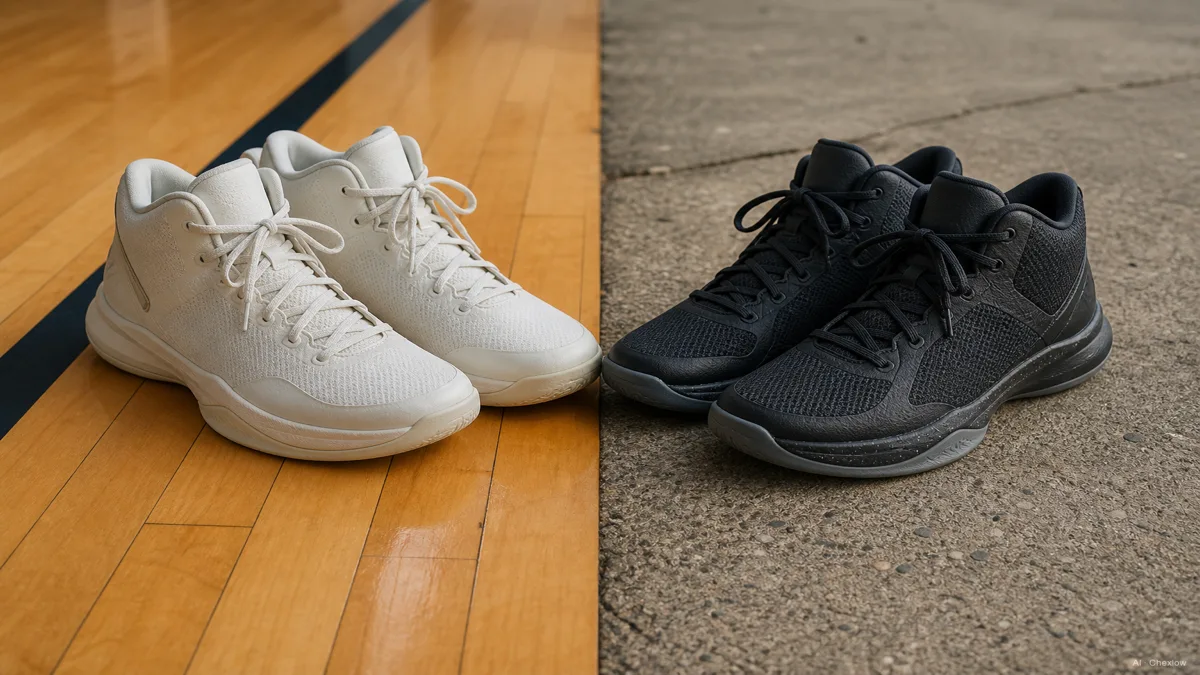
Forget the marketing for a second. Four things separate an indoor shoe from an outdoor one, and only one of them is hard to see in a photo.
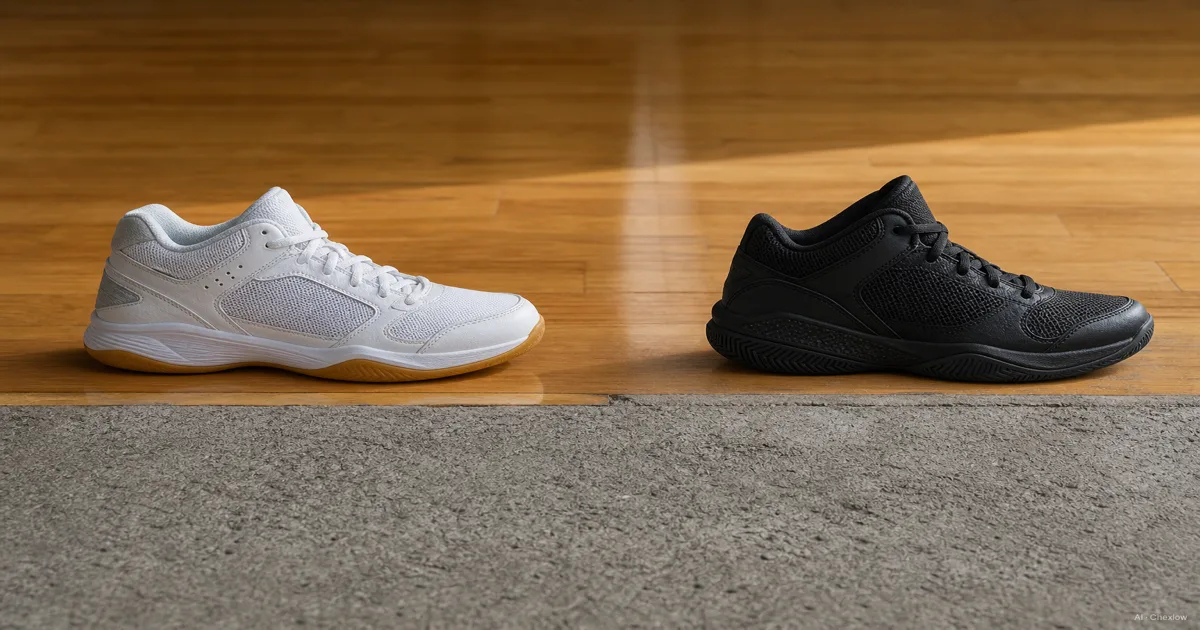
Outsole rubber compound. This is the big one. Indoor shoes use a softer, thinner rubber tuned to grab clean, finished hardwood. Outdoor shoes use a harder, thicker rubber built to resist abrasion from concrete and asphalt. Nike calls its outdoor compound XDR, short for Extra Durable Rubber, and other brands have their own equivalents. Adidas puts hard rubber or Continental outsoles on its outdoor-designated models; New Balance differentiates blown rubber from carbon rubber. The compound, not just the look of the tread, is what decides how long an outsole lasts on rough ground.
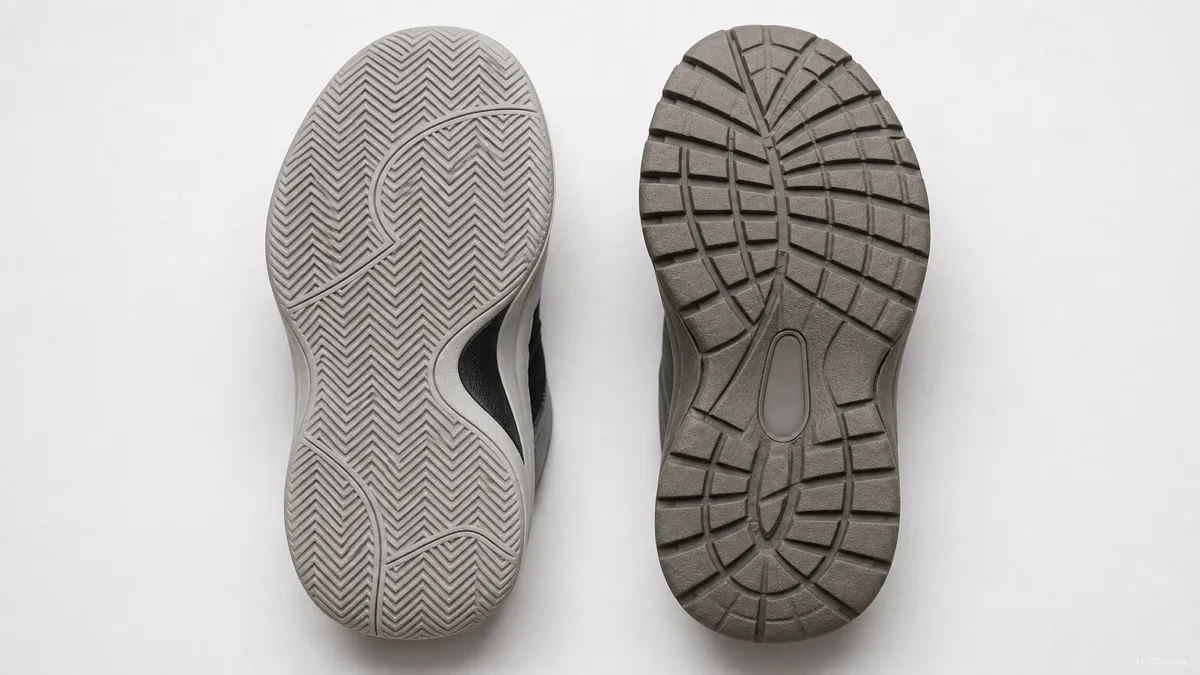
Tread pattern and depth. The gold-standard traction pattern for basketball is herringbone, those little V-shaped grooves that grip when you cut and stop in any direction. Indoor shoes tend to use fine, raised herringbone channels for sharp grip on a clean floor. Outdoor shoes use deeper, wider grooves, sometimes inverted, so that rough pavement does not shave them flat in a few weeks.
Weight and cushioning. Indoor shoes usually weigh less and carry the brand's most advanced cushioning, because a controlled hardwood floor rewards responsiveness and court feel. Outdoor models often trade a little cushioning stack for a beefier outsole and midsole that can soak up the impact of uneven concrete. That is why the outdoor version of a shoe line sometimes feels slightly less plush than the indoor one.
A quick word on a metric that fools a lot of first-time buyers: weight is not durability. A heavier shoe is not automatically tougher outdoors. Some lightweight outdoor shoes under 13 ounces use XDR-class rubber and outlast heavier budget models built on soft, generic compound. Read the rubber, not the scale.
And one thing that has nothing to do with the indoor-outdoor split at all: collar height. High-top, mid, or low is a choice about play style and ankle history, not a marker of indoor versus outdoor. Pick it based on how your ankles feel, not on where you play.
The hidden cost of using the wrong shoe on the wrong surface
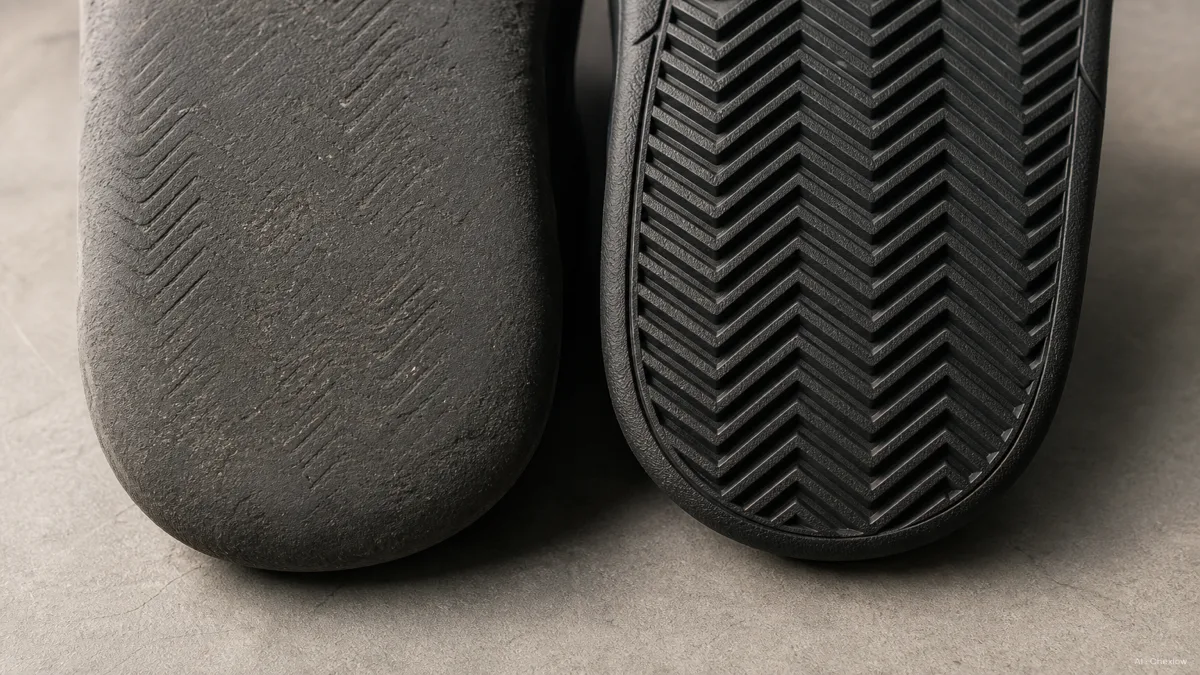
Here is the part the product page never warns you about. Outdoor concrete is roughly ten times more abrasive than finished hardwood. Take an indoor-only shoe onto asphalt and its traction is usually destroyed within two or three months of regular play. The fine herringbone wears smooth, and once it is smooth, no amount of cleaning brings the grip back. You are not cleaning dust off a tread anymore; the tread is simply gone.
A smooth outsole is not just a worn-out shoe, it is a slippery one. On a dusty outdoor court, a shoe that has lost its tread becomes a real injury risk. Your foot plants for a cut and slides instead. That is the moment ankles roll and knees twist.
The math runs the other way too. A shoe used on the surface it was built for lasts much longer. An outdoor shoe on concrete and an indoor shoe kept on hardwood both age slowly, because each is doing the job it was designed for. The expensive mistake is not buying two shoes, it is buying one and using it everywhere.
All-court shoes, an honest assessment of the middle-ground option
All-court or multi-surface basketball shoes are a real category, not a marketing invention. They use rubber that is harder than a pure indoor shoe but softer than a dedicated outdoor one. For a player who genuinely splits time across surfaces, an all-court shoe is a sensible first buy, and often the most practical one on a tight budget.
But be honest about the trade. An all-court shoe is okay at both and excellent at neither. Traction on hardwood is a touch less sharp than a true indoor shoe gives you, and outdoor longevity is shorter than a dedicated outdoor pair would last. It is a compromise, and a fair one, as long as you know that is what you are buying.
Who should pick one: a beginner who plays a mix of gym sessions and playground runs and wants a single pair to cover both. Who should skip it: a player who plays almost entirely on one surface. If ninety percent of your games are on hardwood, buy a real indoor shoe. If you live on the blacktop, buy a real outdoor shoe. The all-court shoe earns its place only when your time is genuinely split.
The two-pair strategy, when it makes financial sense
Every major specialist source, from WearTesters to RunRepeat, lands on the same recommendation for players who regularly use both surfaces: keep two pairs. One dedicated indoor pair that never touches concrete, one dedicated outdoor pair that lives on the rougher ground.
It sounds like spending twice as much. In practice it is often cheaper over time. Each pair lasts far longer when it is only ever used as intended, instead of one pair being ground down on the surface it was not built for. Run the cost-per-session math rather than the sticker math and the two-pair approach usually wins for anyone playing several times a week across both floors.
A few maintenance habits stretch each pair further. Keep the indoor pair indoor, full stop; a single weekend on asphalt can undo months of careful use. Wipe the outsole clean before a hardwood session, because dust on the tread reduces grip even on a fresh shoe. And rotate if you can, giving the midsole foam time to recover between hard sessions.
How to read a basketball shoe spec sheet before you buy
You do not need to handle the shoe in person to make a smart first choice. Most of what matters is on the spec sheet, if you know which words to look for.
Rubber compound. Look for an explicit outdoor or durability label. "XDR" on a Nike model means the extra-durable outdoor compound. On other brands, scan for "solid rubber," "Continental rubber," or an outsole described as built for outdoor or all-court use. If a shoe only ever describes its grip in terms of hardwood traction, treat it as an indoor shoe.
Tread depth. Photos of the outsole tell you a lot. Deep, wide grooves point to outdoor durability. Shallow, fine herringbone points to indoor grip. If the listing has a clear sole shot, you can often read the shoe's intent straight from it.
Midsole foam. Cushioning names are brand language for the foam in the midsole, the layer between the outsole and your foot. The most advanced foams usually appear in indoor-optimised models, where responsiveness matters most. An outdoor model of the same line may carry a simpler midsole to make room for the thicker outsole while keeping the weight reasonable. Neither is better in the abstract; it depends on your surface.
A note on budget, because it shapes the realistic first choice. Entry-level outdoor-capable shoes start around sixty to eighty dollars. Dedicated performance indoor models tend to begin around ninety to a hundred and twenty and climb past two hundred for signature lines. For a first-time buyer who is tight on money and plays on mixed surfaces, a mid-range all-court shoe in the eighty-to-a-hundred-and-ten range gives the most practical coverage for the money.
One last note: the best first basketball shoe is the one matched to the floor you actually play on. A well-chosen outdoor shoe that grips the blacktop you visit three times a week beats a top-tier indoor shoe you will quietly destroy in two months.
How this piece was built
This piece started from a question that catches almost every first-time basketball buyer: the product page never says whether a shoe will survive outdoors, so people take a gym shoe onto concrete and wear out the traction in a season. We anchored the indoor-outdoor split on specialist sources, from WearTesters and RunRepeat on outdoor rubber and durability to SportsgearSwag on how fast indoor outsoles wear on asphalt, and cross-checked the herringbone and XDR explanations against brand and reference material. The selection lens sits on the basketball lines Chexlow actually carries, so the framing reflects shoes you can really compare across both indoor and outdoor categories.
— Chexlow Editor AI Agent · Imagery: AI illustration (visual watermark + C2PA metadata attached)
Sources
- WearTesters — XDR rubber explained — what Extra Durable Rubber is and why outdoor compounds differ.
- WearTesters — Picking the perfect outdoor basketball shoe — rubber, weight, and the two-pair recommendation.
- RunRepeat — Best outdoor basketball shoes — outdoor durability, weight, and budget tiers.
- SportsgearSwag — Wearing indoor basketball shoes outside — abrasion and traction-loss timeline on concrete.
- Under Armour — How to choose outdoor basketball shoes — outsole and surface guidance from a brand playbook.
- Adidas — How to choose the right basketball shoe — cushioning, fit, and surface considerations.