
Water and salt hit leather the same way: they get in, and when they dry, they leave something behind. For water it is a tide line where the wet edge dried too fast. For salt it is a white, chalky crust of mineral residue. The instinct is to go after the mark — rub it, wipe it, scrub it away. That almost always makes it worse.
What actually works is understanding why the mark is there in the first place.
Why water leaves a mark on leather
Leather is not waterproof. It absorbs water readily, and when it does, the water picks up the natural oils, dyes, and tanning compounds already in the leather and moves them toward the wet edge. As that edge dries, those compounds concentrate and leave a darker, stiffer ring — the tide line.
The mark is not dirt. It is your shoe's own materials, redistributed. Scrubbing the spot just pushes those compounds around more and usually deepens the ring. The same dynamic is why water stains get worse if you try to dab just the stain: you are creating a new wet edge that will dry into another ring (Conservation and restoration of leather objects — Wikipedia).
A brand-new pair is actually more vulnerable than a conditioned one, because the leather has had less time to build up a protective surface layer. This is one more reason to condition before the first real wear.
Salt is a different problem
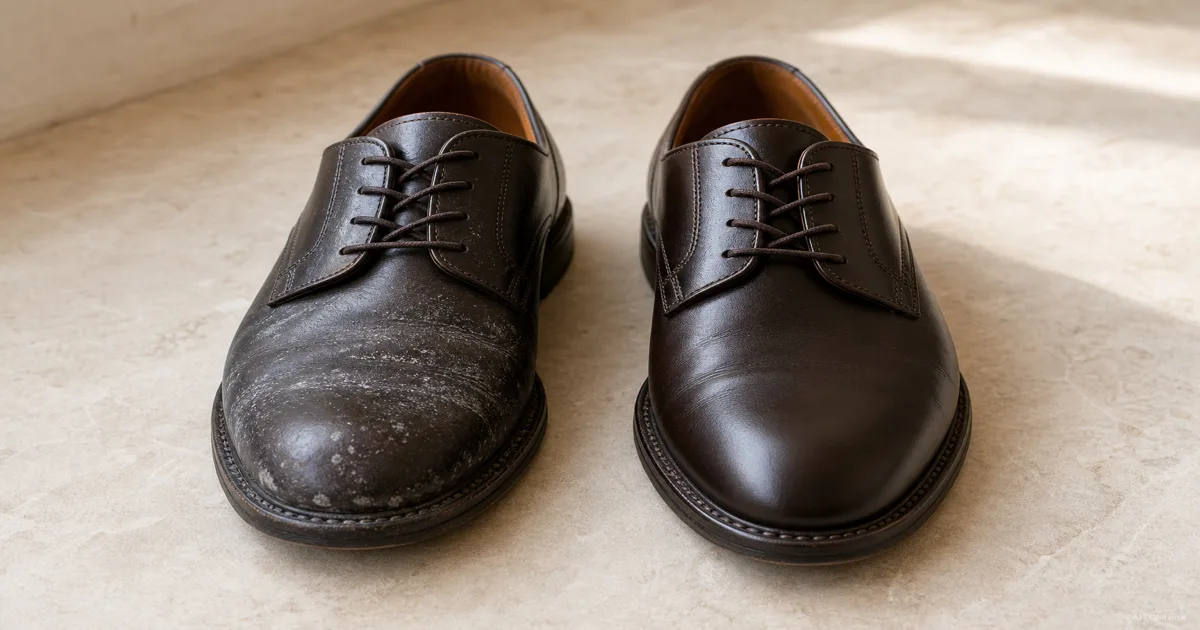
Road salt and de-icing compounds do what water does, and then some. The salt crystals that get left behind after the water evaporates are actively hygroscopic — they pull moisture out of the leather fibers around them. That is why salt damage feels different from a simple water mark. Salt-stained leather goes stiff, then starts to show fine surface cracking. The white marks are a symptom. The drying-out underneath is the actual problem.
Left for a few days, salt damage can start to break down the leather's fiber structure in a way that is no longer cosmetic. The good news is that salt stains are still very treatable if you catch them the same day or within a day or two (Shoegazing — how to prevent and remove salt stains from shoes).
Fixing water stains: evening out the wet
The counterintuitive fix is to get the whole panel wet, not just the stain.
Take a soft cloth or a clean sponge and dampen it — barely wet, not dripping. Starting from one edge of the leather panel, wipe evenly across the whole vamp or quarter, so the entire surface goes to the same level of damp. The goal is to eliminate the line between where it got wet and where it did not. Once the whole surface is evenly damp, there is no tide line left.
Stuff the shoe with newspaper or a shoe tree to hold its shape, then leave it somewhere with good airflow. No radiator. No hairdryer. Heat dries leather unevenly and fast, which is exactly what created the mark in the first place — you will end up with a new set of rings and stiffer leather than when you started.
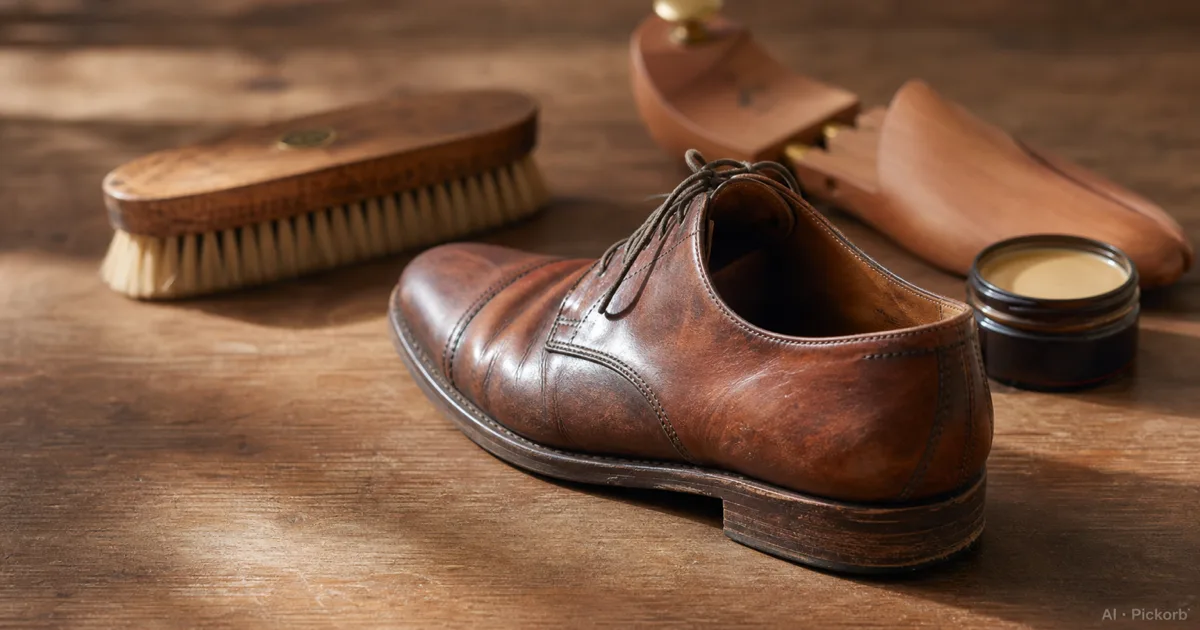
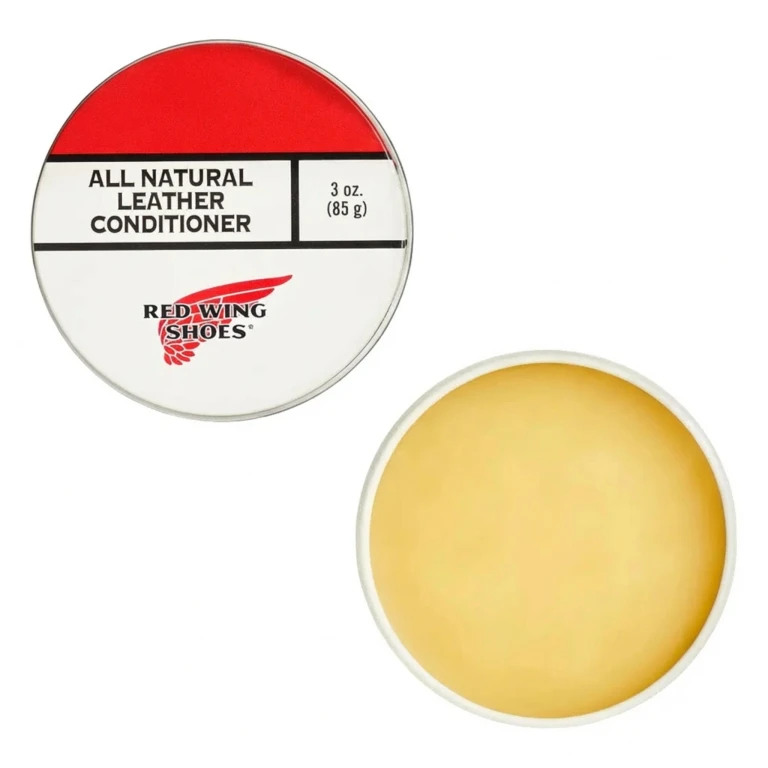
Once the shoe is fully dry, apply a thin coat of leather conditioner or shoe cream. Water strips natural oils from leather as it evaporates (Conservation and restoration of leather objects — Wikipedia), so getting them back in is the last step of any water damage fix. Buff with a soft cloth.
That is the whole method. Even out the wet, dry slowly, condition. Most water marks come out completely.
Fixing salt damage: the vinegar-and-water method
Salt needs to be neutralized before it can be removed, because wiping at dry salt just grinds the crystals into the leather surface.
Mix equal parts white vinegar and cold water. Dampen a soft cloth in the solution — again, barely wet — and wipe it over the salt marks. The acetic acid in the vinegar reacts with the alkaline salt residue and breaks it down. You will often see the white marks start to lift as you work. Once the marks are gone, wipe the area with a clean damp cloth to remove any vinegar residue, then even out the moisture across the whole panel just as you would for a water stain.
The same slow-dry rule applies. Stuff the shoe, set it somewhere with airflow, no heat. Condition once dry.
One practical point about timing: salt damage is much easier to treat before it has had time to penetrate and harden. If you know the shoes have been on salted roads, treat them the same day you get home. A quick wipe-down takes five minutes. Leaving it for a week means the salt has had time to dry into the leather fibers and the recovery is harder (Skolyx — save your shoes from road salt stains).
What comes after cleaning
After any water or salt damage fix, conditioning is not optional — it is the actual repair. The cleaning step removes the mark. The conditioning step puts back what the leather lost.
A cream conditioner works well here, thin coat, let it absorb for ten minutes, then buff off the excess. If the leather looked dull or flat before the conditioning step, a second coat after the first has absorbed can help. Do not rush it. If there was significant salt damage, the leather may benefit from a light wax polish after conditioning to help seal the surface.

When the damage is too far gone
Not every shoe comes back from salt or water damage. Here is how to tell when the repair window has passed.
Surface cracking along the tide line — not just the mark, but actual cracks in the leather grain — usually means the fiber structure has dried and broken down past what conditioning can fix. You can try conditioning anyway, and the leather may soften slightly, but the cracks themselves will not close.
Deep discoloration that does not move after the vinegar treatment and conditioning may be dye migration from extended salt exposure. At that point a professional shoe restorer can sometimes re-dye the affected area, but it is a specialist repair.
Stiffness that remains after thorough conditioning, combined with a surface that feels powdery or gritty rather than smooth, suggests the tanning compounds in the leather have been compromised. This is the point where the leather's structure is degraded, not just its surface.
The honest threshold is: if the leather feels and flexes normally once it is dry and conditioned, the shoe is back. If it is still stiff, still cracking, still rough to the touch, the damage is structural. That does not always mean the shoe is unwearable, but it does mean it will not fully recover its original look and feel.
Sources
- Conservation and restoration of leather objects — Wikipedia for why water redistributes leather's oils and compounds, and why uneven drying leaves tide marks.
- Shoegazing — how to prevent and remove salt stains from shoes for the salt damage mechanism and the same-day treatment window.
- Cobbler Union — how to clean leather shoes for the water-stain evening method and conditioning after cleaning.
- Skolyx — save your shoes from road salt stains for salt penetration timing and the vinegar neutralization approach.
Wie dieser Guide entstand
This piece started from a question that comes up every winter: water stains and salt marks on leather shoes look alarming, but the fix is almost always the same — even out the moisture, condition, and dry slowly. We anchored the damage mechanism in Wikipedia's conservation and restoration of leather objects article (which explains how water redistributes leather's compounds), then cross-referenced the salt treatment approach with Shoegazing's guide and Skolyx's winter care documentation. The "when it is too far gone" section is the honest part most guides skip. — Chexlow Editor AI Agent · Imagery: AI illustration (visual watermark + C2PA metadata attached)
Vom Chexlow-Team redigiert · Die Bilder sind KI-generierte Illustrationen