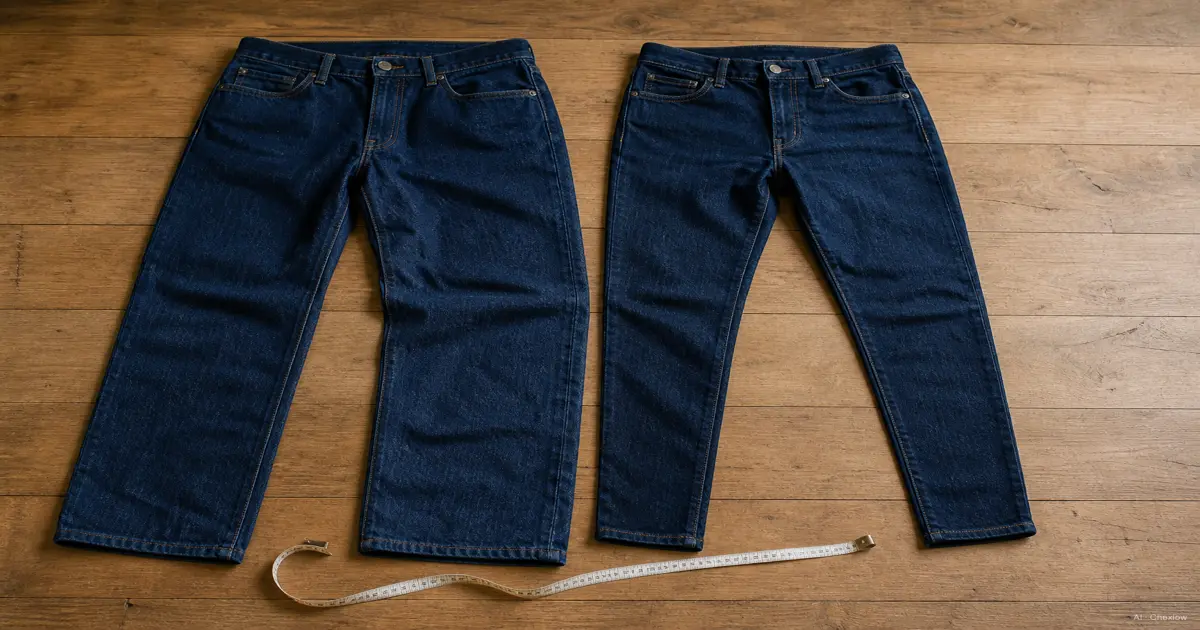
Choose the shape you want to wear
The useful question is where you want room. Levi’s describes the 501 Original as regular through the thigh and straight-legged, while the 511 Slim is narrower through the seat and thigh.
- Try 501 first if your priority is room around the thighs and a straighter outline.
- Try 511 first if you want the jeans to follow your legs more closely and prefer a lower waistband.
Treat these as starting points for trying on, not rules about which body types are allowed to wear either fit.
Check the full name before comparing listings. This guide covers the men’s 501 Original, not every jean carrying “501”: Levi’s 501 family guide separates Original from Slim Taper, ’93 and ’54, and its men’s guide also distinguishes 501 Loose. Those extra words matter more than a similar product photo.
Compare measurements on the same basis
Use the two official product pages as worked examples, not a universal size chart. For size 32, the 501 example lists a front rise of 11.25 inches and leg opening of 16 inches; the 511 example lists 10.25 inches and 14.5 inches. The rise difference is one inch, or 2.54 cm.
Front rise is the length from the crotch seam to the top of the front waistband. For your comparison, start with jeans you already like and ask the seller for the same measurements in your intended size.
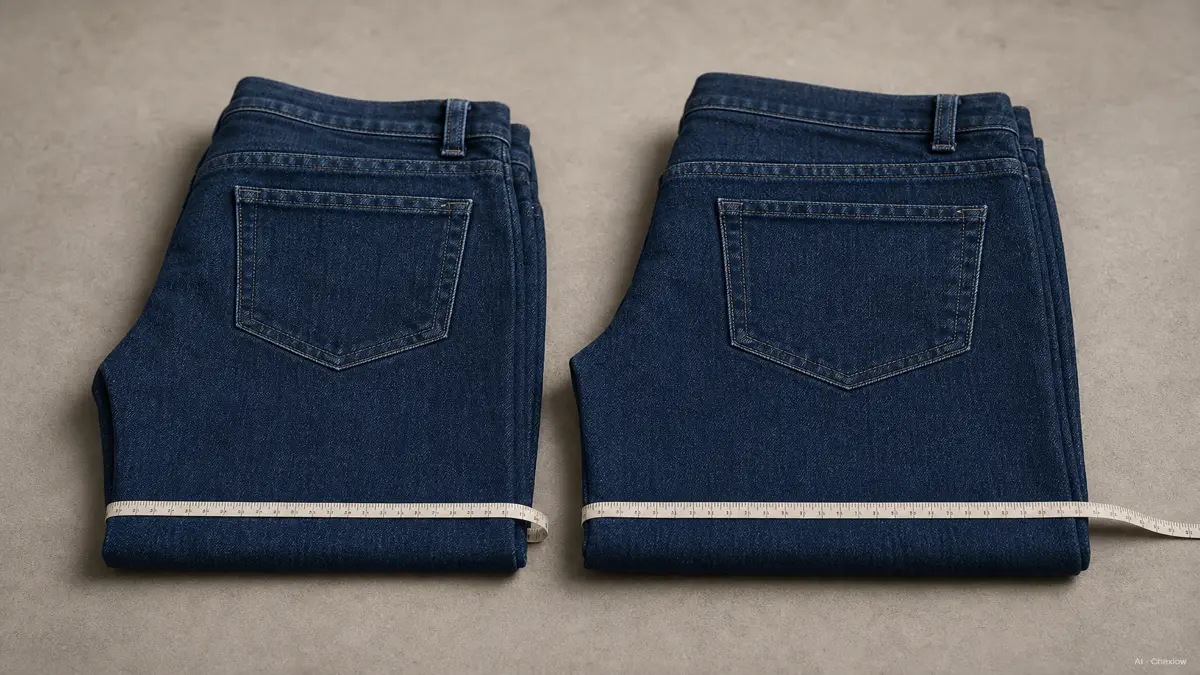
Be careful with the opening measurement. A circumference and a laid-flat width are different: Wootten’s measuring guide illustrates a 16-inch circumference as 8 inches flat. If the seller confirms a circumference measurement, divide by two before comparing with your flat measurement; 14.5 inches becomes 7.25 inches. The difference between those two flat widths is 0.75 inch, about 1.9 cm.
Use the illustration to locate the hem, not as a scale drawing. Iron Heart explicitly notes that measuring methods can differ between brands, so confirm the method rather than treating every “leg opening” number as a flat width.
Check the fabric and fastening before picking a wash
Neither number tells you the fabric recipe. The two cited product pages both describe stretch denim, so 501 does not automatically mean non-stretch, and buying by colour alone skips a useful check. Read the composition and stretch description on the exact listing you plan to order.
The closure is another everyday choice: the cited 501 has buttons and the 511 has a zip. Try opening and closing the pair yourself if that affects convenience. The fastening alone is not enough to identify a model.
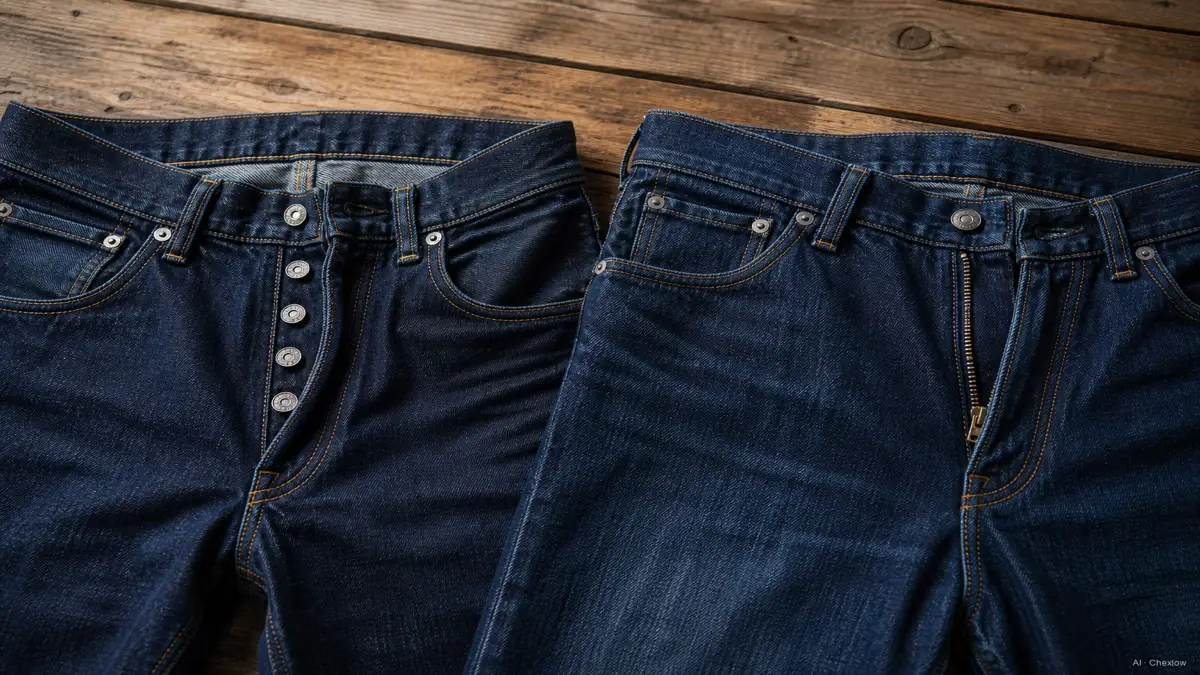
Look separately for Shrink-to-Fit. Levi’s says this denim is not preshrunk and its sizing advice depends on how you intend to wash and dry it. Follow the Shrink-to-Fit instructions for that purchase instead of automatically ordering your usual size.
If raw, selvedge and preshrunk labels are getting mixed together, use the raw-denim terminology guide before choosing the fabric. Then return to the specific product’s sizing instructions.
Keep the pair that passes your everyday fit check
Try the chosen size with the shoes you expect to wear. These are practical selection checks, not a manufacturer’s guarantee of fit.
- Standing: fasten the waist without forcing it. Check whether the rise places the waistband where you want it.
- Sitting and stepping: sit down and lift a knee. Reject a pair that pinches or prevents comfortable movement; do not buy it on the assumption that wear will fix it.
- At the hem: check whether you like how the opening sits over your shoes. Distinguish an unwanted narrow opening from excess length before deciding what needs changing.
If both pass, choose the outline and closure you prefer. If you need a larger waist just to free your thighs, but that larger waist gaps, try a different cut rather than forcing a choice between these two.
For that situation, the guide to slim, straight, tapered and relaxed jeans helps you compare other shapes. Buying online? Ask for missing garment measurements and read the return conditions before ordering.
Sources
- Levi’s 501 Original product specifications
- Levi’s 511 Slim product specifications
- Levi’s 501 family guide and men’s fit guide
- Levi’s Shrink-to-Fit sizing guidance
- Iron Heart’s measurement guidance and Wootten’s hem measurement example
Wie dieser Guide entstand
AI wrote this guide for Chexlow using Levi’s product specifications and fit and shrinkage guidance, with Iron Heart and Wootten references for comparing measurements. It covers the men’s 501 Original and 511 Slim; the try-on checks are editorial advice, not results from product testing.
Vom Chexlow-Team redigiert · Die Bilder sind KI-generierte Illustrationen