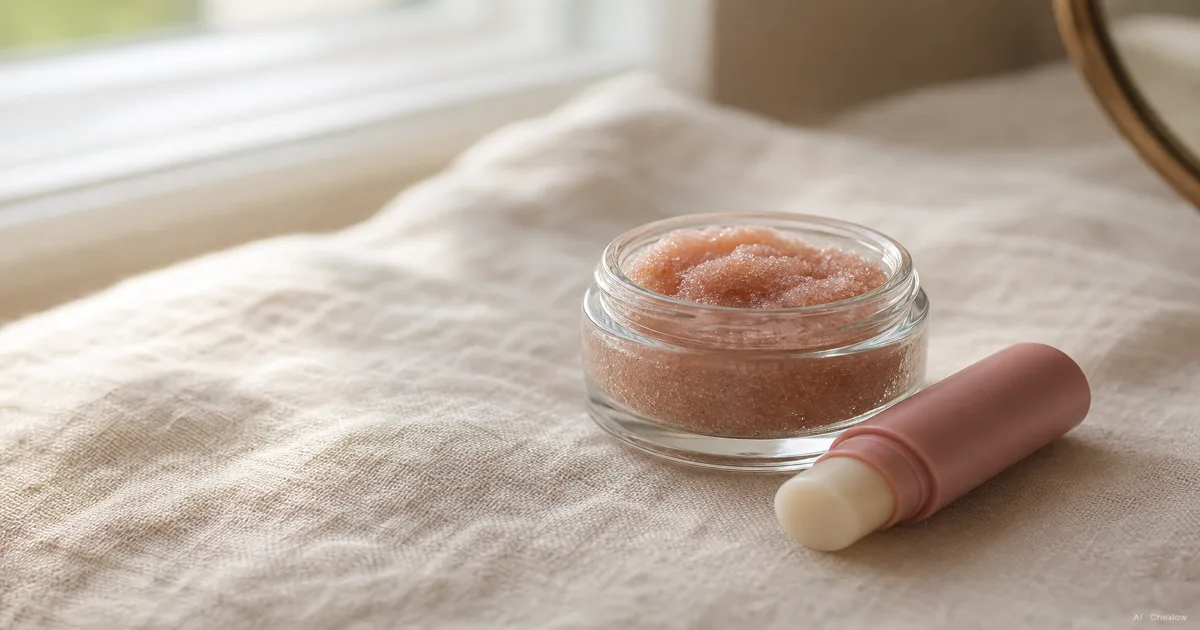
Decide whether a scrub belongs in your basket
Flakes are not automatically a shopping signal. Cleveland Clinic advises against manual lip exfoliants because they can compromise the protective barrier; picking peeling skin is also unhelpful.
- Dry, sore or peeling lips: postpone the scrub and focus on moisturizing.
- Cracks, bleeding or open sores: use neither format. Even Éclair Lips warns against exfoliating in these conditions.
- Comfortable lips and a cosmetic preference: buying a scrub remains optional. The comparison below explains the formats, not a medical need for either.
Compare the application, then read the formula
A jar lets you take product out with a fingertip; a stick applies directly. Éclair Lips describes direct tube application for its exfoliating balm. Choose the handling you prefer, then check how the particular product must be removed.
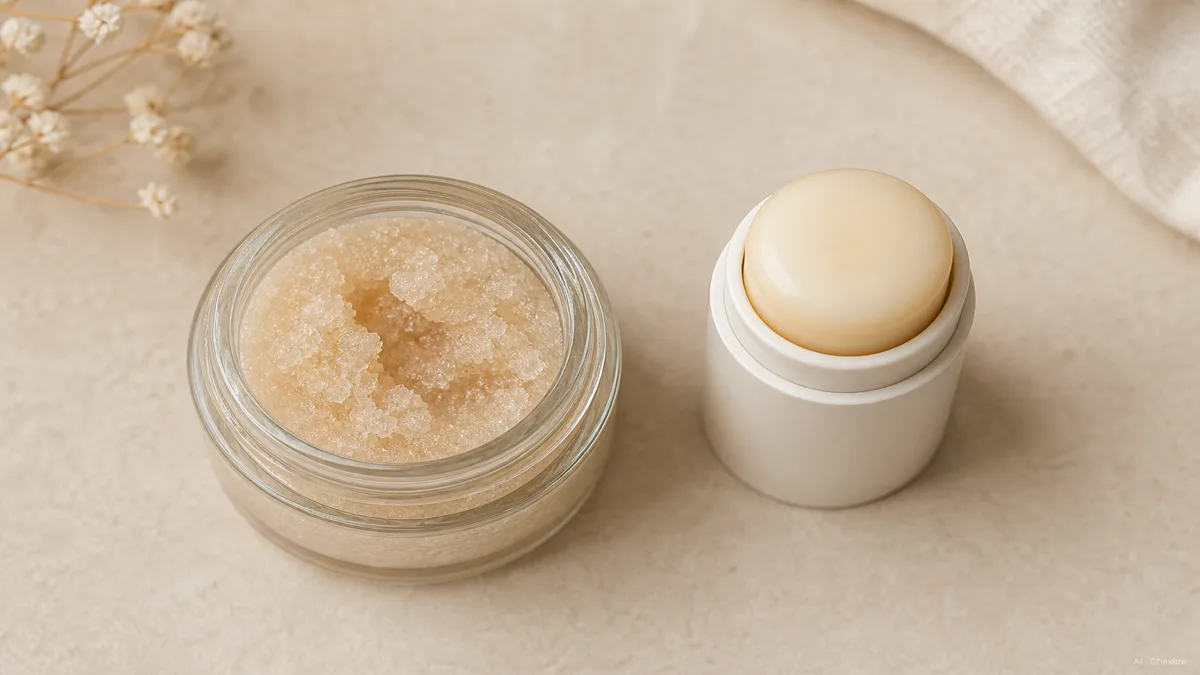
Treat the illustration as a format comparison, not a scale of abrasiveness. A smooth-looking stick does not tell you its particle size or how your lips will react.
For sugar, salt or coffee, ask a more useful question: is this exact formula intended for lips, and are its ingredients and directions available? Lush, for example, describes sugar and jojoba oil in its lip scrubs; that is a formula example, not evidence that every sugar scrub suits you. There is no reason here to rank coffee above sugar, or brown sugar above white sugar. Leave body scrubs out of this purchase.
If you choose to use one, follow its own directions
Do not carry a routine from one product to another. For example, e.l.f.'s instructions use slightly damp lips, gentle circular movements and a moist cotton round or tissue for removal. Lush specifies clean lips, a pea-sized amount and small circles, with a clean damp towel as one removal option.
- Before: read the product's amount, preparation and removal directions.
- During: keep the pressure light; do not keep rubbing to chase every remaining flake.
- After: remove as directed, then move to moisturizing.
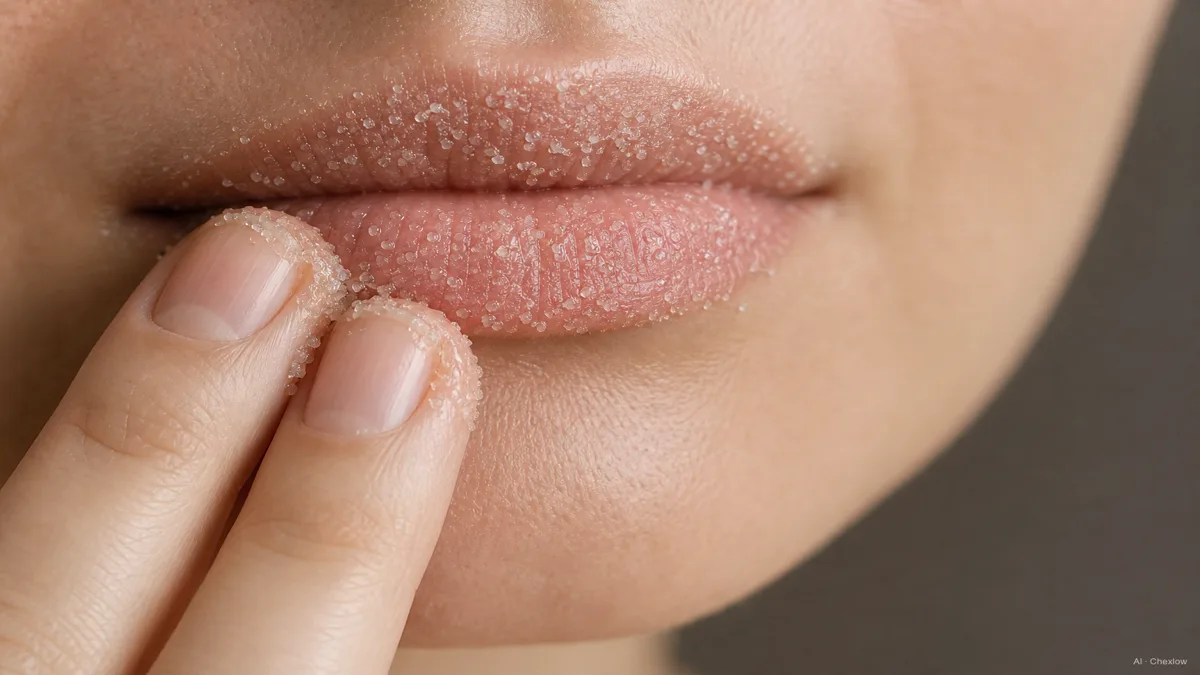
The image illustrates the motion, not a guaranteed safe technique. We do not set a universal weekly schedule or recommend daily scrubbing for recurring flakes. Given the irritation concern above, more flaking is a reason to reconsider exfoliation, not increase it.
Keep the follow-up simple
Choose a non-irritating balm; plain white petroleum jelly is another option. Stop a product if it stings. If basic care has not helped after two to three weeks, see a dermatologist. These are AAD recommendations.
For this first purchase, budget for a tolerable moisturizer before adding an optional scrub or mask. You do not need to assemble a three-product set to follow this guide. If the next decision is which moisturizing product to choose, compare lip balm and lip treatment.
Sources
- Cleveland Clinic: lip exfoliation and irritation
- AAD: care for dry, chapped lips
- Éclair Lips: exfoliating formats and broken-skin caution
- Lush: its lip scrub ingredients and directions
- e.l.f.: its lip scrub application and removal
Wie dieser Guide entstand
This guide was written by Chexlow's AI editor using AAD and Cleveland Clinic guidance alongside Éclair Lips, Lush and e.l.f. product-use information. It separates the optional cosmetic purchase from care for irritated lips; the format checklist is an editorial selection aid, not a product test or medical endorsement.
Vom Chexlow-Team redigiert · Die Bilder sind KI-generierte Illustrationen