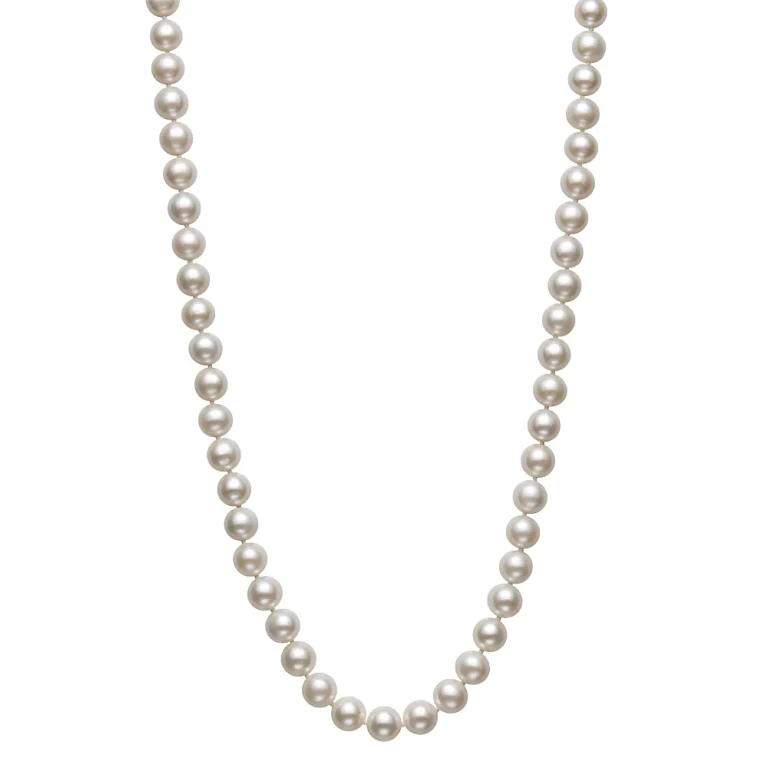
Choose the look you want to wear
Think of an outfit you already own and set a spending ceiling before choosing a pearl type.
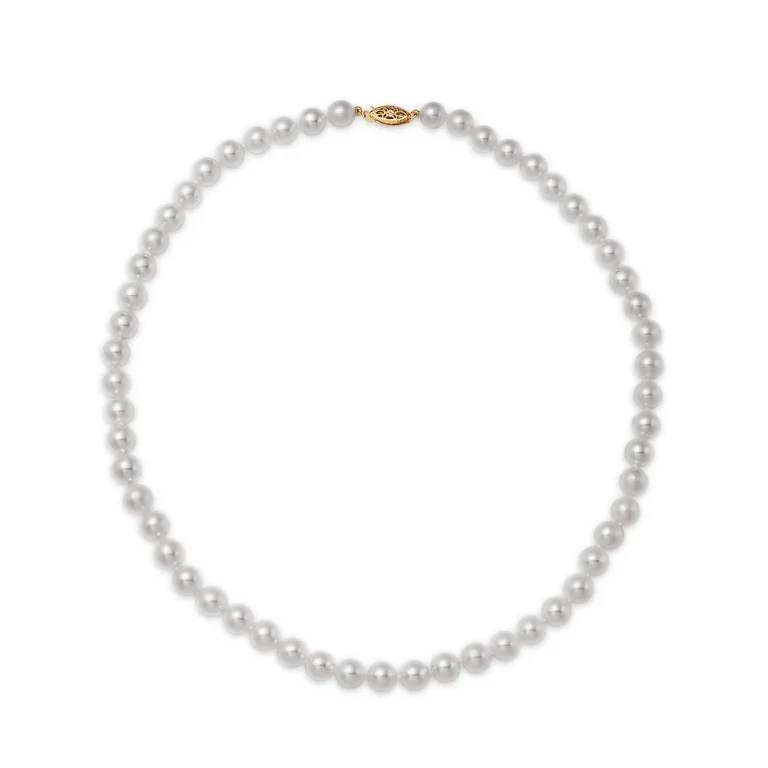
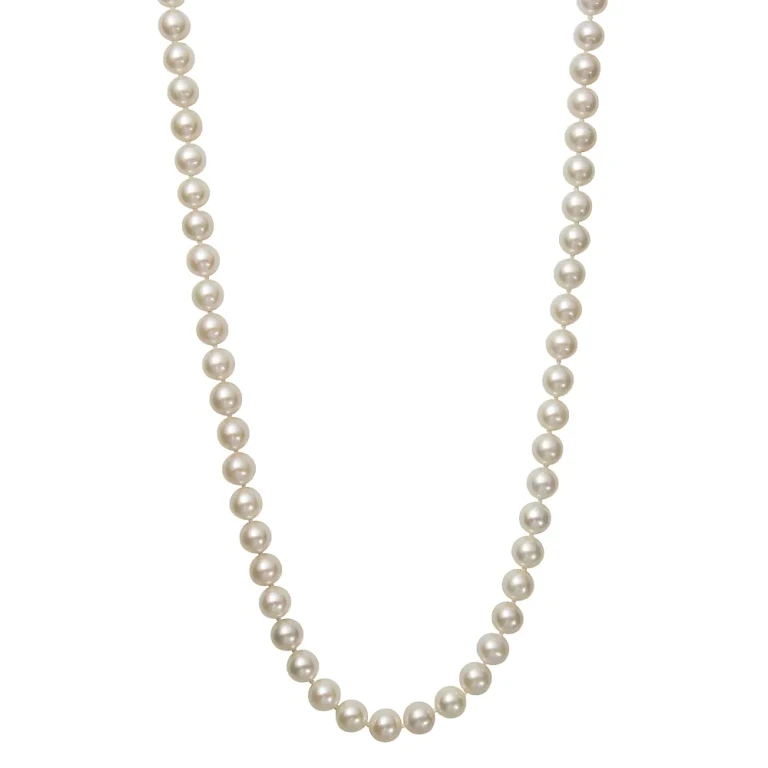
- A classic white strand. Compare an Akoya necklace with a similar-looking freshwater one. White and cream Akoya strands are a familiar classic, but the occasion alone need not decide your purchase.
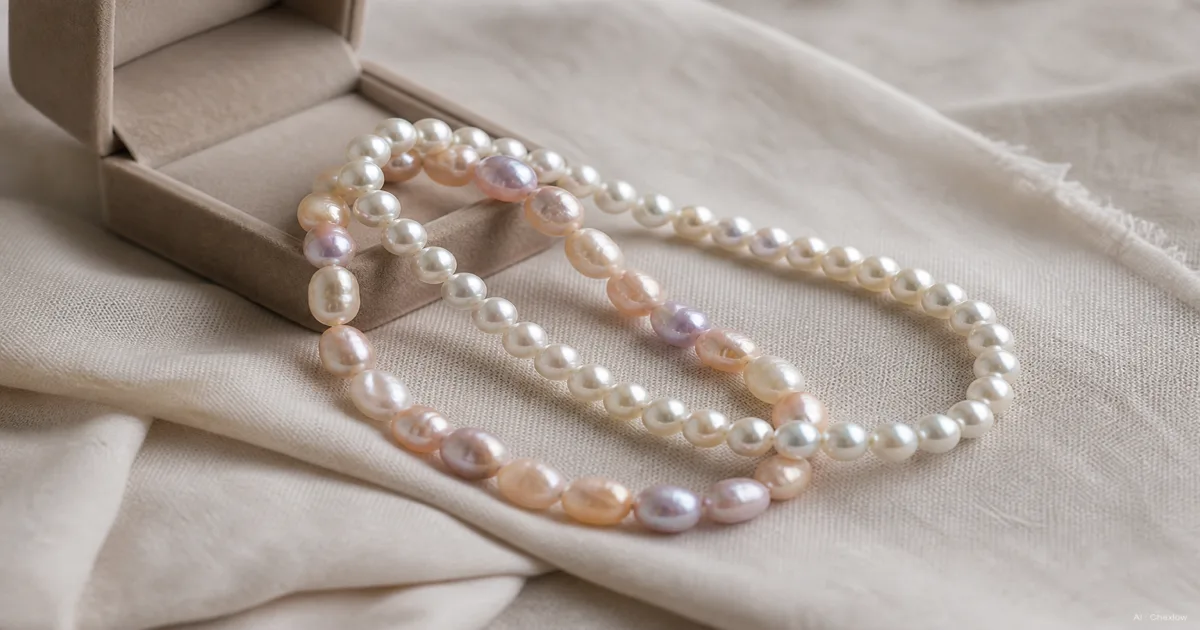
- Color or irregular shapes. Start with freshwater. Its breadth of shapes and colors gives you more directions to explore.
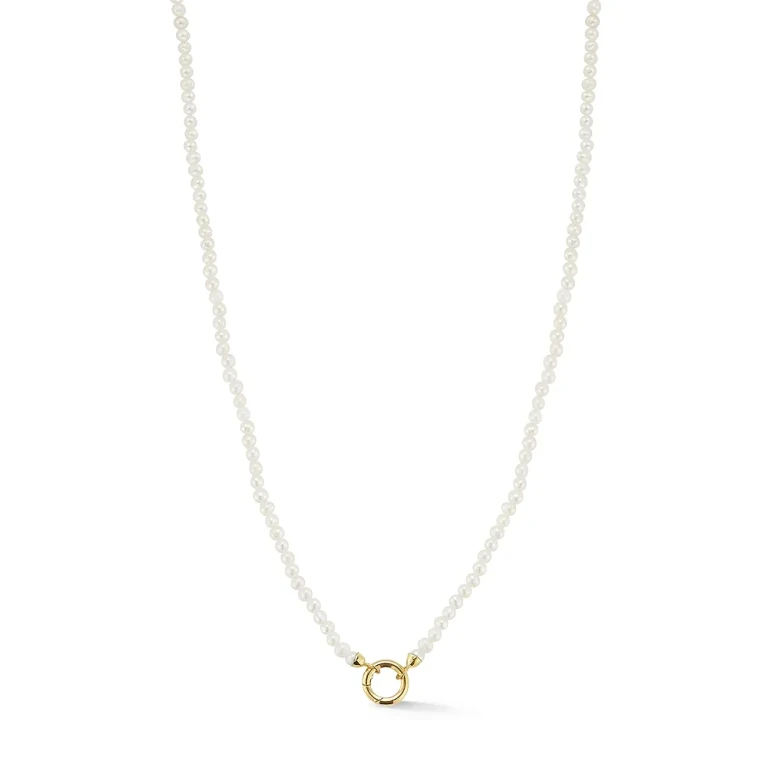
- A smaller commitment. If you would prefer one pearl on a chain, consider that format before comparing full strands. The pendant necklace length guide helps with the next choice.
These starting points draw on GIA’s pearl descriptions; they are selection advice, not a ranking of every necklace. Keep both types on your shortlist if you simply want round white pearls.
Compare two necklaces under the same light
Ask to see the candidates side by side, against the same background. For online purchases, request comparable photographs of the actual strands.
Look at the sharpness of reflected light, then follow the necklace from end to end for consistency. GIA treats luster and matching as separate quality factors. A deliberately varied design needs a different judgment from a uniform strand: ask whether the variation looks intentional to you.
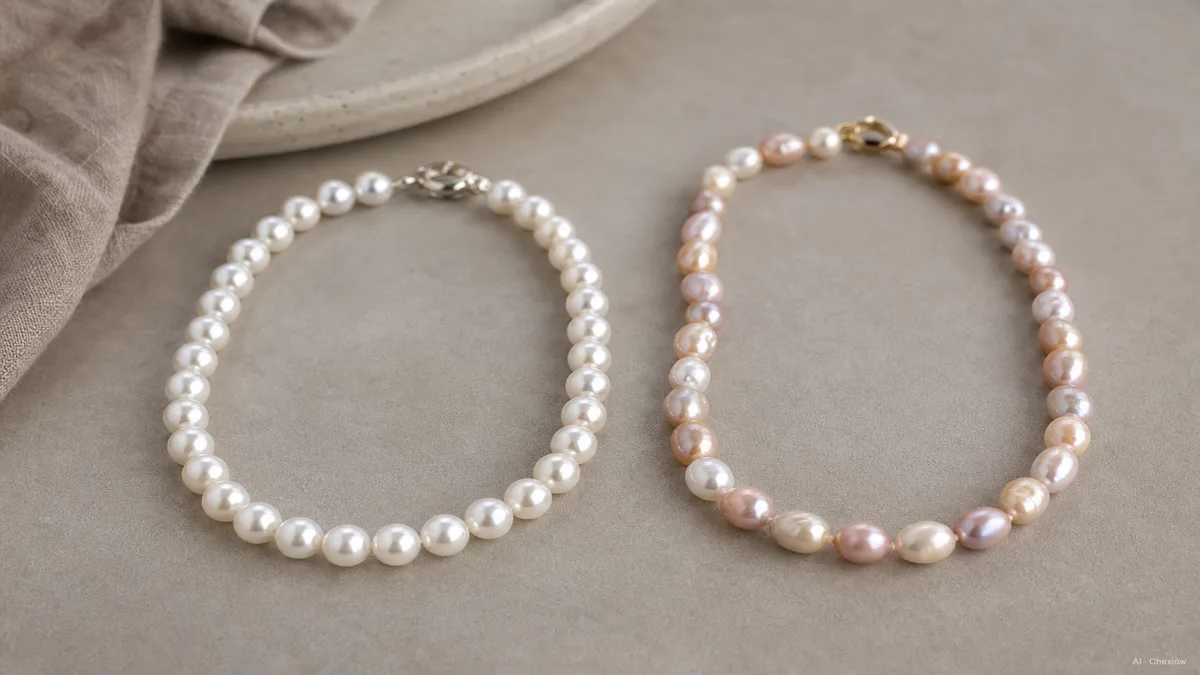
This illustration contrasts two looks, not an identification test. GIA has examined round, bead-cultured freshwater pearls that resemble Akoya. Freshwater does not automatically mean an irregular pearl without a bead inside.
Try both on before paying extra. If you cannot see a difference you value, there is little reason to stretch your budget for the type name alone.
Check the description before comparing prices
Ask for the pearl type, diameter range, necklace length, clasp metal, treatment disclosure and return terms in writing. If a listing uses “AAA” or “AAAA,” ask what that seller actually measures; do not treat the letters alone as proof of equivalent quality. GIA’s own system describes seven separate factors, rather than giving you a shortcut around inspecting the necklace.
“Freshwater Akoya” needs clarification. GIA identifies it as misleading terminology: Akoya is saltwater, and similar appearance does not establish the same identity. If that identity is central to an expensive purchase and remains uncertain, ask about an independent pearl identification report.
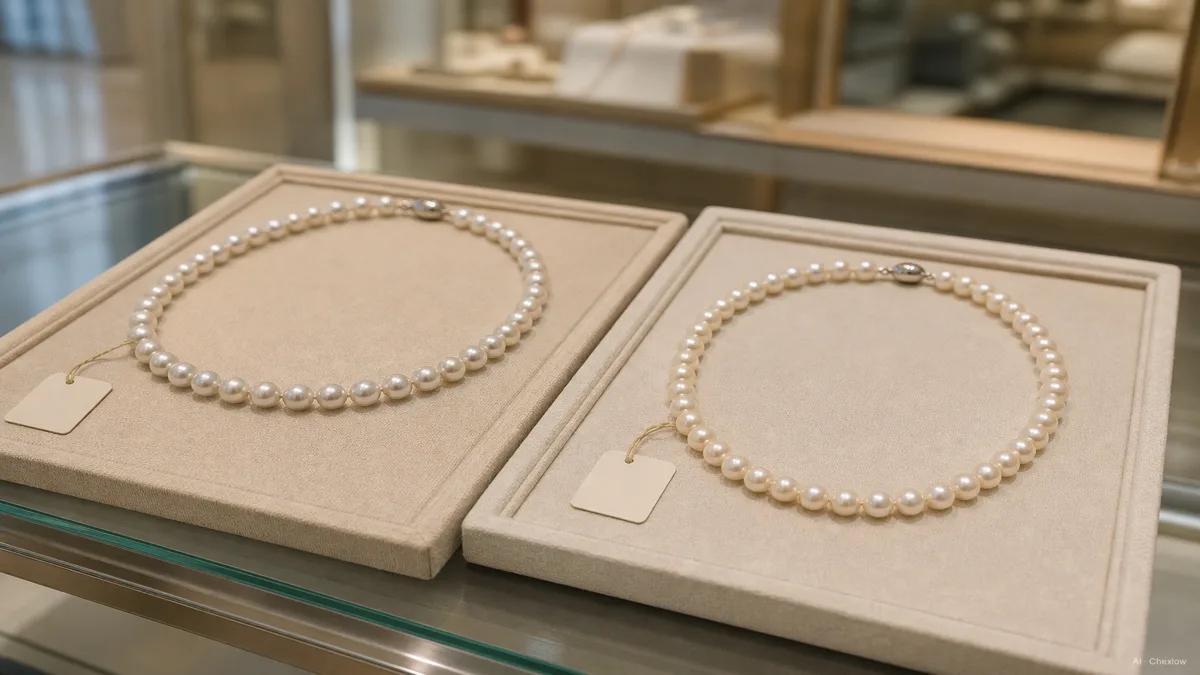
The counter illustration is a reminder to compare the whole specification, not a price reference. Freshwater offers lower entry prices, but request quotes for your chosen size and length with comparable workmanship. Then decide what the extra money buys you: a look you prefer, better consistency, or a particular documented pearl type.
Finish with fit, construction and care
Try the necklace with the neckline you intend to wear and operate the clasp yourself. Check how it is strung: knots between pearls help limit losses if the thread breaks and reduce rubbing. Ask the jeweler about restringing when the thread stretches or weakens.
Neither type is a carefree option. Pearls scratch easily; heat and chemicals can damage them. Put them on after cosmetics, wipe them with a very soft, clean cloth after wear, and never use steam or ultrasonic cleaning.
For the final choice, prioritize the strand you like wearing within your budget. Choose Akoya when its particular look and confirmed identity justify the premium to you; choose freshwater when your preferred strand meets the brief for less. Do not buy either on a promise that its type alone makes it tougher.
Wie dieser Guide entstand
AI wrote this Chexlow guide using GIA’s pearl descriptions, laboratory observations, quality criteria and care guidance. The shortlist and shopping steps are editorial advice for a first necklace, not product testing or authentication of individual offers.
Vom Chexlow-Team redigiert · Die Bilder sind KI-generierte Illustrationen