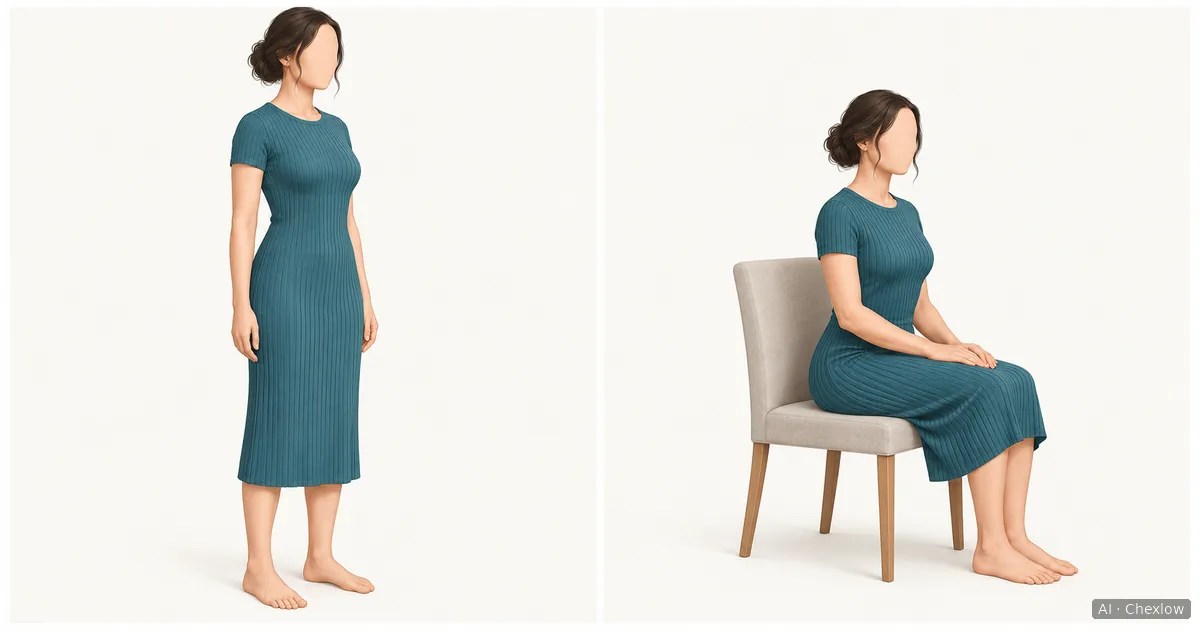


Start with the intended fit, not a smaller size
Want a dress that follows your shape, or one that skims past it? Make that choice before comparing sizes, then use the exact dress’s size guidance as your starting point. Do not automatically size down because the description says “stretch”.
Some fitted knits use negative ease: the finished garment is smaller than the body and stretches when worn. Seamwork’s knit-fitting guide explains that this depends on matching the design to the fabric’s stretch. It is a construction choice, not an instruction to buy below the maker’s recommended size.
For a concrete example, Tilly and the Buttons specifies at least 25% crosswise stretch for its Agnes top. That requirement belongs to that top pattern; it is not a percentage to subtract from your measurements when buying a dress.
If you prefer less cling, compare a deliberately roomier cut alongside the larger size. Your aim is the silhouette you want with comfortable movement, not the smallest size you can put on.
Separate stretch from recovery
Stretch describes how far fabric extends relative to its unstretched length. Recovery describes how it returns afterwards. Seamwork distinguishes both properties; a large stretch allowance alone does not answer whether a close-fitting dress will hold its shape.
Direction matters too. Some knits stretch horizontally, while others also stretch vertically. Ask about the actual dress rather than treating “ribbed” as a promise of stretch in every direction.
During an allowed fitting, observe the fabric after ordinary movement. Does it settle back, or do newly stretched areas remain loose? Avoid forcefully pulling the garment to find its maximum stretch. A brief fitting can reveal a concern, but cannot certify long-term recovery.
Seamwork’s fitting author notes that poorer-recovery knits can work in loose garments without negative ease. For a buyer, that suggests comparing a design that does not depend on close tension. Buying a smaller size to compensate for bagging is not a reliable solution.
Check the dress while sitting and moving
Try it with the underwear or layers you intend to wear, within the seller’s fitting and return conditions. Use these as personal acceptance checks, not a laboratory test.
- Look for pulling. Check the bust before concentrating on the waist. Seamwork identifies drag lines across or beside the bust as a possible sign that more room is needed there.
- Sit and reach. Sit normally, stand up and reach forward. Notice restriction, the hem’s position and whether you keep adjusting the dress to feel comfortable.
- Check coverage. Look from the front and back in useful, ordinary lighting, both standing and seated. If the fabric reveals more than you want, compare the next size or another dress rather than assuming the standing mirror view settles it.
- Look again after moving. Check for lingering bagging and for a neckline that gaps. Seamwork treats neckline gaping as a separate fit problem; it is a reason to assess the cut, not just the size label.
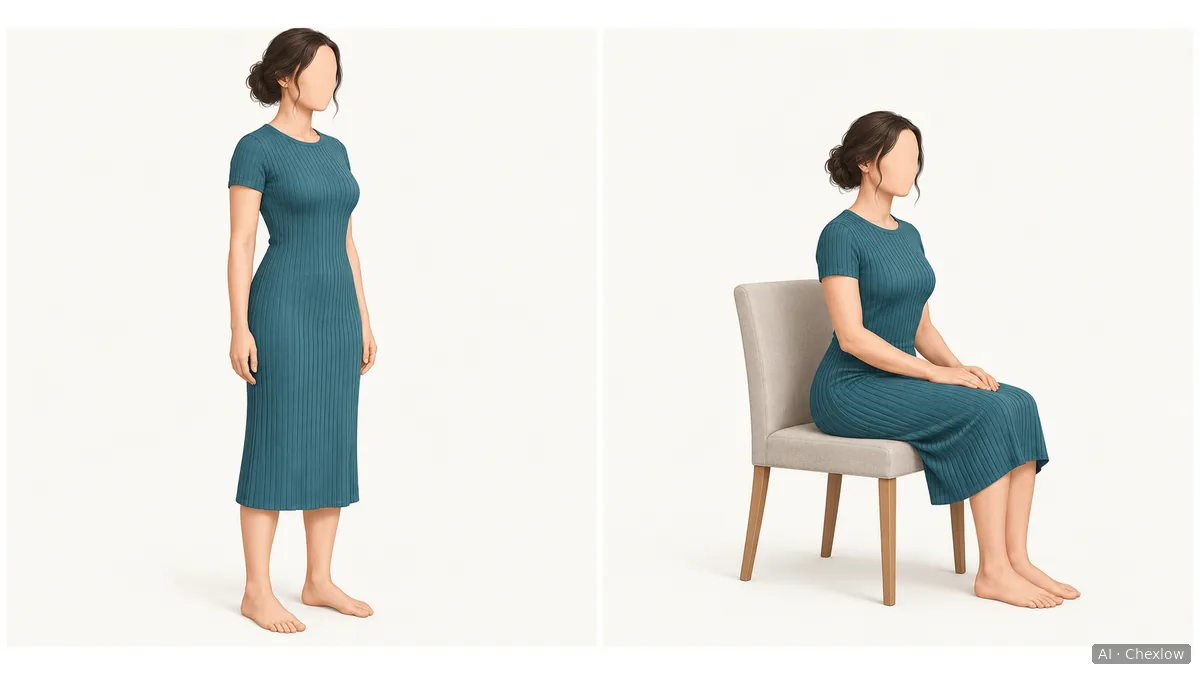
The two positions show what to compare during a fitting. The illustration does not establish the fabric’s opacity, stretch percentage or recovery; those checks belong to the actual dress.
Choose more room, another cut or the close fit
Keep the closer fit if you like its shape and it passes your movement, coverage and settling-back checks. You do not need visible looseness everywhere simply because the garment is knitted.
- Try the next size if the candidate pulls or restricts movement, then repeat the whole check. Do not judge the larger size only at the tightest spot.
- Change the cut if more room at the bust or hips leaves an unwanted gap at the neckline, or if neither size gives the shape you want.
- Change the garment if coverage or persistent bagging remains unacceptable. Do not buy it on the assumption that wearing or washing will correct the fit.
Buying online without a fitting? Ask whether the size chart gives body or garment measurements, what fit the maker intends, and what it can confirm about stretch direction and recovery. Request the missing information and check return conditions before choosing; “stretchy” alone leaves the main questions unanswered.
Once you have chosen the dress, a separate ownership question is how to support it between wears. If you are unsure whether it belongs on a hanger, continue with what to fold, what to hang and how to choose the support.
Wie dieser Guide entstand
Written by AI for Chexlow, this guide uses Seamwork’s knit-fitting and fabric guidance and Tilly and the Buttons’ requirements for its Agnes pattern. It adapts those explanations into a ready-to-wear buying decision; the movement and coverage checks are editorial suggestions, not original product tests or verified specifications for the dresses shown.
Vom Chexlow-Team redigiert · Die Bilder sind KI-generierte Illustrationen