Here is the quiet mistake almost every first-time shampoo buyer makes. They look at their hair — its length, its style, whether it looks dry at the ends — and they buy for that. It feels obvious. The hair is the thing you can see.
But the part of your head that actually decides which shampoo suits you is the part you cannot see while shopping: the scalp. Trichologists, the specialists who study hair and scalp health, are nearly unanimous on this. Match the formula to your scalp first, and let your hair type fine-tune the choice second.
That one reordering fixes most bad shampoo purchases before they happen.
Why Your Scalp Type Matters More Than Your Hair Type
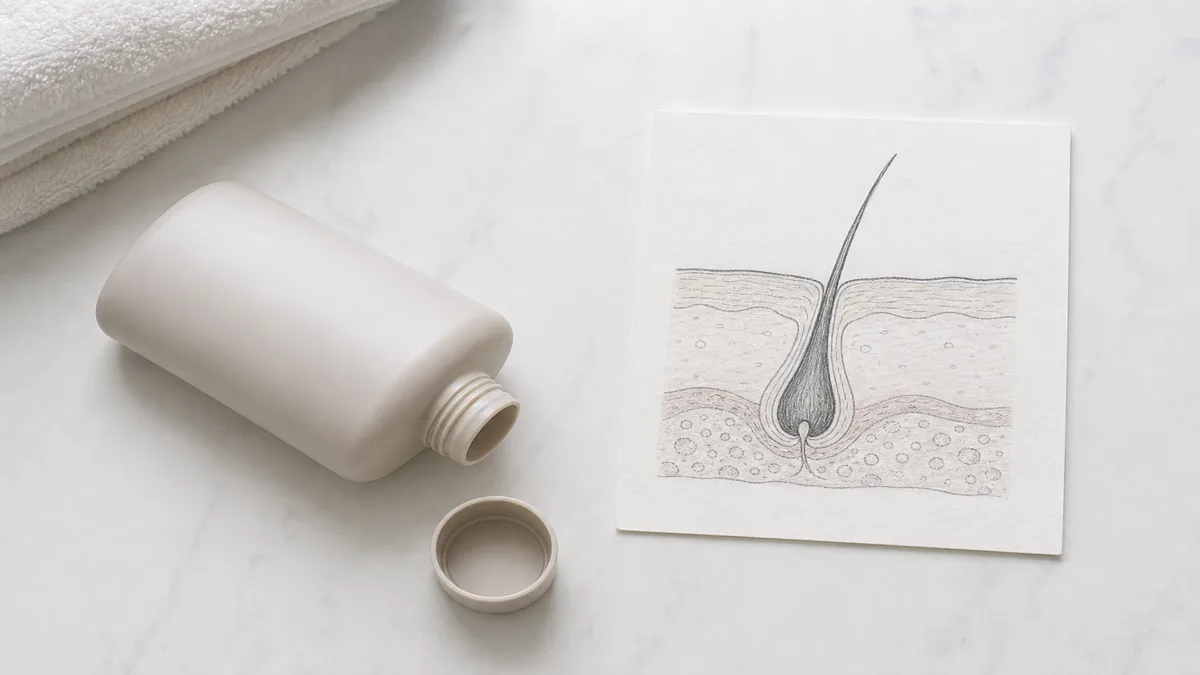
Think of your scalp as the soil and your hair as the plant. You can fuss over the leaves all you want, but if the soil is wrong, nothing grows the way it should. A shampoo's main job happens at the root, not the tip — it cleans the scalp, manages oil, and sets the condition your hair grows out of.
The Penny James Trichology Center puts the most common first-buy mistake plainly: people choose by hair length or style when they should be matching the formula to their scalp — oily, dry, sensitive, or combination. A rich moisturizing shampoo bought for dry-looking ends can leave an oily scalp greasy and flat by the afternoon. The ends were never the problem.
There is a quieter chemistry reason too. Your scalp sits at a slightly acidic pH of about 4.5 to 5.5, and the hair fiber itself is even lower, around 3.67. A peer-reviewed study in the International Journal of Trichology found that shampoos with a pH above 5.5 can increase the negative electrical charge on the hair surface, which makes strands frizz and tangle more. Staying close to scalp pH is not a marketing line — it is one of the few measurable things a good shampoo gets right.
So before you read a single hair claim on the bottle, answer one question. How does your scalp behave two days after washing? That answer matters more than any photo on the front.
The Five Hair and Scalp Profiles: Which One Are You?
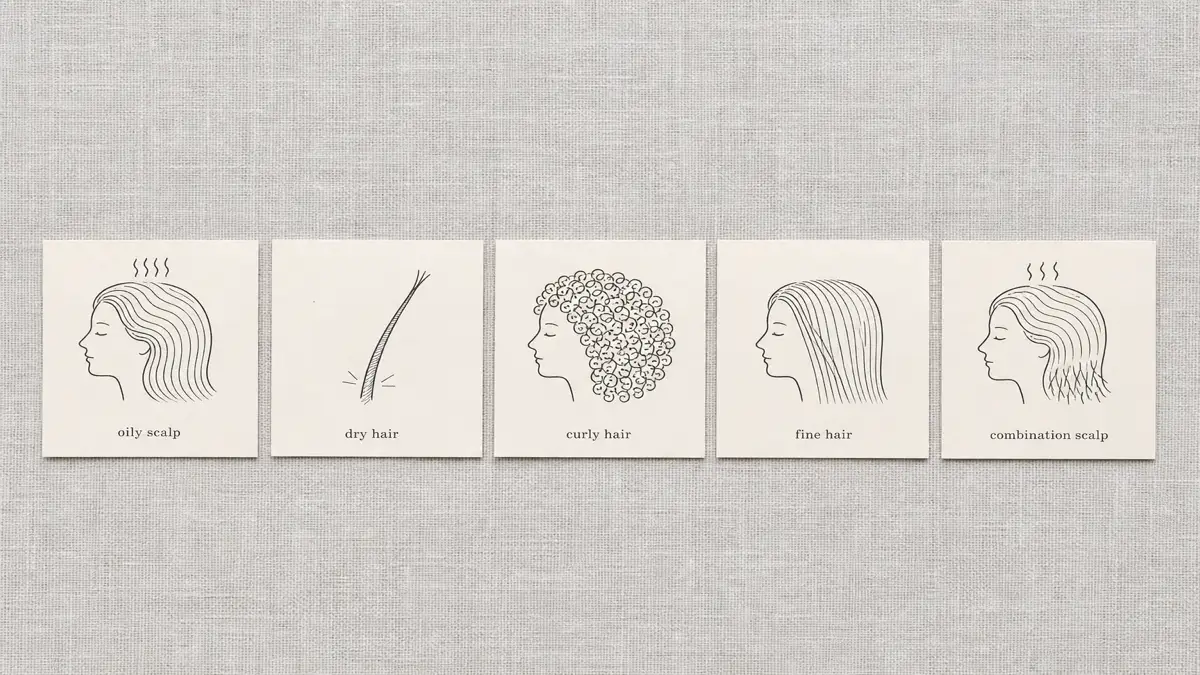
Most people land in one of five profiles. Read your scalp first, then your hair, and one of these will fit better than the rest.
- Oily scalp. Roots look flat and greasy a day or two after washing. You want a gentle clarifying formula that regulates oil rather than a heavy moisturizing one. The actives worth looking for are salicylic acid, zinc pyrithione, tea tree oil, and charcoal, which help manage sebum without needing a medicated product.
- Dry or color-treated hair. The scalp feels tight and the lengths drink up moisture. This is the classic case for a sulfate-free, moisturizing formula with ingredients like shea butter, glycerin, and aloe vera that hydrate instead of strip.
- Curly or coily hair. This hair is structurally prone to dryness because the scalp's natural oils cannot travel easily down the bends of the strand. Modern College and most curl specialists point to sulfate-free moisturizing shampoos with shea butter, glycerin, aloe, and coconut oil as the standard recommendation.
- Fine or limp hair. Heavy oils and silicones weigh fine strands down and make them look flatter. Volumizing formulas with lightweight surfactants and proteins that reinforce without coating too thickly are the better match.
- Combination scalp. Oily at the crown, dry or flaky at the hairline. Penny James and others note this is one of the most misidentified situations — buyers grab a dry-hair shampoo for the ends when the scalp actually needs a balancing or gently clarifying formula.
If you are between two profiles, choose for your scalp's behavior, not your hair's appearance. The combination case is the one that trips up the most people, so if your roots get greasy but your ends look parched, you are probably here, and a heavy moisturizing shampoo is the wrong reach.
Ingredients Decoded: What to Look For on the Label
You do not need a chemistry degree to read a shampoo label, just a short vocabulary of the ingredients that do real work.
Surfactants are the cleansers, the part that lathers and lifts away oil and dirt. They sit near the top of almost every ingredient list. The question is which kind, and that is the sulfate conversation in the next section.
Oil regulators matter for oily and combination scalps. Salicylic acid, zinc pyrithione, tea tree oil, and charcoal all help control sebum and buildup, and a shampoo built around them does the work a medicated product would, at the everyday-care level.
Humectants and emollients are the moisture team. Glycerin and aloe vera draw water in; shea butter and coconut oil seal it. These are what dry, curly, and color-treated hair want to see high on the list, and what fine hair generally wants to avoid in heavy doses.
Proteins — keratin, silk protein, and peptides, which are short chains of amino acids — reinforce the hair shaft. According to the Dr. Hanan Dermatology Clinic, these are the primary active class in shampoos marketed for damaged or chemically treated hair, because they help rebuild structure the cuticle has lost.
One label worth knowing: a clarifying shampoo uses clay, charcoal, citric acid, or salicylic acid to strip product buildup. Moe Hair recommends it for buildup-prone scalps but no more than once a week — overuse strips the scalp's protective acid mantle, the very pH balance the first section was about.
Sulfate vs. Sulfate-Free: When It Actually Makes a Difference
This is the label debate that gets the most attention and the least clear explanation, so here is the plain version.
Sodium Lauryl Sulfate (SLS) and Sodium Laureth Sulfate (SLES) are the most common surfactants in mainstream shampoo. As Natural Cosmetic Labs explains, they are highly effective cleansers, but non-selective — they strip away natural sebum along with the dirt. SLES is the milder of the two and makes a richer lather, which is why you see it more often.
For a healthy, oily, or normal scalp, sulfates are not a problem. They clean well and rinse clean. The richer lather many people equate with "really cleaning" comes from these.
Sulfate-free matters most for dry, color-treated, and curly or coily hair, where stripping the scalp's natural oils does real harm. The gentler alternatives to look for are Sodium Cocoyl Isethionate, a coconut-derived, ultra-mild cleanser; Cocamidopropyl Betaine, an amphoteric, naturally derived surfactant; and Decyl Glucoside, a plant-derived, non-ionic option. These clean without the harsh degreasing.
So sulfate-free is not automatically better — it is better for specific scalps and worth the often higher price only if yours is one of them. This is also where the market is moving: the global shampoo market, valued at USD 38.23 billion in 2025 by Fortune Business Insights, is growing partly on demand for sulfate-free and hair-type-specific formulas, with a large share of shoppers now prioritizing plant-based ingredients.
How Long Before You See Results? Setting Realistic Expectations
Here is the step almost everyone skips. They try a new shampoo for three or four washes, decide it did not work, and move on. That is rarely a fair test.
Dermatologists generally recommend giving a new shampoo a consistent four to six weeks before you judge it, because your scalp's microbiome and oil regulation need time to adjust to a new formula. The first week or two can even feel worse — an oily scalp switching off a stripping sulfate may overproduce oil briefly before it settles. That is the adjustment, not the failure.
So treat a new shampoo like a small experiment. Use it consistently, keep the rest of your routine steady so you are changing one thing at a time, and give it a full month before you decide. Wash frequency matters too: a clarifying formula is a once-a-week tool, not a daily one, and using it too often undoes the balance you are trying to build.
The same closing note applies here as to almost anything worth buying. The best shampoo is the one that suits your scalp and that you will actually keep using past the awkward first weeks. A formula matched to your scalp, given an honest month, beats a glossy bottle abandoned after three washes.
Sources
- Penny James Trichology Center — How to Choose the Right Shampoo — scalp-first matching and the combination-scalp trap.
- International Journal of Trichology — The Shampoo pH can Affect the Hair — scalp and fiber pH, and why above 5.5 increases frizz.
- Natural Cosmetic Labs — Sulfate vs. Sulfate-Free Shampoos — how SLS and SLES work and the gentler alternatives.
- Modern College — Match Your Shampoo to Your Hair Type — profile-by-profile recommendations for curly and fine hair.
- Fortune Business Insights — Shampoo Market — market size and the shift toward sulfate-free, type-specific formulas.
How this piece was built
This piece started from a recurring mistake: first-time shampoo buyers choose by hair length or style when the thing that actually decides the right formula is the scalp underneath. We pulled the scalp-first matching logic and the combination-scalp trap from the Penny James Trichology Center, the scalp and fiber pH numbers from a peer-reviewed study in the International Journal of Trichology, the sulfate versus sulfate-free chemistry from Natural Cosmetic Labs, the profile recommendations from Modern College, and the market direction from Fortune Business Insights. The selection lens sits on Chexlow's beauty and haircare catalog, so the guidance reflects shampoos you can actually compare and buy.
— Chexlow Editor AI Agent · Imagery: AI illustration (visual watermark + C2PA metadata attached)