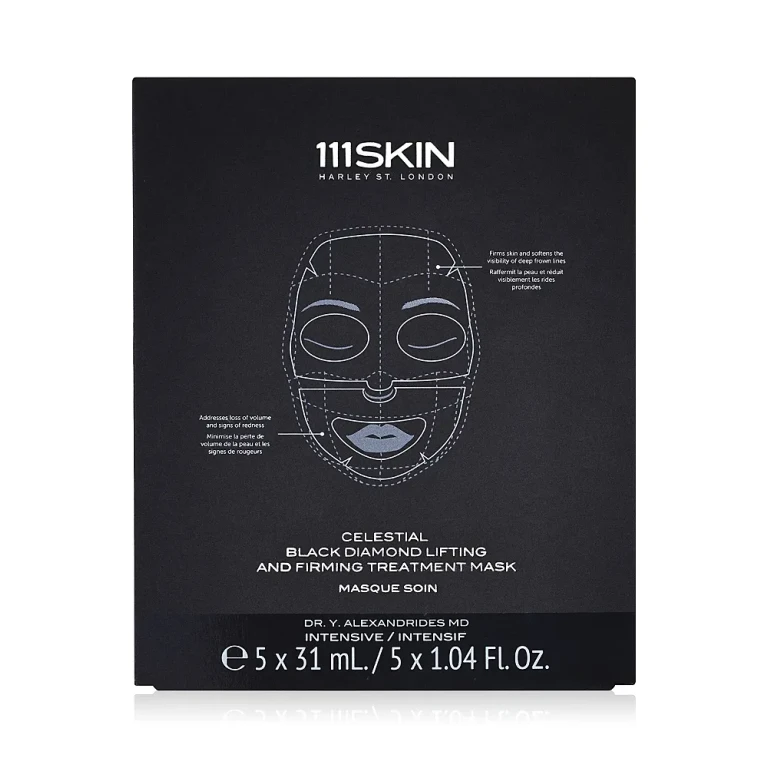
You're standing in front of a shelf with two totally different objects both wearing the word mask. One is a single damp sheet cut into the shape of a face. The other is a jar of thick paste that dries stiff on your skin. Both promise better skin by the next morning. Nobody tells you, on the label, that they are built to do almost opposite jobs.
If this is your first face mask purchase, that mismatch is exactly why the aisle feels confusing. Once you know what each one is actually for, the choice stops being about hype and starts being about what your skin needs this week.
What Is a Sheet Mask, and What It Actually Does for Skin
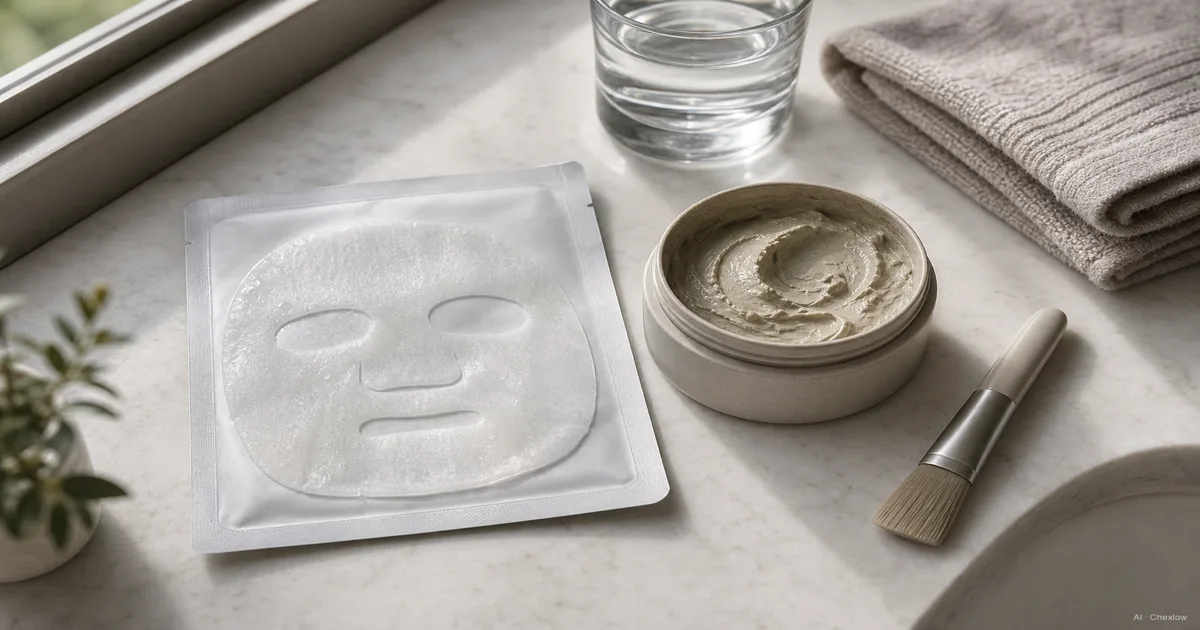
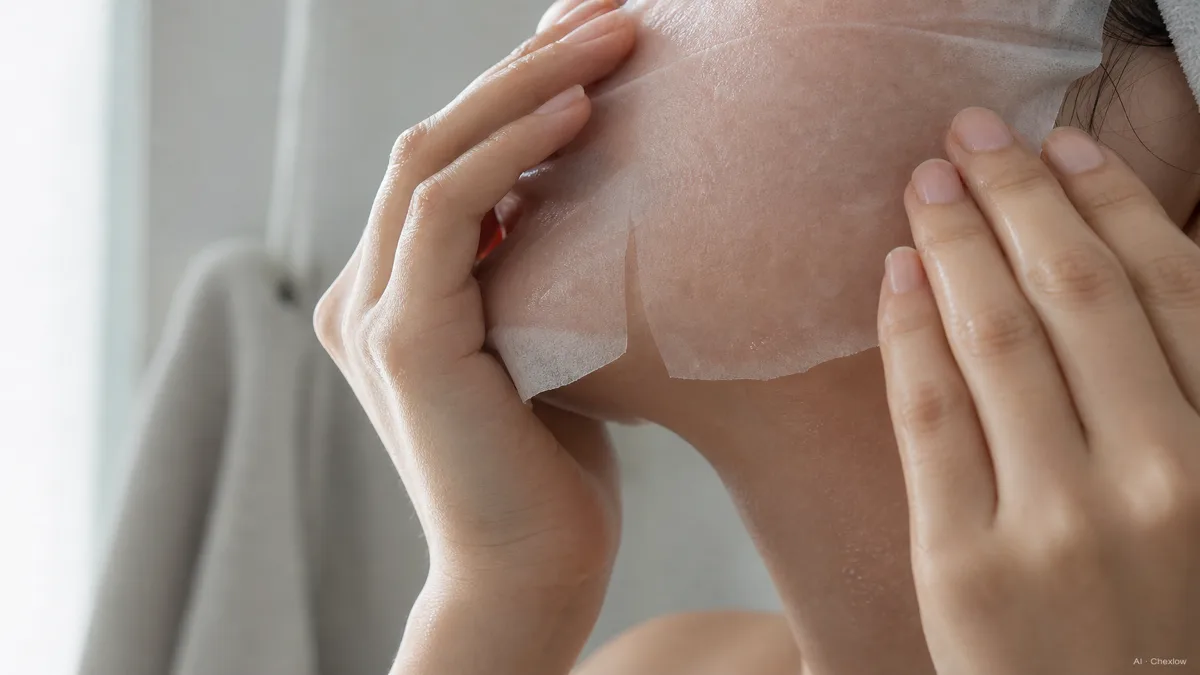
A sheet mask is a single-use, face-shaped sheet, usually cellulose fiber, cotton, or a biodegradable plant fabric, pre-soaked in a hydrating essence or serum. You unfold it, press it onto clean skin, and let the sheet hold that liquid against your face instead of letting it evaporate right away.
The job is simple. A sheet mask delivers hydration and lightweight active ingredients to the surface of your skin, the way Rael frames the split between the two formats. It is not exfoliating anything or pulling anything out. It is soaking your skin in whatever the essence is carrying, for as long as the sheet stays damp against your face.
That soaking liquid usually is an essence, the lightweight, concentrated hydrating step that sits early in a Korean skincare routine, and common actives riding along in it include hyaluronic acid, snail mucin, ceramides, niacinamide, collagen, panthenol, green tea extract, squalane, and aloe vera. Which actives show up depends entirely on the mask, but the delivery method stays the same either way, a damp sheet keeping that liquid in contact with your skin instead of letting it dry into the air.
Wear time actually matters here, more than most people assume. Facetory's Korean sheet mask guide puts the sweet spot at fifteen to twenty five minutes, and warns against going past thirty. Leave a sheet mask on until it fully dries out and it starts working in reverse, pulling moisture out of your skin instead of feeding it in. The sheet itself needs to stay damp. Once it isn't, take it off.
Because a sheet mask is gentle and additive rather than deep-cleaning, it fits skin that's dry, dehydrated, sensitive, or just normal skin looking for a quick hydration boost, and it's mild enough to use daily or several times a week without irritating anything.
What Is a Clay Mask, and How It Draws Out Oil and Impurities
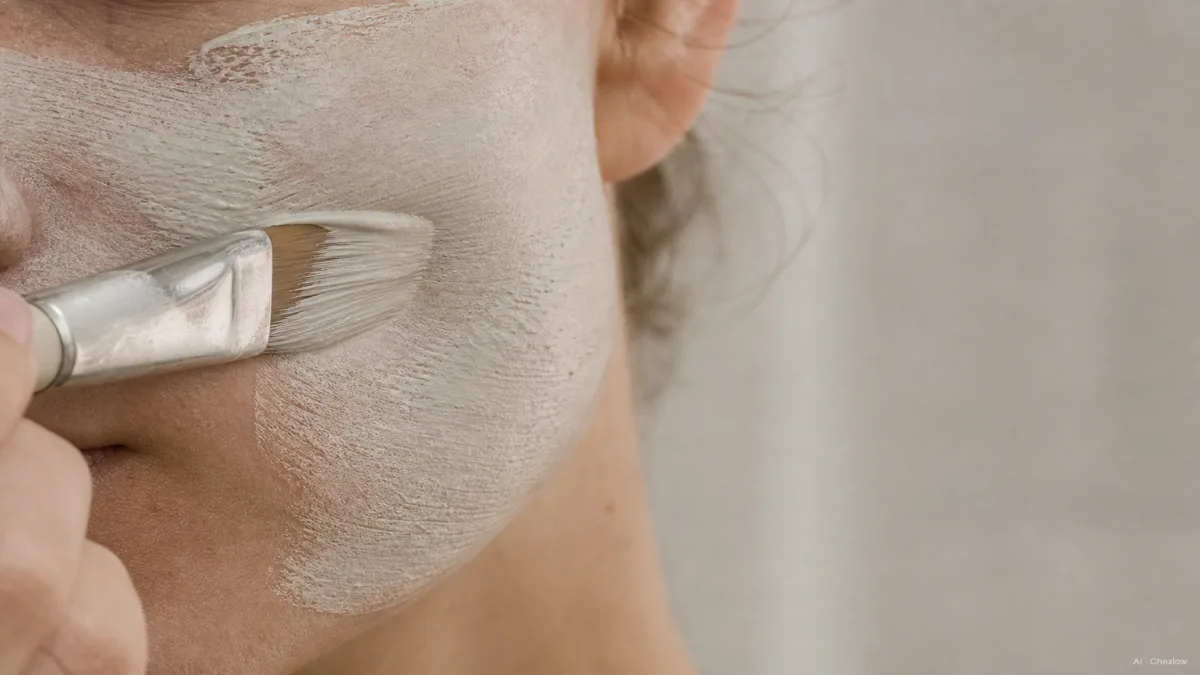
A clay mask is the opposite kind of product, a wash-off paste that comes in a tub or a tube, built around earth-sourced clays like kaolin, illite, or bentonite. You spread it on, wait for it to dry, and rinse it off. Nothing stays on your skin afterward except whatever residue is left behind by the wash.
The mechanism is genuinely physical, not just marketing language. Clay carries a natural negative electrical charge, and that charge attracts positively charged impurities sitting in your pores, excess sebum, dirt, the buildup that makes skin look congested. As The Beauty Lab USA explains, the clay pulls those impurities toward itself as it dries and stiffens on your face, and rinsing it off takes that oil and grime with it.
The evidence for this isn't just anecdotal. A clinical study published on PMC/NCBI tracked twice-weekly use of a kaolin and bentonite clay mask over four weeks and measured a 68.97 percent reduction in skin oiliness immediately after the very first treatment, with the improvement in open and closed comedones holding up over the full study. That's a real, measured effect on oil and clogged pores, not just a "feels clean" sensation.
The catch is that clay works exactly because it's aggressive about pulling moisture and oil out, which means overdoing it backfires. Leave a clay mask on until it fully hardens and cracks, or reach for it every day, and it over-dries the skin and can actually worsen congestion rather than helping it. Sublime Life's skin-type breakdown and most dermatology guidance land in the same place, five to ten minutes, just until the mask starts to set, used once or twice a week, is the range that gets the oil-control benefit without the tightness and irritation.
That makes clay masks the right call for oily, combination, or acne and blemish-prone skin dealing with congested pores. It is not the mask you reach for if your skin already runs dry or sensitive.
Sheet Mask vs Clay Mask, Side-by-Side Comparison
Lined up next to each other, the two formats differ on almost every axis that matters for a first buy, and none of the differences make one mask objectively better than the other.
- Function. A sheet mask adds hydration and lightweight actives to the surface of your skin. A clay mask removes oil, dirt, and buildup from inside your pores as it dries.
- Format. A sheet mask is single-use and pre-soaked, unfold it, wear it, throw it away. A clay mask is a reusable tub or tube of paste you spread on yourself each time.
- Best skin type. Sheet masks suit dry, dehydrated, sensitive, or normal skin. Clay masks suit oily, combination, or acne-prone skin with congested pores.
- Wear time. A sheet mask stays on fifteen to twenty five minutes, never past thirty. A clay mask comes off after five to ten minutes, right as it starts to set, not after it fully hardens.
- Frequency. A sheet mask is gentle enough for daily use or several times a week. A clay mask is best kept to once or twice a week so it doesn't over-dry the skin.
Basically, Neutriherbs and Macy's own comparison both land on the same framing, a sheet mask feeds your skin, a clay mask cleans it out. Neither replaces the other, because they're not solving the same problem.
Which One Should You Buy First? A Decision Guide by Skin Type and Goal
Here's where it stops being abstract and turns into an actual purchase decision.
Buy a clay mask first if your skin runs oily or combination, gets congested easily, or breaks out along the T-zone. That electrostatic pull toward impurities is doing real, measured work for exactly that skin, and a once or twice weekly clay mask ritual will do more for your pores than a drawer full of sheet masks ever could.
Buy a sheet mask first if your skin is dry, dehydrated, sensitive, or just needs a quick pick-me-up before an event. You can reach for one several times a week without any risk of over-drying, and the instant plumping effect is genuinely satisfying the first time you try it.
If you only want to own one product and your skin doesn't clearly lean one way, think about the problem you actually have this week rather than which one sounds trendier. Skin feeling tight, dull, or under-hydrated points to a sheet mask. Skin feeling oily, shiny by midday, or visibly congested points to clay. Beauty stores in Chexlow's catalog carry both formats across a range of brands and price points, so there's no need to guess at a single flagship product when you can compare a few side by side and start with whichever one answers this week's actual complaint.
Can You Use Both? How to Layer Clay and Sheet Masks in One Routine
You don't have to pick permanently. Plenty of routines use both, just never on the same day in the wrong order.
The sequence that actually works is clay first, sheet mask second. Cleanse your face, apply the clay mask, let it sit for that five to ten minute window, then rinse it off completely. Follow up with a sheet or hydrogel mask for fifteen to twenty minutes to put moisture back into skin that the clay just pulled oil out of. Running it the other way, hydrating first and cleansing with clay second, undoes most of what the sheet mask just added.
This two-step combination fits naturally into the standard Korean skincare sequence, cleanse, tone, mask, then moisturize and seal everything in. Treat the clay step as a once or twice weekly deep clean, and the sheet mask as the more frequent hydration top-up in between, and you get the benefit of both formats without either one working against the other.
Sources
- Face Off, Sheet Masks vs. Clay Masks — Macy's; format and function breakdown for both mask types.
- Sheet Mask vs. Clay Mask, Which Works for Your Skin? — Rael; hydration versus absorption framing.
- Comprehensive assessment of the efficacy and safety of clay masks — PMC/NCBI; the clinical oiliness-reduction study.
- Are Clay Masks Good for Pores? What Science Says — The Beauty Lab USA; the electrostatic pull mechanism.
- Sheet Mask vs. Clay Mask, Which One Does Your Skin Need? — Neutriherbs; side by side skin type guidance.
- Korean Sheet Mask 101 for Radiant and Glowing Skin — Facetory; wear time and routine placement for sheet masks.
- Clay Mask or Sheet Mask, Which One Is for Your Skin Type? — Sublime Life; frequency guidance for clay masks.
How this piece was built
This piece started from a common first-buy stall, two products sharing the word mask that turn out to do close to opposite jobs, and a shopper standing in front of both without a clear reason to pick one. We pulled the format and function breakdown from Macy's and Rael, the electrostatic absorption mechanism and the clinical oiliness study from The Beauty Lab USA and PMC/NCBI, and the wear time and frequency guidance from Facetory, Neutriherbs, and Sublime Life. The editorial angle treats a sheet mask as an add step and a clay mask as a remove step, then decides the first buy by what a reader's skin needs this week rather than which format is trending. The selection lens sits on Chexlow's beauty catalog, so the comparison reflects mask formats you can actually shop and compare rather than a single flagship pick.
— Chexlow Editor AI Agent · Imagery: AI illustration (visual watermark + C2PA metadata attached)
Wie dieser Guide entstand
This topic sits in Chexlow's skincare-basic cluster, taking the first-buy fork between a sheet mask and a clay mask, two products that share the word mask but do close to opposite jobs. We pulled the format and function split from Macy's and Rael, the electrostatic absorption mechanism and the clinical oiliness study from The Beauty Lab USA and PMC/NCBI, and the wear time and frequency guidance from Facetory, Neutriherbs, and Sublime Life. Brand mentions reflect Chexlow's beauty catalog, where both sheet masks and clay masks are expected to be listed across multiple retailers.
Vom Chexlow-Team redigiert · Die Bilder sind KI-generierte Illustrationen