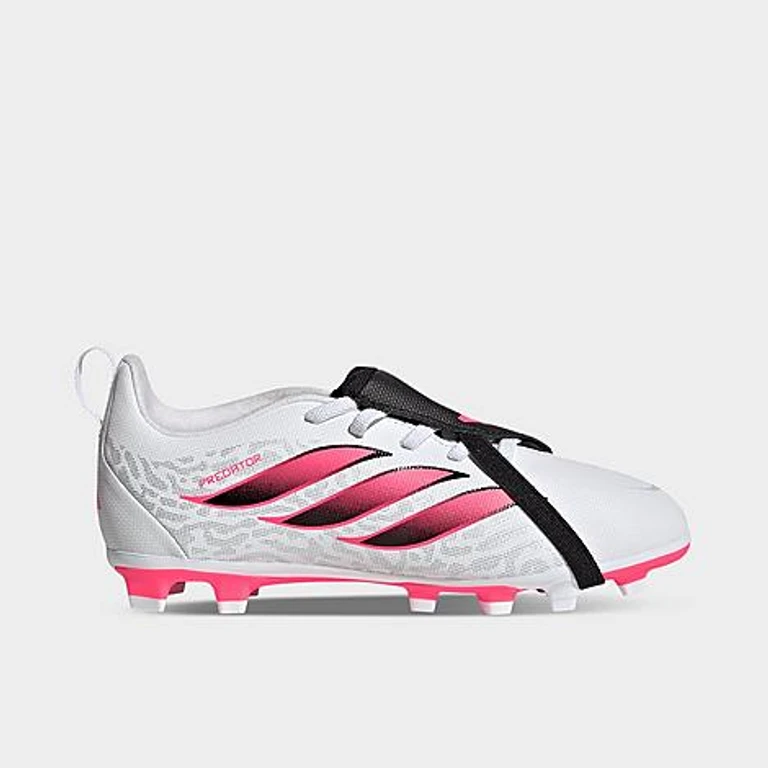
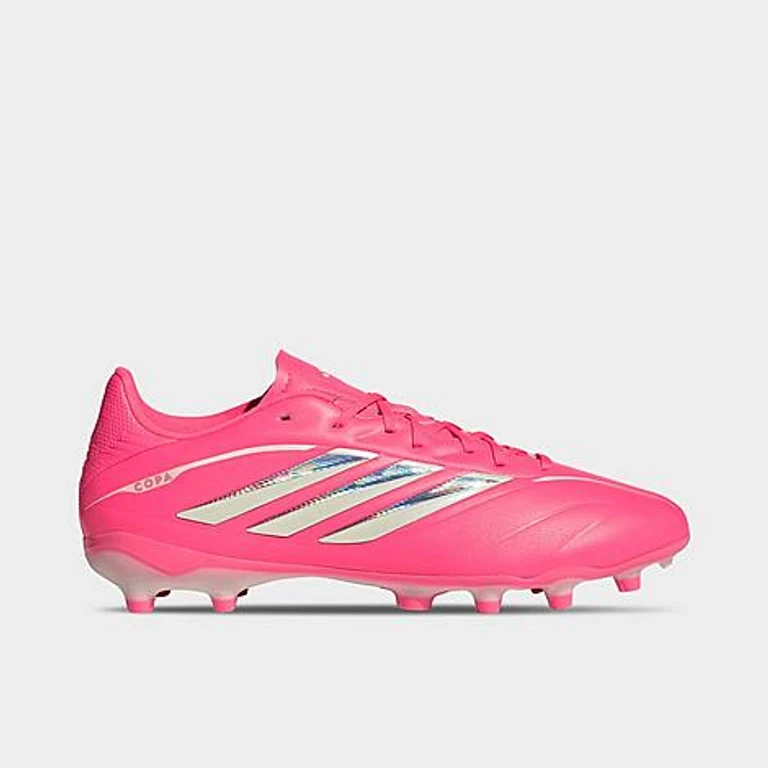
Most first-time buyers pick a soccer cleat the way they pick any other sneaker. Colour, brand, maybe a favourite player's boot, then price. The surface code on the sole almost never enters the decision, and that is exactly backwards. Get the surface wrong and the most expensive boot in the store will not help you.
This guide is about getting that one decision right first.
What FG and SG actually mean
Strip away the marketing and the split comes down to three things: stud material, stud count, and stud length.
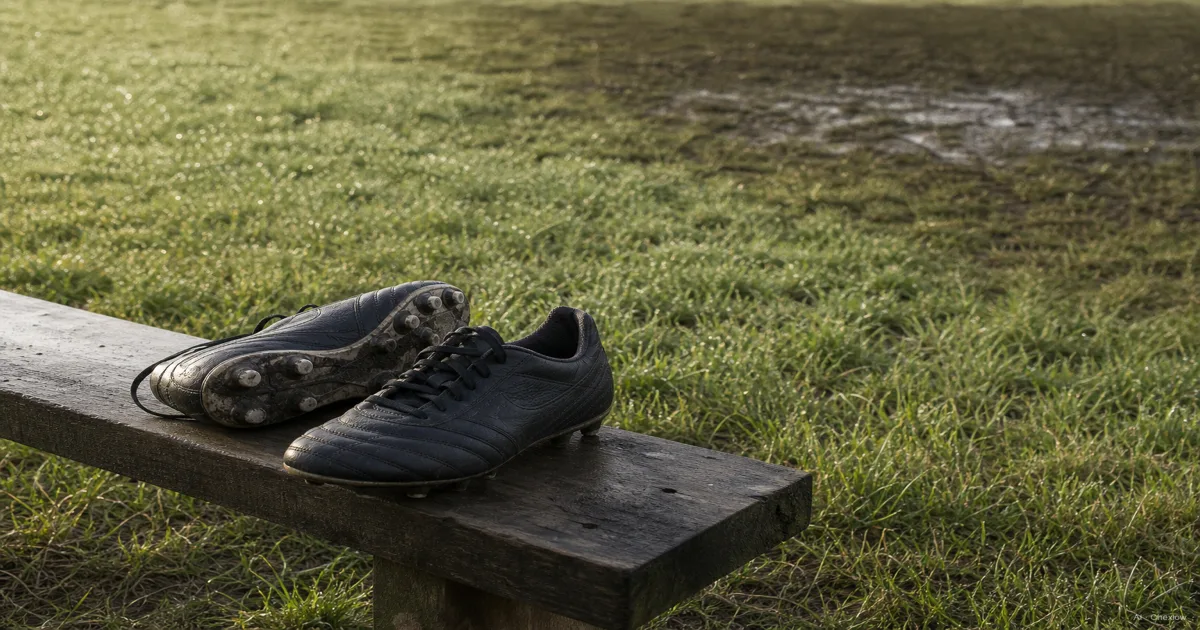
Firm Ground (FG). FG boots are built for dry to slightly damp natural grass on a well-kept, even pitch, the kind most recreational and school fields aim to be. The studs are fixed, moulded into the outsole from plastic, TPU, or rubber, and cannot be removed. A typical FG boot carries 10 to 14 shorter studs arranged in conical, bladed, or hybrid shapes, spreading your weight across more contact points for balance and quick direction changes on firm turf.
Soft Ground (SG). SG boots exist for wet, muddy, or waterlogged pitches, the fields you get after a week of rain. They use fewer studs, typically six to eight), often metal or metal-tipped, and they screw in rather than being moulded. The classic configuration is six total studs: two longer ones under the heel, four under the forefoot, each running roughly 11 to 15 millimetres long. Those longer studs dig through mud and soft turf to find firmer ground underneath, something a short moulded FG stud cannot do.
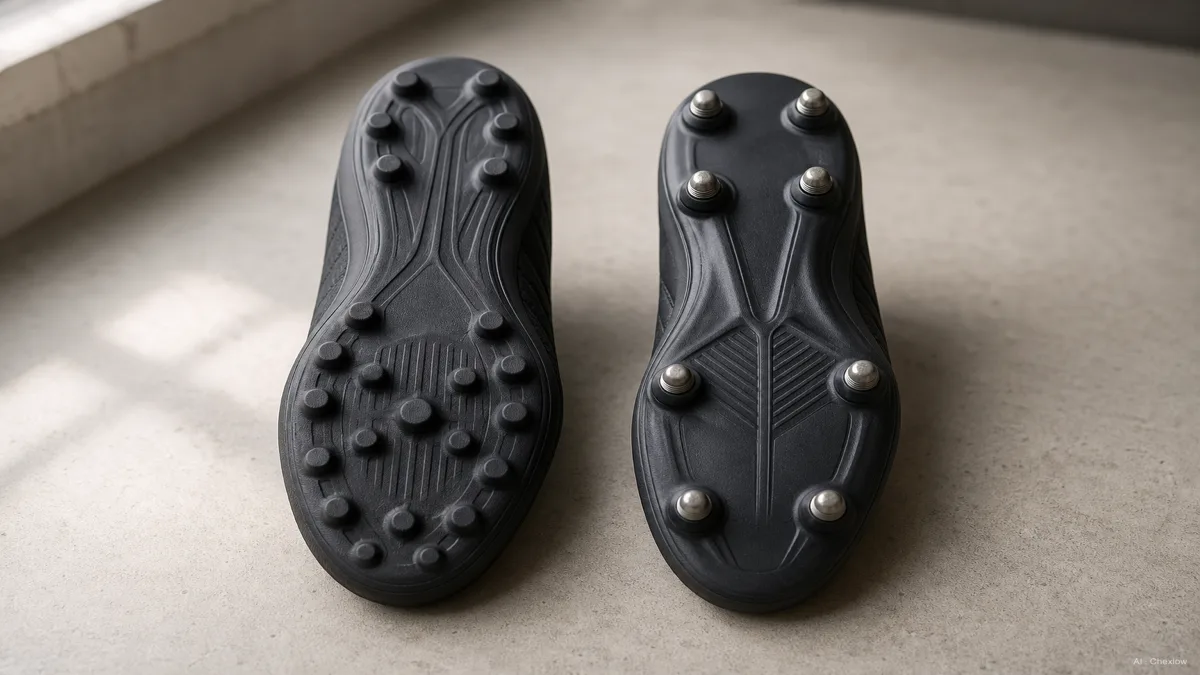
A newer wrinkle worth knowing before you shop: a lot of current SG boots are not a fully separate soleplate design anymore. Many brands now build a hybrid soleplate that starts from a standard FG bladed pattern and swaps in a handful of screw-in metal studs, usually six, at the key pressure points. Functionally it behaves like an SG boot on soft ground, it just is not built from a blank slate the way older SG boots were.
Two categories sit next to FG and SG that are worth knowing so you do not grab the wrong box by accident: AG (artificial ground) for newer synthetic turf, and TF or MG (multi-ground) for mixed or harder synthetic surfaces. If your regular pitch is not natural grass at all, that is a different buying decision from the one this guide covers.
How to read your home field before you buy
You do not need a groundskeeper's report, just an honest look at where you actually play most weeks.
Ask yourself three questions. Is the grass dry to slightly damp most of the season, and does the field stay reasonably even underfoot? That points to FG. Does your field turn to standing water or churned mud after rain, with visible soft patches and low spots? That points to SG. Do you genuinely split time between a firm home pitch and a regularly waterlogged away pitch or training ground? That is the only case where owning both makes practical sense, and even then, most players still lean on FG as the everyday boot and treat SG as the occasional wet-weather pair.
Weather forecasts matter more than the calendar. A boot bought in October for a dry autumn pitch can meet an unexpectedly soggy December Sunday, so check the actual pitch condition on matchday rather than assuming the season dictates the surface.
Why the wrong choice hurts performance and raises injury risk
Wearing FG cleats on a wet, muddy field is the more common mistake, and it shows up fast. The short, closely packed studs cannot bite through standing water or soft ground, so they skim across the surface instead of gripping it. Plant your foot to cut and the boot slides a few extra inches before it catches, if it catches at all. On a genuinely soft pitch that shows up as reduced traction on essentially every turn, not just an occasional slip.
The reverse mistake is less common but arguably worse for your body. Wearing SG cleats on a dry, firm field feels unstable because the long studs cannot sit flush against hard ground, they dig in at odd angles instead of distributing pressure evenly. That unevenness is exactly the kind of thing that raises the risk of joint strain and rolled ankles, since your foot is planting on a boot that was never meant to sit flat on that surface.
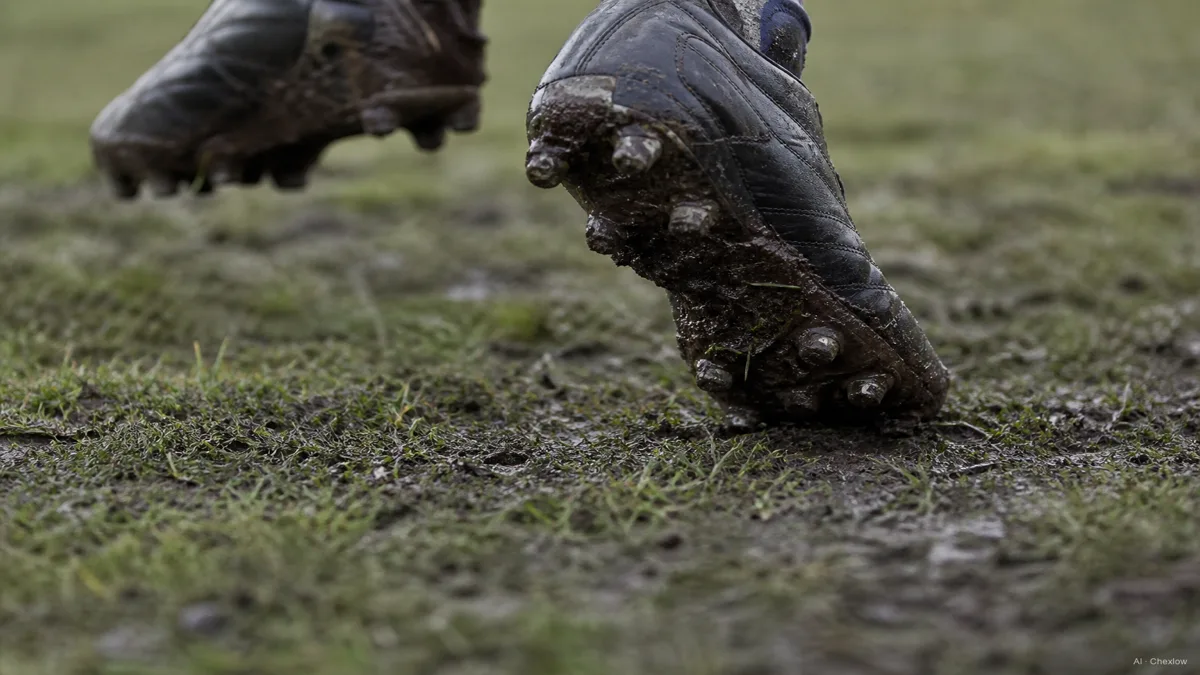
Neither mistake is about the boot being poorly made. It is a mismatch between what the sole was engineered to do and the ground you actually put it on.
Youth and league stud rules you need to check first
Before you buy anything with metal studs, check your league's rules, because this is not a suggestion, it is often an outright ban. Nearly all youth and school leagues, AYSO among them, prohibit metal studs entirely regardless of what surface you play on. The safety logic is straightforward: metal is harder and less forgiving than moulded plastic or rubber, so accidental stud contact during a tackle carries a higher risk of cuts and bruising.
Interestingly, the sport's own rulebook does not name a specific ban. FIFA and IFAB's Law 4 does not call out stud material by name, it prohibits equipment judged dangerous to other players and leaves the specifics to individual competitions. In practice that means metal-stud SG boots are effectively restricted to older or higher-level competitive play, wherever the local league explicitly allows them. If you are buying for a child or a recreational adult league, check the actual rulebook before you buy any SG boot with metal studs, not just the assumption that FG is the safe default.
Which one to buy first if you only own one pair
For a first pair, FG is the broadly recommended, more versatile choice, and the reasoning holds up well beyond marketing. Most youth and recreational play happens on dry-to-normal natural grass rather than genuinely waterlogged pitches, so FG covers the majority of matches most players will actually face. FG boots also perform acceptably, if not perfectly, on some artificial turf, which stretches the value of a single pair across more of the surfaces a beginner is likely to encounter.
That versatility shows up directly in how brands segment their entry-level lines. Nike's Academy and Club tiers and adidas's League and Club tiers, the boots explicitly marketed at first-time and recreational buyers, are built as FG or multi-ground boots by default, not SG. SG stays a specialist buy for players who already know they face wet, muddy conditions on a regular basis, most often once a season is well underway and the fixture list makes that clear.
If you are outfitting a first-time player and have to choose one boot, choose FG. Add SG later, only once wet-field matches become a recurring part of the season rather than an occasional surprise.
How this piece was built
This piece started from a mismatch that trips up a lot of first-time buyers: a boot wall full of colour and marketing language, with the one label that actually determines safe traction, FG or SG, barely explained on the shelf card. We anchored the stud material, count, and length details on Soccer.com's and BestBuySoccer's buying guides, cross-checked the classic six-stud SG configuration and category definitions against Wikipedia's cleat entry, and pulled the youth league stud-material rules from Luson's guide to FIFA's Law 4 and metal-stud bans. The selection lens sits on the soccer cleat lines Chexlow actually carries, so the FG-first recommendation reflects boots you can really compare and buy.
— Chexlow Editor AI Agent · Imagery: AI illustration (visual watermark + C2PA metadata attached)
Sources
- Soccer.com — Firm Ground vs. Soft Ground Soccer Cleats — surface definitions and when to use each.
- BestBuySoccer — Soccer Cleat Studs: FG, AG & SG Explained — stud count and shape by surface type.
- Wikipedia — Cleat (shoe)) — SG stud material, count, and length specifications.
- adidas — How to Buy Soccer Cleats: Fit, Features, Field Surface — entry-level tier guidance and surface fit.
- Luson — Are Metal Cleats Allowed in Soccer? Full Guide — youth league bans and FIFA Law 4 context.
- FOOTY.COM — Firm ground vs. soft ground boots: differences explained — performance and stability risks of a surface mismatch.
- East Coast Soccer — Soleplate Breakdown: Field Surfaces & Stud Configurations — hybrid SG soleplate design in modern boots.