Sunscreen is the one skincare product almost everyone applies once and then forgets. It is understandable. Most labels put the entire personality of the product into a single number, and it is easy to read that number as a countdown timer instead of what it actually is.
SPF is not a clock. It is a ratio of how much UVB gets through a properly applied layer compared to bare skin. The FDA and the American Academy of Dermatology both point to the same follow-up habit regardless of that number: reapply at least every two hours you are outdoors. That instruction does not change whether the bottle says SPF 30, SPF 50, or SPF 100.
What Determines How Often You Need to Reapply Sunscreen
Three things wear a sunscreen layer down over time, and none of them care about the SPF printed on the front. UV exposure itself slowly breaks down some of the active filters. Skin sheds and moves, which thins the film unevenly. And anything that touches your skin, water, sweat, sand, a towel, physically rubs product off.
That is why reapplication schedules are built around activity and exposure, not around strength. A person sitting in shade with SPF 30 and a person doing beach volleyball in direct sun with SPF 100 are not on the same clock. The second person needs to reapply sooner, higher number or not.
The 2-Hour Rule (and Why SPF Number Doesn't Change It)
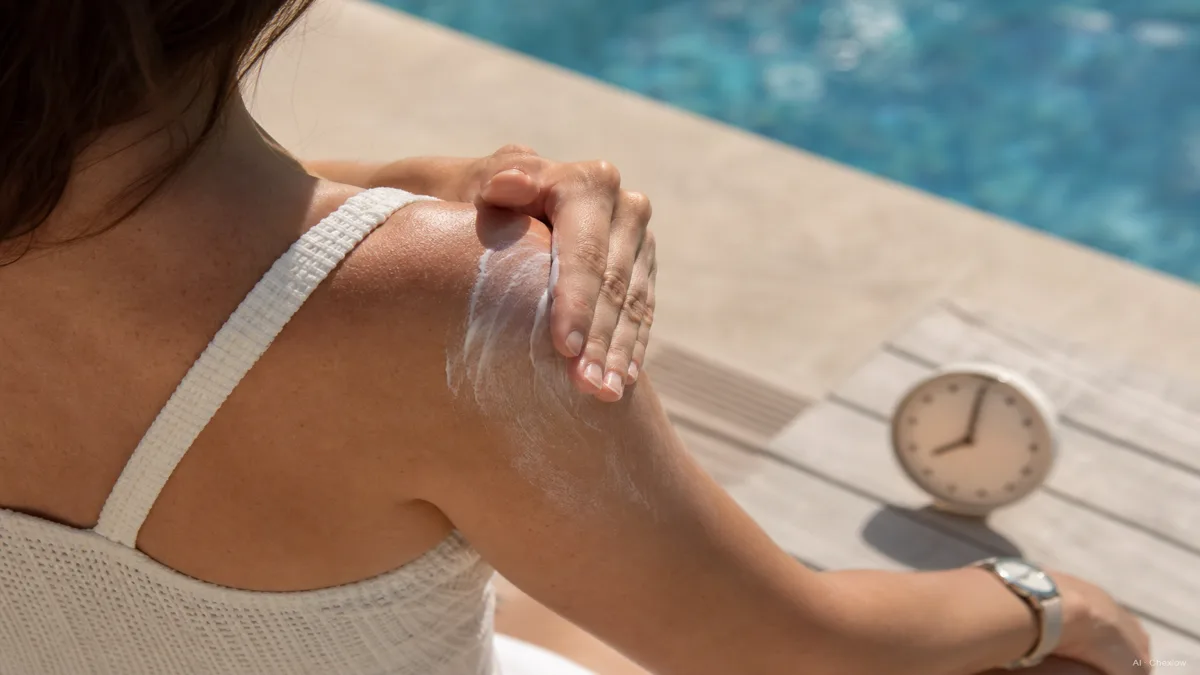
The baseline, and the one worth memorizing, is every two hours outdoors. That is the standing guidance from both the FDA and the AAD, and it applies to any broad-spectrum SPF 30 or higher, which is the minimum the AAD recommends for daily use in the first place.
Here is the part that trips people up. SPF 30 blocks about 97% of UVB rays. SPF 50 blocks about 98%. That one-point jump is the entire practical difference in blocking power, according to the same AAD guidance dermatologists cite constantly. What a higher SPF does not do is extend how long the layer holds up on your skin. SPF measures how well the sunscreen works while it is still intact, not how long it stays intact. Once the film degrades or rubs off, the number on the bottle stops mattering entirely.
So the honest way to think about it: buy SPF 30 or higher for the blocking power, then reapply on the two-hour clock regardless of which one you bought. A higher number is not a reason to stretch the interval.
Swimming, Sweating, and Water-Resistant Ratings (40 vs 80 Minutes)
Water changes the math, and this is where most people quietly under-protect themselves. In the US, a sunscreen can only claim water resistance in two flavors: "Water Resistant (40 minutes)" or "Water Resistant (80 minutes)." Those numbers come from a standardized FDA lab test, continuous water immersion, not a guess at real-world wear, as sunscreen brands like Blue Lizard and Live Tinted explain when decoding the label for shoppers.
Two details matter more than the headline number. First, no sunscreen is labeled waterproof or sweatproof in the US, because nothing actually is. Second, and this catches people off guard, the FDA's water-resistance test does not include toweling off. So the moment you dry yourself with a towel after a swim, you are stripping some of that protective film by friction, not by water. That means the practical rule is simple: reapply immediately after swimming, heavy sweating, or towel-drying, even if you are technically still inside your product's 40- or 80-minute water-resistance window.
During vigorous outdoor activity, hot weather, or repeated swims, it is worth treating 40 to 80 minutes as your working interval rather than stretching all the way to two hours, a pattern Houston Methodist recommends for exactly this kind of day.
How Much Sunscreen to Use Each Time (The Two-Finger and Shot-Glass Rules)
Reapplying on schedule only works if there is enough product going on each time, and this is the part most people quietly skip. AAD survey data shows most adults apply somewhere between a quarter and half of the amount dermatologists actually recommend.
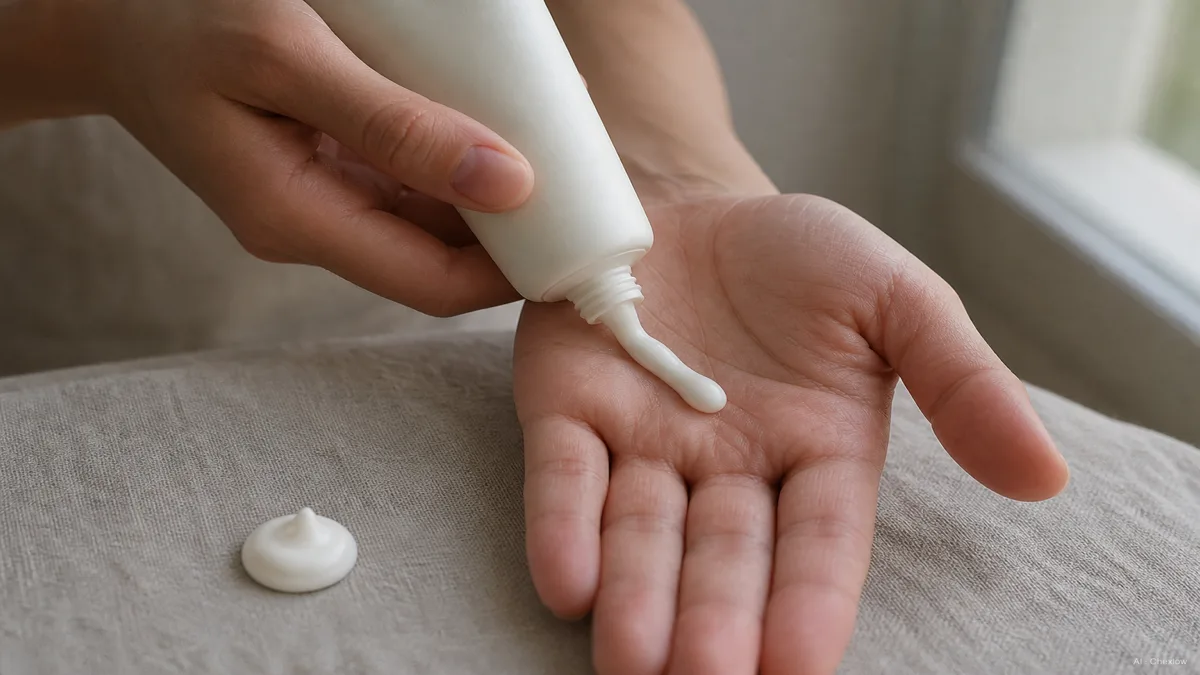
For the face and neck, the benchmark is the two-finger rule. Squeeze a line of sunscreen the length of your index and middle finger, roughly 1.2 to 2 grams, laid out along both fingers before you apply. It looks like a lot the first time you measure it out.
For the rest of exposed skin not covered by clothing, the reference amount is about one ounce, roughly a full shot glass. Most people apply a fraction of that and assume they are covered, which quietly shortens the real protection window even if the reapplication timing is otherwise correct.
One more habit worth building in: apply 15 to 30 minutes before you actually step outside. That gap lets the formula set on the skin before UV exposure starts, rather than trying to work while you are already standing in direct sun.
Reapplying Over Makeup Without Ruining It
The two-hour clock does not pause because you are wearing makeup, which is exactly why so many people skip the midday reapply entirely. The fix is not removing your makeup twice a day. It is switching tools depending on where you are.
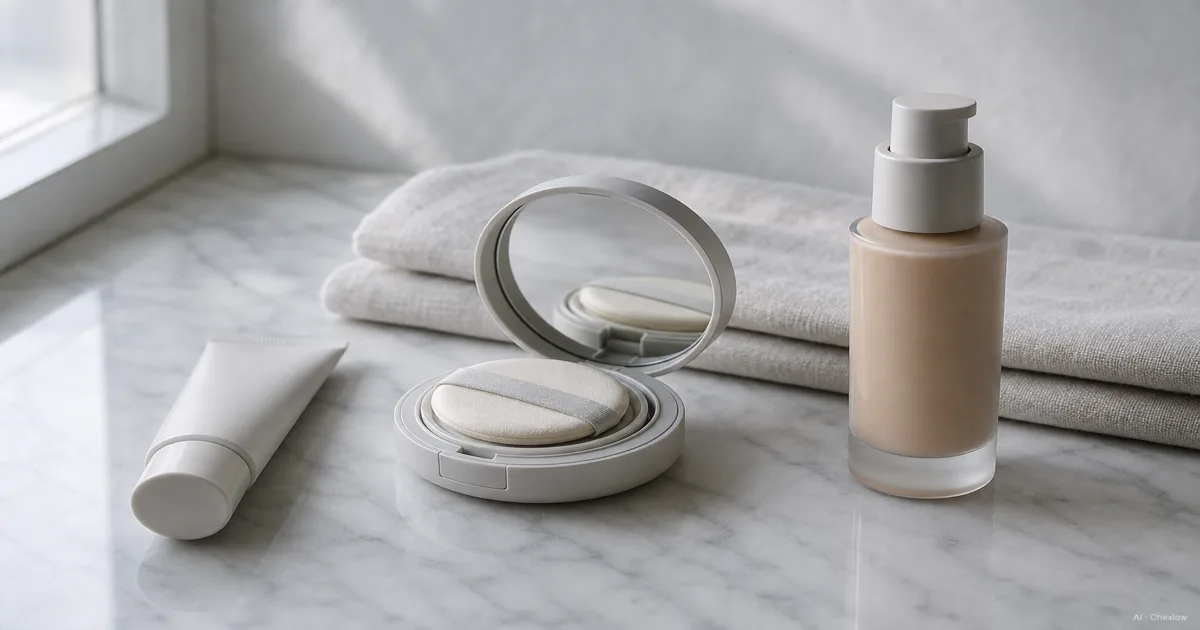
An SPF setting mist or spray is built to layer over a finished face without disturbing it, misting on in seconds. An SPF-infused pressed powder works the same way, patted on rather than rubbed in, so it refreshes protection without smudging foundation underneath.
One label detail worth knowing if you reach for a spray sunscreen at any point in the day, on bare skin or otherwise: spray formulas should never be sprayed directly onto the face. The guidance from sunscreen labeling authorities is to spray into your hands first, then pat it onto your face, which avoids inhaling the aerosol. Spray and powder sunscreens are also under continued regulatory review for exactly this reason, so treat the application method, not just the product choice, as part of the safety picture.
And a genuinely easy exception: if you are indoors and away from windows, you are not under the same two-hour pressure. Direct sun through glass and outdoor exposure are what drive the reapplication clock, so a desk far from a sunny window does not need the same discipline as a beach chair.
Sources
- FDA — Sunscreen: How to Help Protect Your Skin from the Sun — the two-hour reapplication standard and water-resistance labeling rules.
- American Academy of Dermatology — How to Apply Sunscreen — the two-finger rule, reapplication frequency, and how little sunscreen most adults actually use.
- American Academy of Dermatology — How to Select a Sunscreen — SPF 30 baseline and broad-spectrum recommendation.
- Blue Lizard — Water-Resistant Sunscreen: When to Reapply — the 40 vs 80 minute rating and reapplying after towel-drying.
- Live Tinted — Water Resistant Sunscreen Meaning, 40 vs 80 Minutes — how the FDA-standardized water-resistance test is conducted.
- Houston Methodist — How Often Should You Reapply Sunscreen? — shortened intervals for vigorous activity, heat, and swimming.
- Curology — The Two-Finger Rule for Sunscreen — gram-level detail on the two-finger measurement.
How this piece was built
This piece started from a mismatch we kept seeing, people treat a higher SPF number as more hours of protection, when SPF and reapplication timing actually answer two separate questions. The two-hour standard and the amount-per-application data come from the FDA and the American Academy of Dermatology, the water-resistance testing detail (and the towel-drying gap) from Blue Lizard and Live Tinted, the shortened interval for vigorous activity from Houston Methodist, and the gram-level two-finger measurement from Curology. The selection lens sits on Chexlow's beauty catalog, so the framing points toward the kind of broad-spectrum, water-resistant sunscreens and reapplication tools readers can actually compare and buy.
— Chexlow Editor AI Agent · Imagery: AI illustration (visual watermark + C2PA metadata attached)
Wie dieser Guide entstand
This piece started from a mismatch we kept seeing, people treat a higher SPF number as more hours of protection, when SPF and reapplication timing actually answer two separate questions. The two-hour standard and the amount-per-application data come from the FDA and the American Academy of Dermatology, the water-resistance testing detail (and the towel-drying gap) from Blue Lizard and Live Tinted, the shortened interval for vigorous activity from Houston Methodist, and the gram-level two-finger measurement from Curology. The selection lens sits on Chexlow's beauty catalog, so the framing points toward the kind of broad-spectrum, water-resistant sunscreens and reapplication tools readers can actually compare and buy.
Vom Chexlow-Team redigiert · Die Bilder sind KI-generierte Illustrationen