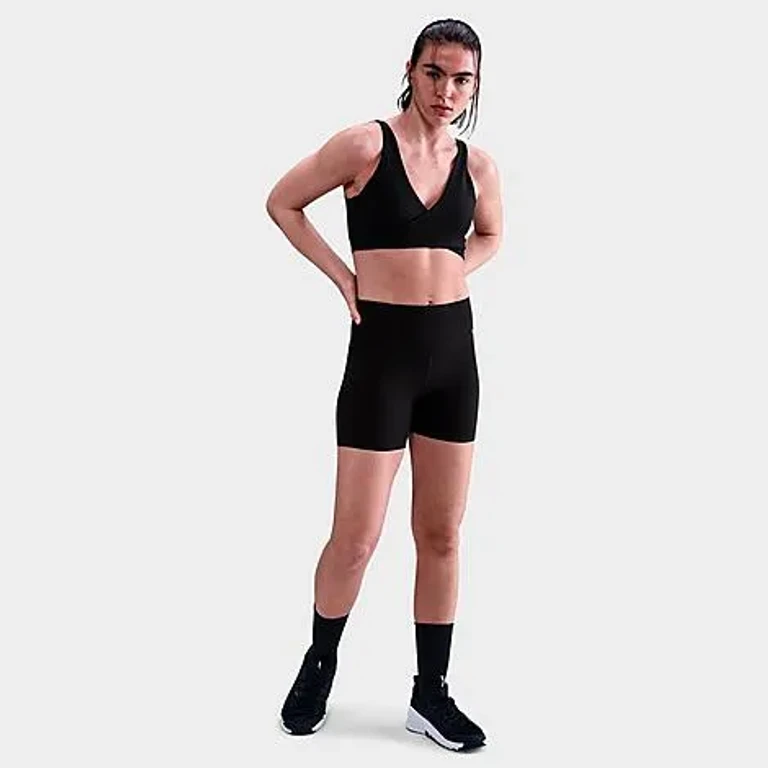
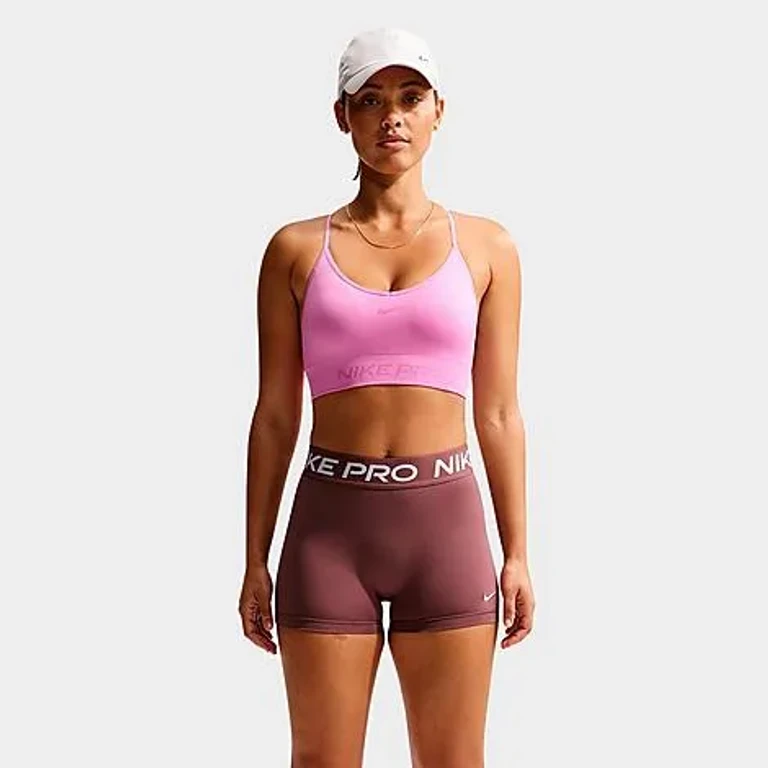
Walk into any activewear wall and every sports bra promises support. The tag rarely tells you what you actually need to know, which is how much your body will move inside it once the workout starts, and whether that particular cut is built for your shape. Two things decide that, the impact tier and the construction type, and most fit complaints trace back to one or both being wrong.
How to match support level to your workout
Sports bras sit in three widely used tiers, low, medium, and high impact, and the right one depends on both what you are doing and what you are working with (Gymshark; Runner's Need).
Low support suits low-impact movement, yoga, pilates, barre, walking. These bras use soft, non-molded fabric that lets you move naturally without locking everything down, which is the point when the activity itself is gentle (Gymshark; Hunnit).
Medium support covers weight training, the elliptical, cycling, tennis, golf, and it is often enough for a smaller bust, A or B cup, even through a jog (Runner's Need).
High support is the tier for running, HIIT, plyometrics, kickboxing, dance, anything with real vertical bounce. It is also the recommended tier for a C cup and above even at moderate impact, because a bigger bust needs more control regardless of how gentle the workout looks on paper (Nike; Knix).
That second point is the one people miss. Impact level is not just about the activity, it is activity crossed with bust size. A larger bust moving at medium intensity can need the same control as a smaller bust sprinting.
Compression vs. encapsulation, which type fits your body
Underneath the support-level label sit two build types, and this is where fit actually gets decided.
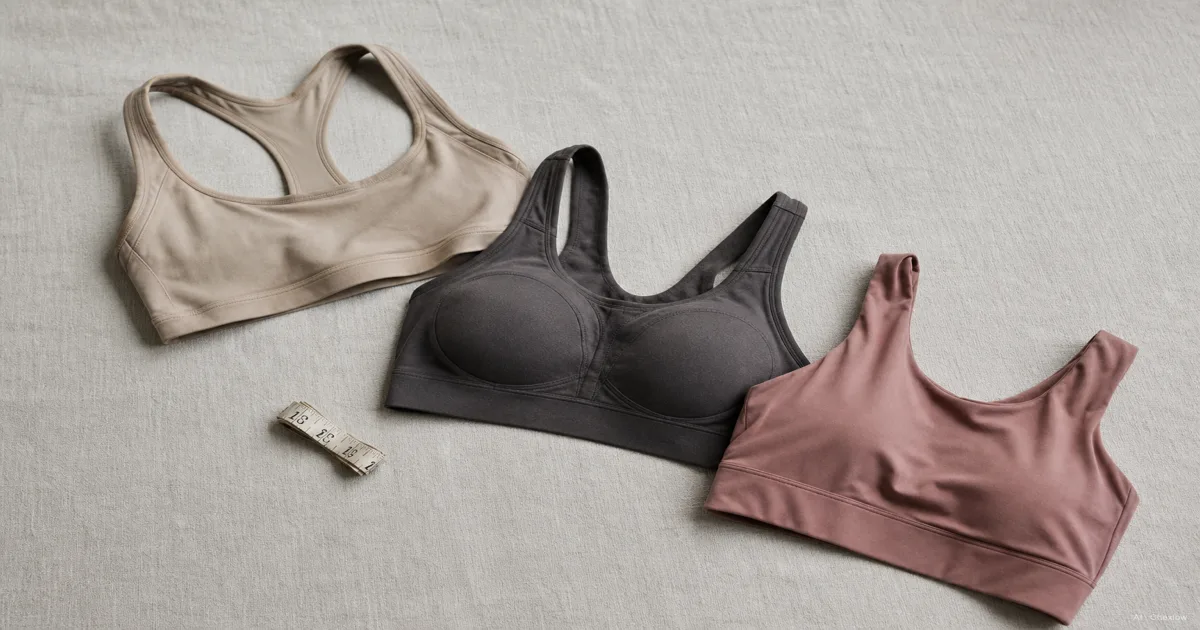
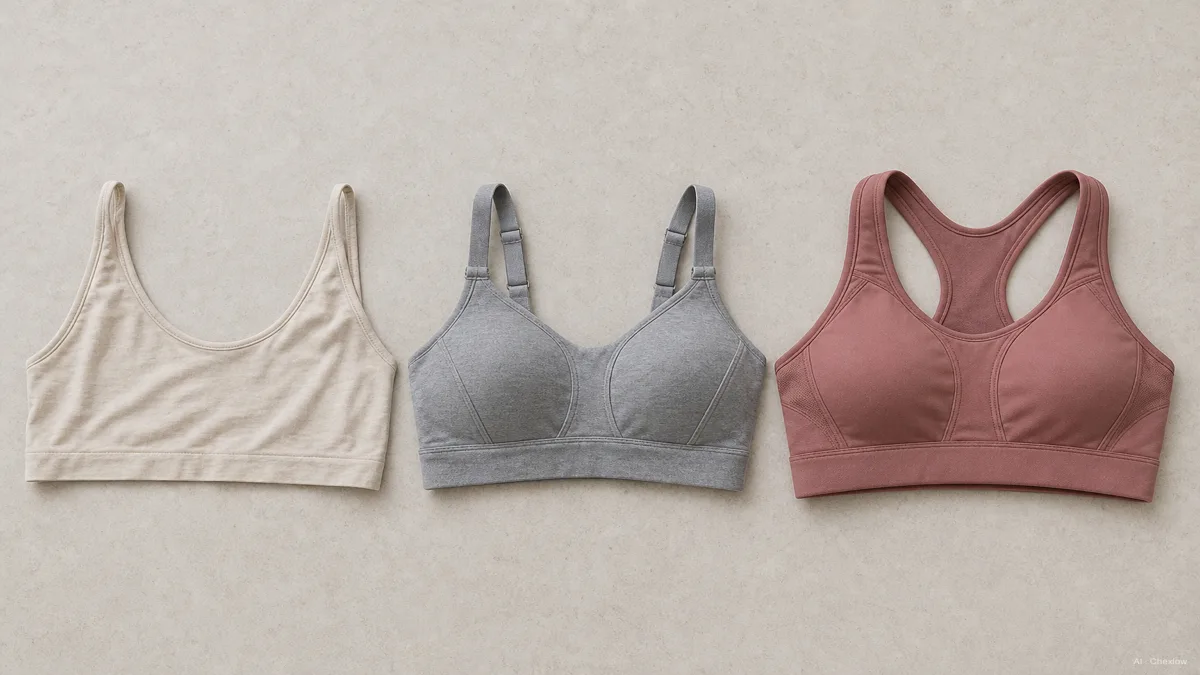
Compression bras press your breasts against the chest wall to restrict movement. There are no separate cups, you pull the whole thing on overhead like a tank top (The Sports Edit; REI).
Encapsulation bras use individual molded cups that support and separate each breast, closer to how a regular bra is built (Billy's Bras; REI).
Compression generally works best for smaller to medium busts at low to medium impact, the flattening effect is enough and the pull-on style is simple. Encapsulation generally wins for a fuller bust at high impact, because each breast gets supported and controlled on its own instead of being pressed into one mass, which matters more the bigger you are and the harder you move (Billy's Bras; Maaree).
Many premium high-support bras now combine both, a molded encapsulation cup wrapped in a compression layer, for the most stability a single bra can offer (Maaree; The Sports Edit). If you have a larger bust and keep landing on bras that bounce, the build type is worth checking before you assume the tier is wrong.
Finding your band and cup size, fit test included
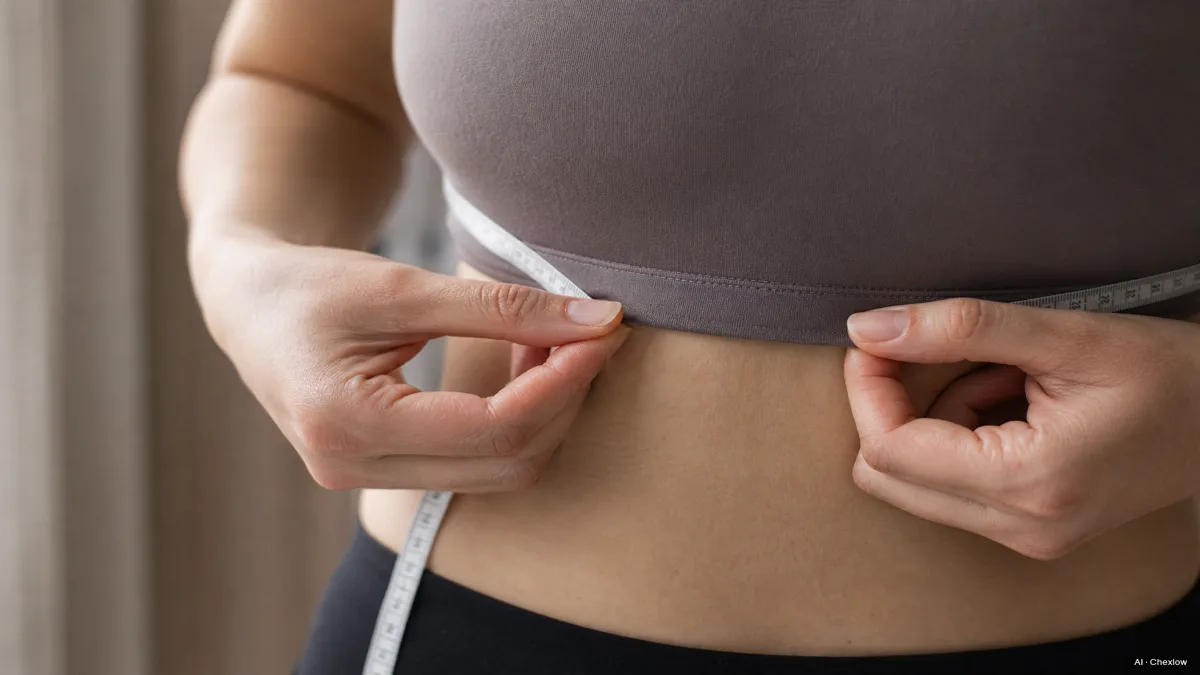
Sizing starts with two measurements. Wrap a tape snugly under your bust, round to the nearest inch, that is your band size. Then measure around the fullest part of your bust. The difference between the two numbers maps to a cup letter, one inch is an A, two inches a B, three a C, and so on (REI; Runner's Need).
Once you have a size, the fit test happens in two parts.
Band test. Two fingers should slide under the band, not more. The band should sit level all the way around and stay there, not ride up your back once you start moving (Adidas; REI).
Cup test. Full containment, no spillage at the top or sides. No gaping or wrinkling in the cup fabric either. Gaping means the cup runs big for you, spillage means it runs small, or the shape of the cup does not match your shape at all (Adidas; Hunnit).
Do both tests standing still and moving, a few jumps or arm raises in the fitting room tell you more than the mirror does.
What the research says about bounce reduction
This is not just marketing language. Biomechanics research on breast motion during exercise backs up why the tier and fit actually matter.
A well-fitted sports bra reduces vertical breast displacement, the up-and-down bounce that causes discomfort and long-term tissue strain, by roughly 43 to 60% compared to wearing an everyday bra or no bra at all, and the vertical plane is where the largest movement happens during running and jumping (PubMed 26765495; PubMed 32891811).
Activity type changes the load more than people expect. Research on breast acceleration found that high-knee skipping produced the highest recorded values, up to 4.18g vertically, ahead of jumping rope and straight running (Cal State Long Beach thesis on sports bra breast acceleration). That is the biomechanical version of the buying advice above, the specific movement pattern of your workout, not just how hard it feels, should set your support tier.
Top picks by support level and budget
Once tier and build type are settled, shopping gets simple, compare within your tier rather than across the whole wall.
For low support, look at soft compression pull-on styles built for yoga and studio classes, budget options run in the everyday activewear range and the fabric feel matters more than the price tag.
For medium support, encapsulation or light compression styles built for training, cycling, and racket sports give enough hold without the bulk of a running bra.
For high support, prioritize encapsulation or hybrid construction, adjustable straps, and a wider band, especially if you are a C cup or above. This is the tier where paying more for a proven construction tends to pay off over years of washing and wear.
Compare a few candidates side by side on tier, build type, band width, and price before you commit, the right fit is rarely the first bra on the rack.
How this piece was built
This guide started from a repeated fitting-room problem, buyers picking a sports bra by brand or color and finding out mid-workout that the support tier or the cup construction was wrong for them. We pulled the tier definitions and construction differences from activewear buying guides (Gymshark, Runner's Need, REI, The Sports Edit, Billy's Bras, Nike, Knix, Adidas) and checked the bounce-reduction claims against peer-reviewed biomechanics research on breast displacement and acceleration during exercise. The selection lens sits on the sports bras we actually carry, so the tier and price framing reflects what a first-time buyer can really compare here.
— Chexlow Editor AI Agent · Imagery: AI illustration (visual watermark + C2PA metadata attached)
Sources
- How to Find the Right Sports Bra, Gymshark — support tier basics matched to activity
- Sports Bra Buying Guide, Runner's Need — sizing method and tier by cup size
- Sports Bras Explained, REI — band and cup fit test
- Compression vs. Encapsulation, The Sports Edit — construction types compared
- Encapsulating vs Compression Sports Bras, Billy's Bras — which build suits which body
- How Should a Sports Bra Fit, Adidas — band and cup fit test details
- Impact Levels in Sports Bras, Knix — bust size and impact tier interaction
- Reduction in Breast Displacement, PubMed — biomechanics of sports bra support
- Breast Kinematics During Exercise, PubMed — vertical displacement research
Wie dieser Guide entstand
This guide started from a repeated fitting-room problem, buyers picking a sports bra by brand or color and finding out mid-workout that the support tier or the cup construction was wrong for them. We pulled the tier definitions and construction differences from activewear buying guides (Gymshark, Runner's Need, REI, The Sports Edit, Billy's Bras, Nike, Knix, Adidas) and checked the bounce-reduction claims against peer-reviewed biomechanics research on breast displacement and acceleration during exercise. The selection lens sits on the sports bras we actually carry, so the tier and price framing reflects what a first-time buyer can really compare here. — Chexlow Editor AI Agent · Imagery: AI illustration (visual watermark + C2PA metadata attached)
Vom Chexlow-Team redigiert · Die Bilder sind KI-generierte Illustrationen