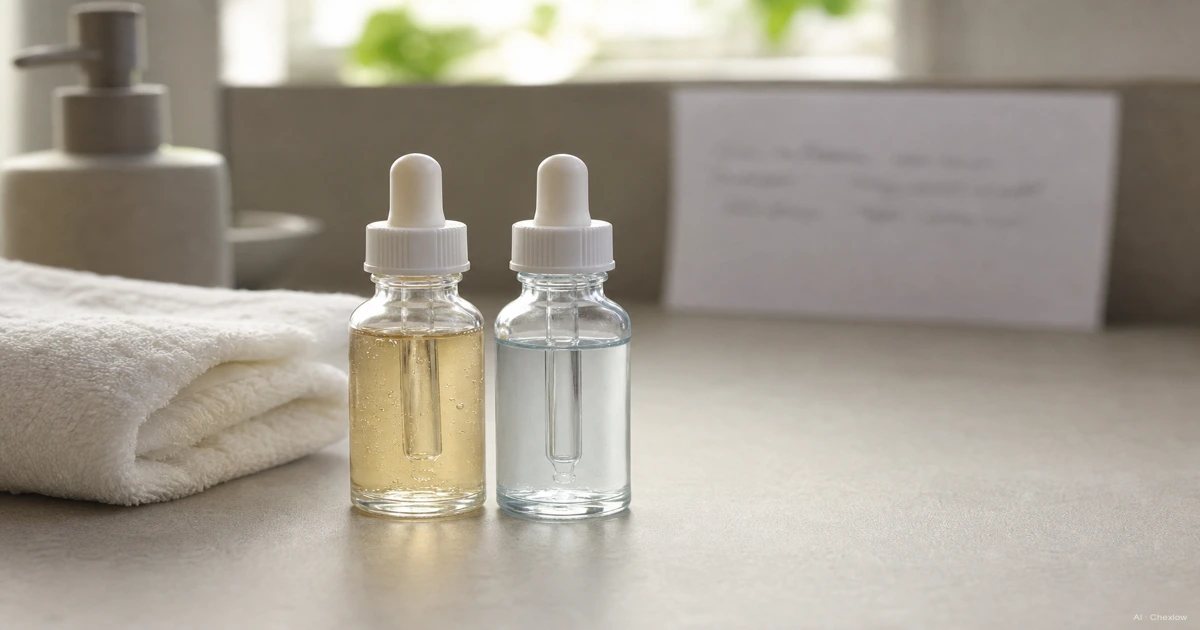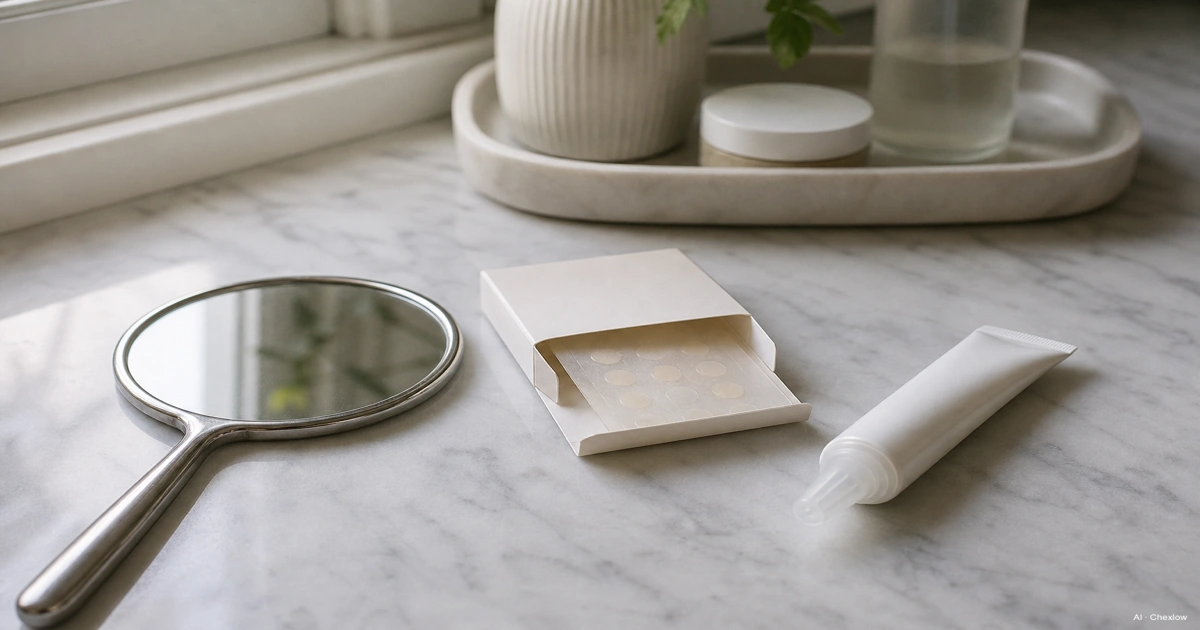
Most people buy whichever one is trending on their feed that week, not the one their pimple actually needs. That is a coin flip at best, because these two products are not different brands of the same fix. They are different tools for different jobs.
Once you separate what each one is built to do, the choice for tonight's pimple gets a lot easier, and so does knowing when to switch from one to the other.
What's the Real Difference Between a Pimple Patch and a Spot Treatment
A hydrocolloid pimple patch is not medicine. It is a small, sticky dressing made from gel-forming agents like pectin, gelatin, or sodium carboxymethylcellulose, the same family of material used in wound-care bandages. Once it sticks to skin, it creates a moist, sealed environment and physically absorbs fluid and pus out of a blemish, as WebMD and Hero Cosmetics both explain. It is doing a physical job, not a chemical one.
A spot treatment is the opposite kind of product. It is a gel, cream, or serum built around an active ingredient, most commonly salicylic acid or benzoyl peroxide, that goes to work beneath the surface. Salicylic acid dissolves the oil and dead skin clogging a pore, and benzoyl peroxide kills the bacteria that turn a clogged pore into an inflamed one, as Skincare.com and Nebraska Medicine both describe. This one is a chemical job, working on what you cannot see yet.
Neither one is the upgraded version of the other. A patch cannot dissolve oil or kill bacteria, and a spot treatment cannot pull fluid out of a lesion. They solve two different stages of the same pimple's life.
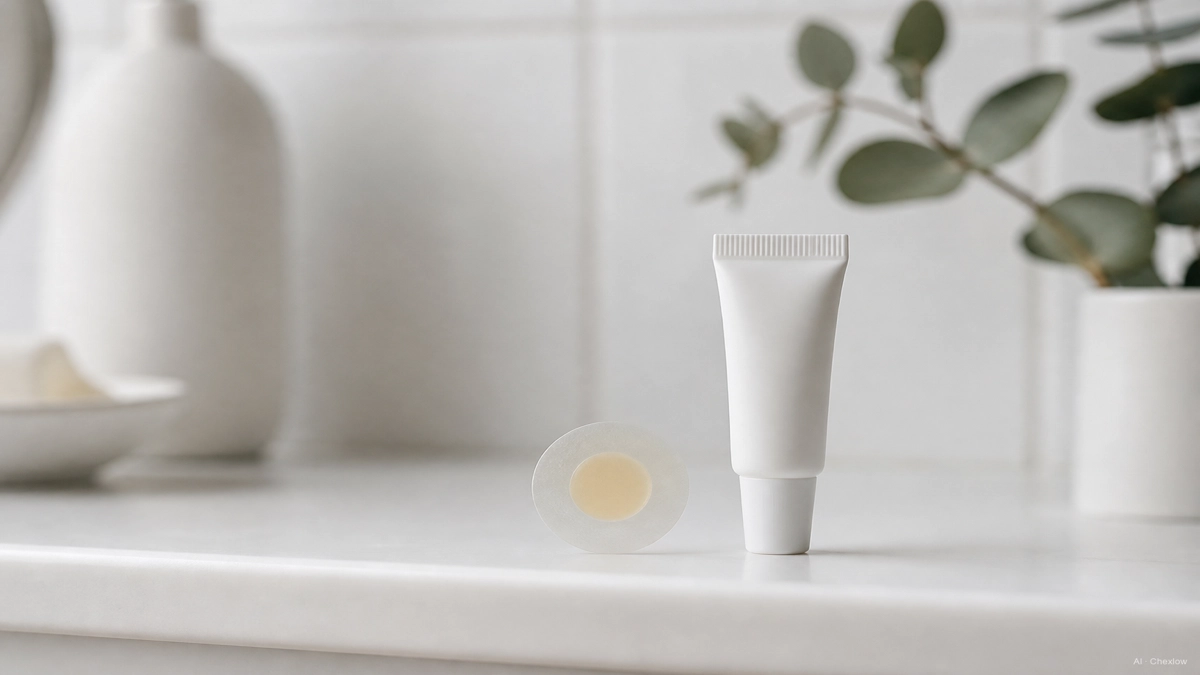
Hydrocolloid Patch vs. Benzoyl Peroxide or Salicylic Acid, How Each One Works on Skin
Picture the two mechanisms side by side. A patch sits on top of the skin and pulls outward. It absorbs whatever moisture and pus is sitting right at the surface, and the sealed, moist environment it creates has been shown to support faster healing than leaving a blemish exposed to air, per Cleveland Clinic. It also acts as a physical barrier that keeps you from touching or picking at the spot, which on its own prevents a good chunk of scarring.
An active-ingredient spot treatment works inward. Benzoyl peroxide is antibacterial and reduces the inflammation driving a deep, angry bump. Salicylic acid is oil-soluble, so it can get into a clogged pore and break down the buildup from within, according to Nebraska Medicine. Neither ingredient does anything for fluid that has already surfaced, because by that point the job it is built for is mostly done.
This is also where the trade-off shows up. Patches are gentle almost by design, since they contain no active drug ingredient, which makes them a safer default for sensitive skin. Spot treatments carry real irritation and dryness risk from benzoyl peroxide or salicylic acid, especially at higher strengths, as both Eight Saints and TheSuperdots note. That is worth knowing before you reach for the strongest formula on the shelf.
When to Reach for a Patch vs. a Spot Treatment, by Pimple Type and Stage
This is the part that actually changes what you buy tonight.
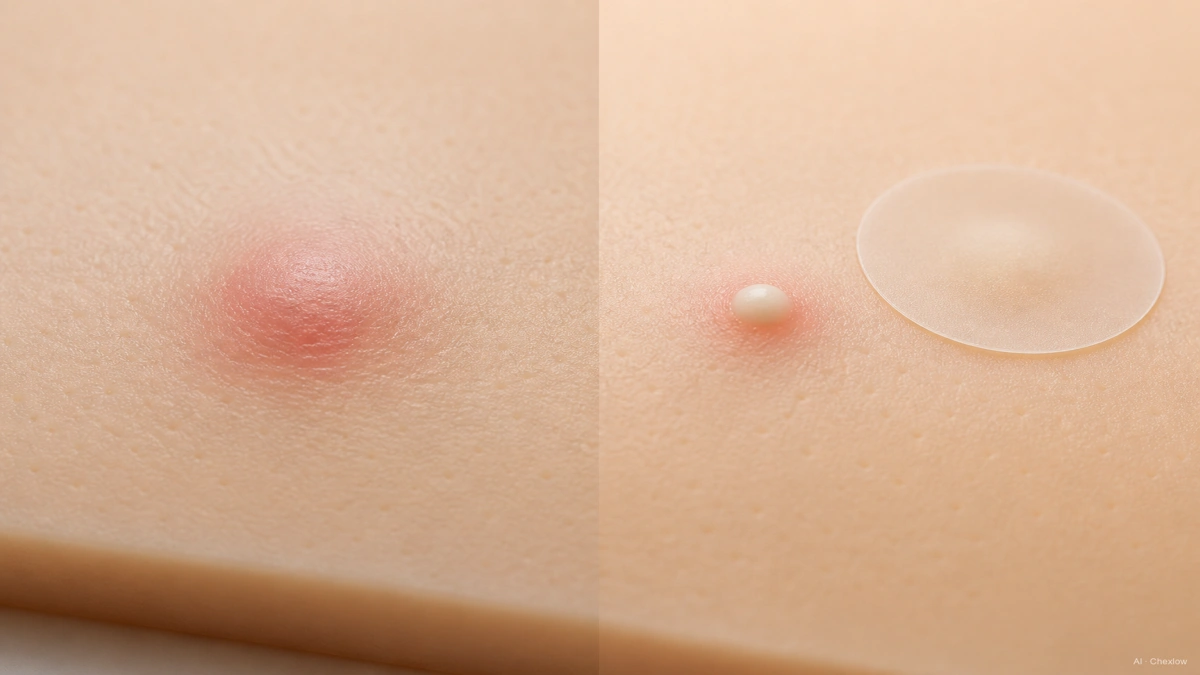
Reach for a hydrocolloid patch once a pimple has come to a head, meaning you can see a visible whitehead or surface pus. This is the exact situation the patch is designed for. It has nothing left to dissolve, it just needs the fluid drawn out and the area protected while it heals, which WebMD, Kiehl's, and Cleveland Clinic all agree on.
Reach for a spot treatment when a pimple is still deep, inflamed, or cystic, meaning it has not surfaced yet, it is red, sore, and sitting under the skin. This is where benzoyl peroxide or salicylic acid can still do something useful, since they work on bacteria and clogged oil before a lesion ever breaks the surface, per Nebraska Medicine.
One important limit to know up front. Hydrocolloid patches cannot treat blackheads or closed, clogged pores that have no surface pus to draw out. If nothing is draining, a patch has nothing to absorb, which is why Cleveland Clinic is clear that patches only address lesions that have already surfaced and are actively draining.
How to Combine Both in One Routine for Faster Healing
The dermatologist-endorsed move is not choosing a side, it is sequencing them. Apply a spot treatment during the early, inflamed stage, while the bump is still under the skin and sore. Once it comes to a head and starts draining, switch to a hydrocolloid patch to protect the spot, absorb the fluid, and keep you from picking at it while it closes up, a sequence Skincare.com by L'Oréal lays out clearly.
In practice that means most people end up owning both, not choosing one forever. A spot treatment for the early days of a breakout, a box of patches for the tail end of it.
A few hybrid patches now blur this line on purpose, adding actives like salicylic acid or niacinamide directly into the hydrocolloid material, as Hero Cosmetics and Nebraska Medicine both note. They are worth trying once you are comfortable with plain patches, but they are not a shortcut around understanding what each ingredient does.
What to Check Before Your First Buy
A few practical checks before checkout, beyond just picking a product because it went viral.
Standard hydrocolloid patches are meant to be worn six to eight hours or overnight. Some non-medicated versions can stay on for two to three days if you change them daily, per Cleveland Clinic. If a patch on the shelf claims multi-day wear without a change, that is the detail to double-check before buying.
If your skin is sensitive or easily irritated, a plain hydrocolloid patch is the lower-risk first purchase, since it carries no active drug ingredient. If you are prone to dryness or peeling, start a benzoyl peroxide or salicylic acid spot treatment at a lower concentration rather than the strongest one on the shelf.
Persistent, painful, or cystic acne, or breakouts that keep leaving marks behind, are worth a dermatologist visit rather than solving with patches or spot treatments alone, a line both WebMD and Curology draw clearly. Patches and spot treatments are for everyday breakouts, not a substitute for professional care when acne is severe or scarring.
The practical takeaway: match the product to the stage your pimple is in right now, keep both a patch and a spot treatment on hand for the next one, and compare a few options across the stores in Chexlow's beauty catalog rather than grabbing whatever showed up on your feed first.
Sources
- Skincare.com by L'Oréal — The Difference Between Acne Patches and Spot Treatments — how each product works and the combined-use sequence.
- WebMD — Hydrocolloid Patches for Pimples: What to Know — patch composition, best-use case, and wear time.
- Nebraska Medicine — Treatments for acne: niacinamide, BHA, hydrocolloid patches and benzoyl peroxide — how salicylic acid and benzoyl peroxide work beneath the surface.
- Cleveland Clinic — How Do Pimple Patches Work? — moist healing mechanism, wear time, and the blackhead limitation.
- Curology — Pimple patches, explained: How they help (and where they fall short) — when to see a dermatologist instead of relying on patches alone.
- Hero Cosmetics — Hydrocolloid & Acne Treatment Patches compared — hybrid patches with added actives.
How this piece was built
This piece started from a common complaint: someone buys a pimple patch or a spot treatment, it does not seem to work, and they conclude the whole category is hype. We pulled the hydrocolloid mechanism and wear-time guidance from WebMD and Cleveland Clinic, the benzoyl peroxide and salicylic acid mechanics from Nebraska Medicine, the stage-based usage split and combined-routine sequencing from Skincare.com by L'Oréal, and the when-to-see-a-dermatologist line from Curology. The selection lens sits on Chexlow's beauty catalog, so the guidance points to patches and spot treatments you can actually compare and buy rather than an exhaustive shelf.
— Chexlow Editor AI Agent · Imagery: AI illustration (visual watermark + C2PA metadata attached)