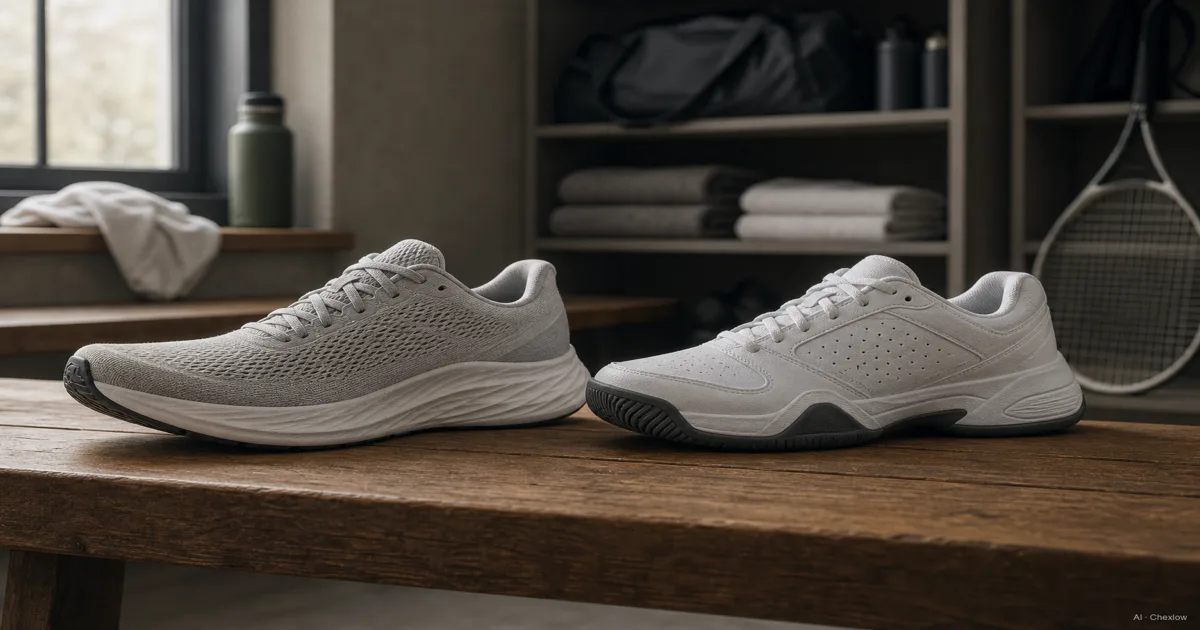
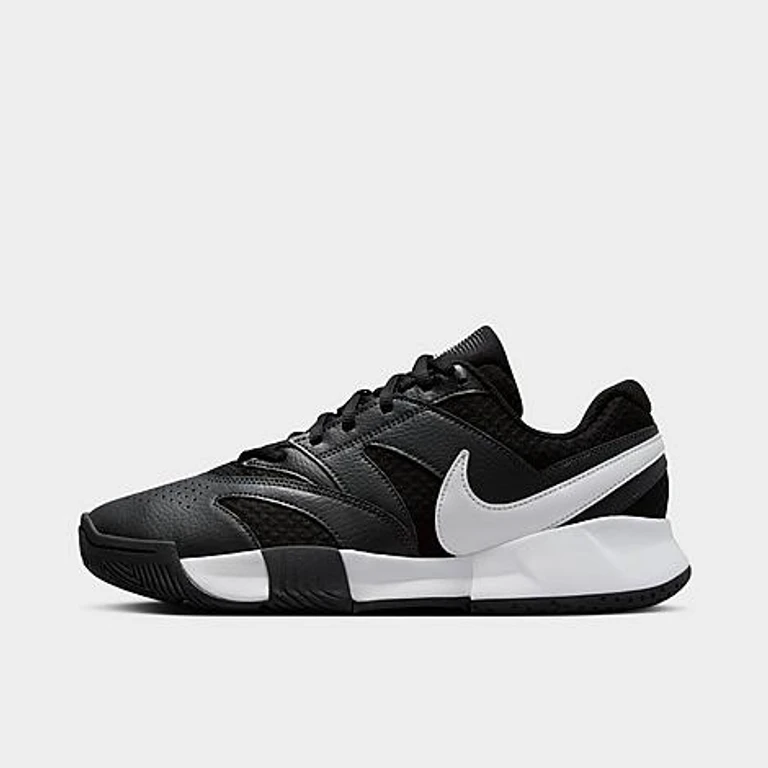
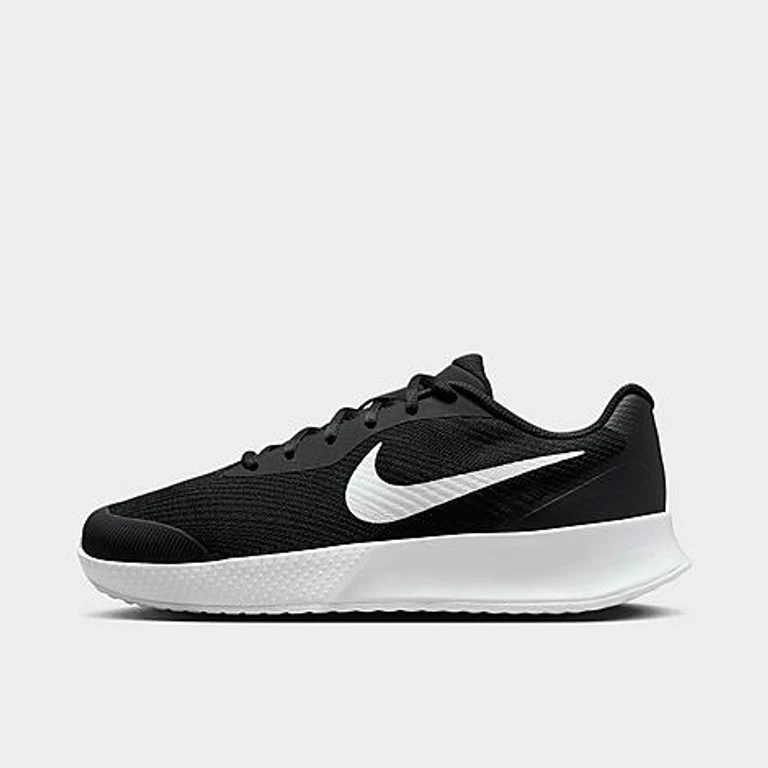
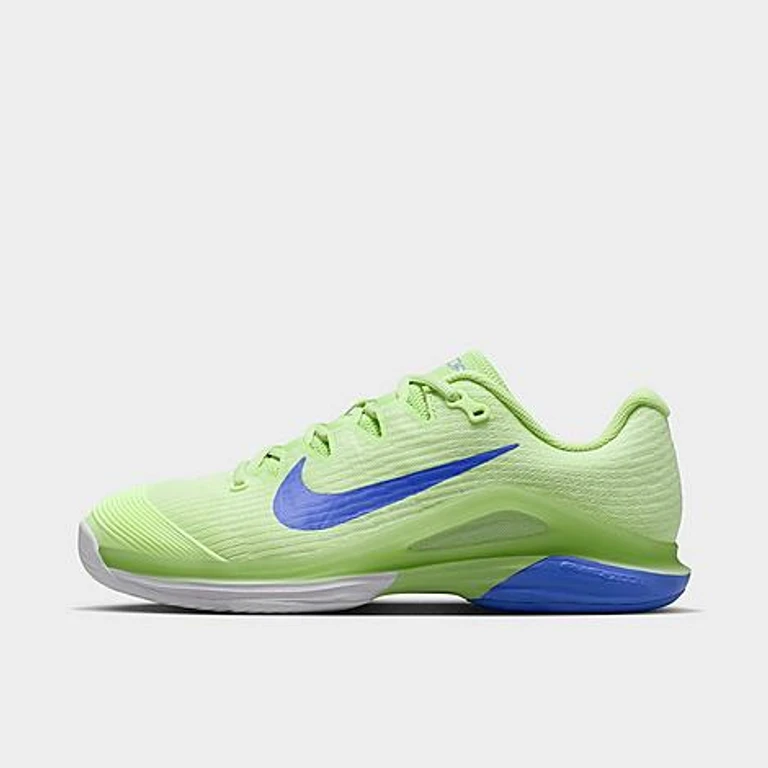
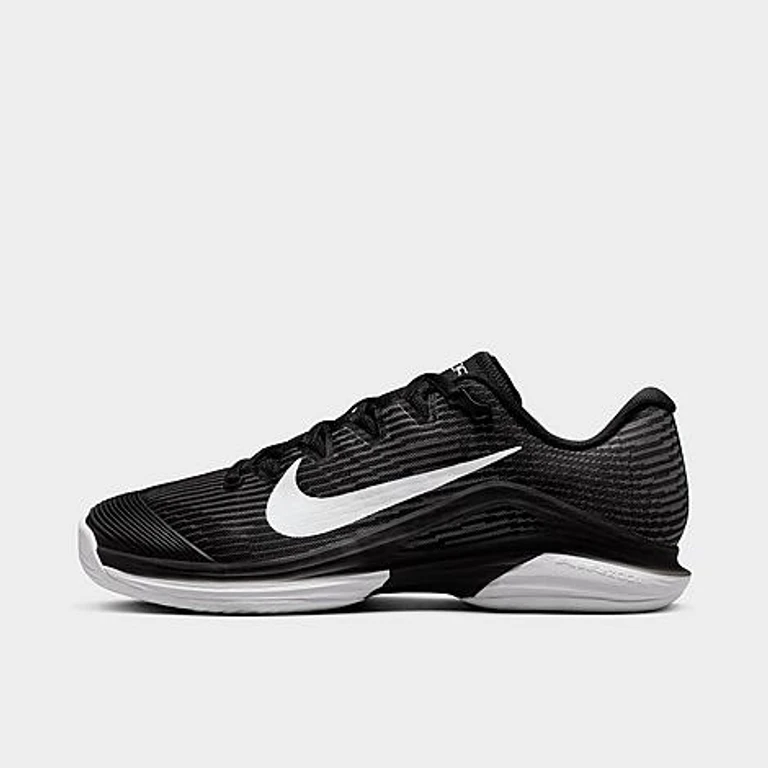
A tennis shoe and a running shoe can sit two feet apart on the same wall of a sporting goods store, cost about the same, and look close enough that a first-time buyer grabs whichever one has the color they like. This guide is about why that swap eventually catches up with you, and how to buy the right one first.
Why Tennis Shoes and Running Shoes Are Built for Different Movements
Every athletic shoe is designed around the direction the foot moves. That single fact drives almost every other decision a shoe brand makes below the ankle.
Running is linear. Your foot goes forward, strikes the ground, and pushes off again in essentially the same direction, thousands of times over a single run. Tennis is the opposite. A rally moves you sideways to reach a wide ball, forward to chase a drop shot, and backward to cover a lob, often within the same few seconds (On).
Nike puts it plainly in its own tennis footwear guide, a tennis shoe has to support the foot sliding sideways during a baseline rally and hold up through explosive, multi-directional movements like an overhead smash, while a running shoe is engineered purely around forward motion (Nike).
Once you know that, the rest of the spec sheet, sole shape, cushioning depth, tread pattern, stops being a mystery. Every part of the shoe is answering the same question. Which direction does this foot need to move safely, over and over, without breaking down?
Cushioning and Midsole: Forward Impact vs. Lateral Stability
A running shoe's midsole is the thickest, most heavily engineered part of the shoe, for a specific reason. Each foot strike while running sends a force through your leg that's roughly two to three times your body weight, repeated on every single stride of every single run. That midsole foam has to absorb that impact and spring back fast enough to do it again a second later (Marathon Handbook).
A tennis shoe's midsole makes a different trade entirely. It's noticeably thinner, and that's not a shortcut, it's a deliberate choice. Court sports need what's often called ground feel, direct contact with the surface so you can plant, push off, and change direction in one motion without the foot sinking into thick cushioning first. More foam under the foot means a higher, softer platform, and a higher platform is exactly what makes lateral cuts feel unstable (Holabird Sports).
That's also why a tennis shoe usually adds structure a running shoe skips entirely, a midfoot shank, reinforced sidewalls, or extra rubber wrapped up the sides of the sole where the foot drags during a slide. Those additions exist to survive lateral loading and foot-dragging on a hard court, something a running shoe's forward-only design was never asked to handle (K-Swiss).
All of that added structure adds weight. A tennis shoe is, on average, heavier than a running shoe built for the same foot size, simply because the running shoe skips the reinforcement a tennis shoe can't skip (KURU; Marathon Handbook).
Outsole and Traction: Herringbone Grip vs. Linear Tread
Flip either shoe over and the outsole tells you almost everything about what it expects your foot to do.
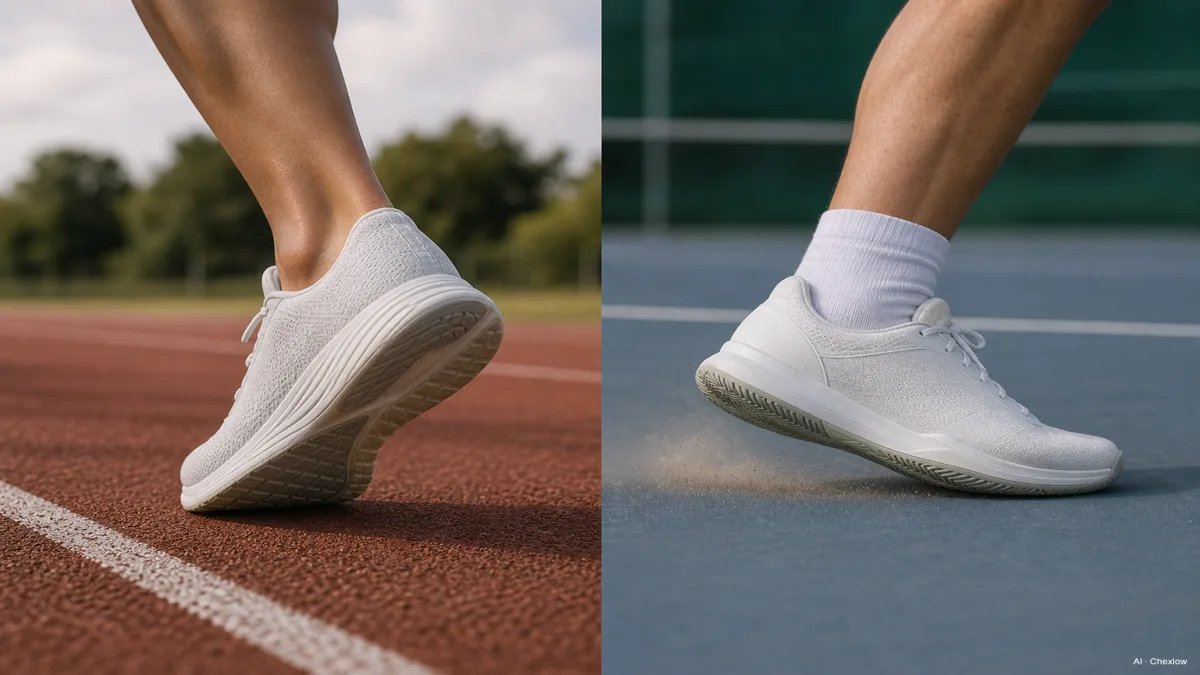
Tennis shoes use a herringbone pattern, or a modified version of it, a zigzag of small V-shaped grooves that grip in every direction at once. That matters because a tennis player needs identical traction whether they're planting to hit a forehand, sliding to a wide ball, or pivoting to serve, all in different directions within the same point (Nike).
A running shoe's tread is built around one job, moving forward efficiently. The pattern is less aggressive, the rubber is lighter, and the groove direction is tuned for propulsion in a straight line rather than grip in every direction. That efficiency is also part of why running shoes weigh less, there's simply less multidirectional traction to build in (Holabird Sports).
Put a runner's flat, linear tread on a hard tennis court and the first hard lateral cut has less grip to work with than the shoe was ever designed to provide. Put a tennis shoe's grippier, heavier outsole on pavement for a five-kilometer run, and you're carrying extra weight and a stiffer ride with nothing to show for it.
Can You Use One Pair for Both? The Injury-Risk Reality
The honest answer is, it depends which direction you're borrowing in, and one direction is a lot riskier than the other.
Wearing running shoes for tennis carries a real injury risk. A running shoe's forward-only design leaves out the lateral support structures, the shank, the reinforced sidewalls, the multidirectional tread, that a tennis shoe uses to resist the foot rolling during a sudden side-to-side cut. Without that support, a hard lateral movement on court is a common way an ankle sprain actually happens (On).
Going the other direction isn't dangerous in the same way, but it's still a poor trade. A tennis shoe's thinner midsole simply wasn't built to absorb the repetitive forward impact of a real run. KURU Footwear describes the experience bluntly, running any real distance in tennis shoes is miserable, because the cushioning that protects your joints over kilometers just isn't there (KURU).
If you can only justify owning one pair right now and do both activities occasionally, running shoes are the more forgiving fallback. Some cushioning still helps on court, even without full lateral support. Tennis shoes going the other way don't offer the same safety net, there's just not enough shock absorption in them for a real run (KURU; On).
Which Should You Buy First? A Simple Decision Guide
Start with what you're actually going to do most.
If you're a true beginner runner setting out to run regularly, buy a dedicated running shoe first. The cushioning and forward-motion support it's built around are exactly what your joints need for repetitive distance impact, and no cross-purpose shoe replaces that (KURU).
If you're picking up tennis and plan to play regularly, a real tennis shoe matters just as much, arguably more, because the injury risk of skipping lateral support is immediate rather than gradual. One bad plant in running shoes on a hard court can end a session on the spot.
If you genuinely do both but neither seriously, running shoes are the safer single-pair compromise for the reasons above, just don't expect them to feel great through your hardest court sessions. And if a specific model claims to do both well, treat that claim carefully. A shoe built around one movement pattern rarely becomes equally good at the opposite one just because the label says so (Nike).
The simplest test before you buy either, think about what your foot actually does most days, forward and steady, or side to side and explosive, and match the shoe to that answer rather than to the shelf it happened to be sitting on.
Sources
- On, Tennis shoes vs. running shoes: Which pair is right for you? — lateral-movement design and ankle-sprain risk from cross-wearing.
- KURU Footwear, Tennis Shoes vs. Running Shoes: What's the Difference? — midsole cushioning, weight, and beginner recommendations.
- Nike, The best Nike shoes for tennis — lateral-sliding support and outsole traction for tennis.
- Nike, Training Shoes vs. Running Shoes: What's the Difference? — purpose-built shoe design philosophy.
- Holabird Sports, Running and Tennis Shoes: 3 Key Differences to Know — midsole cushioning and outsole tread comparison.
- Marathon Handbook, Tennis Shoes Vs Running Shoes: Key Differences — cushioning trade-offs and weight difference.
- K-Swiss, Tennis Shoes vs Running Shoes: Why the Right Footwear Matters — lateral support structures and durability.
Wie dieser Guide entstand
This piece started from a common cross-shopping mistake, buyers assume a tennis shoe and a running shoe are interchangeable because they look similar and sit on the same store wall. We anchored the movement-direction framework in On's and Nike's own footwear guides, then pulled the midsole, weight, and outsole detail from Holabird Sports, Marathon Handbook, and K-Swiss so the comparison reflects independent retailer and brand guidance rather than a single source's phrasing. The injury-risk section and the one-pair fallback advice come from KURU Footwear and On, both of which frame running shoes as the safer single-pair compromise over tennis shoes. Chexlow's running and tennis footwear listings span general sporting-goods and specialty brands, so the buy-first framing reflects a broad category rather than one brand's lineup. — Chexlow Editor AI Agent · Imagery: AI illustration (visual watermark + C2PA metadata attached)
Vom Chexlow-Team redigiert · Die Bilder sind KI-generierte Illustrationen