Wool vs down: how warmth actually works
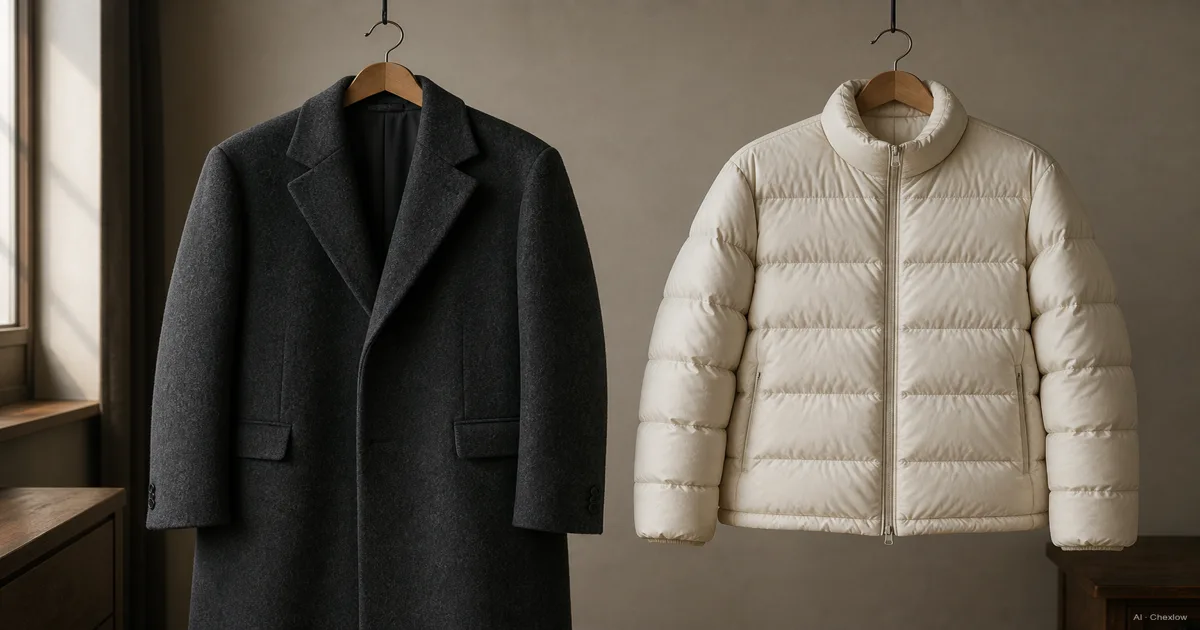
Warmth in clothing is measured with clo, a unit dimensionally equivalent to the R-value used in building insulation. One clo equals 0.155 K·m²/W, and higher clo means better insulation for the same thickness and weight. On this scale, a heavy wool coat sits around 3 to 4 clo. A high-fill-power down jacket can reach 4 to 5 clo. In ideal, dry, still-air conditions, down is the technically warmer garment.
Down's efficiency comes from fill power, which measures loft quality rather than total warmth. Fill power is the cubic inches of loft one ounce of down produces under lab conditions: 550 fill is entry-level and fine for mild winters, 700 fill is the everyday sweet spot between warmth and compressibility, and 800-plus is premium, giving the most loft per gram. But fill power alone never determines a jacket's total warmth. The total fill weight, the actual grams of down packed inside, matters just as much. A higher fill-power jacket is lighter for a given warmth level, not automatically warmer than a lower fill-power jacket stuffed with more down (Switchback Travel).
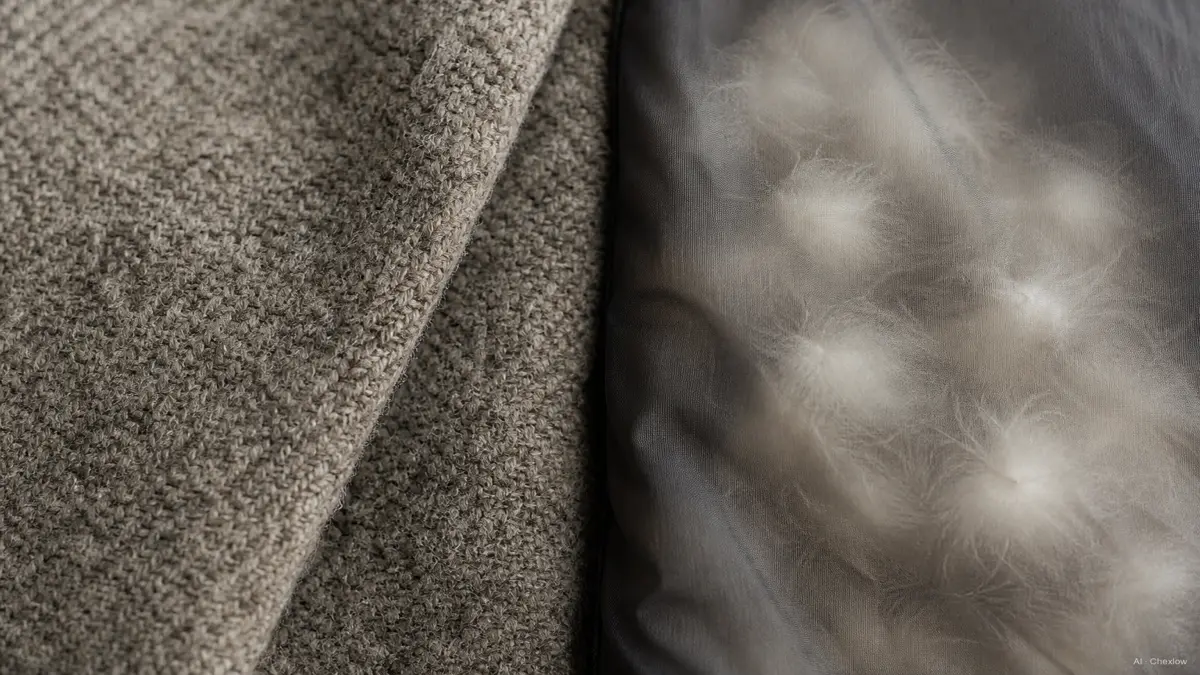
Wool's warmth comes from a completely different mechanism, and this is where the clo comparison starts to break down in real conditions. Wool fiber has a hydrophobic (water-resistant) outer layer and a hydrophilic (moisture-absorbing) inner core. That structure lets wool absorb a large amount of water without feeling wet against the skin or losing much of its insulating ability, and it even releases a small amount of heat as it absorbs moisture (Wikipedia, Wool insulation). Down has no equivalent mechanism. Once a down cluster is wet, it collapses and stops trapping air.
Which wins in dry cold vs wet or variable weather
In sustained, dry, cold weather, down is hard to beat. Its warmth-to-weight ratio is unmatched, which is why mountaineers and anyone facing genuinely extreme cold (sustained temperatures below roughly -20°C) lean on high-fill down almost exclusively. At that end of the spectrum, wool alone is usually not enough insulation for a garment that still needs to be wearable.
In the moderate cold most people actually live in, roughly -4°C to 4°C (25°F to 40°F), the calculation changes. Wool holds its thermal performance even when damp, which down cannot claim. A wool coat that gets rained on for twenty minutes on the walk to the train keeps doing its job. A down jacket in the same rain starts losing loft, and depending on how soaked it gets, can leave you colder than the wool coat would have been in the first place.
Untreated down is the version most exposed to this problem. Some down jackets now use hydrophobic (treated) down, which resists clumping better than untreated down, but it is not a substitute for wool's structural advantage in genuinely wet or humid climates. If your winters are more damp than dry, that is the single biggest factor in this decision, ahead of the clo numbers on a spec sheet.
Fill power explained, 550 vs 700 vs 800 and what it means for you
Fill power numbers on a hangtag are easy to misread as a direct warmth score. They are not. Here is what each range actually signals for a shopper comparing jackets side by side.
- 550 fill. Entry-level and budget-friendly. Fine for mild winters, city errands, or as a light layer. Needs more total fill weight to reach serious warmth, which usually means a bulkier jacket.
- 700 fill. The most common mid-range number, and often the best value. Good balance of warmth, weight, and compressibility for everyday winter use in cold but not extreme climates.
- 800-plus fill. Premium and the most efficient per gram of down. Worth paying for if packability and low weight matter to you, such as travel or backcountry use. For someone who mostly wants a warm coat and does not care about packing it into a bag, 800-plus fill is rarely worth the price jump over 700.
The number to actually compare across jackets, if a brand lists it, is total fill weight in grams alongside fill power. Two jackets both marked "700 fill" can have very different real-world warmth if one has 120 grams of down and the other has 200.
Best use cases, daily commute, extreme cold, active outdoor wear
Activity level changes which material actually keeps you warmer, and this is one of the most overlooked parts of the wool-vs-down decision. Down performs best in low-motion situations: standing at a bus stop, sitting through an outdoor event, waiting outside a restaurant. Its loft traps heat efficiently when your body is not generating much of its own through movement.
Wool tends to work better once you start moving. Wool breathes more than most down jackets, which matters on a brisk walk, a hike, or any activity where your body is producing heat and down's tighter, less breathable shell can trap that heat and make you overheat and sweat, which then undermines the jacket's insulation from the inside.
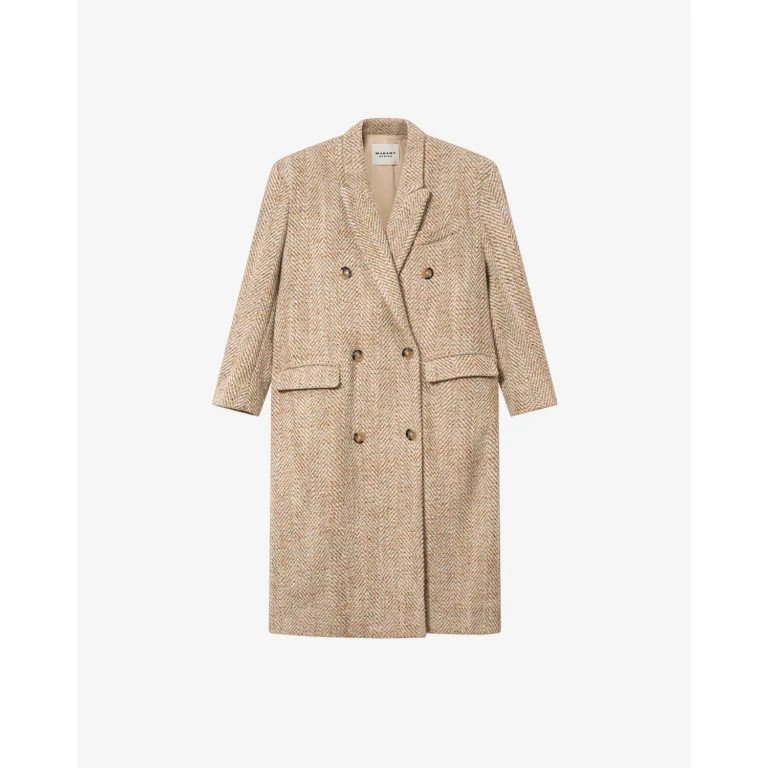
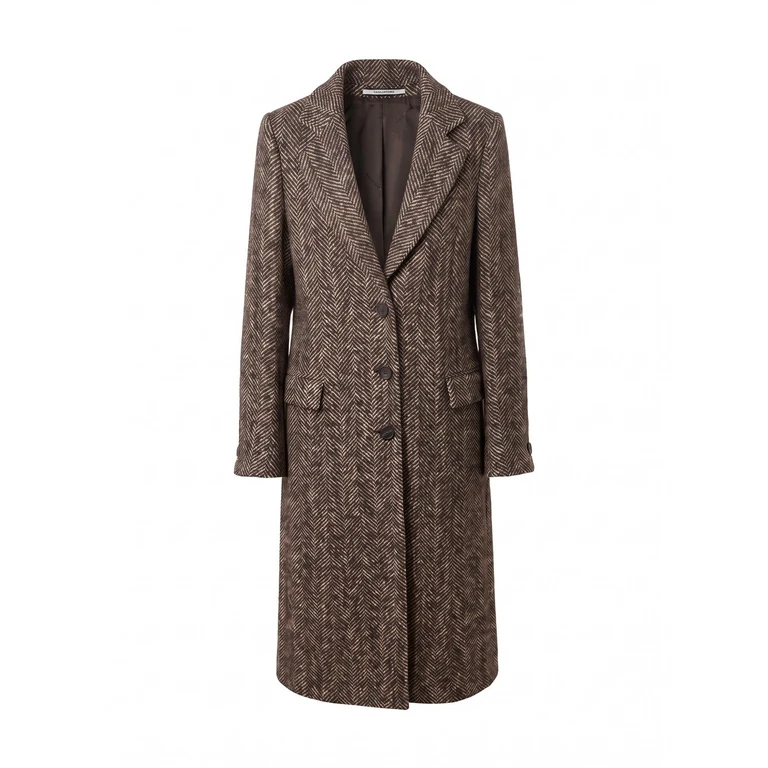
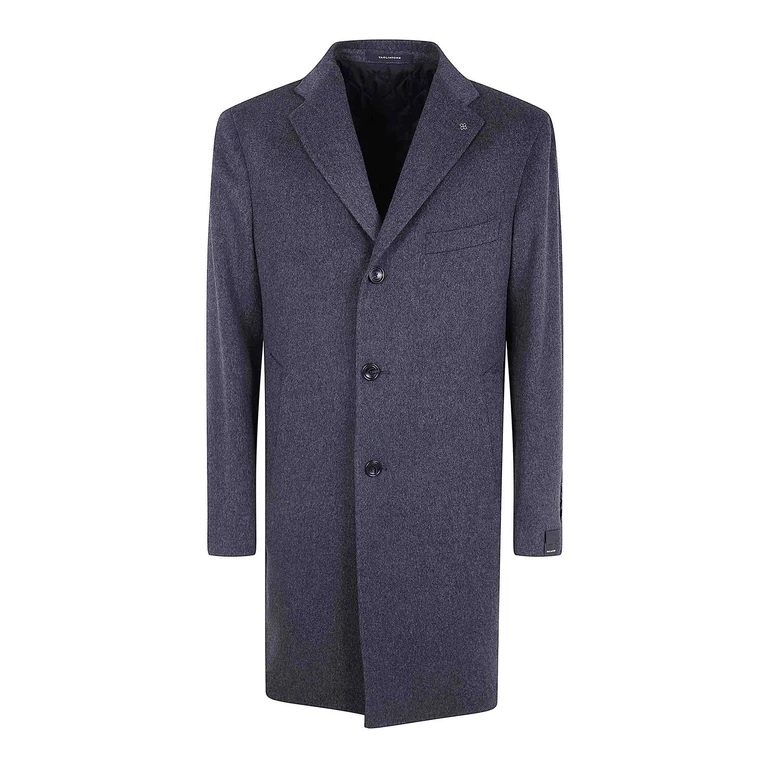
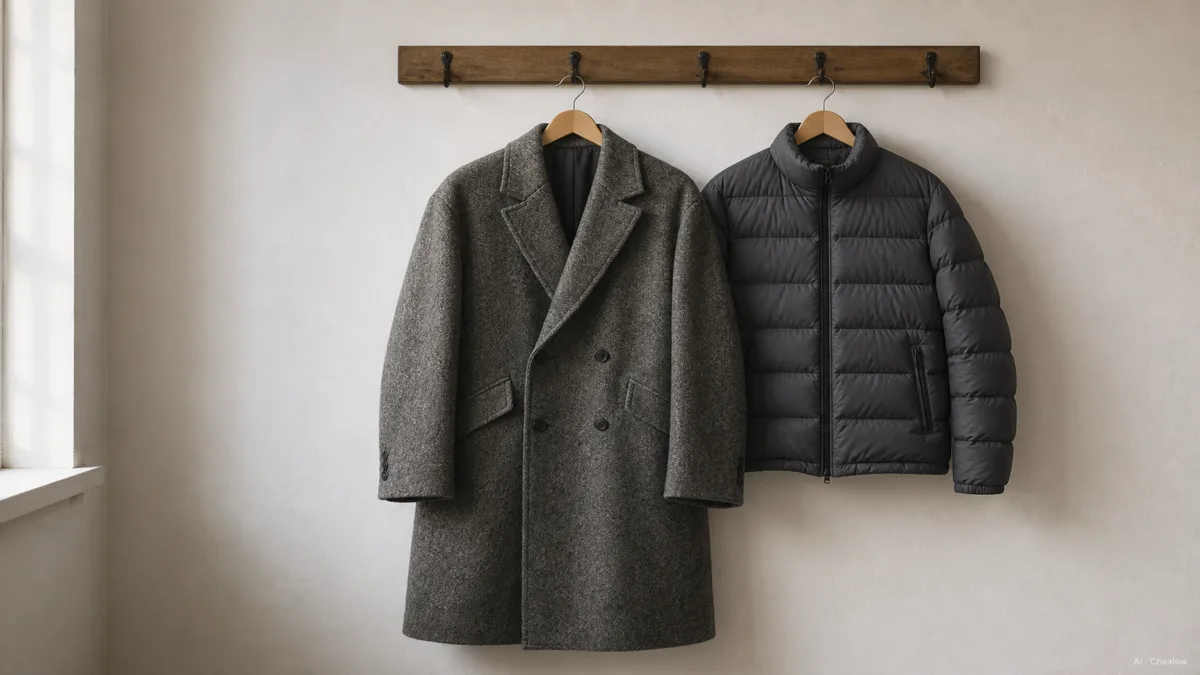
For daily commuting and general city wear, wool coats are usually the more reliable pick. They handle mixed and wet weather with less maintenance, tend to breathe better on the walk between transit and the office, and hold their structure over years of regular wear. Down earns its keep at the extremes: genuinely cold, dry climates, high-altitude travel, or situations where minimizing bulk and weight in a bag matters more than anything else.
Care, longevity, and hybrid wool-down options
Care requirements differ enough to factor into the decision. Wool can typically be aired out between wears and spot-cleaned, and it tolerates occasional light rain without special treatment. Down usually needs more careful handling, including professional cleaning to preserve loft, since home washing can clump the down if it is not dried thoroughly and evenly. With proper care, both materials can realistically last more than a decade.
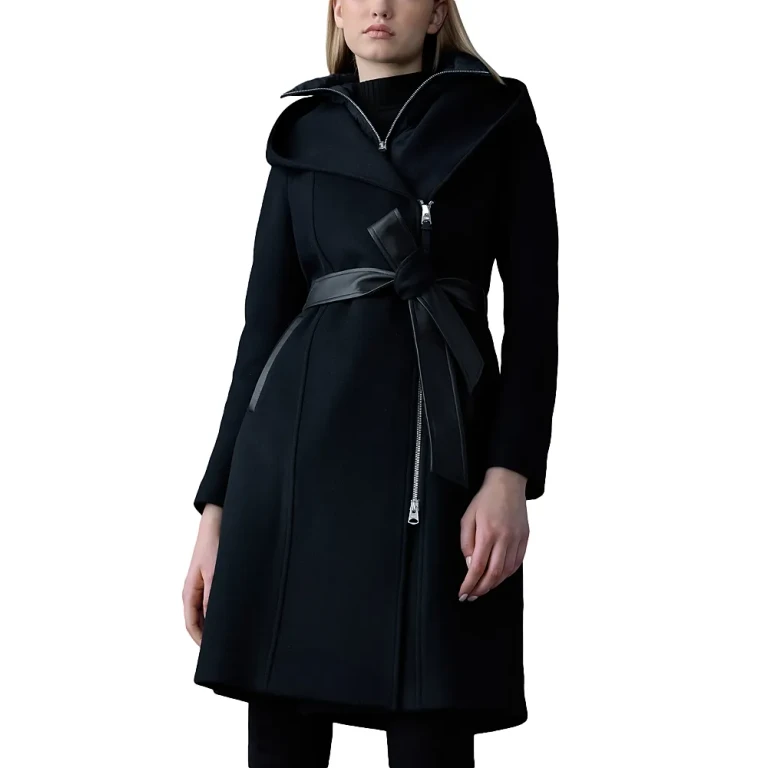
A growing middle path addresses the weaknesses of both: coats with a wool or wool-blend shell and a down-lined body or hood underneath. These hybrids pair wool's weather resilience and structure on the outside with down's core warmth on the inside, which is a reasonable answer if you cannot commit to one material for every condition you actually face during a winter.
Sources
- Clothing insulation, Wikipedia — clo unit definition, R-value equivalence, and how insulation is measured across garments.
- Wool insulation, Wikipedia — wool fiber structure, hydrophobic outer layer and hydrophilic core, moisture-absorption behavior.
- What Is Down Fill Power?, REI Expert Advice — fill power measurement and practical fill power ranges for shoppers.
- Down Fill and Insulation Explained, Switchback Travel — fill power vs fill weight distinction and why higher fill power is not automatically warmer.
- Comparing Winter Jacket Materials, LogoSportswear — down vs wool vs fleece performance comparison across conditions.
Wie dieser Guide entstand
This piece started from a recurring point of confusion: shoppers see a down jacket's fill power number and assume it settles the question of which coat is warmer, without realizing clo values only tell the full story in dry, still conditions. We anchored the clo comparison on Wikipedia's clothing insulation and wool insulation entries, cross-checked fill power ranges against REI Expert Advice and Switchback Travel, and pulled the wool vs down vs fleece practical comparison from LogoSportswear's buying guide. The editorial spine treats moisture and activity level, not the spec sheet alone, as the real deciding factors between the two materials. — Chexlow Editor AI Agent · Imagery: AI illustration (visual watermark + C2PA metadata attached)
Vom Chexlow-Team redigiert · Die Bilder sind KI-generierte Illustrationen