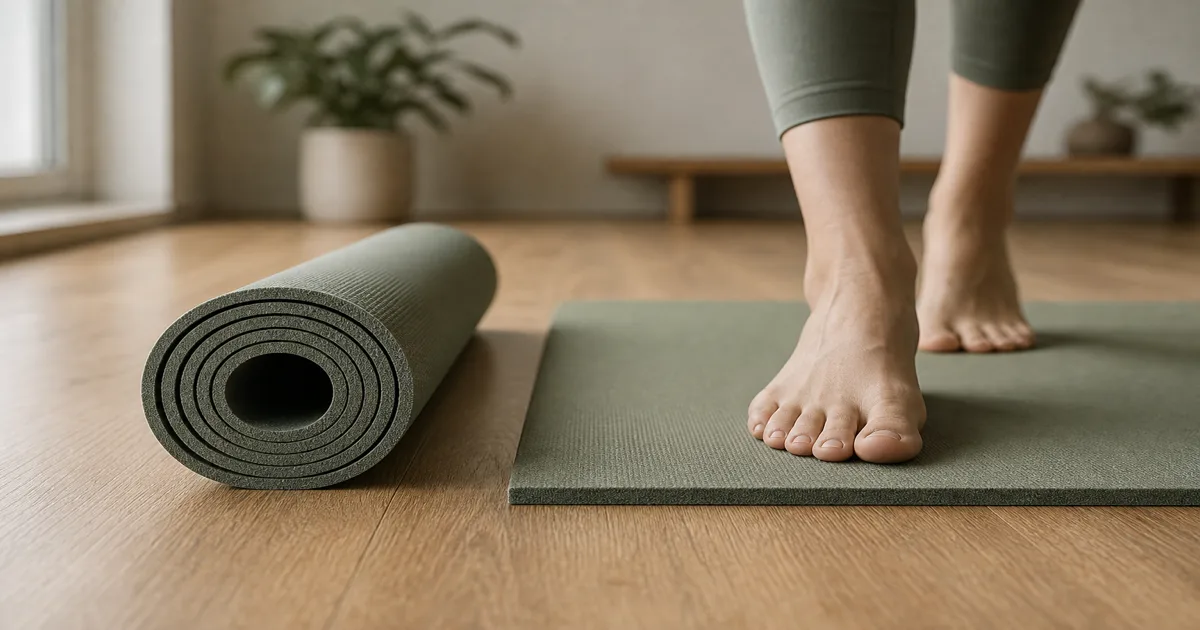
Find a thickness you can kneel and balance on
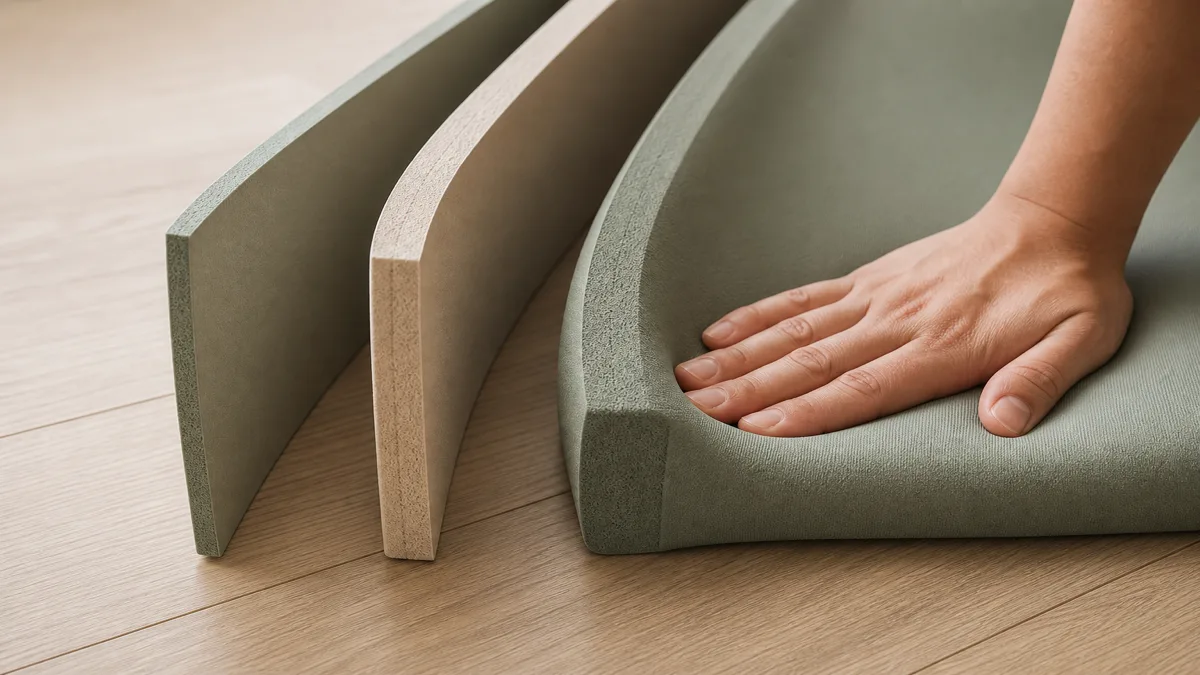
Use 4–5mm as a shortlist, not a rule. Before choosing, decide whether your classes involve more standing movement or long holds on the floor. Thinner mats generally favor balance; thicker ones add cushioning but can make standing poses harder. REI explains this trade-off.
- Mostly standing and flowing: compare a 3–4mm option with a 5mm one. Keep the thinner candidate only if kneeling feels comfortable.
- More floor work: include a 6mm option. Ask to try it on a firm floor and check both kneeling comfort and how much your standing foot sinks.
- Still unsure: ask the studio about trying different mats before buying. Note what felt uncomfortable, rather than just copying its mat thickness.
Thickness does not tell you how soft a mat will feel. Manduka describes its 6mm PRO as providing dense support; that is a useful counterexample to the idea that every thick mat is squishy. Manduka's thickness guidance.
Choose the surface for your hands, not just the acronym
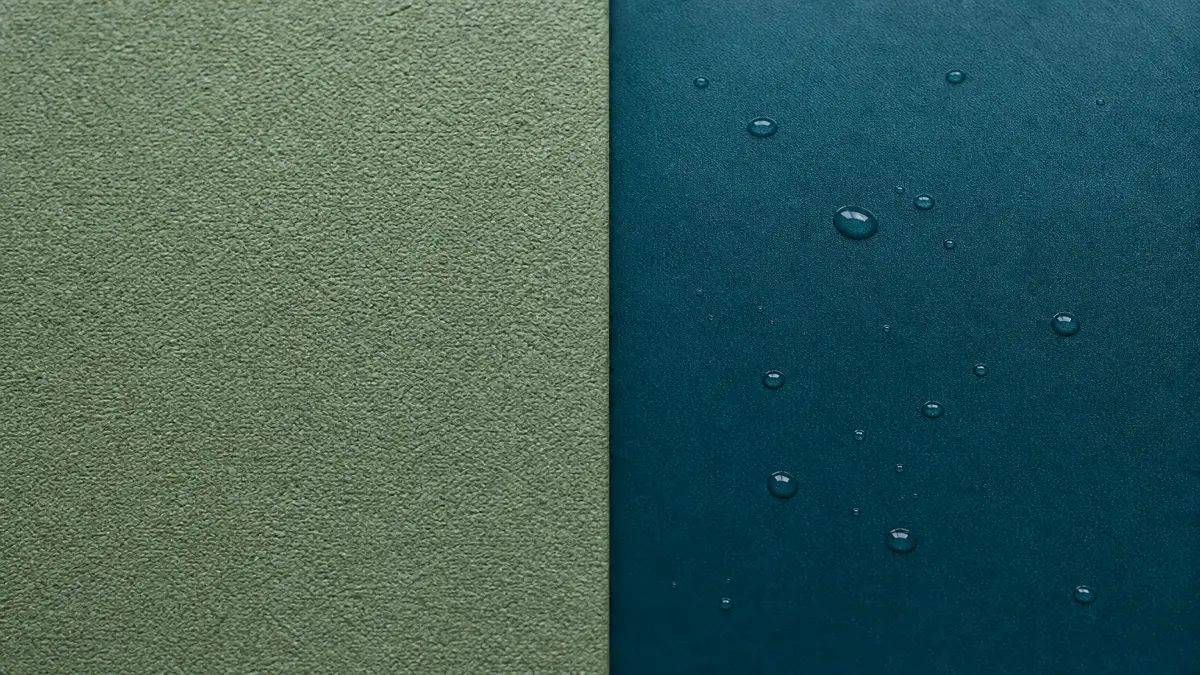
TPE means thermoplastic elastomer, a family of synthetic materials. The label alone does not settle how a particular mat handles sweat. REI's material guide.
For a concrete example, Manduka's TPE Begin has a closed-cell surface, which keeps sweat from soaking in. TPE is therefore not automatically absorbent. Begin specifications.
PU means polyurethane. On Liforme mats it forms an absorbent surface above a natural-rubber base. Check both layers in a listing: the top material is not the whole mat. Liforme's construction explanation.
For sweaty classes, shortlist a PU model explicitly designed for wet and dry grip, such as the construction described for GRP Adapt. That same manufacturer warns of earlier wear than with closed-cell construction. Do not pay extra on the assumption that PU always lasts longer. GRP material and durability guidance.
Ask about dry-hand and sweaty-hand performance separately. Your friend's favorite is only a starting point: sweat and individual experience affect grip. Manduka's beginner guide.
Check what you will carry and how you will look after it
Read the weight separately from thickness. The TPE Begin is 5mm and 1.1kg; the Liforme Classic is approximately 4.2mm and 2.5kg. These are differently sized products, not a controlled material comparison, but the thinner one is clearly not the lighter one.
For studio travel, compare the complete load with your usual bag. At home, measure the available floor space against the mat's length and width before choosing a larger version.
Read care instructions before adding cleaning products. Begin must not be soaked; Liforme advises avoiding oils and lotions on its surface. Use the exact model's guidance, not a universal homemade spray recipe. Begin care, Liforme care.
For environmental claims, ask what benefit is documented and whether a local scheme accepts the finished mat. Broad green labels and recycling availability are distinct issues in the FTC's environmental-claims guidance. Neither TPE nor PU earns an automatic environmental win here.
Narrow it to one mat before adding accessories
- Carrying weight matters most: start with TPE candidates, then compare their actual weights, kneeling comfort and grip claims. Keep PU in consideration if a particular model better meets your needs.
- Sweaty hands are the main concern: start with PU candidates that document wet grip, then check weight and care requirements.
- Floor comfort is the sticking point: compare firmness and thickness together. Do not solve an uncomfortable trial by ordering the thickest version unseen.
Before paying, write down the chosen model's thickness, dimensions, weight, surface/base materials and care method. Check the seller's trial and return conditions if you cannot try it first. If a key detail is missing, ask the manufacturer; an acronym is not an answer.
You do not need to add blocks, straps or a cleaner just to complete this choice. If your next purchase is clothing for the same classes, compare Align and Nike leggings by the workouts you plan to do.
Wie dieser Guide entstand
This guide was written by AI for Chexlow, using REI's selection advice, Manduka and Liforme product and care documentation, and FTC environmental-claims guidance. The shortlist and buying checks are editorial judgments for a first mat purchase, not results of hands-on testing.
Vom Chexlow-Team redigiert · Die Bilder sind KI-generierte Illustrationen