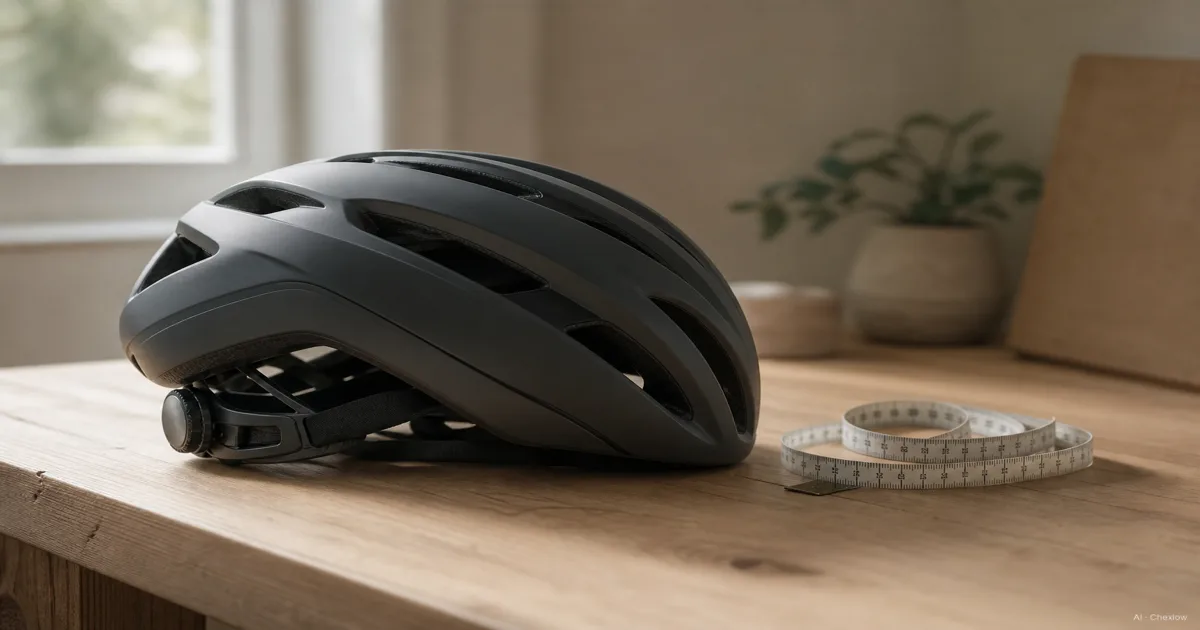
Start with your riding, then check the label
For an ordinary commute or weekend ride on paved paths, start with road or commuter helmets. Road designs emphasize airflow and low weight; mountain-bike helmets commonly add a visor and more rear coverage. Full-face models serve disciplines such as downhill and enduro. These are useful shopping categories, rather than a ranking from least to most protective. Trek’s guide to helmet types explains the differences.
Downhill racing or BMX? Check the intended activity explicitly: ASTM F1952 covers downhill mountain-bike helmets, while ASTM F2032 covers BMX helmets. A “mountain” label alone does not settle that choice. For powered bikes, confirm the vehicle class and local helmet requirements before using this ordinary-cycling shortlist; Trek’s guide also distinguishes e-bike helmet needs and local rules.
Read the actual helmet label and manufacturer documentation before buying:
- CPSC / 16 CFR Part 1203. US bicycle helmets must meet this standard and carry a compliance label. Check the model identification too. CPSC requirements
- EN 1078. A European standard covering cycle helmets, with requirements for impact absorption, retention, vision and marking. It is a standard designation, not a comparative safety score. DIN’s overview
These examples are not a worldwide approval list. When buying across borders, ask the manufacturer to confirm the specific version’s compliance for your market.
Measure, adjust, then decide whether it fits
Use a cloth tape, or string and a ruler, to measure horizontally around your head above your ears, following the maker’s measurement diagram. Compare the result with that model’s centimetre range. Trek’s fit guide shows the method.
A size chart gets you to the try-on stage. It cannot finish the decision. With the helmet on, follow its instructions and use NHTSA’s fitting cues:
- Position. Keep it level, with the front about two finger-widths above your eyebrows.
- Side straps. Adjust the side straps into a V around each ear.
- Chinstrap. Fasten the chinstrap snugly, leaving room for just two fingers.
Adjust the rear fit system without squeezing your head. The dial does not replace the chinstrap. BHSI explains why both adjustments matter.
With everything fastened, try moving the helmet forward and backward. It should neither cover your eyes nor expose your forehead. If adjustment cannot achieve that, try another size or model, or ask a bike shop for fitting help. Trek’s final fit check
Keep it on while you consider the purchase. Pressure at one spot, persistent slipping, or needing to tilt it to feel comfortable are reasons to try another candidate. Bring the glasses you ride in and check them together. If you are also choosing sunglasses for daytime rides, the next question is how to choose UV protection and polarization.
Compare protection, then choose among the helmets that fit
Mips describes a technology. Its low-friction system allows some movement between helmet and head to help reduce rotational motion in certain impacts. It is built into the helmet, not a liner you can add yourself. Mips’ explanation
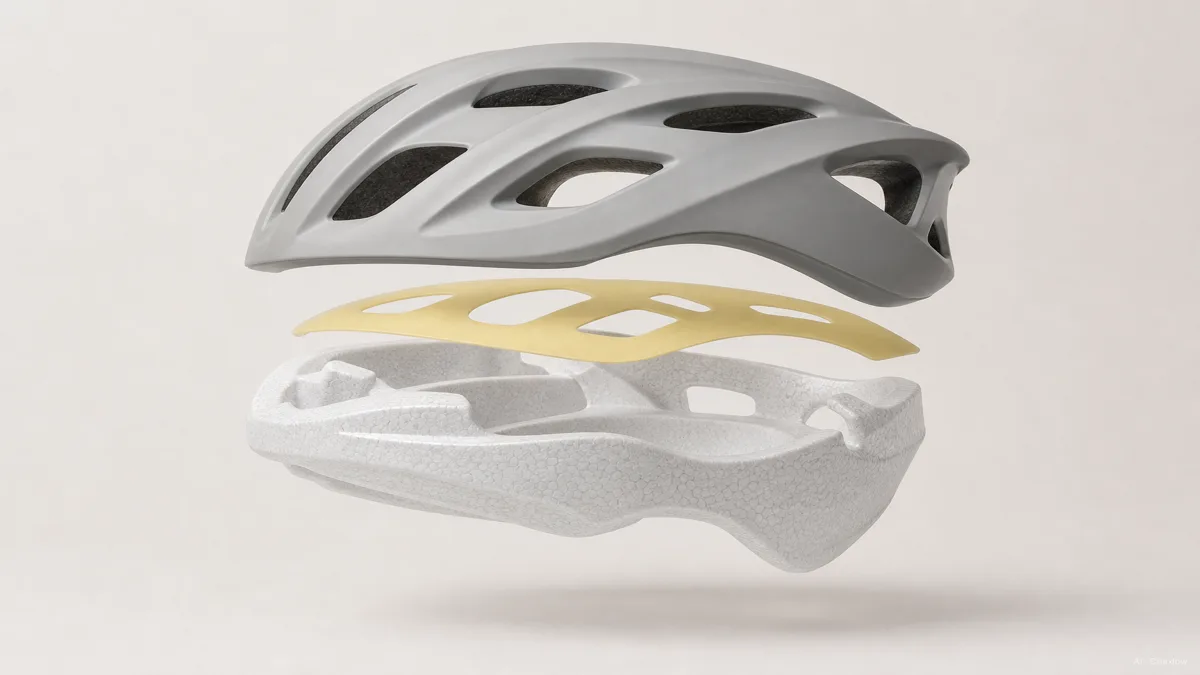
The illustration shows relative movement during an angled impact. It does not show a guaranteed reduction in injury, or a reason to accept a helmet that fits poorly.
Virginia Tech provides a separate comparison. Its STAR system uses 24 laboratory impacts; lower scores indicate better tested performance. The lab recommends four or five stars. Look up the exact model and version on the bicycle helmet ratings page, rather than applying one result to a whole brand.
Use those distinctions to make the purchase:
- Suitable use, verified standard, secure fit, useful test result: keep it on the shortlist and compare comfort, adjustment and budget.
- Good rating but poor fit: try another helmet.
- No exact rating found: treat its comparative performance as unknown. Do not borrow the score of a similarly named version.
- Unclear compliance or intended use: resolve that before paying.
Among suitable helmets that fit equally well, favor the stronger independent result you can afford. A Mips logo alone does not settle that comparison. No helmet guarantees protection in every crash.
Check condition before buying used, and after a crash
Most bicycle helmets use EPS, a rigid foam liner designed to crush as it absorbs impact energy. The outer shell helps hold the liner together. That is why a tidy exterior cannot tell you the whole story. Trek explains the construction.
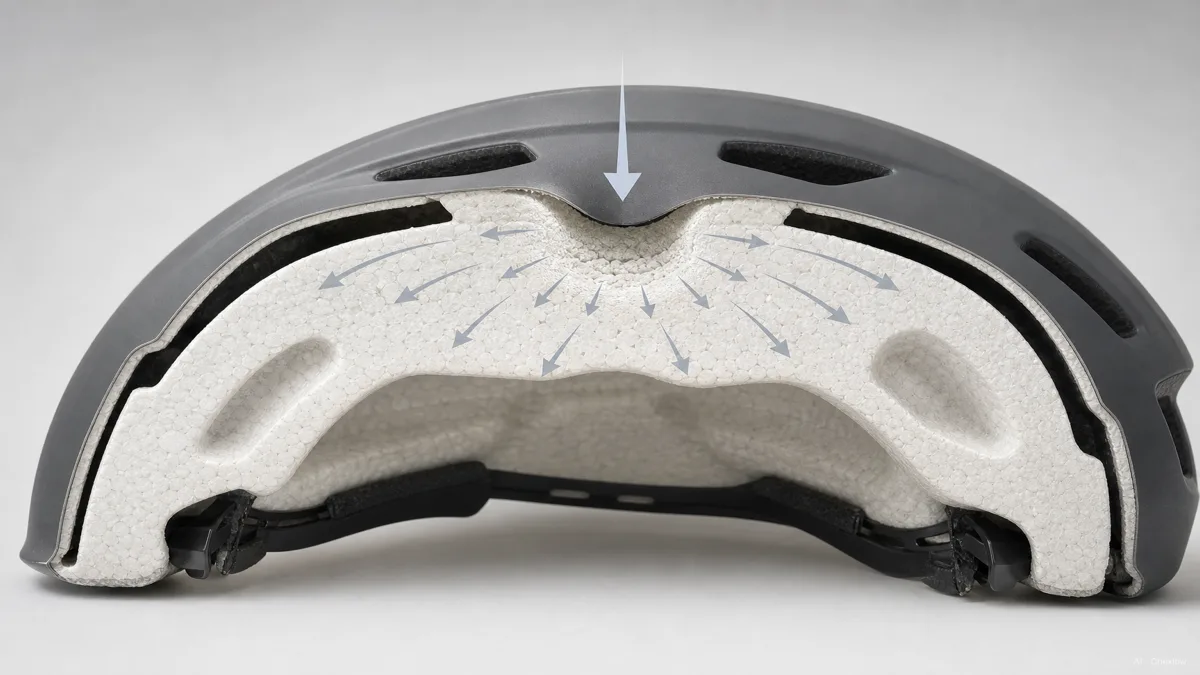
Replace a helmet that took a crash impact, even if damage is hidden. Trek explains why replacement is necessary. For age-related replacement, follow your helmet manufacturer’s guidance. Also inspect for cracks, crushed foam and worn straps using BHSI’s inspection guide.
For a first purchase, skip a used helmet if you cannot establish its impact history. That is a buying precaution based on hidden damage, not a claim that every used helmet is damaged. Save the new helmet’s instructions so you can check its fitting and replacement guidance later.
Sources
- CPSC: bicycle helmet requirements
- DIN: scope of EN 1078
- NHTSA: fitting a bicycle helmet
- Mips: technology and limitations
- Virginia Tech: bicycle helmet ratings
Cómo se elaboró esta guía
Written by AI for Chexlow, using CPSC and NHTSA guidance, DIN and ASTM public standard overviews, Trek and BHSI fitting information, Mips documentation and Virginia Tech’s testing explanation. The editorial aim is to help a first-time buyer separate suitability, fit and comparative protection; this is not a hands-on product test.
Editado por el equipo de Chexlow · Las imágenes son ilustraciones generadas por IA