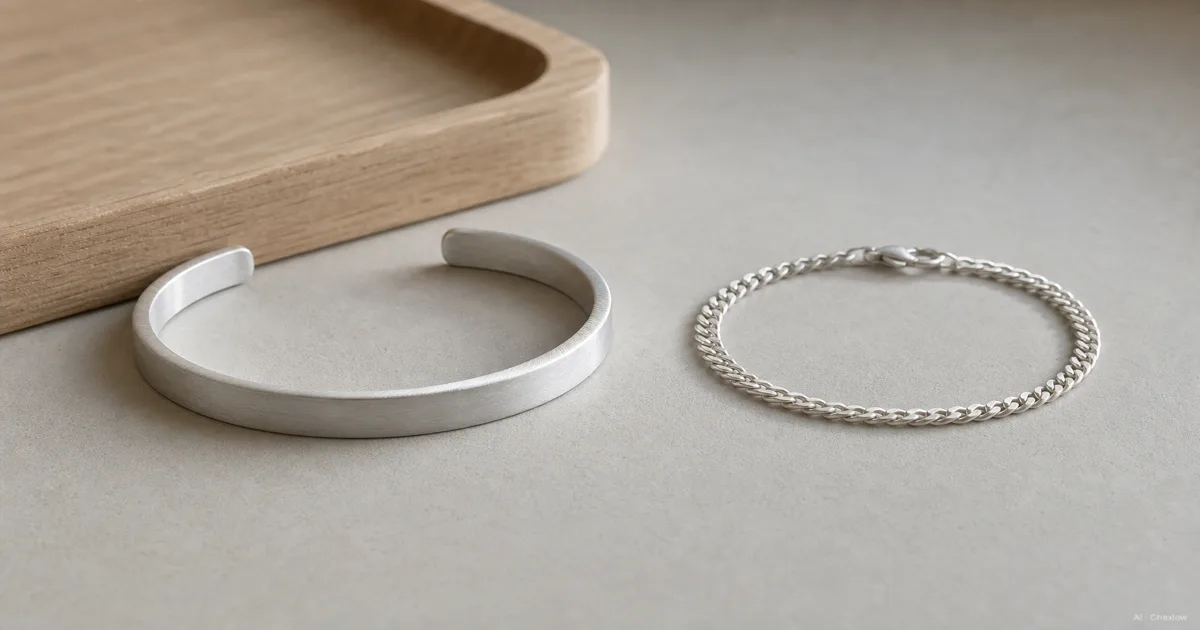
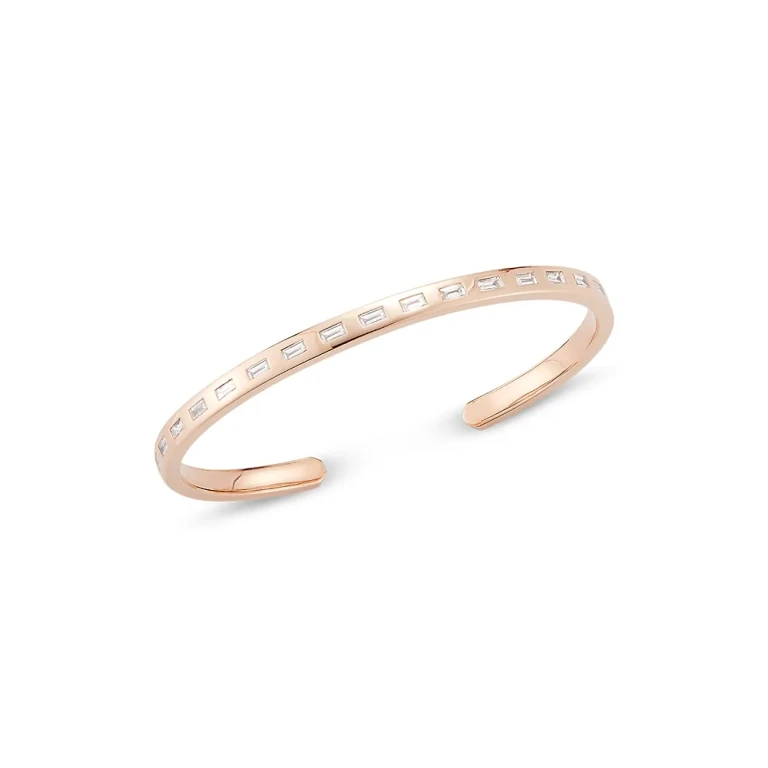
Choose the fastening you want to use every day
Before comparing metals, try putting the bracelet on by yourself. For a first purchase, a fastening you can manage matters more than plans to build a stack later.
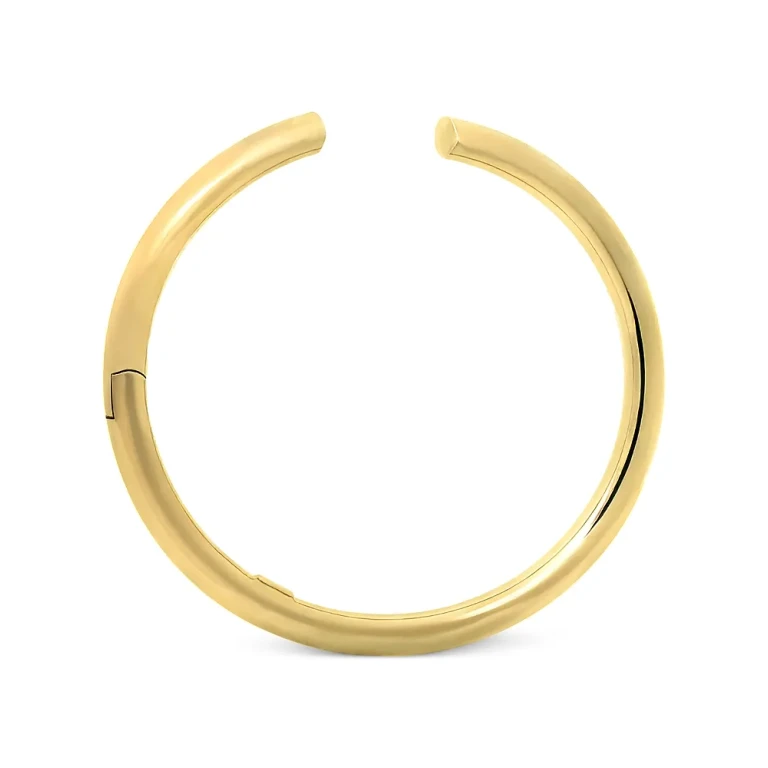
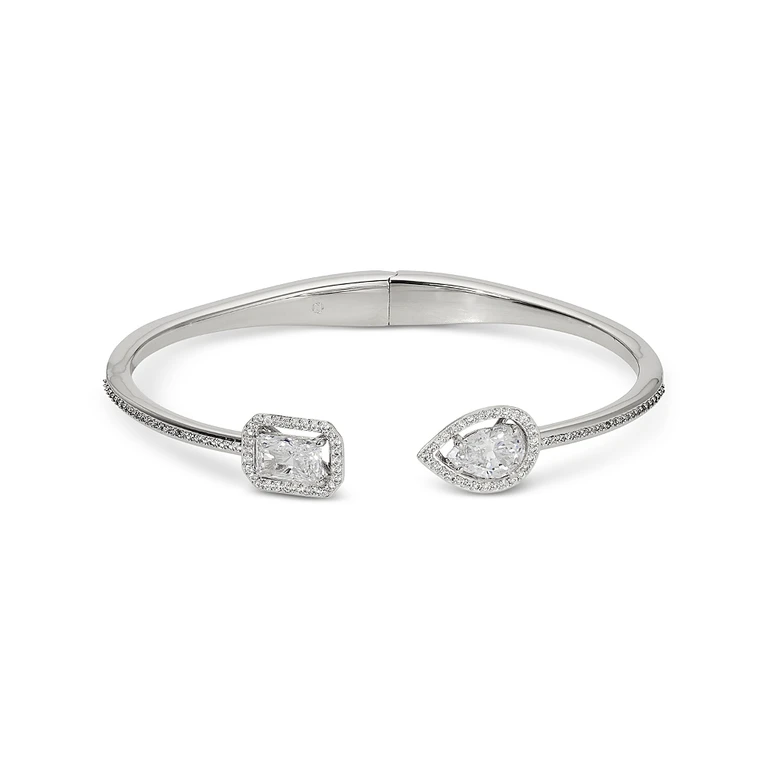
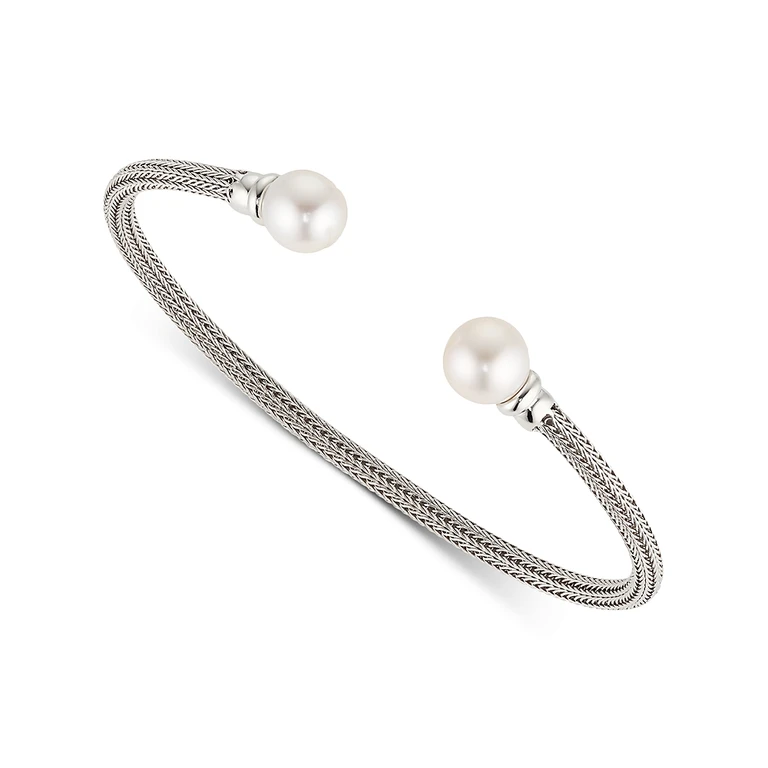
Here, cuff means an open, shape-holding band, while chain bracelet means flexible links closed with a clasp. Some products called cuffs have hinges or flexible construction, so check the opening in the photos rather than relying on the name. Dana Rebecca explains these differences.
- Try a chain first if you want it to drape around your wrist. Check that you can open the clasp and catch the receiving ring with one hand.
- Try an open cuff first if avoiding a small clasp is your priority. It still needs to go on comfortably and stay in place without squeezing your wrist.
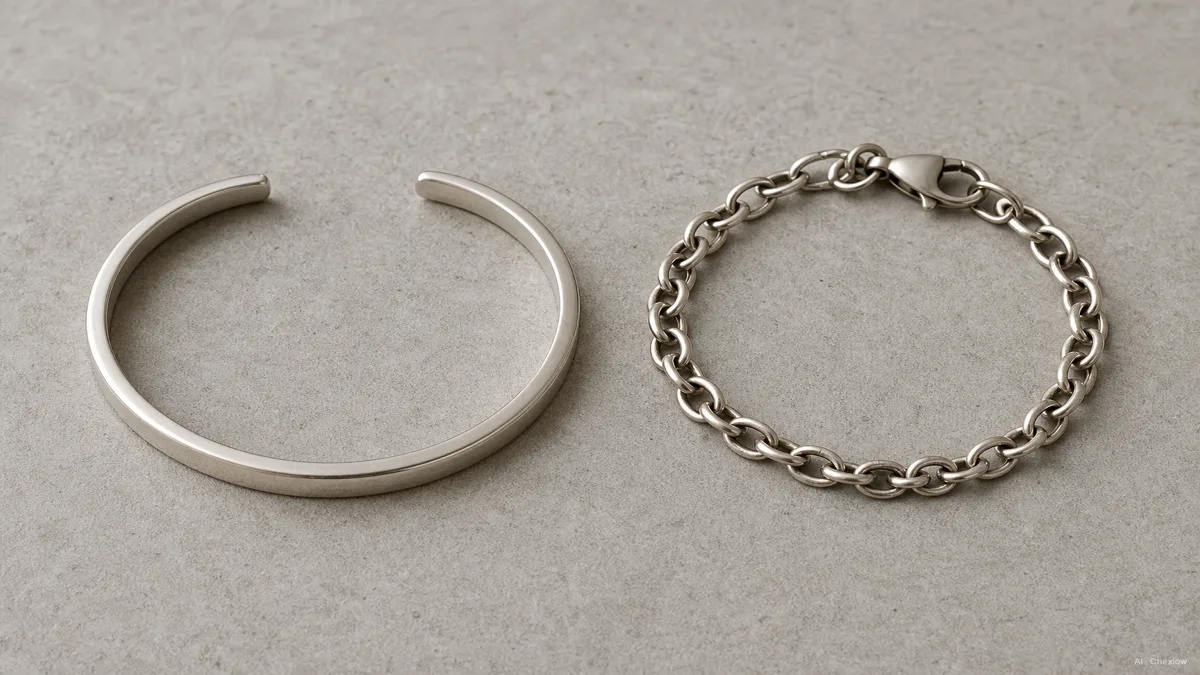
A closed slip-on bangle is a separate fit question: it must pass over your hand. Tiffany distinguishes that closed circle from an open cuff. If that is what the listing shows, use its bangle guide.
Measure first, then use the right size chart
Measure the wrist you plan to wear it on. For a linked bracelet, James Avery measures just below the wrist bone, where the bracelet will sit, using flexible tape or a paper ruler.
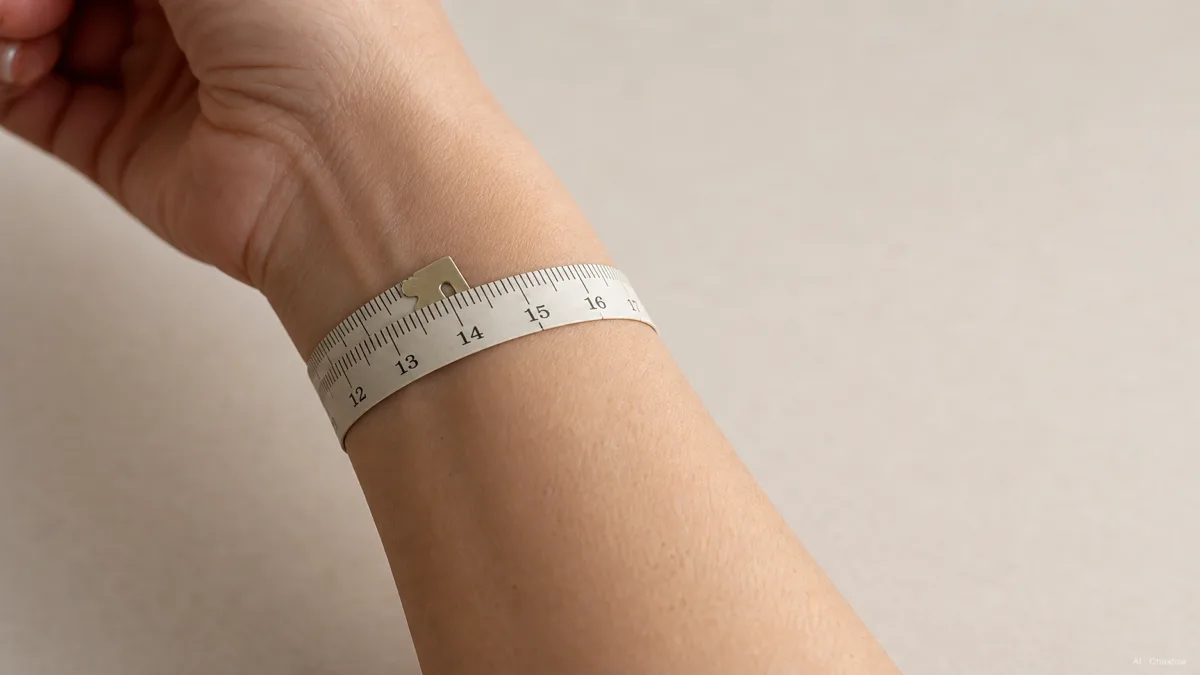
For a chain, check whether the listing gives finished bracelet length or the wrist size it fits. James Avery adds half an inch for its multi-link bracelets; treat that as a brand-specific example, not an allowance to add to every size chart.
For a cuff, follow the maker's method. Tiffany uses wrist circumference, while James Avery provides a separate cuff method and chart. Ask what any quoted inner measurement includes and how the opening should fit. If the seller cannot explain the size, pause the order rather than planning to bend it to fit.
Use link shape to narrow the look
Once you know the size and fastening, compare a few profiles at a similar width. The illustration helps identify the pattern; it cannot tell you how heavy or comfortable a particular bracelet will feel.
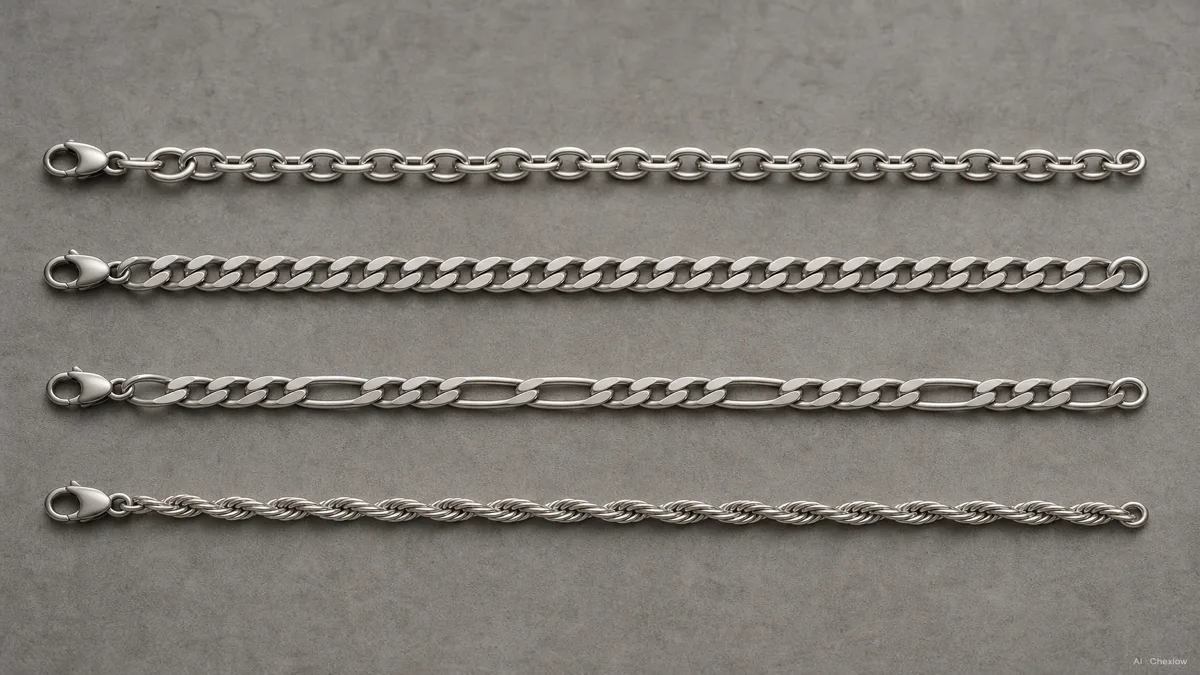
- Cable: repeating round or oval links.
- Curb: twisted links arranged to lie flat.
- Figaro: alternating link sizes create a repeating pattern.
- Rope: linked construction creates a twisting, rope-like outline.
These distinctions come from Market Square Jewelers' chain guide. Choose the pattern you like, then ask about width, solid or hollow construction, and the clasp. A style name alone is not enough to rank two finished bracelets for strength.
If what you really want is a continuous line of stones, compare a different option in the first tennis bracelet guide before narrowing your search to plain metal chains.
Check what sits beneath the color
Keep shape and material as separate decisions. A gold-colored cuff and a gold-colored chain still need a precise material description.
Stainless steel: check the finish and every other material in the piece. The Steel Shop notes that polished steel can scratch and distinguishes its steel components from leather that is not waterproof. That is a useful reason to read the whole bracelet's care instructions, not infer them from “steel” alone. Steel care guidance.
Gold-filled: this has a gold layer mechanically bonded to a base metal, usually brass, as Cooksongold explains. It is not the same construction as a bracelet made throughout from a gold alloy.
Gold alloy or gold-plated: read the full description, not just “18K.” The FTC explains in its Spanish-language guide that 18K gold is 18 parts gold out of 24, while plating is a surface layer that wears with use. Neither a karat number nor a gold color tells you everything about the finished piece.
Keep a candidate only when its base material, finish and care instructions are clear enough for you to accept. If the description says only “gold tone,” ask the seller what it is made from.
If you are still choosing between gold, silver and steel, use the everyday jewelry metal guide to settle that question before comparing more designs.
Let a short try-on make the final decision
Wear each candidate on the intended wrist and make the movements you normally make: type, bend your wrist and pull your usual sleeve over it. Notice pressure, unwanted sliding and contact with your watch or desk. These are checks to perform yourself, not comfort guarantees attached to either shape.
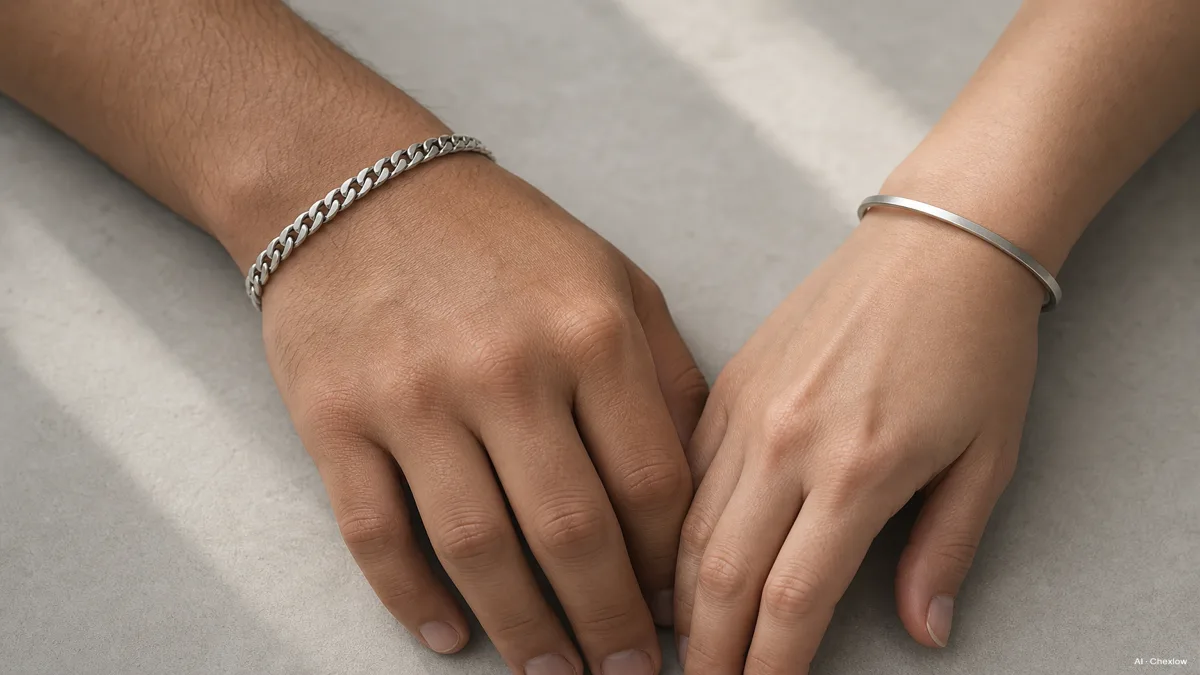
- First, check fastening. Put it on and remove it without help. For a chain, confirm that the clasp closes fully. For a cuff, follow the maker's fitting instructions instead of forcing the opening.
- Then, compare the fit. Keep the candidate whose position and movement you prefer. If both annoy you, try a different size or width before changing the metal.
- Before ordering, check the details. Confirm the exact dimensions, material, adjustment options and written return terms. The FTC recommends checking refund and return policies in writing.
Choose the chain when you prefer its drape and can manage its clasp. Choose the cuff when you prefer its fixed shape and the opening fits comfortably. If neither passes those checks, keep looking; your first bracelet does not need a second purchase to make it workable.
Cómo se elaboró esta guía
AI wrote this guide for Chexlow using maker sizing and construction guidance from James Avery, Tiffany and Dana Rebecca, chain descriptions from Market Square Jewelers, and material information from Cooksongold, The Steel Shop and the FTC's Spanish-language consumer guide. The first-purchase checks are editorial guidance based on those sources, not results of hands-on product testing.
Editado por el equipo de Chexlow · Las imágenes son ilustraciones generadas por IA