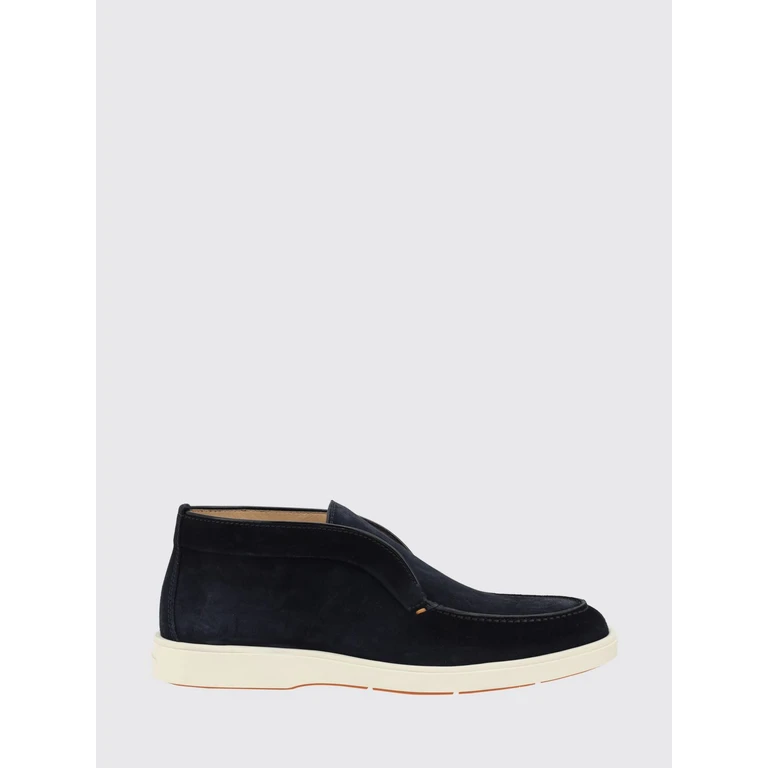
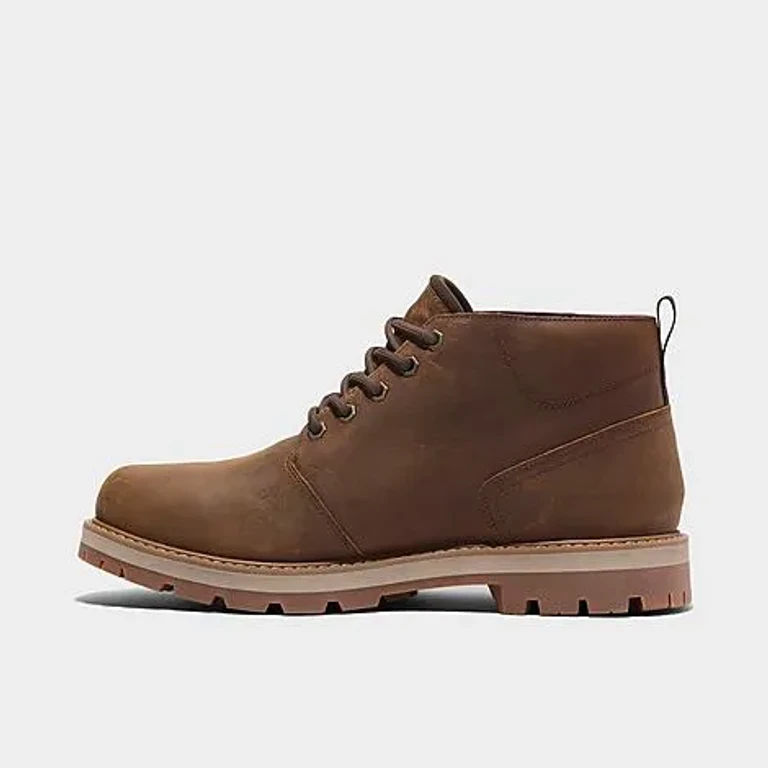
Walk into this decision thinking they are two separate products and you will go in circles. They are not. Once you see the relationship clearly, the choice gets easy.
Here is what actually matters.
What Makes a Desert Boot a Desert Boot (Not Just Any Chukka)
Think of it as a square-and-rectangle thing. Every desert boot is a chukka boot. Not every chukka boot is a desert boot. The desert boot is a specific, narrower style that lives inside the bigger chukka family.
The chukka itself is just a shape. Shoe historian June Swann described the essential version as ankle-high, open-laced, unlined, with two to four eyelet pairs, thin soles, and a rounded toe, usually in two pieces of suede (Chukka boot, Wikipedia). That is a broad definition. A lot of boots fit inside it.
The desert boot narrows it down. It was a specific design by Nathan Clark, great-grandson of the Clarks founder, who saw crepe-soled suede boots being made by cobblers in Cairo's Khan el-Khalili bazaar during the Second World War. He brought the idea home, and the desert boot launched commercially on 7 July 1950 (Hespoke Style, desert boot history). The original inspiration traced back to the veldskoen, a South African crepe-soled shoe worn by Eighth Army officers in North Africa.
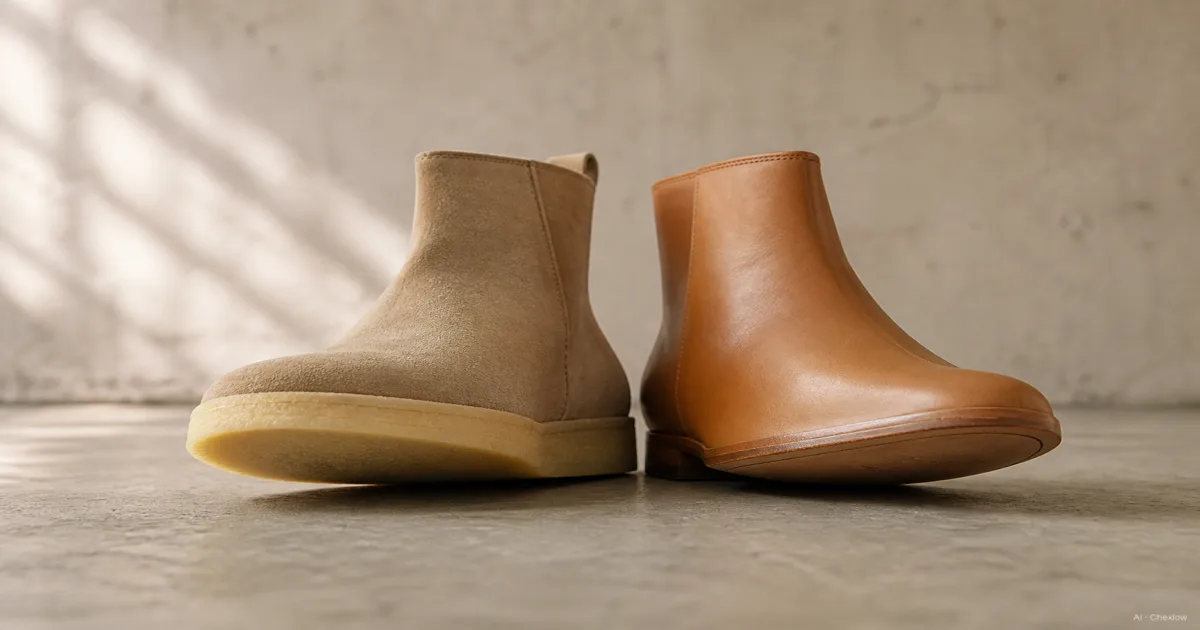
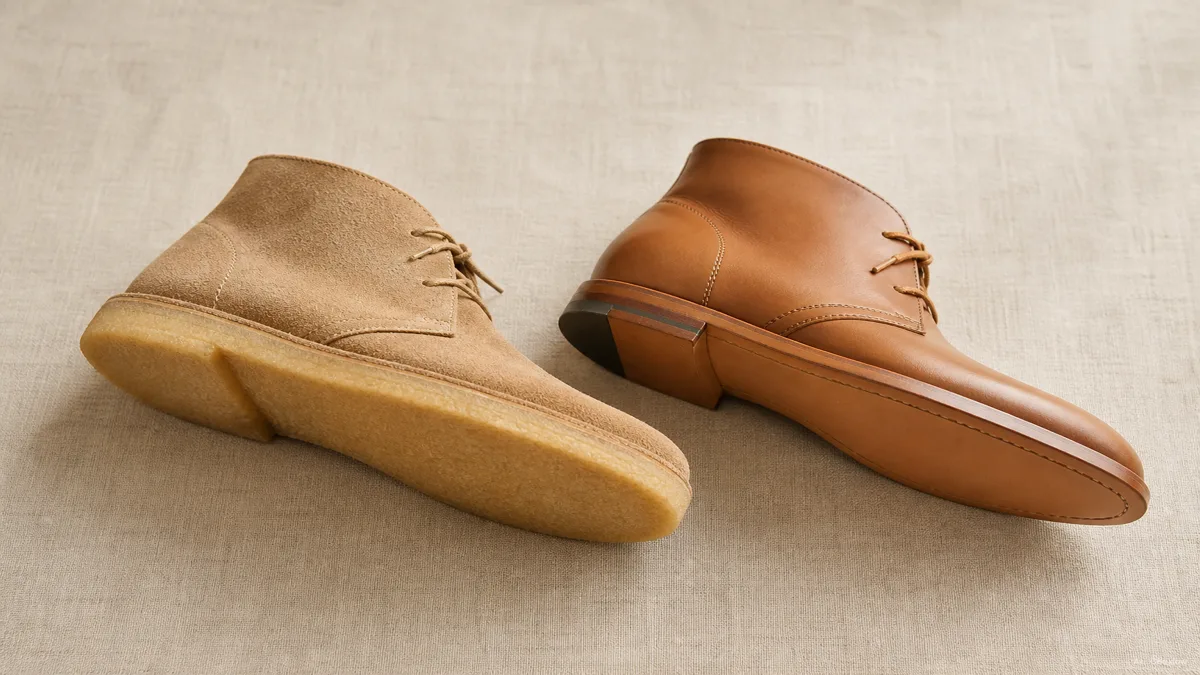
So a desert boot is, by definition: unlined, suede or nubuck upper, two eyelets, and a crepe sole. Strip away the crepe sole and put it on leather, line the inside, switch to full-grain, and you are back to a general chukka. The name even has a backstory worth knowing. A chukka is a roughly seven-minute period of play in polo, and the boots were worn by players between or after matches.
The Sole Decides Everything: Crepe vs. Leather vs. Commando
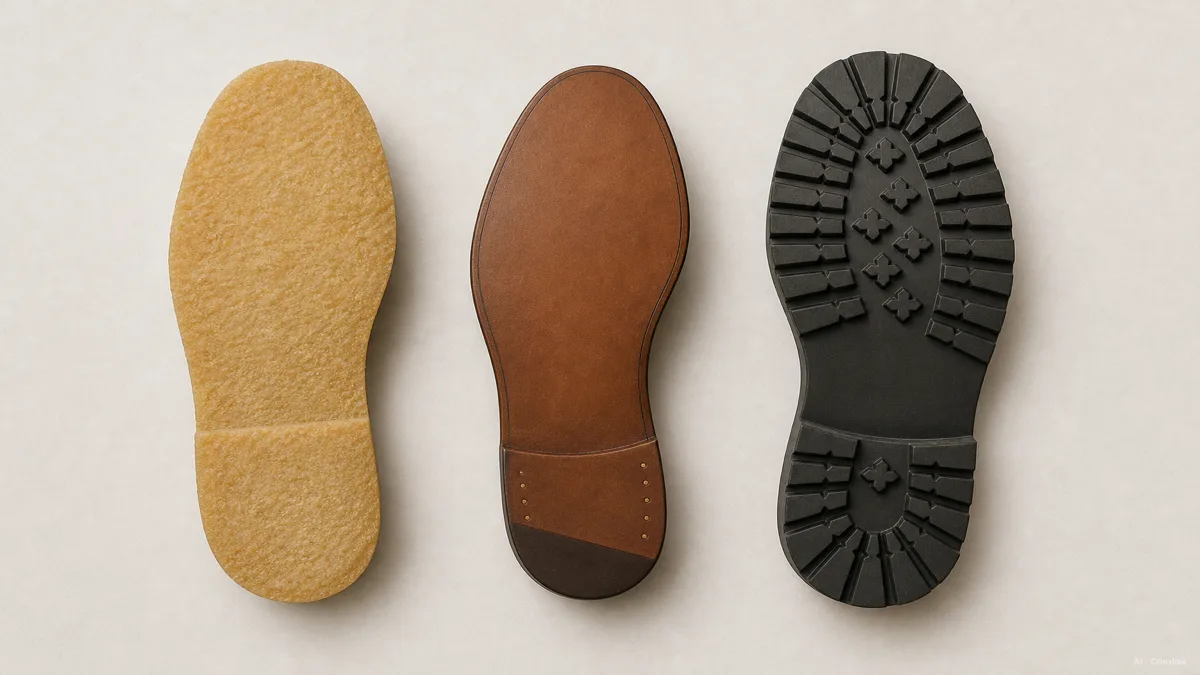
If you only remember one thing from this guide, make it this. The sole is the real fork in the road.
A crepe sole is the desert boot signature. Crepe is coagulated latex tapped from rubber trees, and it stays soft and a little springy. It absorbs shock, has a naturally textured surface, and reads casual. It is also why a desert boot looks relaxed even when the suede above it is pristine (Aquila, chukka vs desert boot).
A leather sole is the dressier path, and it is where a chukka boot pulls away from a desert boot. Leather is thinner, firmer, and cleaner in profile. It pairs with tailored trousers, takes a polish, and develops patina with age. The trade-off is grip and weather: leather soles slip on wet stone and wear faster on hard pavement.
A commando sole is the third option, a chunky lugged rubber that grips hard and shrugs off bad weather. It pushes a chukka in a rugged, outdoorsy direction, further from the desert boot's lightness (GearMoose, chukka vs desert boots).
The short version: crepe for soft and casual, leather for sharp and dressy, commando for grippy and rugged. The upper can look almost identical across all three. What you are really choosing is the floor you walk on.
Casual vs. Versatile: Choosing Your Formality Range
This is where the two styles separate in real life, away from the spec sheet.
A desert boot lives in casual and smart-casual territory. Suede upper, crepe sole, unlined and unstructured, it is light and breathable and a little soft around the edges. It looks great with jeans, chinos, and relaxed trousers. It looks out of place with a suit. That is not a flaw, it is the whole point. The desert boot was built to be easy, not formal.
A chukka boot, especially a leather-soled one in full-grain leather, reaches further up. It is more structured, often lined, and it transitions from jeans to business-casual trousers and, with the right outfit, even some suits. If you need one boot that can sit at a relaxed dinner and also hold its own at a smarter occasion, the leather chukka covers more ground.
A quick word on pants, because it trips people up. Slim-leg trousers work best with both styles. You want the hem to just rest on the upper of the boot, not pool over it and not ride above the ankle. Skinny and boot-cut both fight the silhouette. Jeans and chinos pair naturally with either boot. Only the structured leather chukka really pushes into dressier territory, so if your wardrobe is mostly denim and casual, the desert boot is the more honest match.
So the formality question answers itself. Mostly casual life, lots of denim, want comfort first? Desert boot. Need one boot that flexes from weekend to a smarter weeknight? Leather chukka.
Break-in, Care, and Longevity: What to Expect From Each
The day-one experience is genuinely different between these two, and it is worth knowing before you buy.
A crepe-soled desert boot needs no break-in. The sole is soft and flexible from the first wear, and the unlined suede upper has very little structure to fight against. You can wear it out of the box for a full day without drama. The downside is that crepe wears down faster on rough pavement and can pick up dirt, and suede needs a brush and a protector spray to stay clean. Crepe also compresses over time, so a heavily worn desert boot eventually flattens underfoot.
A leather-soled chukka asks for a short break-in. The firmer sole and any lining need a few wears to flex and settle around your foot. Start with an hour or two, then build up. The reward is longevity. Leather soles can be resoled, full-grain uppers take conditioning and polish, and a well-made leather chukka develops patina and lasts for years rather than seasons. If the boot is Goodyear-welted, where the upper, insole, and sole are stitched together along a welt, you can replace the sole entirely when it wears out, which stretches the lifespan a long way.
Care splits along the same line. Suede desert boots: brush after wear, use a suede protector, treat stains gently and quickly. Leather chukkas: wipe down, condition every month or two, polish when you want to deepen the color, and use shoe trees to hold the shape. Different uppers, different routines, same goal of keeping the boot looking like itself.
First-Buy Shortlist: Entry, Mid, and Premium Picks
You do not need to spend a lot to start, and you can spend a great deal if you want to. The category stretches across a wide price range, so it helps to think in three tiers.
At the entry level, Clarks is the obvious starting point, since the brand effectively invented the desert boot and remains the reference benchmark. The Clarks Bushacre sits near the bottom of the range and is a low-risk way to find out whether you even like the crepe-sole feel before committing more (Stridewise, best desert boots). At this tier you are buying the look and the comfort, not heirloom construction.
In the middle, the classic Clarks Desert Boot is the canonical pick, the suede-and-crepe original most people picture when they hear the words. Around this tier you also find makers like Grenson and Italian options such as Astorflex, where build quality steps up and the leather chukka variants start to appear (Ape to Gentleman, best chukka boots).
At the premium end, Goodyear-welted boots from Northampton makers like Crockett & Jones, or family-run welt factories such as Morjas, climb well past the rest of the range. Here you are paying for resoleable construction, better leather, and a boot that can be maintained for many years. This is a leather-chukka kind of purchase, dressier and built to last, rather than the casual crepe-soled desert boot.
A simple rule for a first buy: if you want easy and casual, start with a crepe-soled desert boot at the entry or mid tier and see how often you reach for it. If you already know you want something dressier and longer-lived, skip to a leather chukka and treat it as a multi-year piece. You can compare specific models and current prices across stores on Chexlow before you commit.
Sources
- Chukka boot, Wikipedia — chukka definition, June Swann's essential-boot description, polo name origin
- Hespoke Style, desert boot history — Nathan Clark, Cairo bazaar inspiration, 1950 launch, veldskoen origin
- Aquila, chukka vs desert boot — crepe sole, suede upper, formality and construction differences
- GearMoose, chukka vs desert boots — leather and commando sole options, structure and lining differences
- Stridewise, best desert boots — entry and mid price tiers, Clarks as reference benchmark
- Ape to Gentleman, best chukka boots — mid and premium makers, Goodyear-welted construction