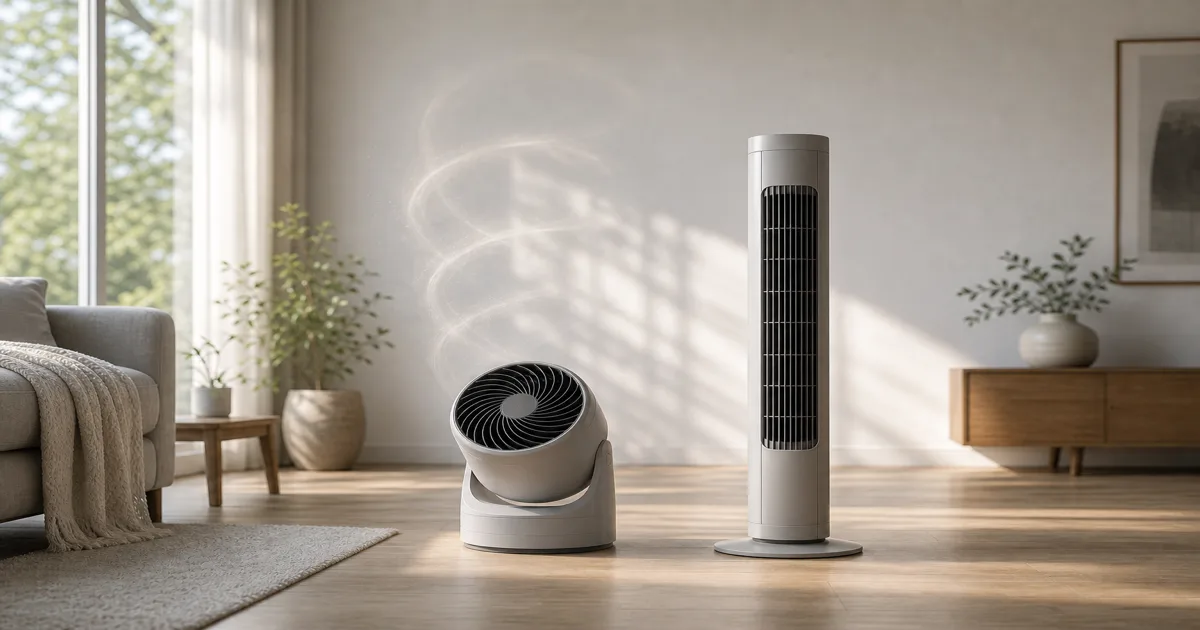
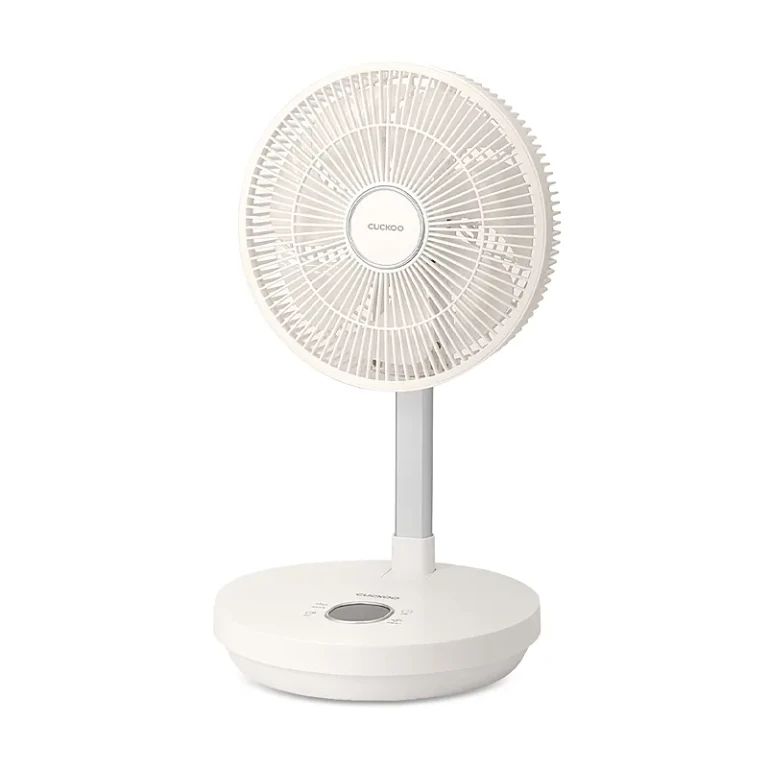
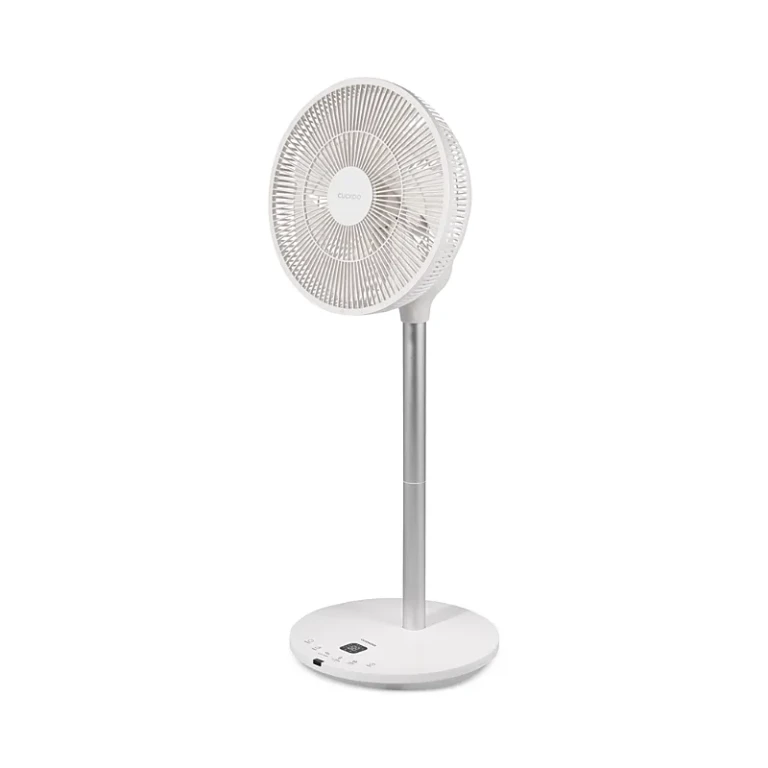
Choose the job before the shape
If you mostly want to feel cooler at your chair or bedside, start with a pedestal or tower fan. If the air conditioner leaves one part of the room comfortable and another warm, start with an air circulator. This personal-breeze versus room-mixing distinction is the useful starting point in IRIS OHYAMA's guide.
It is not a hard boundary. IRIS's hybrid fans offer both gentle airflow and stronger circulation. If you need both, shortlist one device whose low setting suits you before buying two.
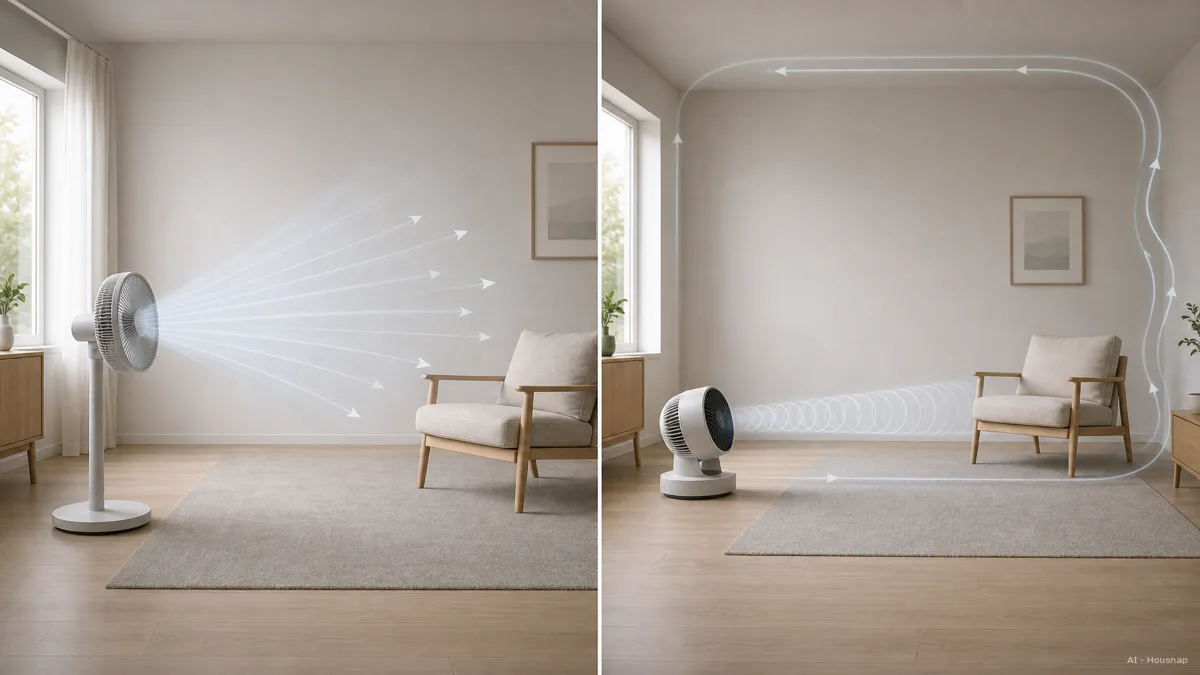
The arrows illustrate the two aims; they do not guarantee a complete airflow loop in every room.
Neither device refrigerates the air. DOE explains that fans improve how people feel, while air conditioning transfers heat outdoors. A longer advertised throw is not a substitute for cooling capacity.
Match the device to its actual position
Before comparing specifications, note the distance to your seat, the available floor space and anything blocking the intended airflow. For direct cooling, prioritize an outlet height and angle that reach you. For circulation, identify an open route across the room.
CFM means cubic feet per minute, a measure of airflow volume (EPA). It is not a room-area rating. IRIS labels coverage as approximate and based on its own criteria, so this guide does not convert a floor area into one universal CFM requirement.
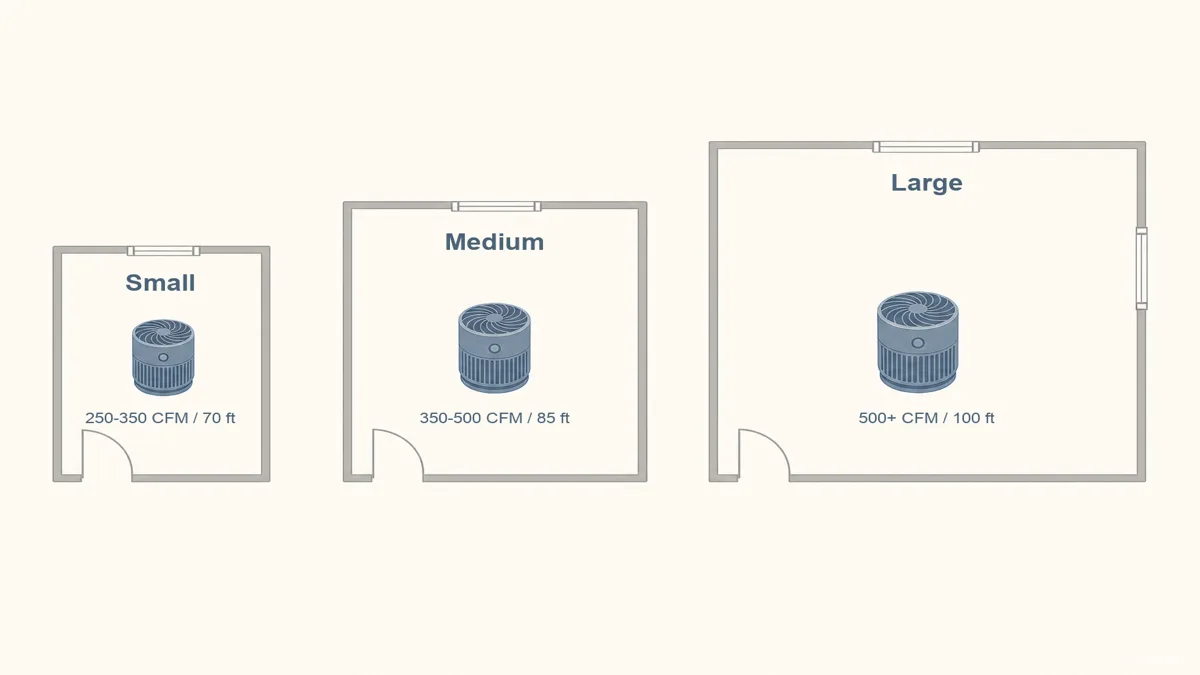
Use this illustration to think about room layout. Its CFM and distance figures are not verified sizing thresholds; use the specific model's documentation.
For a concrete specification example, the Vornado 630 has three speeds, a pivoting head and an advertised reach of up to 70 feet. That reach does not tell you how much breeze you will enjoy at your seat. Treat it as one specification, not a reason to size up automatically.
Compare the setting you will actually use
A headline reach figure and a quiet-mode claim may describe different settings. IRIS's hybrid range states maximum airflow for coverage and throw, but specifies lower settings for quiet operation. Do not combine those claims into one imagined performance level.
Compare two shortlisted devices on these points:
- Useful airflow. Which setting reaches your seat or serves your intended circulation route?
- Sound at that setting. Look for the speed and measurement conditions behind a noise claim. If those are missing, leave the comparison unresolved.
- Control and upkeep. Check tilt, oscillation, accessible controls and the cleaning instructions. A removable grille, such as the 630's, is a concrete feature to compare.
- Power. Compare the listed consumption and its operating conditions. AC or DC alone is not an energy bill.
IRIS's AC/DC example compares two named models. It does not justify a fixed saving for every DC fan. Spend extra for a useful adjustment range or demonstrated performance at your chosen setting, rather than the motor label alone.
Check the result before adding another appliance
For direct cooling, adjust the position and speed from the chair where you will use it. For room mixing, follow the model's placement instructions: Vornado calls for unobstructed airflow and suggests low speed toward the ceiling for winter use. Stop or redirect the breeze if it makes you uncomfortable.
Judge success against the original problem: comfortable airflow at your seat, or less noticeable hot and cold areas. If moving the device helps, reconsider placement before buying a larger one. If the whole room remains too hot, more circulation alone is not the same as removing heat.
If your real concern is airborne dust, a stronger breeze is the wrong buying criterion. EPA describes filtration as a supplement to controlling pollutant sources and ventilating with clean outdoor air. Continue with choosing an air purifier by filtration and room size when that is the job you need done.
Sources
- IRIS OHYAMA's circulator selection guide
- IRIS OHYAMA's hybrid fan specifications
- Vornado 630 specifications
- Vornado placement FAQs
- DOE Home Cooling 101
- EPA on airflow and ventilation
- EPA on household air filtration
Cómo se elaboró esta guía
AI wrote this guide for Chexlow using IRIS OHYAMA and Vornado documentation, plus U.S. Department of Energy and EPA guidance. The editorial focus is choosing between personal airflow and room mixing, then checking placement and usable settings. It is a documentation-based comparison, not a hands-on product test.
Editado por el equipo de Chexlow · Las imágenes son ilustraciones generadas por IA