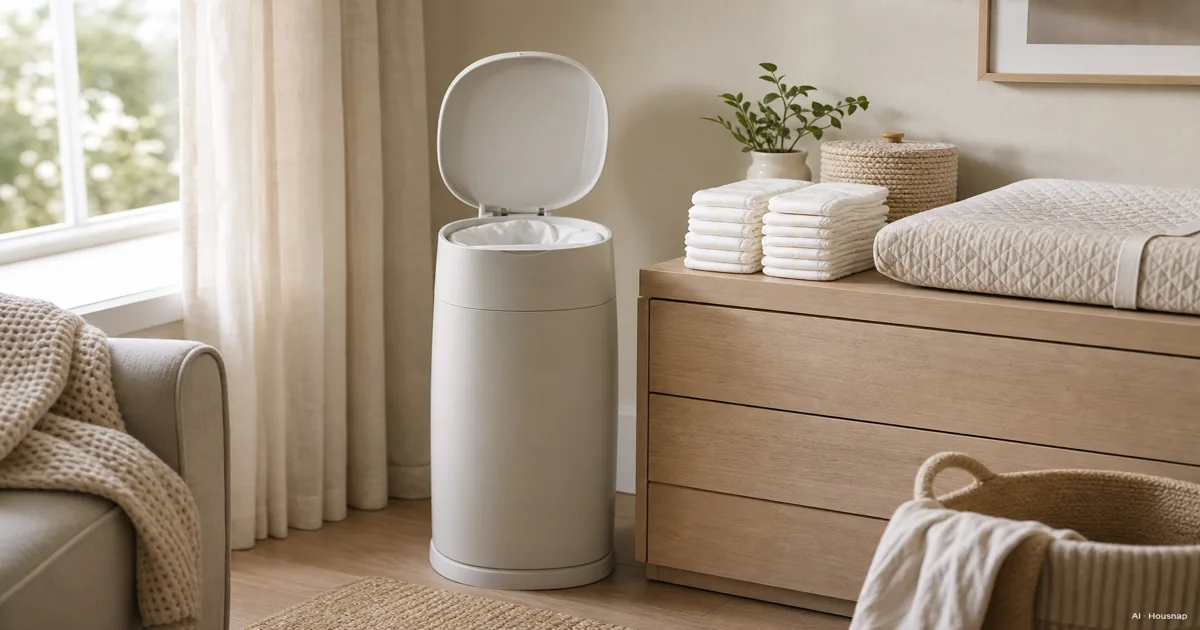

Narrow the choice by what you want to avoid
For a first pail for disposable diapers, start with one priority rather than an odor-control ranking.
- Avoid special refills: shortlist the Ubbi steel pail. It uses a sliding lid, rubber seals and standard trash bags. Check that operating the slide suits you. Ubbi’s design overview
- Open with a pedal and choose between two bag formats: consider the original Munchkin STEP. It accepts refill rings or Snap, Seal & Toss bags; its supplied baking soda puck is lavender scented. STEP specifications
- Prefer a pedal and clamp closure: compare Diaper Genie Complete, which has double clamps and a carbon filter. Keep “Complete” in your search: these details do not describe every Diaper Genie. Complete specifications
These are choices about operation and consumables, not a claim that one pail wins every odor test. If added fragrance bothers you, check the refill and deodorizer as carefully as the pail.
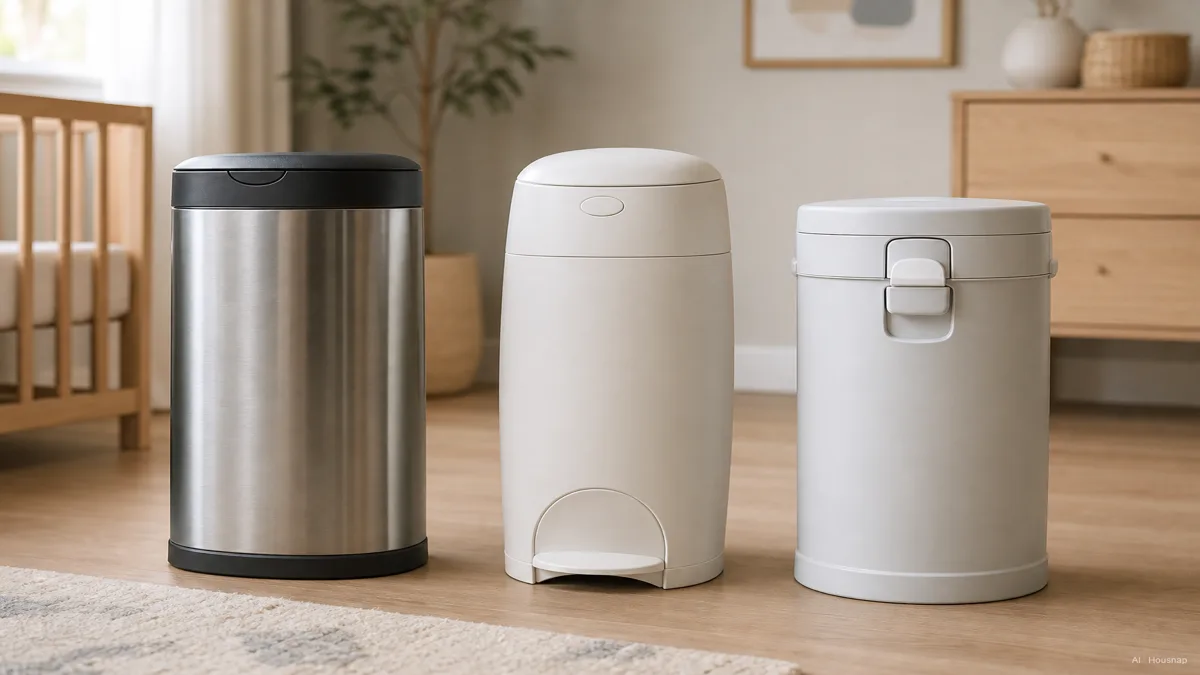
Check what happens after you press the pedal
A pedal tells you how the lid opens. It does not tell you whether the whole disposal process is hands-free.
STEP requires you to push the rolled diaper through the seal, then close the lid to twist the bag opening shut. It does not individually tie each diaper. Watch both movements before buying. STEP owner’s guide
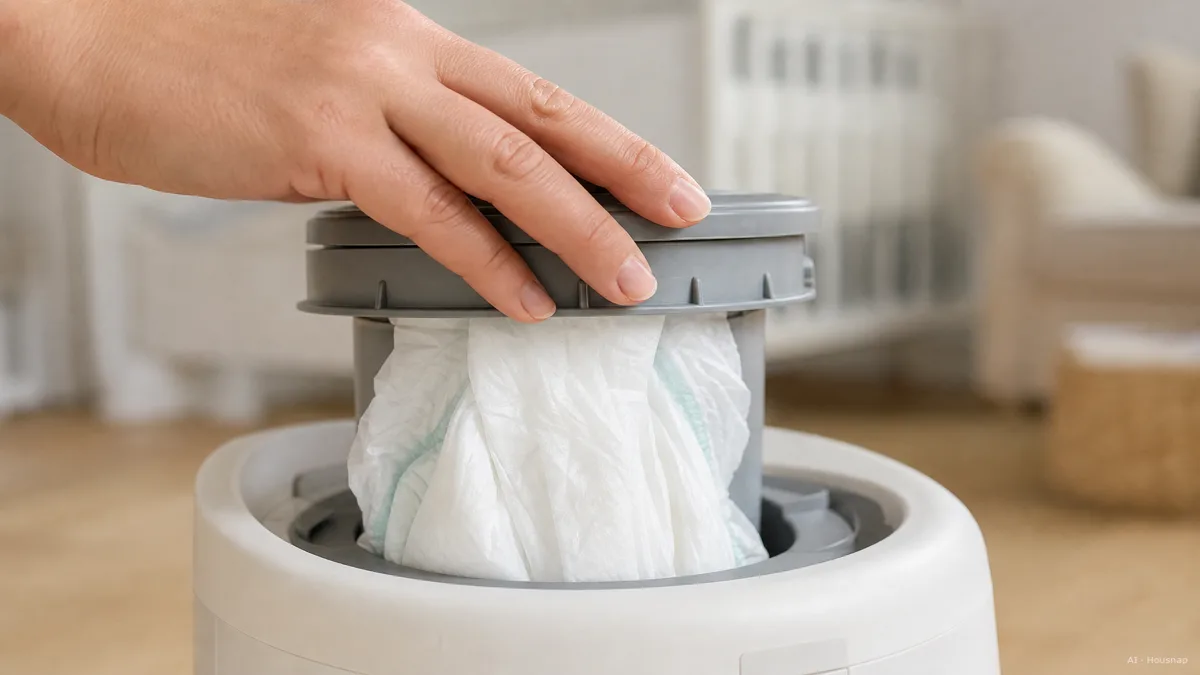
The illustration shows a twist mechanism, not a photograph identifying a particular model. Use it to distinguish the moving bag opening from the outer lid.
Also separate “closed” from “being emptied.” Ubbi acknowledges odor when its pail is open. Treat odor-lock wording as a description of containment, not a promise that removing a full bag will be odorless. Ubbi FAQ
Choose the refill before comparing running costs
Put the exact pail name beside the refill’s compatibility list. A shared brand name is not enough.
- Ubbi liners: the manufacturer specifies tall 13-gallon kitchen bags. Check dimensions and fit rather than assuming every local rubbish bag will work. Bag guidance
- STEP rings: continuous film is cut and tied when you remove a full bag. Ring instructions
- STEP Snap, Seal & Toss: these separate bags close without cutting or tying. Choose them if that part of emptying is what you want to simplify. Bag details
- Complete refills: look for the compatible round-refill format. Diaper Genie distinguishes round continuous film from Easy Roll tear-off bags, so do not swap formats by brand alone. Refill formats
Cross-brand compatibility can exist: Munchkin lists its Arm & Hammer refill rings for both STEP and Complete. Do not assume other cartridges work just because this one fits both pails. Compatibility list
For cost, compare the pail price plus replacement bags and required consumables over the same period. Count individual bags when a pack contains bags; for continuous film, estimate how much your emptying routine uses. A newborn-diaper claim is not a count of bag changes.
For example, Complete lists up to 36 newborn diapers in the pail, versus 270 across its included refill. Those numbers measure different things. Neither sets how long you should leave waste indoors. Capacity definitions
Make the space and emptying routine work
Before ordering, mark out the pail’s footprint and allow room to open the lid, operate a pedal and remove a full bag. With no baby on the changing surface, rehearse where you would stand and how you would reach the opening.
Never leave a baby unattended on a changing table, even with the strap fastened. Keep changing supplies within your reach and beyond the child’s. A convenient pail position must support that routine. AAP changing-table guidance
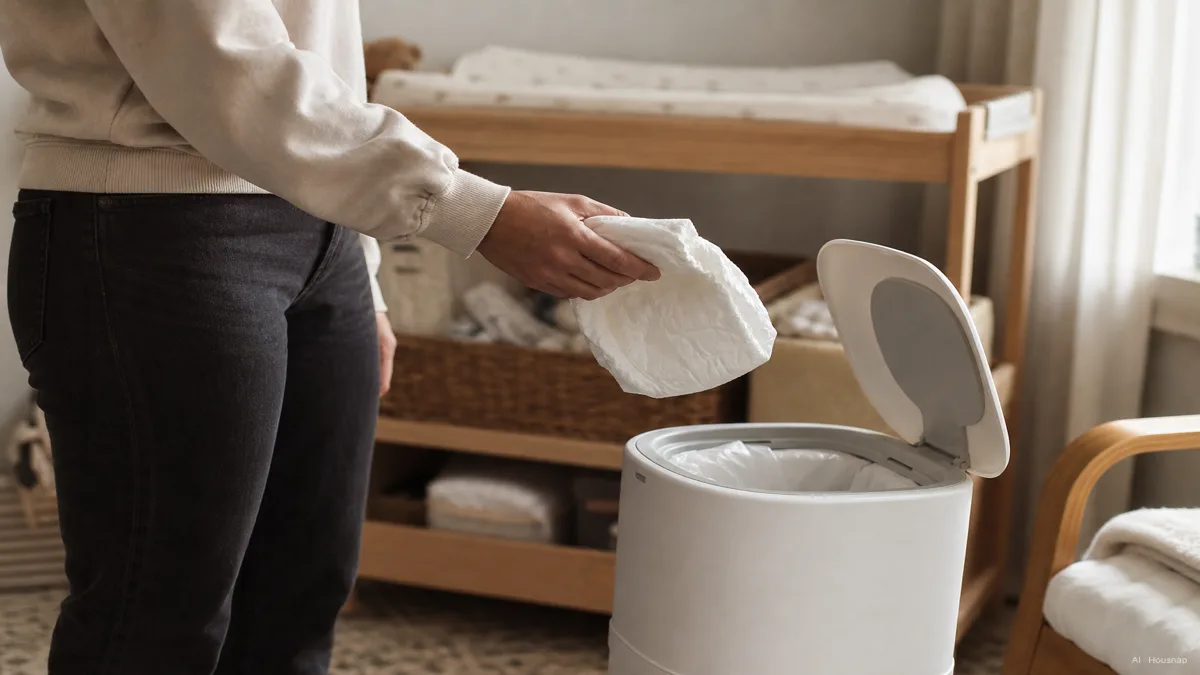
Check care instructions too. Ubbi specifies a dry cloth and no liquids; it also warns that overfilling makes the bag harder to remove. A larger capacity is not a reason to keep packing diapers in. Ubbi care and emptying guidance
If you have not chosen the sleep furniture and cannot yet judge the available floor space, resolve crib versus bassinet before fixing the pail’s position.
Your purchase is ready when you can name the exact pail, a confirmed compatible bag and a workable place to open and empty it.
Cómo se elaboró esta guía
Written by Chexlow’s AI editor using manufacturer product pages, refill compatibility information, the STEP owner’s guide and AAP changing-table guidance. The editorial focus is choosing a pail for disposable diapers by operation, consumables and placement; this is not a hands-on odor comparison.
Editado por el equipo de Chexlow · Las imágenes son ilustraciones generadas por IA