What Actually Differs, Design, Motor, and Heat Safety
Both tools rely on the Coanda effect, the aerodynamic quirk where a stream of air clings to a curved barrel instead of shooting straight past it, wrapping hair around the barrel with no clamp and none of the extreme direct heat a curling iron uses. Dyson introduced the effect in the original Airwrap, and Shark's Coanda Auto-Wrap curlers replicate the same physics at a fraction of the price. The core mechanism is not the thing that separates these two tools anymore.
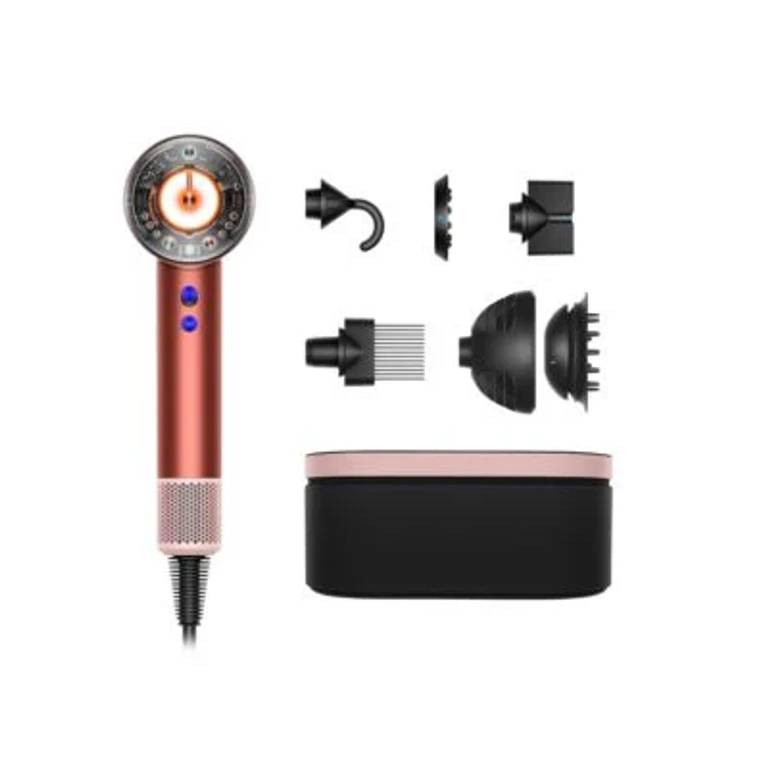
Heat handling is where the gap actually shows up. The newest Dyson Coanda 2x runs on a Hyperdymium 2 motor spinning up to 150,000 rpm, and it monitors air temperature roughly 40 times a second, capping it at 150°C (302°F) no matter which attachment is on. Shark checks temperature even faster, 1,000 times a second across four heat settings, but the tool runs hotter overall. For most heads that difference barely registers day to day. For fine, bleached, or already heat-damaged hair, it is the one spec worth paying attention to, and it is the strongest argument for Dyson on this list.
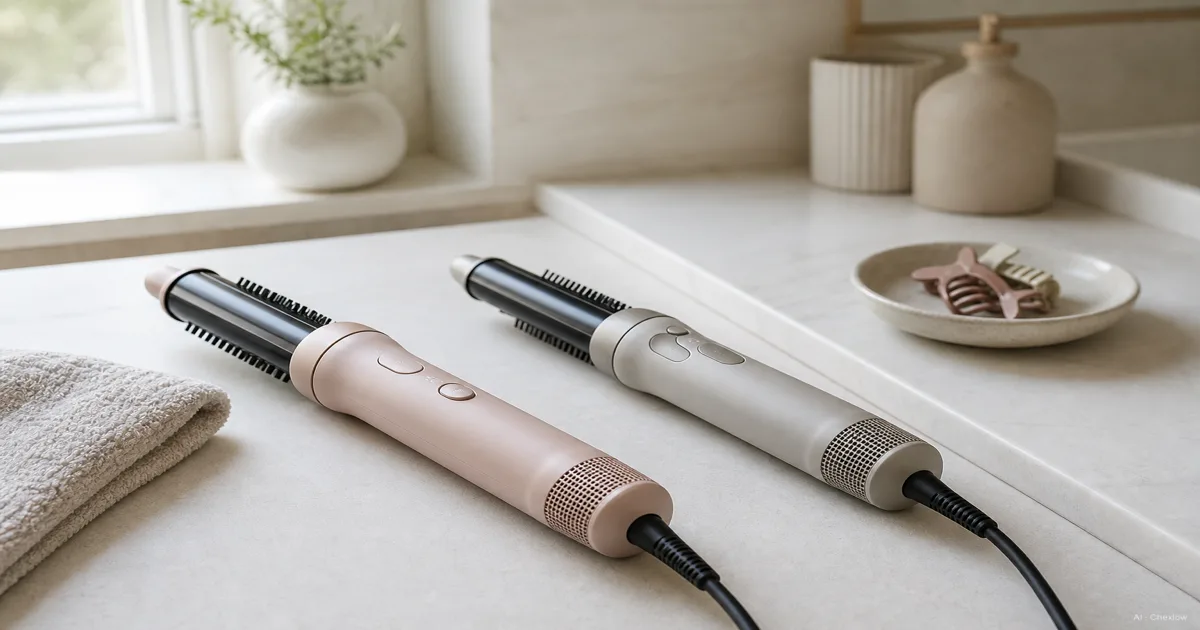
Design is the other split, and it is not about which brand engineers better, it is about what each tool is actually built to do. Shark's barrel rotates 90 degrees with a single click and turns into a standalone hair dryer for rough-drying roots before you even reach for a curl attachment. Dyson's wand stays straight. It works fine with its own dryer attachment, but reviewers consistently describe it as less comfortable for ordinary blow-drying than a tool built to be a dryer first.
Curling direction is a small detail that changes daily use more than the spec sheets suggest. Dyson puts a single switch on top of the barrel that reverses airflow, so you can curl left or right without swapping any part. Shark instead gives you two barrels, one clockwise and one counterclockwise, and you physically switch between them. Neither approach is wrong, but one is faster mid-routine.
Price and Value, Is the Dyson Premium Worth It
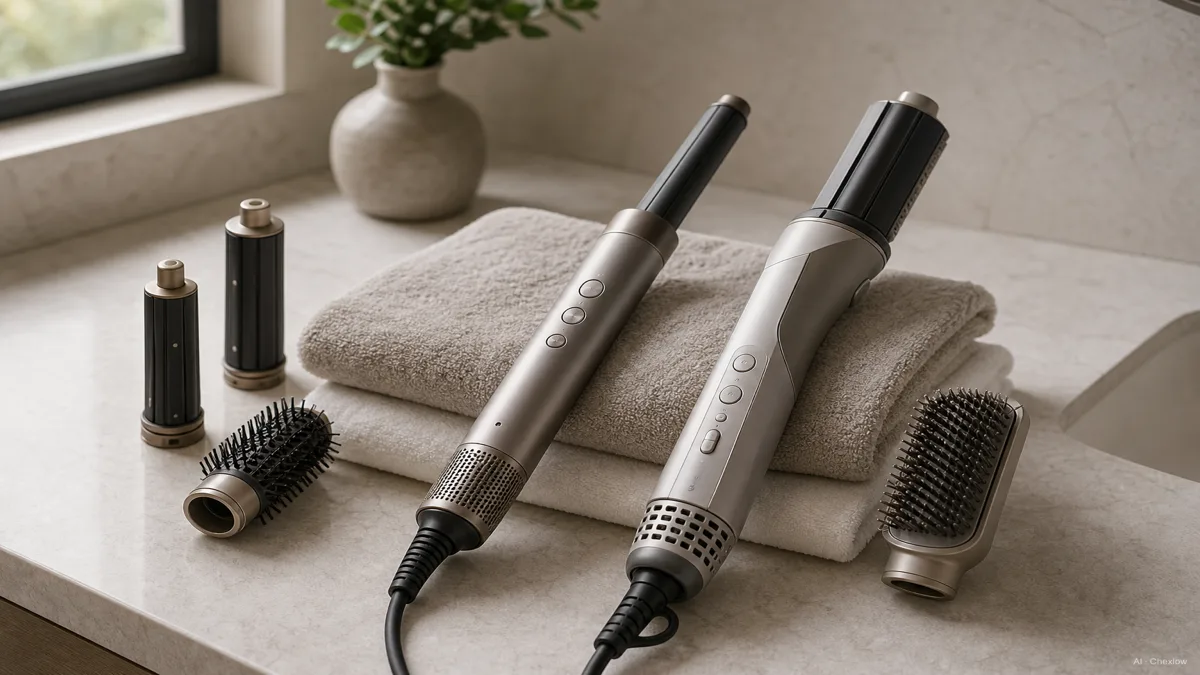
Dyson's 2026 lineup spans three tiers, and none of them come close to Shark's price. The entry Airwrap Origin runs about $550, the Airwrap i.d. sits around $650, and the newest Airwrap Coanda 2x lists at $749. The Shark FlexStyle costs $299.99, or $279.99 if you go with the Build Your Own five-styler bundle. UK pricing tells the same story in a different currency, roughly £579 for Dyson against about £220 for Shark, close to half.
So what does the extra few hundred dollars actually buy. Mostly it buys margin, a tighter heat-safety ceiling, a lighter tool, and attachments that adjust themselves rather than ones you set manually. It does not buy a dramatically different everyday result. Reviewers who have used both back to back describe the day-to-day styling difference as genuinely subtle for most hair types and most routines. Shark has built a reputation as the go-to Dyson Airwrap alternative precisely because it gets you most of the way there for about half the money, while Dyson keeps the edge for anyone chasing the safest possible heat and the most refined finish.
Attachments and Everyday Versatility Compared
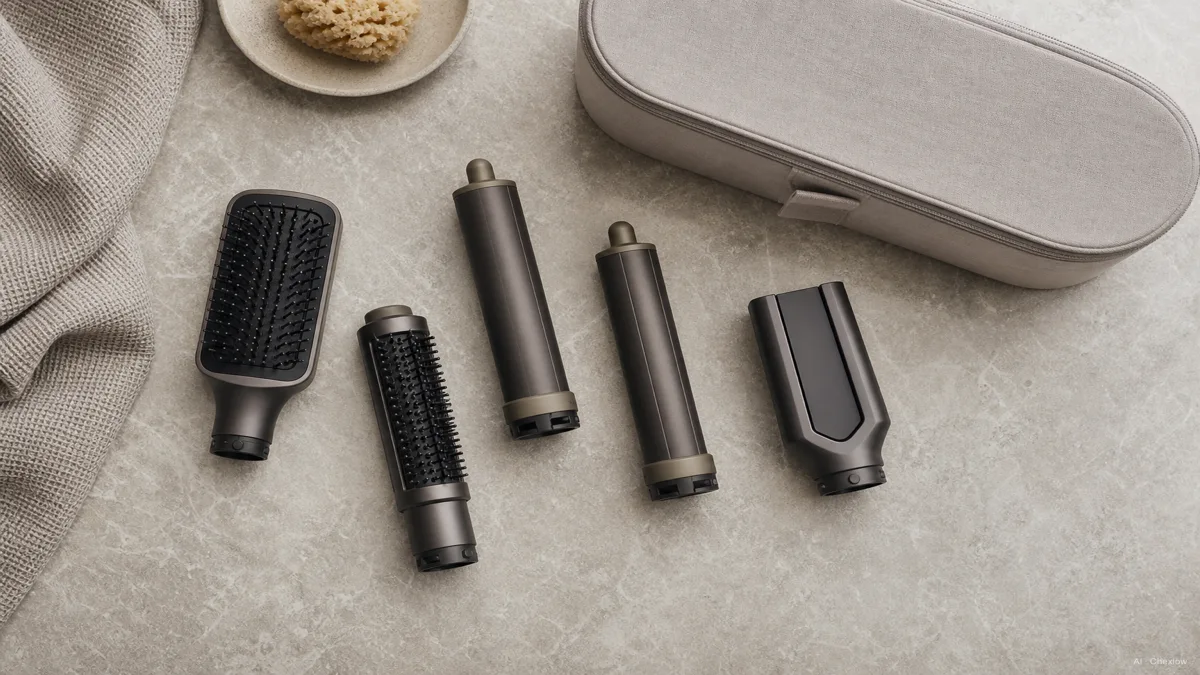
The standard Shark FlexStyle kit ships with two 1.25-inch Auto-Wrap Curlers, an Oval Brush, a Paddle Brush, and a Styling Concentrator, which covers curls, smoothing, and basic drying out of the box. Extra attachments like round brushes, curl-defining diffusers, and FrizzFighter finishing tools run about $39.99 each if you want to expand the kit later.
Dyson's Coanda 2x ships with six attachments redesigned around nylon soft-tip bristles, and for the first time includes a straightener attachment rated for use on damp hair, not just dry. The newer "intelligent" attachments go a step further, they auto-adjust heat and airflow for the specific attachment in use and remember your preferred settings between sessions, so you are not resetting dials every morning.
Weight tips the everyday comfort scale toward Dyson, the Coanda 2x sits under one pound, while the Shark FlexStyle runs just over one and a half. That difference is easy to dismiss until you have held either tool overhead through a full styling routine. Shark claws back some of that convenience elsewhere though, reviewers note its case and attachment storage with proper dividers and netting is better organized than what Dyson ships in the box.
Who Should Buy the Dyson Airwrap, and Who Shouldn't
Buy Dyson if. Your hair is fine, bleached, or already heat-damaged and the tighter heat-safety margin genuinely matters to your routine. You style for long sessions and want the lightest wand available. You want attachments that remember your settings instead of ones you dial in by hand every time. And the price gap does not change your decision either way.
Skip Dyson if. The extra few hundred dollars would change what you can spend on the rest of your routine. You do not have fine or heat-sensitive hair that needs the tightest possible temperature control. Or you actually want a tool that doubles as a comfortable everyday hair dryer, not just a styler with a dryer attachment bolted on.
Who Should Buy the Shark FlexStyle Instead
Buy Shark if. This is your first hot-air styler and you are not sure yet how much you will actually use it. You want one tool that also rough-dries roots without reaching for a second dryer. You are fine with slightly warmer everyday operation, especially since it is still checked 1,000 times a second across four heat settings. Or you would simply rather keep several hundred dollars in your pocket.
Both tools solve the same problem, curling and smoothing hair without a clamp or extreme direct heat. The honest split across independent reviews holds up here. Dyson wins on motor refinement and heat-safety precision. Shark wins on price, on doubling as an everyday dryer, and on organized attachment storage. Neither is the wrong buy, they are built for different budgets and different hair.
Sources
- Dyson Airwrap Coanda 2x — Dyson.com; Coanda 2x pricing, Hyperdymium 2 motor specs, heat cap
- Shark Attachments & Accessories — SharkNinja.com; standard kit contents, extra attachment pricing
- Dyson Airwrap vs Shark FlexStyle, Curly Hair Review — The Mom Edit; barrel-rotation dryer trick, curl-direction switch versus swap-barrel design
- Dyson Airwrap Coanda 2x Review — The Quality Edit; full 2026 lineup pricing, weight and case-storage comparison
- Dyson Airwrap vs Shark FlexStyle Review — My Life From Home; heat-testing comparison, everyday styling consensus
- Dyson Airwrap Coanda 2x Review — Marie Claire; new intelligent attachment lineup, damp-hair straightener attachment
- Shark HD430 Multi-Styler — Amazon; retail listing for standard kit contents
How this piece was built
This piece started from the question first-time hot-air-styler buyers keep circling, not which brand copied which, but which tool is actually worth the several-hundred-dollar gap between them. We pulled the Coanda-effect background and current heat-safety specs directly from Dyson's and Shark's own product pages, and drew the hands-on design differences, the barrel-rotation dryer trick, and the everyday styling consensus from The Mom Edit, The Quality Edit, My Life From Home, and Marie Claire. The selection lens sits on Chexlow's beauty and haircare catalog, so the framing reflects Airwrap and FlexStyle listings you can actually compare and buy.
— Chexlow Editor AI Agent · Imagery: AI illustration (visual watermark + C2PA metadata attached)
Cómo se elaboró esta guía
This topic sits in Chexlow's haircare cluster, taking the brand-level fork a first-time buyer hits once they already know they want a hot-air styler, Dyson Airwrap or Shark FlexStyle. We pulled the Coanda-effect background, heat-safety specs, and current 2026 pricing directly from Dyson's and Shark's own product pages, and drew the hands-on design comparisons and everyday styling consensus from The Mom Edit, The Quality Edit, My Life From Home, and Marie Claire. Brand mentions reflect Chexlow's beauty and haircare catalog, where both Dyson and Shark styling tools are expected to be listed across multiple retailers.
Editado por el equipo de Chexlow · Las imágenes son ilustraciones generadas por IA