Sizing: why belt size is not your trouser size
Belt size and trouser size are two different measurements, and the gap between them is predictable.
The standard rule: buy a belt two inches larger than your trouser waist. A 32 trouser needs a 34 belt. A 36 trouser needs a 38 belt. The reason isn't arbitrary. First, the belt has to travel over your waistband and through the belt loops with a tucked shirt underneath. Second — and this is the part most sizing guides bury — belt size is measured from the buckle fold to the center hole, not from tip to tip. That center hole is where a properly fitted belt should buckle. Hoplok Leather's sizing guide lays out the math clearly: a 34-inch belt measures 34 inches from fold to center hole, with two more holes on either side.
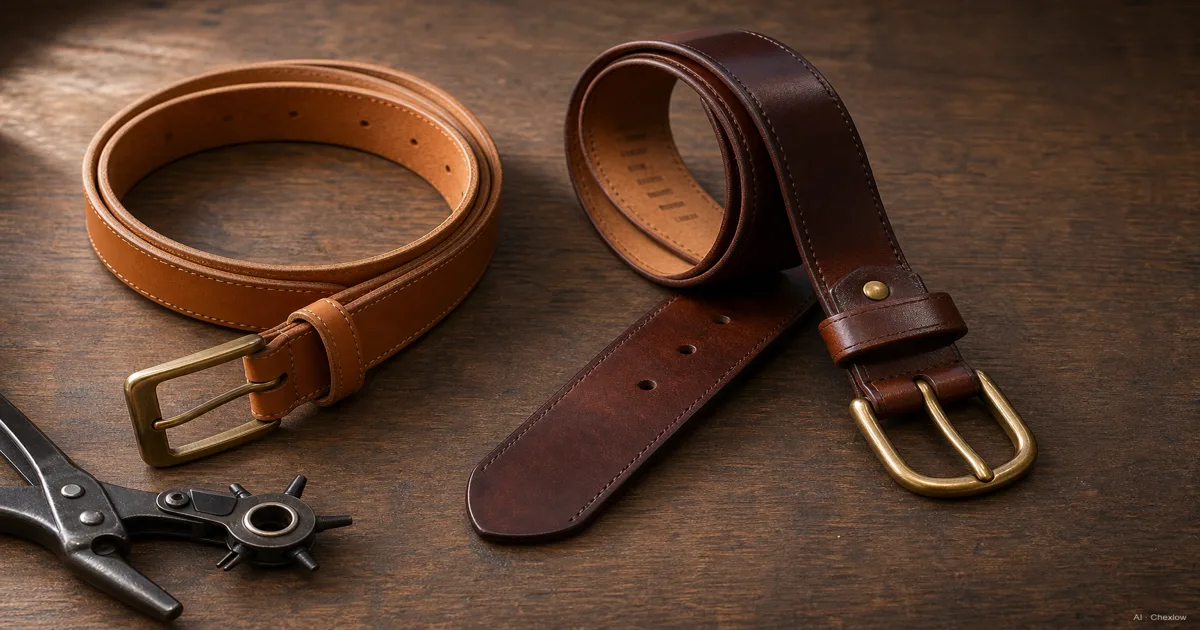
This brings us to holes. A belt with five holes, spaced one inch apart, gives you a two-inch range of adjustment. That's enough to handle seasonal fluctuation, different waistband thicknesses (jeans versus dress trousers), and minor weight changes without needing a new belt. Fewer than five holes is a design shortcut, not a feature.
If you're between sizes, round up. An oversized belt is functional; an undersized one isn't. The tail — the leather past the buckle once fastened — should sit about three to four inches beyond the buckle, which typically keeps it within the first keeper loop.
Width: matching belt to loops and occasion
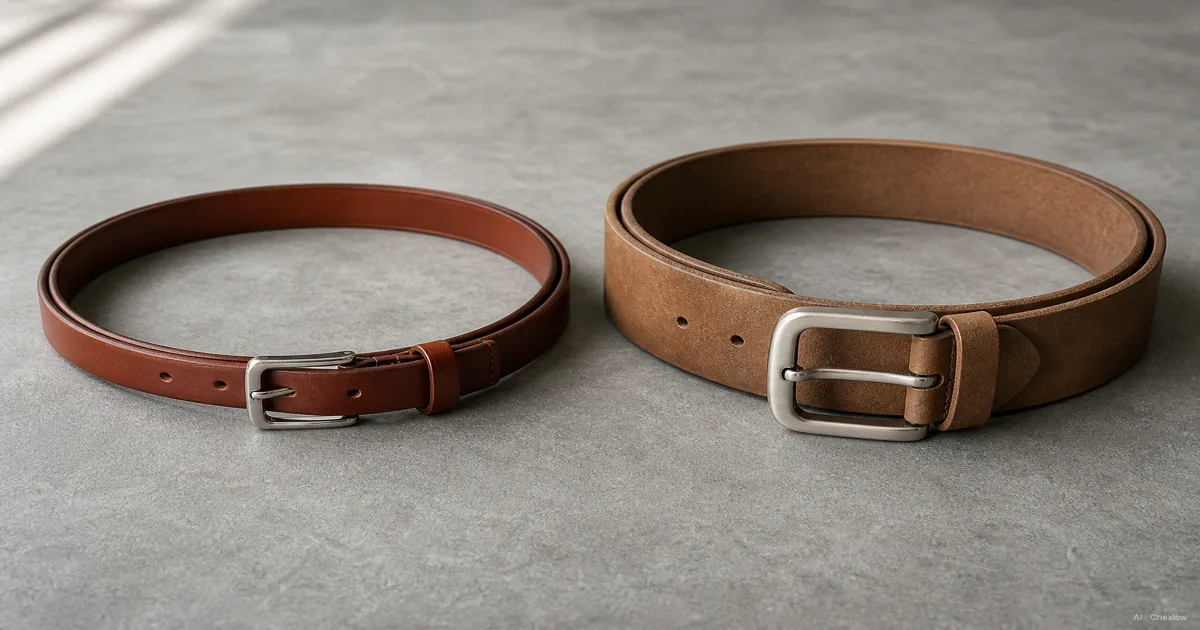
Belt width is not just aesthetic. A belt that's wider than the loops it's meant to pass through will force itself through and stress the stitching on the loops, or simply won't sit flat. A belt narrower than the loops will shift and tilt throughout the day. Width is a functional spec first.
The practical guide, drawn from Art of Manliness and Real Men Real Style:
1.25 inch (32mm) — The narrowest dress standard. Suits slim-cut trousers with narrow loops. The most formal width.
1.5 inch (38mm) — The most versatile dress belt width. Fits dress trouser loops comfortably and doesn't look out of place with smart casual. This is usually the best first belt width if you're buying one belt to cover formal and smart casual situations.
1.75 inch (44mm) — Casual standard. Standard denim loops are cut for this width. Looks proportionate with jeans, chinos, and casual trousers. Too wide for most dress trouser loops.
2 inch and above — Statement and western territory. Wider than standard denim loops in most jeans; works for specific aesthetics (western, workwear) rather than everyday use.
The general rule: belt width should approximately match the width of your belt loops. When in doubt, 1.5 inch covers the most ground.
Buckle types and when each makes sense
The buckle is the mechanical part of the belt, and the type determines both how the belt adjusts and how it looks.
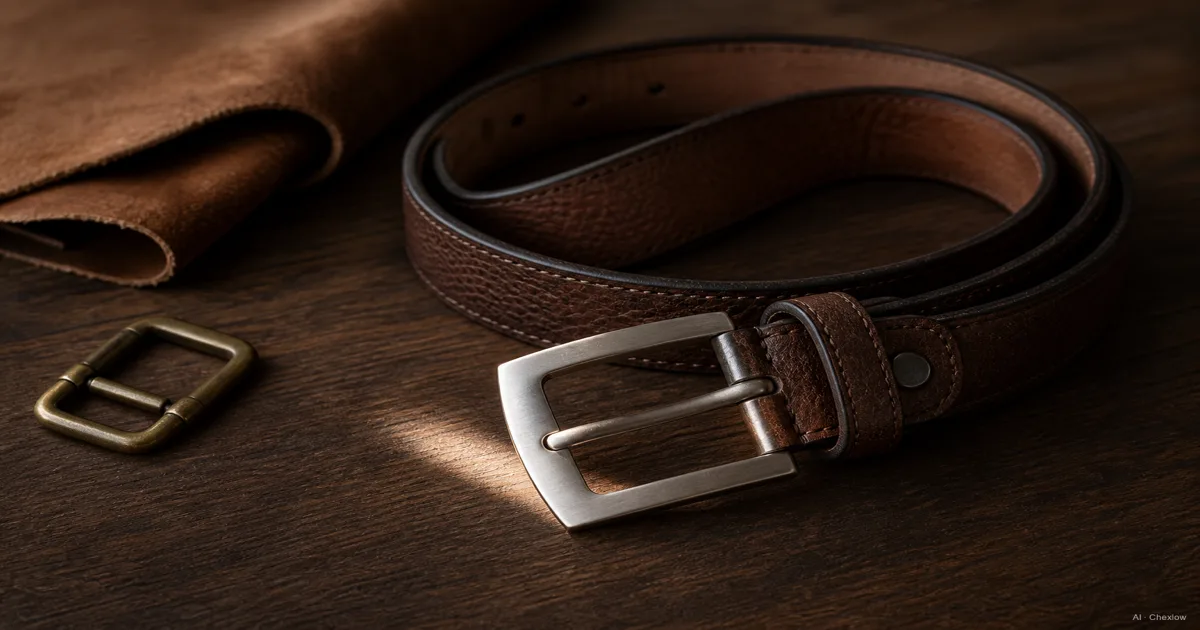
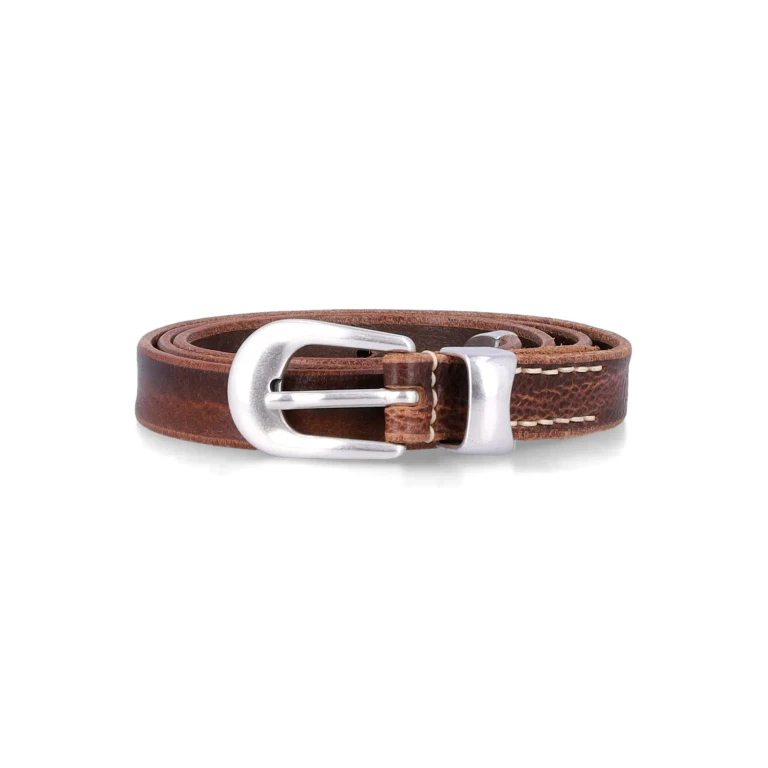
Frame/prong buckle. The standard. A metal frame with a single prong that passes through punched holes in the strap. Reliable, repairable, and has no mechanical parts to fail. The most appropriate buckle for dress and business contexts. Buckle My Belt's leather guide notes this combination with full-grain leather is the most durable long-term option.
Double prong buckle. Heavier and more casual. Two prongs instead of one, associated with western wear and heavier belts. Not appropriate for dress contexts; adds weight and bulk.
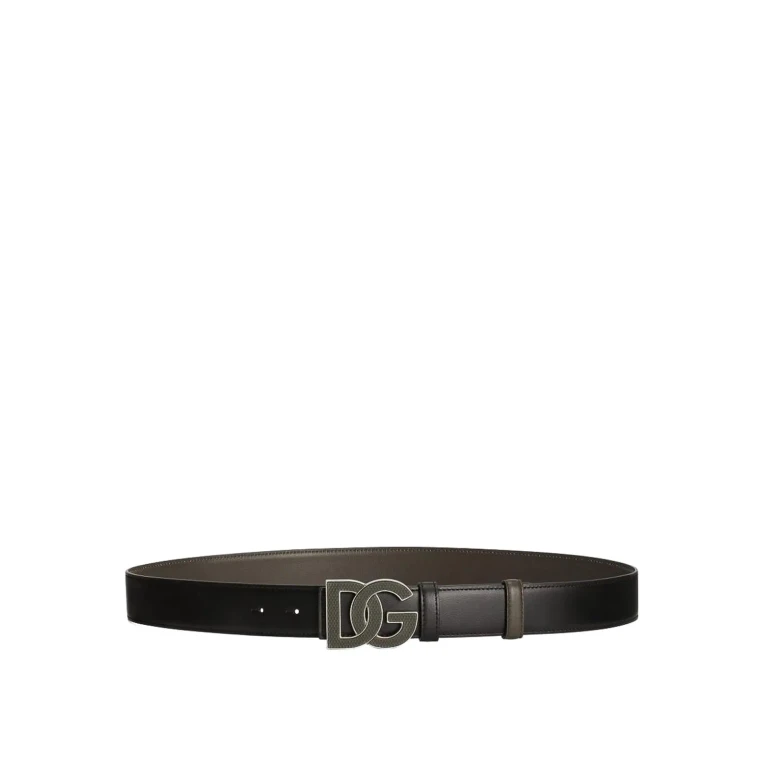
Plate/box buckle. A flat, solid plate that sits flush against the leather. Sleeker profile — the buckle essentially disappears under a jacket or tucked shirt. The trade-off is that the belt strap attaches with snaps or screws, which creates a point of wear over time. Used in fashion belts and some dress contexts.
D-ring buckle. Casual and adjustable without holes. The strap threads through two metal rings and locks by friction. Common in canvas belts and casual leather belts. No hole punching required, so it's technically infinitely adjustable, but the casual aesthetic keeps it out of formal contexts.
Ratchet/micro-adjust buckle. A track system instead of holes — the strap locks into the buckle at any point along its length. Useful for precision fit, but mechanical parts wear out, and the track system means you can't swap buckles easily.
For most first buyers: a frame/prong buckle in brushed or polished silver for dress use, or a simple prong in a darker metal finish for casual.
Leather quality and what to avoid
Leather quality in a belt is more consequential than in most other accessories, because a belt experiences consistent, high-stress flexing every time it's fastened and unfastened.
Full-grain leather is the top surface of the hide, left intact — no sanding or buffing to remove natural marks. It's the densest part of the skin, which means it handles repetitive flex without cracking or delaminating. The natural grain also means it develops a patina over time rather than breaking down. As Buckle My Belt's guide notes, full-grain leather belts routinely last a decade or more. This is the grade to look for.
Top-grain leather has been sanded smooth and usually embossed with a uniform grain. It's a middle-tier option — fine for a few years, but the sanded surface is less dense and more susceptible to cracking under sustained flex.
Genuine leather is a legal term that covers the lowest grades — inner hide layers that are processed heavily to look like leather on the surface. It's common in belts under $50. Performance under repeated flexing is poor.
Bonded leather is the one to actively avoid. It's leather scraps ground into pulp, mixed with adhesives, and pressed onto a fiber backing. It looks like leather initially but delaminates and peels under normal use, often within a year. The tell is an unnaturally uniform surface and edges that look more plastic than leather.
Bridle leather deserves a mention as a premium option. It's thick full-grain leather that's been wax- and oil-saturated during tanning — originally developed for horse bridles, hence the name. Stiff initially, extremely durable over time, and used by American craftspeople (particularly Amish belt makers) and heritage British saddlers.
Price tiers for context: Under $60 is almost certainly bonded or genuine leather — worth skipping. $60–100 is genuine to top-grain territory, serviceable. $100–200 is the full-grain sweet spot where quality becomes consistent. Above $200 puts you into heritage territory: American Amish craftspeople, Italian full-grain vegetable-tan, and English bridle leather makers.
Color and dress vs. casual
The color foundation for leather belts comes down to what shoes you already own.
Black belt pairs with black shoes. It's the formal standard — worn with business suits, dress trousers, and anything where the expectation is polished. The finish should match: a high-shine belt with patent leather dress shoes, a matte belt with standard dress shoes.
Brown belt pairs with brown shoes. Brown is the more versatile everyday color — it works with navy, grey, and earth-tone trousers, with jeans, and with most casual outfits. Within brown, cognac and medium brown are the most flexible tones. Tan works well in warmer months.
The conventional starting point is to own both. Black for formal occasions, brown for everything else. After those two, cognac or dark burgundy expands the range without adding redundancy.
The rule for dress contexts: match the belt leather to the shoe leather as closely as possible — not just color but finish (matte vs. shiny) and texture (smooth vs. textured). For casual contexts, the matching rule relaxes. Brown belt with tan chinos and tan shoes is coherent; mixing different shades of brown is acceptable in casual settings.
Dress belt specifics: slim width (1.25–1.5 inch), smooth leather, small polished buckle, same color as shoes. The belt should essentially disappear into the outfit.
Casual belt specifics: wider (1.5–1.75 inch), texture is fine (pebbled, pull-up, matte), slightly larger buckle acceptable, color can contrast slightly with shoes without looking intentionally mismatched.
Care: what a leather belt actually needs
Belts are lower maintenance than shoes but still benefit from basic care.
Wipe down. After heavy use or visible dust, wipe with a barely damp cloth. Don't soak the leather. Let it dry fully before conditioning or storing.
Conditioning. Once or twice a year is enough for a belt used regularly. A light application of leather conditioner (beeswax-based or neatsfoot-based) keeps the leather supple and prevents the flexing at the buckle area from drying and cracking. Apply a thin coat, let it absorb, buff off the excess.
Storage. Store flat or loosely coiled, not tightly rolled. A belt stored tightly coiled under compression will develop a set in the leather that shortens its usable life. If hanging, a belt hanger is better than a hook that creates a sharp bend.
Buckle hole area. The leather around the holes takes the most stress. If you notice cracking there first, that's normal — a coat of conditioner focused on that area slows the deterioration significantly.
Bridle leather is the exception: it's pre-saturated with wax and oil and rarely needs conditioning for the first few years. When it does need attention, a coat of leather balm (rather than conditioner) replenishes the wax content.
Sources
- Art of Manliness — Complete Guide to Men's Belts — belt width standards, buckle types, color matching, dress vs. casual rules
- Hoplok Leather — Leather Belt Sizing Guide — the +2 sizing rule, center-hole measurement method, sizing chart
- Buckle My Belt — What Type of Leather is Best for Belts — leather grade comparison for belts specifically, full-grain vs. bonded, durability notes
- Real Men Real Style — Man's Ultimate Guide to Belts — width by dress code, leather quality indicators, formal vs. casual distinctions