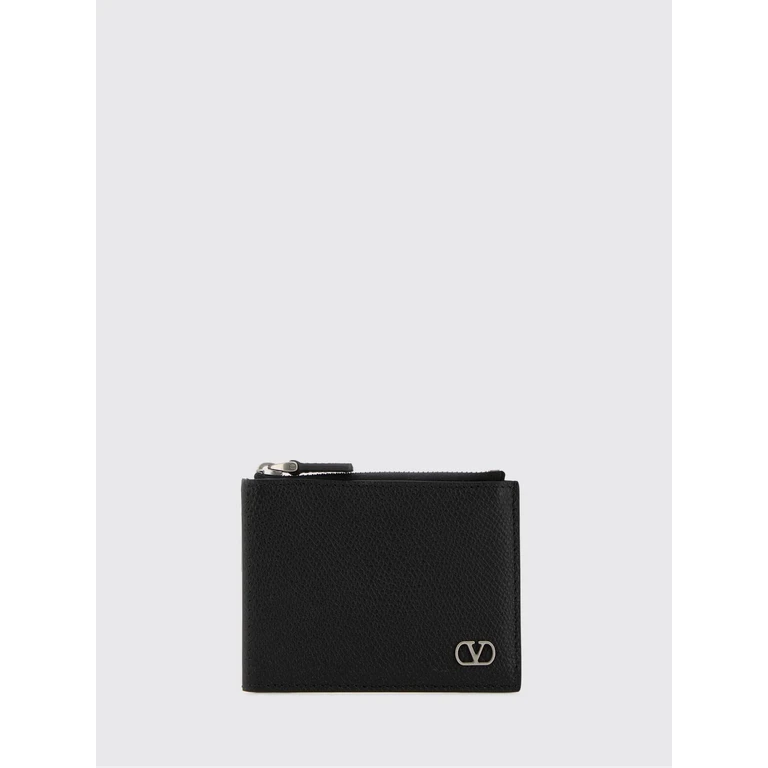
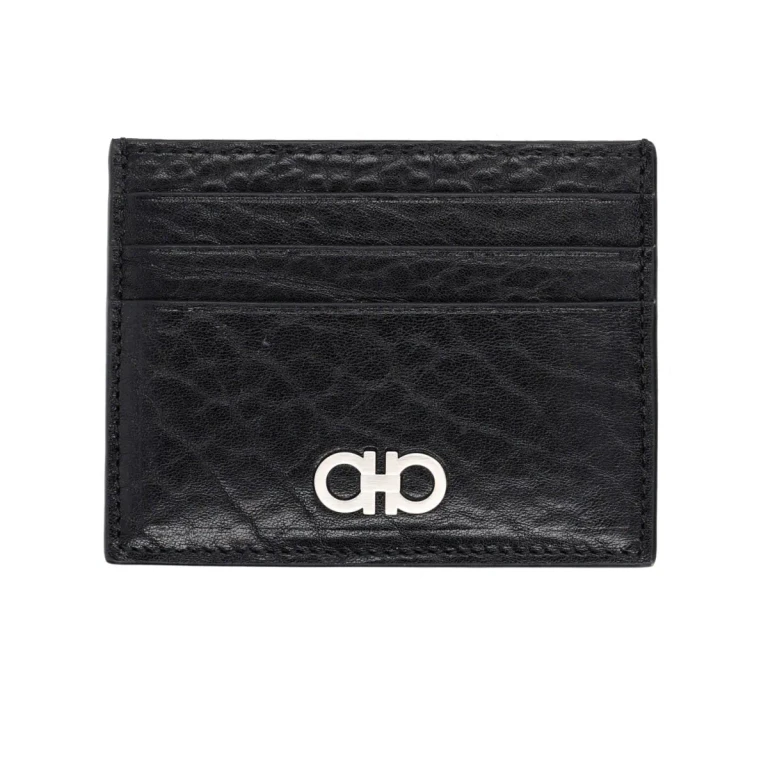
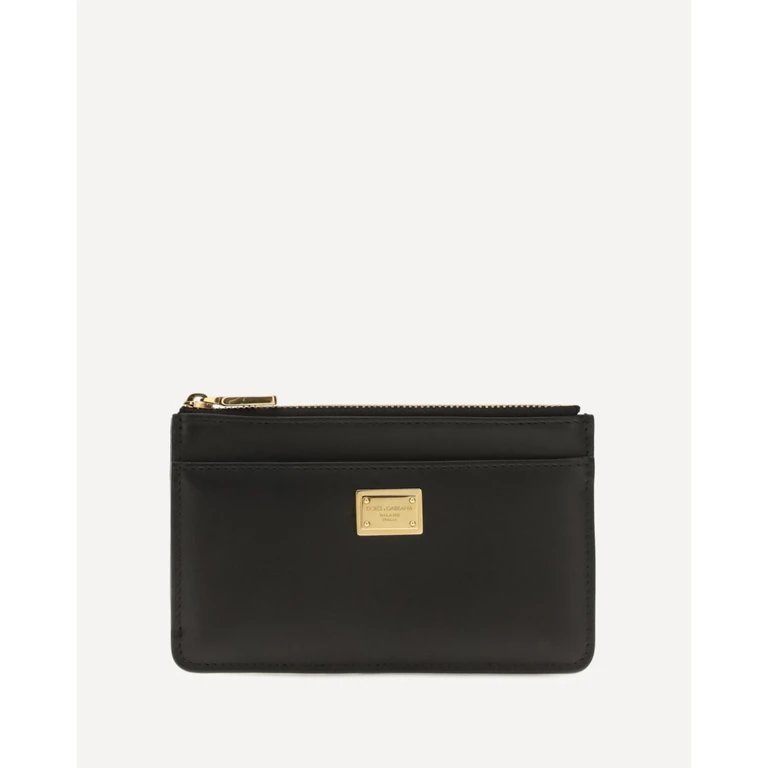
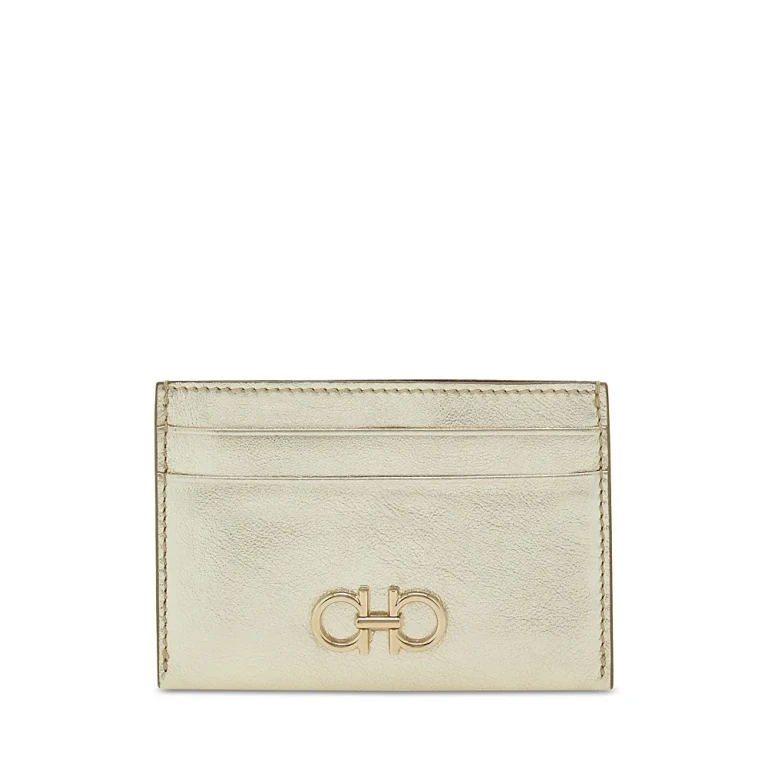
Card case vs. slim wallet — the actual distinction
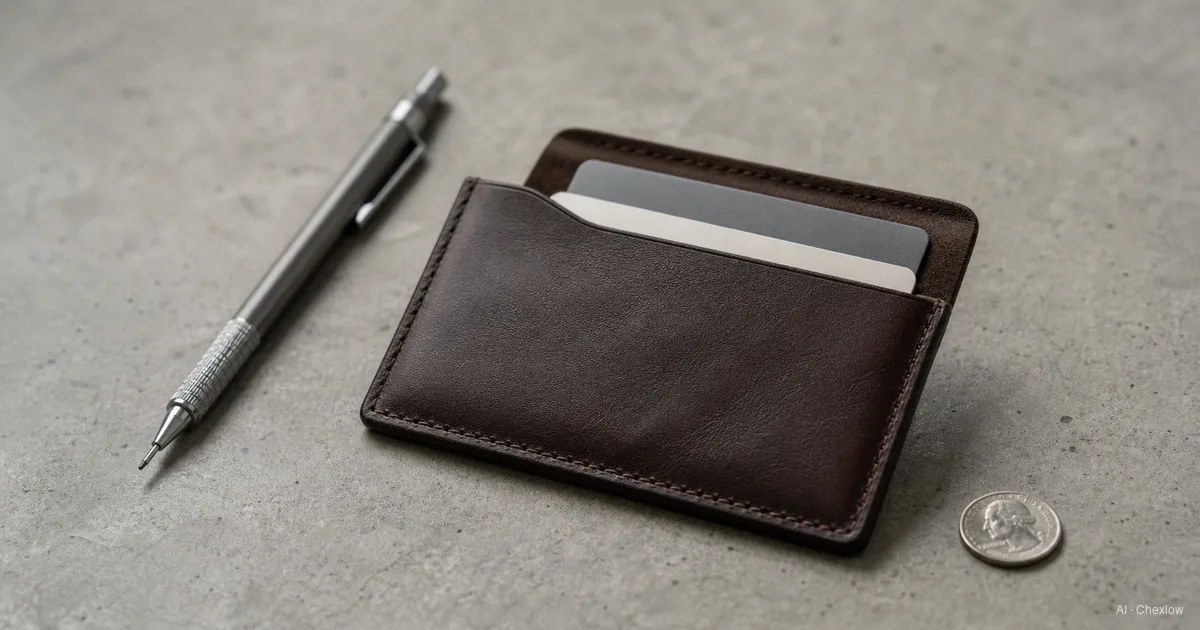
The terms are often used interchangeably but they describe different objects. A card case is essentially a sleeve or a set of sleeves: one to three card slots per side of a flat case, typically holding four to eight cards total, with no provision for cash or at most a small bill clip. The defining characteristic is flatness: a well-made card case in full-grain leather at capacity should be no thicker than 8–10 mm.
A slim wallet is a reduced-scale version of a standard wallet. It may have card slots, a bill compartment, and sometimes a coin section. It is thinner than a traditional bifold — typically 12–16 mm at capacity — but thicker than a true card case. Slim wallets are sometimes called minimalist wallets, but the minimalism is comparative: they are minimalist compared to a full bifold, not compared to a card case.
The choice between them depends on your carry requirements. If you use a payment app for most transactions and carry cards purely for identity (ID card), backup payment (one credit card), and occasional use (one more card), a card case handles your needs. If you regularly handle cash, need more cards across multiple contexts (transport card, loyalty card, corporate card), or want flexibility without committing fully to the card-only lifestyle, a slim wallet gives you more range without the bulk of a traditional billfold (Wirecutter, Best Minimalist Wallets, 2024).
One practical test before buying a card case: spend one week carrying only the cards you think you need for the card case, nothing else. The cards left unused by the end of that week can stay home.
Leather tanning methods — vegetable tanned vs. chrome tanned, and what they mean for aging
The tanning method is the most consequential decision in leather quality for a card case, and it is often listed in product descriptions as "veg tan" or "full-grain vegetable tanned" versus nothing listed at all (which usually means chrome tanned or a blend).
Vegetable tanning uses plant-derived tannins, typically from oak bark or chestnut. The process is slower (weeks to months versus hours for chrome tanning) and produces leather with several distinctive properties. It starts stiff and slightly pale, softens through use, darkens with light exposure and handling, and develops a patina — the combination of color change, surface texture change, and a subtle sheen — that is specific to that individual piece of leather and how it has been used. A vegetable-tanned card case will look different (and better) after a year than it did when new. The limitation is that vegetable-tanned leather is more moisture-sensitive than chrome-tanned and can water-stain if wet and not treated (Horween Leather Company, What Is Veg Tan Leather?).
Chrome tanning uses chromium salts in a process that takes hours. It produces leather that is more uniform in color, softer from the outset, and more resistant to water. The tradeoff is that chrome-tanned leather develops less patina — it ages more gracefully than a badly made vegetable-tanned piece, but it does not develop the singular character that makes a well-made vegetable-tanned card case something you would carry for ten years.
For a card case that you expect to live in your pocket every day for years and improve with age, vegetable-tanned full-grain leather is the material of choice. The break-in period is real (see below), but the long-term result is worth it.
Capacity vs. thickness — why fewer cards is actually better
A card case works because it is flat enough to fit comfortably in a front trouser pocket without creating a visible bulge and without compressing the pocket's contents. The moment it exceeds approximately 10–12 mm of thickness, it starts defeating the purpose.
Most card cases are rated for four to six cards. This rating assumes cards inserted flat, not angled or stacked unevenly. In practice, each standard credit card or ID card (ISO/IEC 7810 ID-1 format) is 0.76 mm thick. Four cards in a single sleeve side stack to 3 mm; with a leather shell of 1.5–2 mm per side, a four-card case is approximately 7–8 mm when new and before the leather softens. Six cards brings this to approximately 9–10 mm. Add a folded bill or two and you are at 12 mm or more, which is getting thick for the purpose.
More cards also means more difficulty reaching the card you want. A card case with six cards in one sleeve and you want the third one is already creating friction. The ideal for a card case that functions smoothly is four to five cards maximum, with the most frequently accessed card always in the outermost slot.
When deciding on capacity, the right question is not "how many cards does this hold" but "how many cards do I actually take out of my pocket on an average day." That number, plus one for backup, is the right capacity. For most people who have genuinely committed to minimalist carry, the answer is two to four cards (The Minimalists, Wallet Experiments).
RFID blocking in card cases
The RFID question for card cases is the same as for travel wallets, but the risk profile is slightly different because card cases are used in daily urban contexts (transit, cafes, retail) rather than specifically at airports or tourist-density locations.
The relevant concern in a daily carry context is contactless card skimming. Modern contactless payment cards use EMV (Europay, Mastercard, Visa) standards with rolling transaction codes — the card generates a unique code for each transaction, and a skimmed static card number cannot be replayed for a new purchase in the way a magnetic stripe card number could be (Visa, EMV Chip Security). This limits the utility of RFID skimming for payment cards significantly.
The main remaining concern is identity documents that contain RFID data: some national ID cards, driver's licenses, and enhanced driver's licenses contain chips. For these, an RFID-blocking card case provides genuine protection.
The practical recommendation is similar to travel wallets: if two card cases are otherwise equal, the RFID-blocking version is marginally preferable. The RFID feature should not be the primary basis for selection. A premium RFID-blocking card case made of inferior leather is a worse purchase than a premium non-blocking card case made of vegetable-tanned full-grain leather.
Break-in and patina for vegetable-tanned leather
A new vegetable-tanned leather card case will feel stiff, and the card slots will be tight enough that inserting cards requires some force. This is correct and expected — it is not a manufacturing defect. The leather is doing what it is supposed to do: the tannins are holding the fiber structure rigid until the object begins to conform to its contents and its user's handling.
The break-in process for a card case typically takes two to four weeks of regular daily use. During this period, the card slots loosen slightly as the leather fibers compress and the structure of the case adapts to the cards inside. The surface color begins to shift — typically darkening very slightly from the heat and oils of being held and pocketed. If the leather was conditioned before first use (a small amount of leather balm or conditioner applied to the outside), this process is faster and the leather softens more evenly.
Patina development is separate from break-in and takes longer: three months to a year to become visually distinctive, several years to be truly striking. Patina in vegetable-tanned leather is the accumulation of skin oils, friction burnishing, and light exposure on the surface of the hide. It concentrates on the edges and corners first, which darken and develop a waxy burnish. The flat panels develop an ambient darkening and a subtle translucency that makes the leather look alive rather than inert.
The conditions that accelerate good patina: regular handling (every day, in and out of a pocket), occasional conditioning with a natural leather balm every three to six months, avoiding soaking in water, and keeping the case away from silicone or synthetic conditioners that create a film rather than nourishing the fiber (Tanner Goods, How Leather Develops Patina). Heat and UV light accelerate darkening. A case left on a sunny window ledge for a month will show the same darkening as a year of regular pocket carry.
How many cards is realistic to carry
This is the question that most card case buyers do not answer honestly before purchasing, and it is the main reason card cases get abandoned. The number of cards you want to carry is not the same as the number of cards a card case is designed to hold.
A realistic assessment: most adults in a developed economy with mobile payment infrastructure need the following in a daily carry:
- One primary payment card (credit or debit)
- One ID (driver's license or national ID)
- One backup payment card (different bank, in case the primary is declined or the network is down)
- Optionally: one transit card if your city uses physical transit cards rather than phone-tap
- Optionally: one loyalty card if you visit a specific retailer or cafe daily and it is not on your phone
That is three to five cards. Everything beyond that is either covered by a phone app, available as an emergency at home, or is being carried "just in case" without genuine frequency of use.
The "just in case" cards are the enemy of minimalist carry. A gym membership card used three times a week does not belong in the daily carry — it should be in a dedicated gym bag. An insurance card needed once a year should live in a drawer at home, photographed in your phone for the rare occasion you need it. A loyalty card for a store you visit monthly can be looked up in the app (Going Gear, How to Minimize Your Wallet).
If you regularly find yourself reaching for cards that are not in your card case, that is a signal: either the card case is too small, or your card selection needs review. The purpose of a card case is to have exactly what you need, immediately accessible. When the number is right, a card case stops being a compromise and becomes an improvement.