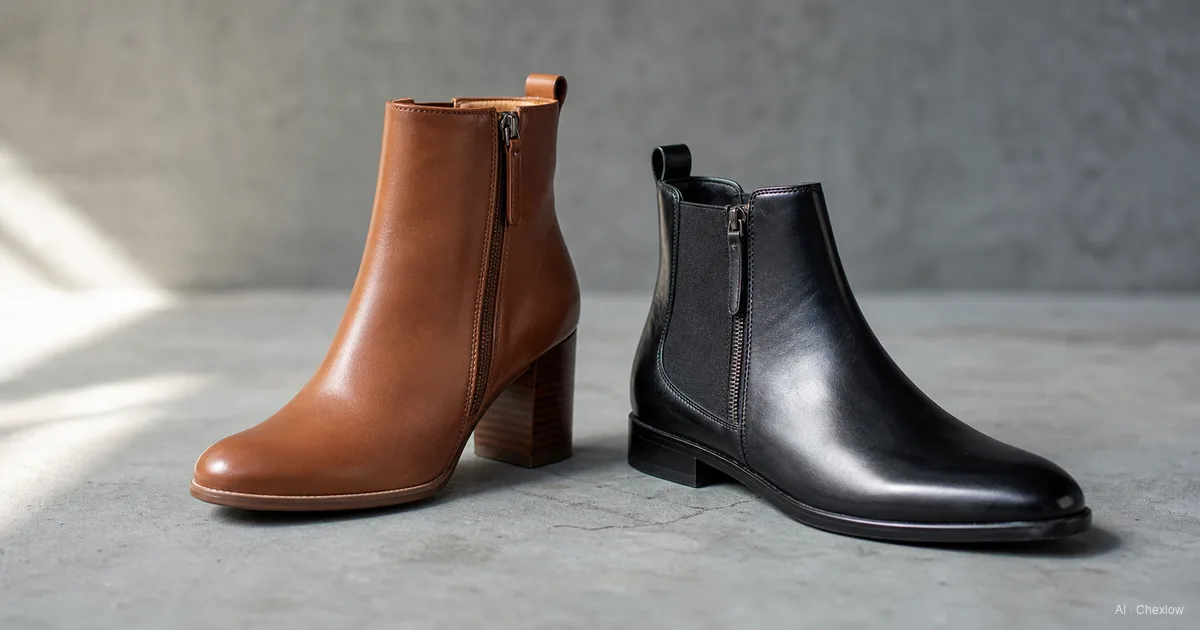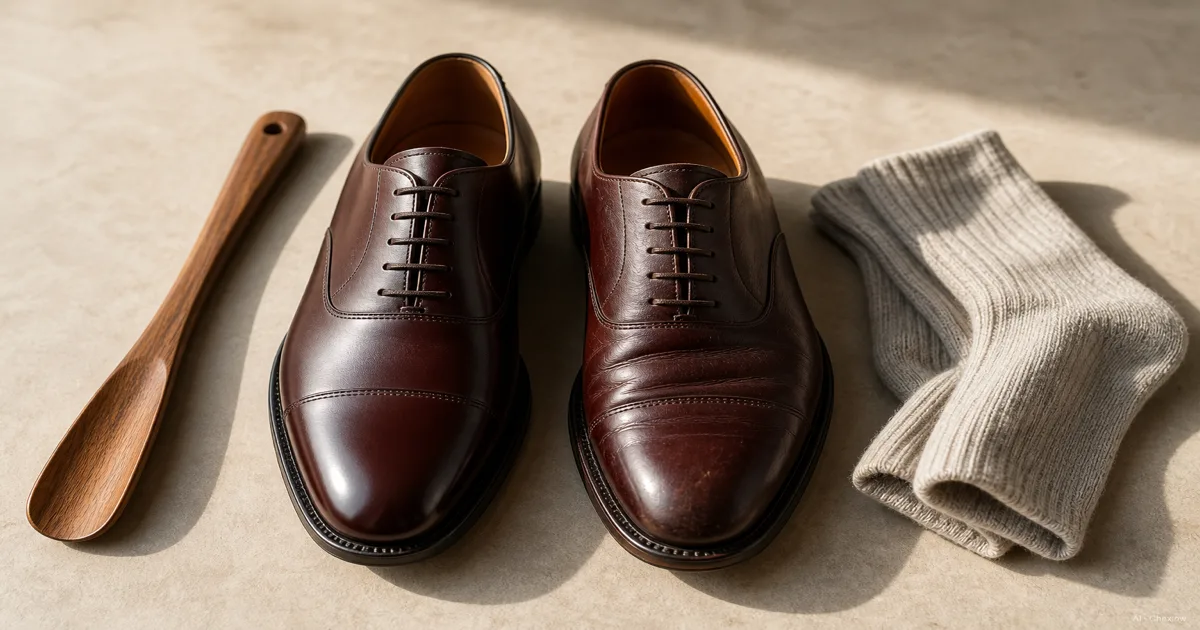
You bought a leather sneaker and it looks perfect. Crisp toe, even colour, a sole with no story yet.
Then week three happens. A grey smudge near the laces, a scuff on the toe, a faint line where the leather creases. You wipe it with whatever cloth is nearby, maybe a bit of water, and move on.
That single wipe is where most first-year damage actually starts. Not from neglect. From the wrong move at the wrong moment.
The fix is not a longer cleaning session. It is knowing your surface, cleaning in the right order, and being honest about what conditioner and waterproofing actually do.
Know your surface before you touch it
Leather sneakers are not one material. The way you clean them depends on the surface, and getting this wrong is how a small mark becomes permanent.
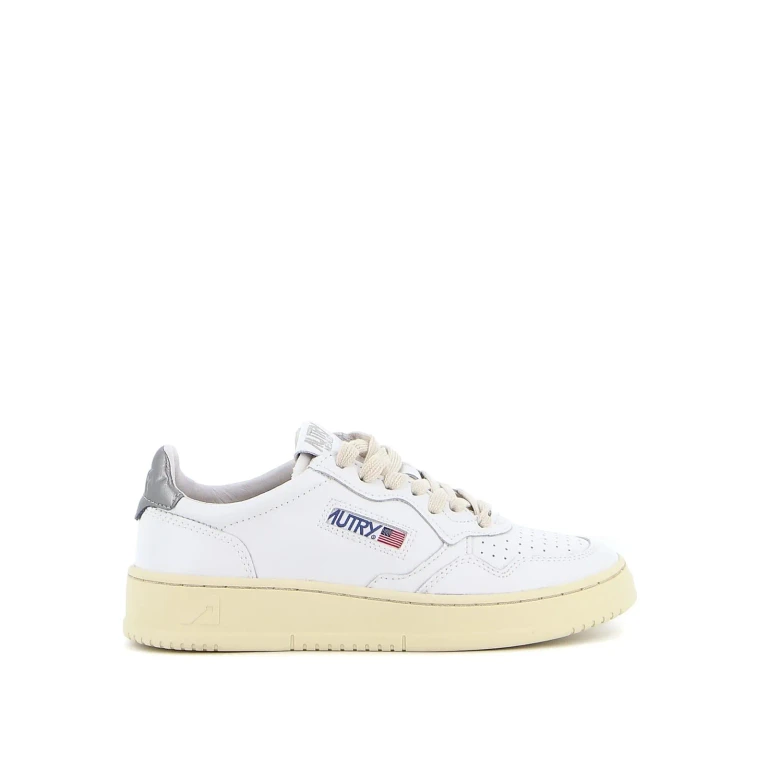
Smooth leather has a finished outer face. It can be full-grain, where the natural grain is left intact, or corrected-grain, where the surface was sanded and a finish was applied to even it out (leather grades). Either way there is a sealed top surface, which is why a damp cloth can lift dirt off it without sinking in straight away.
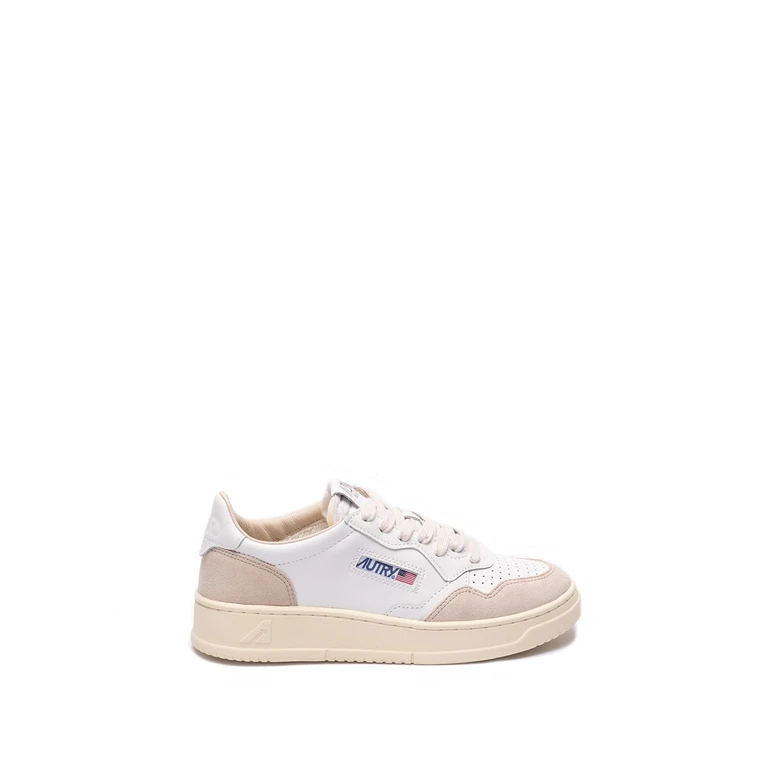
Suede and nubuck are the opposite. Suede is made from the underside of the hide, which is softer and more pliable but less durable, with a fuzzy napped finish (suede). Because of that open, textured nap, suede absorbs liquid fast and stains easily. A damp cloth that rescues smooth leather will leave a dark watermark on suede.
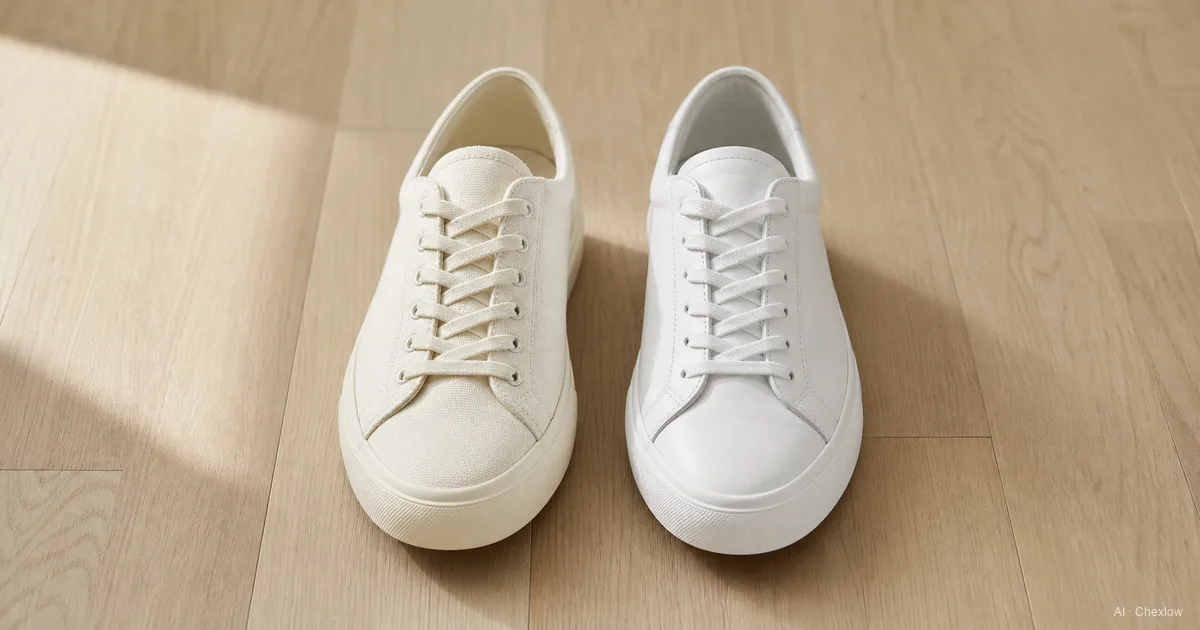
Then there is the heavily coated or "protected" finish, common on white sneakers in the lower price range. The grain has been corrected and sealed under a uniform layer, which makes wiping easy but also means creams sit on top instead of soaking in. Most people never check which of these three they own. Run a dry fingertip across the toe before your first clean: smooth and slightly slick is a finished surface, soft and brushed-feeling is suede or nubuck. That thirty-second check decides every move after it.

The cleaning order that does not leave marks
The order matters more than the product. Conservation guidance for leather starts with removing dust by brush, precisely because trapped grit causes tiny abrasions when you rub (leather conservation). If you go straight in with a wet cloth, you are dragging that grit across the surface.
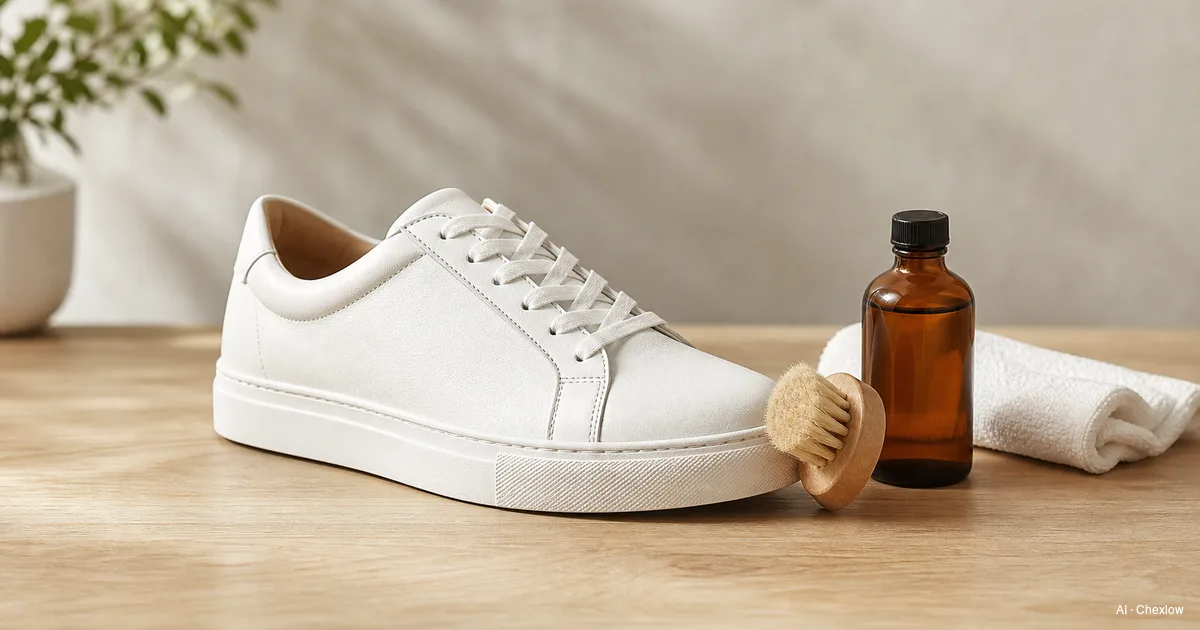
So start dry, every time. Pull the laces out. Brush the whole upper with a soft brush, paying attention to the seams and the toe crease where dust collects. Only after the surface is dust-free do you decide whether it even needs anything wet.
For smooth and coated leather, a barely damp cloth is usually enough. Damp, not wet. Leather should not be soaked, because soaking can cause hardening, discolouration, and the tidemarks you see as faint rings after a wet patch dries (leather conservation). Wipe in one direction, let it air dry away from a radiator, and stop there.
For suede and nubuck, skip water entirely for routine cleaning. A suede brush lifts most marks. For scuffs, a rubber suede eraser works the surface without soaking it. Water is the thing suede handles worst, so the everyday routine is dry-on-dry. The single most useful habit across all three surfaces is the same: deal with a mark the day it happens, while it is still on top of the leather and not inside it.
Conditioning: when it helps and when it just sits there
Conditioner has a reputation as the thing responsible owners do often. On a sneaker, that reputation gets people into trouble.
Conditioner replaces oils and keeps leather supple, which matters for a shoe that flexes at the toe with every step. But it is not a weekly ritual, and more is not better. Over-applying leather dressing can cause spewing, where free fatty acids rise to the surface as a white deposit that is often mistaken for mould (leather conservation). On a dark sneaker that white bloom is alarming, and it came from doing too much, not too little.
The surface decides whether conditioning even works. On full-grain smooth leather, a thin conditioner soaks in and the toe stays flexible. On a heavily coated white sneaker, the same cream often beads on the sealed finish and just leaves residue, because there is nothing open for it to absorb into. And on suede or nubuck, standard smooth-leather conditioner is the wrong product entirely. It flattens and darkens the nap, so suede uses its own protector spray, not a cream.
The honest rule for a first year: condition smooth leather a few times a year, not monthly, and always test a hidden spot like the heel collar first. If the cream sits on top after a minute, your shoe is telling you it does not need it.
Water repellency is a treatment, not a property
A leather sneaker is not waterproof, and no amount of care makes it so. This matters because people treat a new pair as if it can handle rain, then blame the leather when it stains.
Water resistance and waterproofing are different things. A water-resistant surface slows water down; a genuinely waterproof construction needs a repellent coating and sealed seams, which a stitched leather sneaker does not have (waterproofing). What you can do is add a layer of repellency on top. Footwear is commonly treated with beeswax, a waterproofing spray, or mink oil to make the surface shed water (waterproofing).
The catch is that these treatments change the leather. A wax or oil can darken smooth leather and shift its colour, which is fine on a brown pair and very visible on a white one. So treat early, treat evenly, and treat the whole shoe rather than spot-fixing, so the colour shift is uniform if it happens at all. For suede, the spray is almost non-negotiable from day one, because once suede has absorbed a rain stain there is no easy wipe to undo it. For white smooth leather, a light even spray buys you margin on a surprise shower without committing to a heavy wax that yellows the look.

Storage and yellowing: the slow damage you do not notice
The marks you clean are the obvious half. The other half happens in the cupboard while you are not looking, and it splits cleanly into two problems.
The upper is about moisture and air. Leather holds onto humidity, and stored damp it can grow mould; conservation practice keeps storage relative humidity below 65% and asks for good air circulation (leather conservation). In real terms: never seal a rain-damp sneaker in a box, skip the airtight plastic bin that traps moisture, and let a worn pair breathe a day before it goes away. A small silica pack in the shoe cupboard is doing quiet work.
The sole is a different problem with a different cause. White rubber and foam yellow through photo-oxidation, the reaction of light and oxygen on the material, and heat accelerates it more than light does (polymer photo-oxidation). This is why a pair left in a hot car or by a sunny window yellows at the sole edge while the upper still looks clean. You cannot stop the chemistry, but you can deny it the conditions: store cool, out of direct sun, away from heat sources. Scrubbing a yellowed sole harder will not bring it back, because the colour change is inside the rubber, not on it.
A simple first-year rhythm
None of this is a weekend project. The whole point of a routine is that each step is small.
Weekly, brush the dust off and check for fresh marks while they are still sitting on the surface. After rain, dry the pair slowly and away from heat, then reproof suede or re-treat smooth leather if the water beaded less than it used to. A few times across the year, condition smooth leather lightly and test a hidden spot first. And whenever the shoe goes into storage, make sure it is dry and breathing, not sealed and damp.
Match every step to your surface and you avoid the two ways a first year goes wrong: a permanent mark from cleaning suede like smooth leather, and a yellowed sole from heat you never thought about.
If you are still choosing between a few leather sneakers, this is worth weighing before you buy. Compare the surface types side by side, not just the prices, because a smooth finished pair, a coated white pair, and a suede pair ask for three different years of care.
Sources
- Conservation and restoration of leather objects for dust-brush-first cleaning, the risk of soaking leather, spewing from over-conditioning, and humidity storage limits.
- Suede for the napped underside surface, fast liquid absorption, and lower durability.
- Leather grades for full-grain versus corrected-grain finishes.
- Photo-oxidation of polymers for sole yellowing from light, oxygen, and heat.
- Waterproofing for water resistance versus waterproofing and footwear repellent treatments.