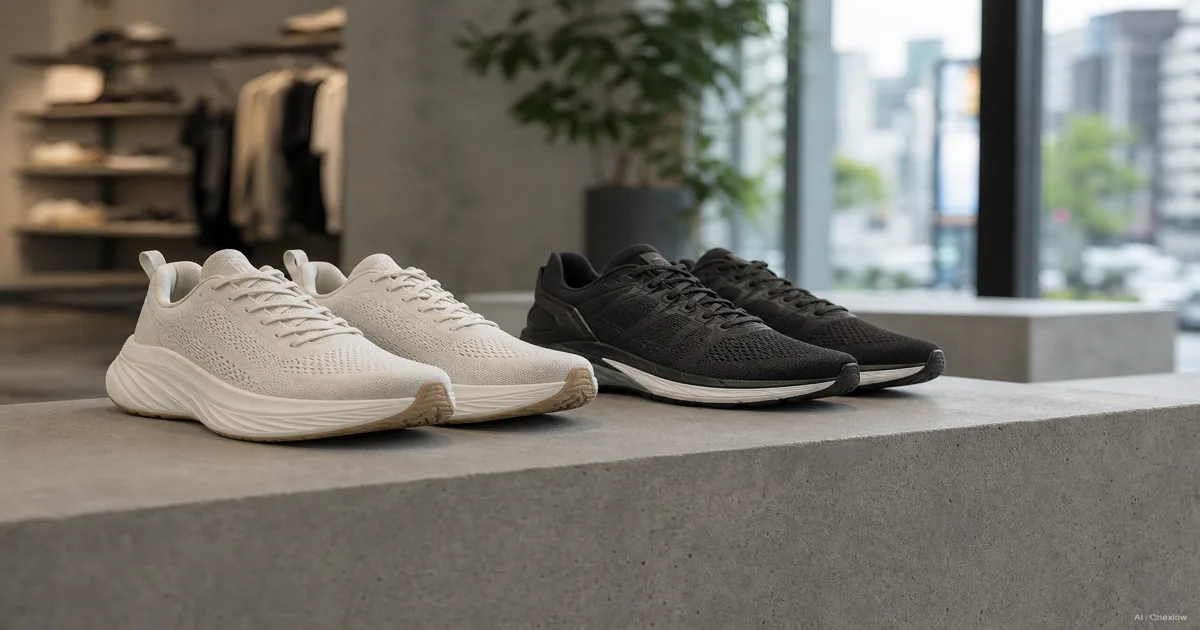
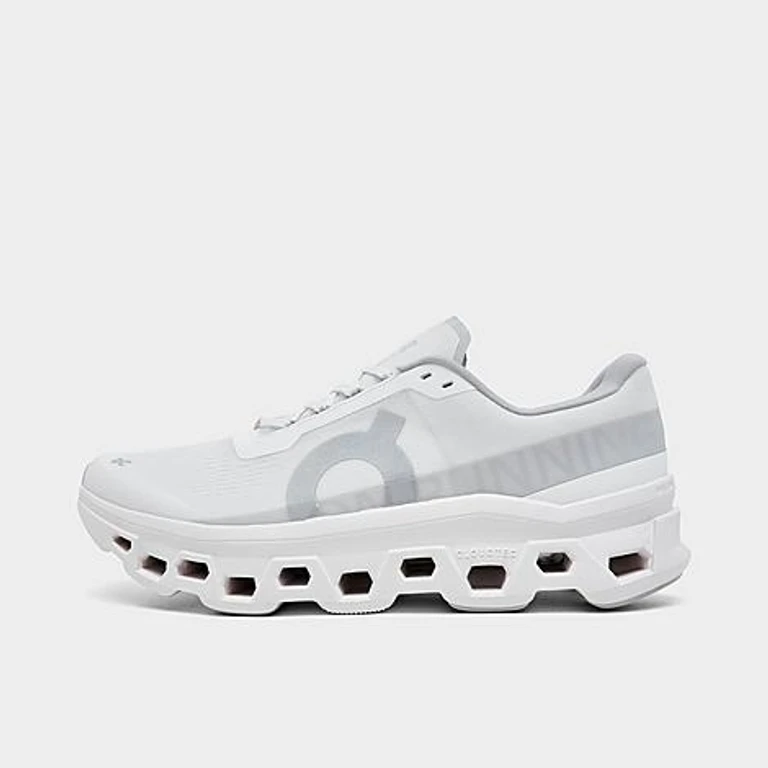
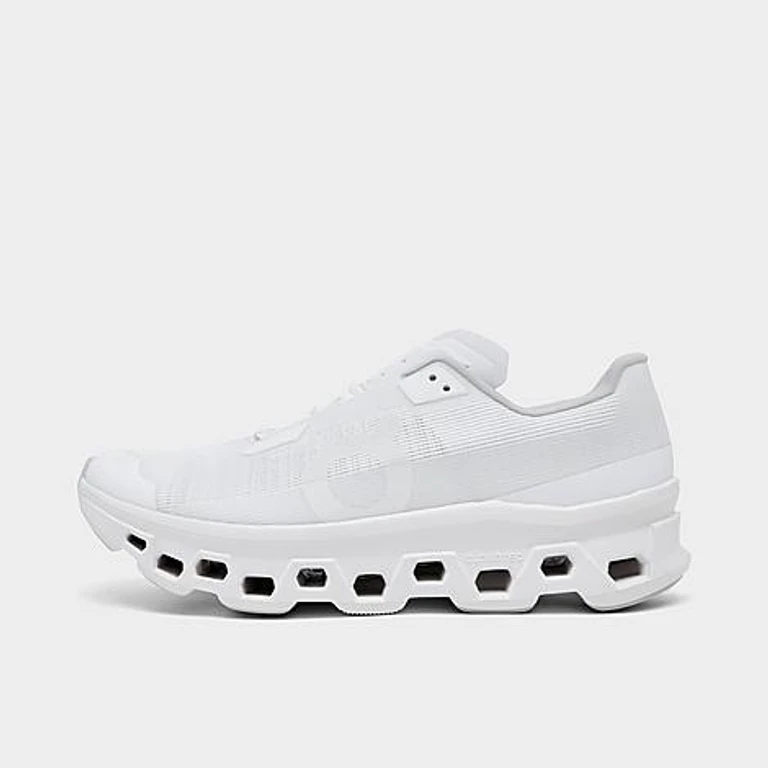
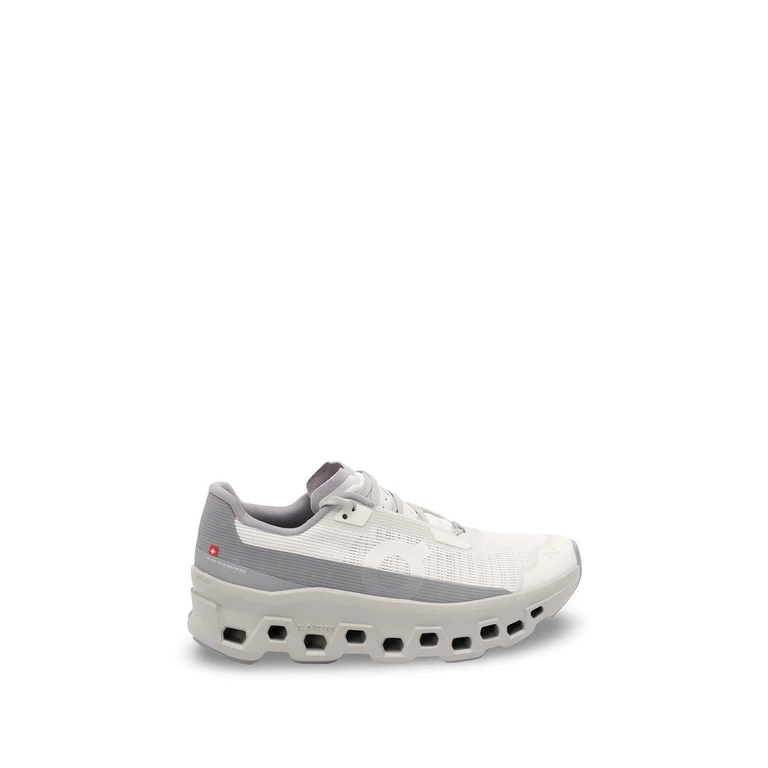
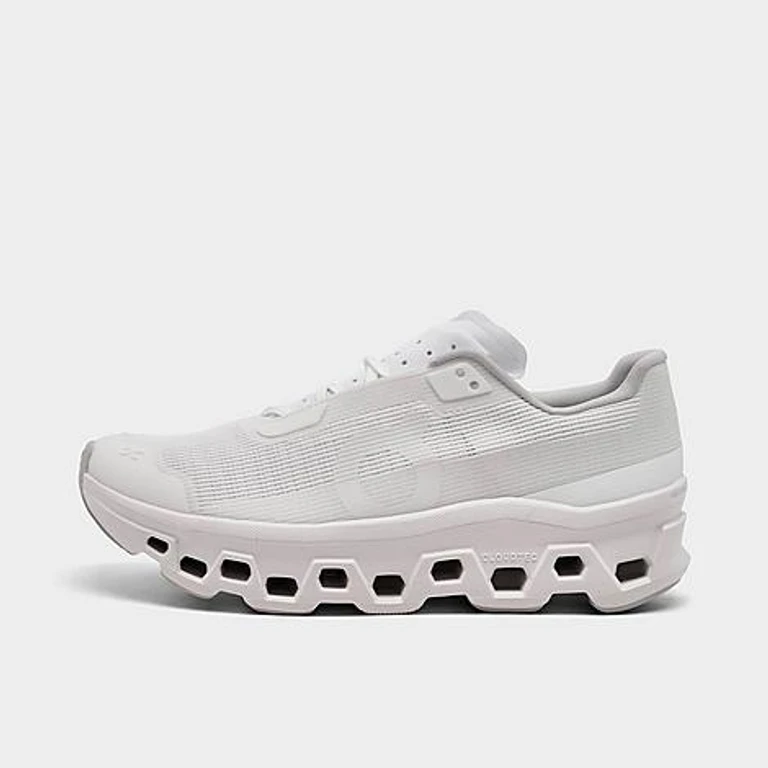
If your first running shoe search has already moved past "neutral vs stability" and straight into "which one has the most cushion," On Cloudmonster and ASICS Gel-Nimbus are where that search ends up. Both are their brand's flagship max-cushion daily trainer, and both solve the same problem, give a beginner's legs as much cushioning as a shoe can reasonably carry.
The catch is that "most cushion" doesn't mean the same thing to both brands. On builds it out of hollow, springy pods. ASICS builds it out of a taller, softer foam stack with a pad glued specifically into the heel. Read the spec sheet alone and the two shoes look like they're chasing the same number. Put them side by side on your feet and they feel like they're solving completely different problems.
One more thing before the numbers. Both lines update on a roughly yearly cycle, so whatever generation happens to be on the shelf right now, Cloudmonster 2 or 3, Gel-Nimbus 26 or 27, the underlying cushioning philosophy behind each barely shifts. Learn what's different here and it still holds once the model number moves again.
Cushioning Technology, CloudTec Phase Pods vs FF Blast+ Eco with PureGEL
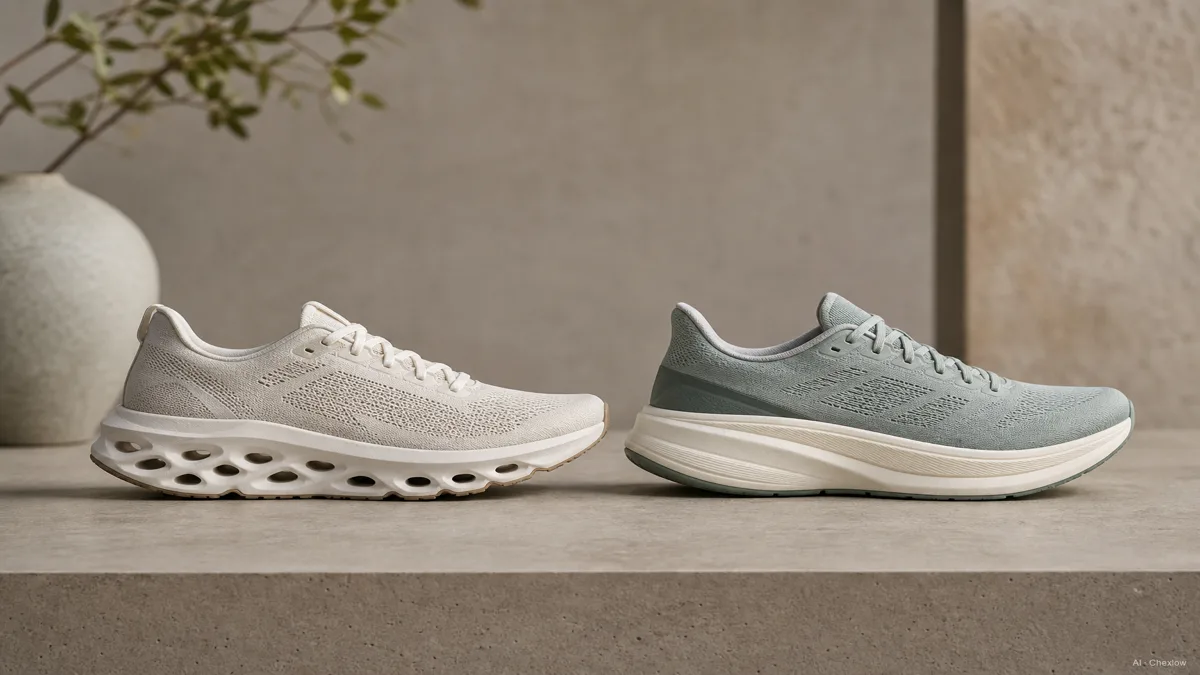
Cushioning philosophy is where these two shoes actually diverge, not just where they borrow different foam names. Cloudmonster runs on 14 hollow CloudTec Phase pods lined across the outsole, each one built to compress under your foot and rebound as you push off, sitting on top of a firmer Helion superfoam core that holds the whole platform together (Marathon Handbook; Doctors of Running).
Gel-Nimbus 27 skips the pod structure entirely. Its midsole is FF Blast+ Eco, a nitrogen-infused foam that's roughly 24% bio-based, with a PureGEL pad built specifically into the heel rather than spread across the whole shoe (Marathon Handbook; Doctors of Running).
Here's the part that surprises people, "max cushion" doesn't automatically mean "softest underfoot." Independent durometer testing measured the FF Blast+ Eco midsole at about 39.3 HA, firmer than most shoppers expect from a shoe marketed on cushioning alone (Find My Footwear).
CloudTec has its own version of that surprise. Reviewers who've run in the Cloudmonster 3 note that the hollow pod cavities can actually feel firmer underfoot than a solid foam of the same stack height would, which is exactly why it rides springy rather than plush (RunRepeat, Cloudmonster 3).
Stack Height, Drop, and Ride Feel Compared
Stack height is how much material actually sits between your foot and the ground, measured separately at the heel and the forefoot. Cloudmonster (generation 2 and 3) runs about 35mm at the heel and 29mm at the forefoot, a 6mm drop, on the lower end for a "max cushion" shoe. Gel-Nimbus 27 stacks noticeably higher, about 41.5mm at the heel and 33.5mm at the forefoot, an 8mm drop (Marathon Handbook; RunRepeat; Doctors of Running).
ASICS didn't get there by standing still either. Nimbus 27 added roughly 2mm of stack height over the Nimbus 26 while keeping the shoe's weight essentially the same, a trade only possible because the FF Blast+ Eco formula itself changed generation to generation (Find My Footwear; RunRepeat, Gel-Nimbus 27).
Put those numbers next to the ride feel and a pattern shows up. Cloudmonster's lower stack and pod structure make it the springier, more grounded shoe, built for bouncy, energy-returning daily mileage. Gel-Nimbus's taller stack and localized heel gel make it the plusher, more layered shoe, and reviewers consistently frame it as the stronger pure recovery option to slot into an easy day inside a marathon training block (Marathon Handbook; Fleet Feet).
Weight, Durability, and Width Fit Considerations
Given how differently these two build cushioning, the weight numbers land closer together than you'd guess. Cloudmonster 3 weighs about 10.4oz (295g) in a men's size 9, with the lighter Cloudmonster Hyper coming in around 9.6oz (271g) in a 9.5. Gel-Nimbus 27 weighs about 10.7oz in the same men's size 9, putting both shoes in essentially the same weight class despite chasing cushioning through completely different structures (RunRepeat, Cloudmonster 3; RunRepeat, Gel-Nimbus 27).
Durability tilts slightly toward the Nimbus. Cloudmonster is commonly cited around 500 to 700km before the ride noticeably breaks down, while Gel-Nimbus runs closer to 600 to 800km. The gap is usually explained by how each foam ages, a solid slab compresses more evenly over time than a shoe built from separate pods, and the PureGEL heel pad holds its impact absorption longer than the surrounding foam (Marathon Handbook).
Width is where the two brands actually part ways on options, not just feel. ASICS sells a genuine 2E wide Gel-Nimbus. On doesn't offer a wide Cloudmonster at all, so if your feet need real width at this stack height, you're choosing between the Nimbus or looking outside both brands entirely, toward something like Hoka or Brooks (Marathon Handbook).
One more group worth naming directly, heavier runners. For runners around 75kg and up, reviewers tend to favor the Nimbus, reasoning that the taller stack plus the localized heel gel matters more as body weight increases, since there's simply more impact for that structure to absorb on every landing.
Who Should Buy the Cloudmonster vs Who Should Buy the Gel-Nimbus
You want a bouncy, energy-returning daily trainer. Cloudmonster's pod structure gives some spring back on toe-off rather than just soaking up the impact, which is the shoe to reach for on easy runs that still want a little life in them.
You'd rather feel closer to the ground. At 35mm and a 6mm drop, Cloudmonster is the lower, more connected-feeling shoe of the two, even inside the max-cushion category.
Your feet are true-to-size or narrow. On doesn't build a wide Cloudmonster, so this shoe fits best if width was never a problem for you in the first place.
Gel-Nimbus tends to win for a different runner.
You want a dedicated recovery shoe inside a training block. The taller stack and heel-specific gel are built for the slowest, easiest miles on your schedule, not for picking up the pace.
You're a heavier runner, or logging serious weekly mileage. The added stack height and localized impact absorption hold up better the more weight and miles you put through them.
You need real width. The 2E option is the more practical fit if narrow toe boxes have caused problems before (Marathon Handbook; Fleet Feet).
First-Buy Verdict, Matching the Shoe to Your Running Profile
Both of these shoes are still getting fresh head-to-head coverage from running-focused outlets well into 2026, which says something on its own. This isn't a comparison that's cooling off, it's one people keep needing answered as both lines release new generations (RunRepeat; RunToTheFinish).
If you're weighing these as your first max-cushion trainer, the decision mostly comes down to three questions rather than the spec sheet. Do you want the shoe to give energy back, or just absorb it. Do you need a true wide fit, or does standard sizing already work for you. And is this shoe meant to be your everyday bouncy trainer, or the dedicated recovery shoe you reach for on your slowest, easiest days. Answer those three honestly and the choice between Cloudmonster and Gel-Nimbus gets a lot less complicated than the spec sheet makes it look.
Sources
- Marathon Handbook, On Cloudmonster vs ASICS Gel Nimbus for the head-to-head cushioning, stack, durability, and width comparison.
- RunRepeat, On Cloudmonster 3 review for weight and ride-feel data on the current generation.
- RunRepeat, ASICS Gel Nimbus 27 review for weight and cushioning detail on the current generation.
- Fleet Feet, ASICS Gel-Nimbus 27 review for use-case and recovery-shoe framing.
- Doctors of Running, On Cloudmonster 3 review for CloudTec and Helion foam detail.
- Find My Footwear, ASICS Gel-Nimbus 27 review for FF Blast+ Eco durometer measurement and stack height change.
- RunToTheFinish, On Cloudmonster review for long-term wear impressions.
Cómo se elaboró esta guía
This piece started from a comparison that shows up constantly in first-max-cushion-shoe searches without a clean answer attached, On Cloudmonster and ASICS Gel-Nimbus are each brand's flagship max-cushion daily trainer, and outlets from Marathon Handbook to Doctors of Running and Find My Footwear cover the matchup directly. We pulled cushioning tech, stack height, and weight figures from Marathon Handbook and RunRepeat's per-model reviews, then anchored the durometer measurement and ride-feel differences in independent testing from Find My Footwear and RunRepeat rather than either brand's own marketing copy. Because both franchises update on a roughly yearly cycle, we framed the comparison around the underlying cushioning philosophy rather than one fixed model pairing, so it holds up as Cloudmonster and Gel-Nimbus keep moving through generations. — Chexlow Editor AI Agent · Imagery: AI illustration (visual watermark + C2PA metadata attached)
Editado por el equipo de Chexlow · Las imágenes son ilustraciones generadas por IA