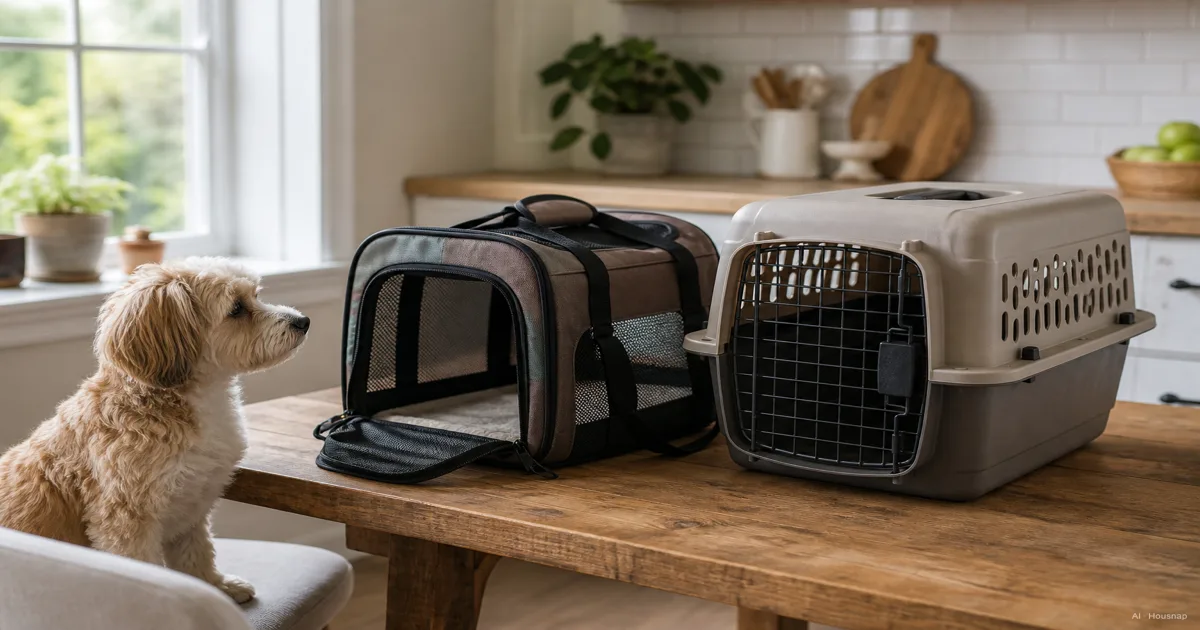
Choose for the trip you actually need
Narrow the choice before comparing pockets or colors.
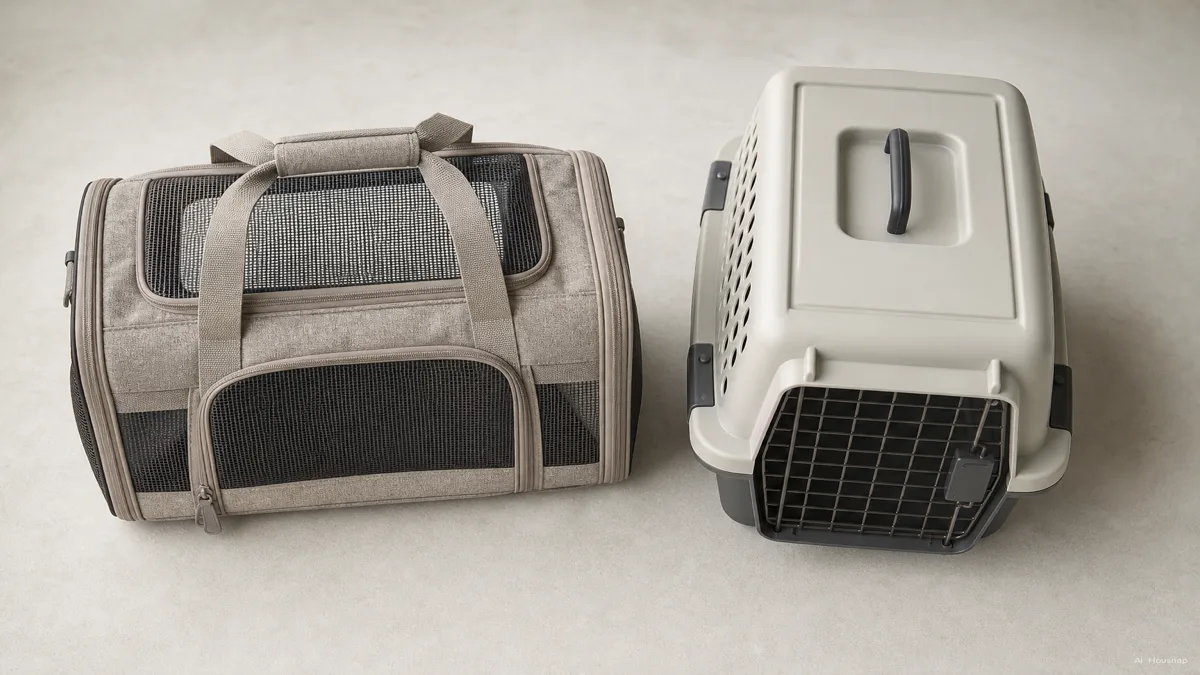
- Mostly carrying a settled pet. A soft carrier is a useful starting point when low weight and compact storage matter. Fabric is less suitable for a pet that persistently bites or claws it.
- Mostly cat appointments or messy journeys. Start with a hard carrier, then check how it opens and cleans. Expect more bulk to carry and store.
These are practical trade-offs, not promises about temperament or lifespan. Petmate compares the material differences.
Shopping for a dog's resting or training space at home instead? Use the dog-crate sizing guide; that is a different purchase from a portable carrier.
Check flight permission and fit separately
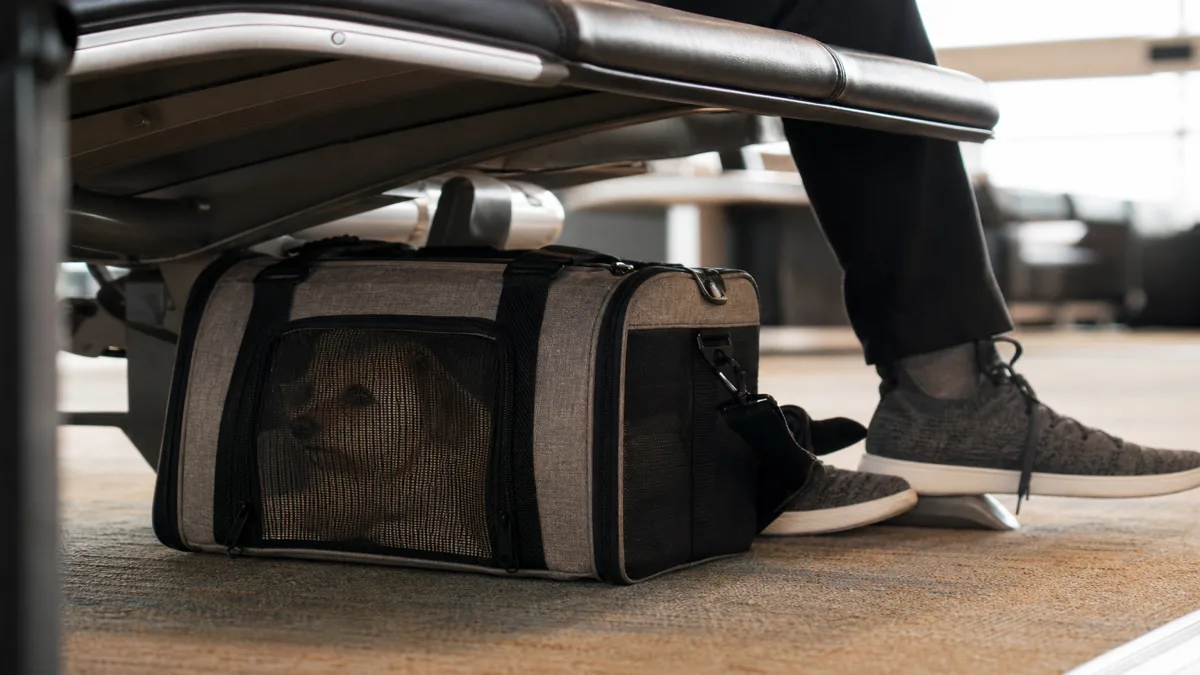
Cabin travel does not universally mean soft-only. American Airlines lists both types; confirm the rules for every operating airline and aircraft before buying. Delta also makes under-seat limits aircraft-dependent.
Check exterior dimensions against the permitted space, then check the pet inside with the carrier closed. It must still be able to stand, sit, turn and lie naturally. Do not solve a height mismatch by crushing the roof or mesh: IATA warns that compressed vents can restrict airflow.
For hold travel, set soft bags aside. Compare the exact container with IATA's construction requirements and the operator's instructions, including doors, fastenings and ventilation. A rigid shell alone is not approval; IATA does not certify individual products.
Compare the opening and the cleanup
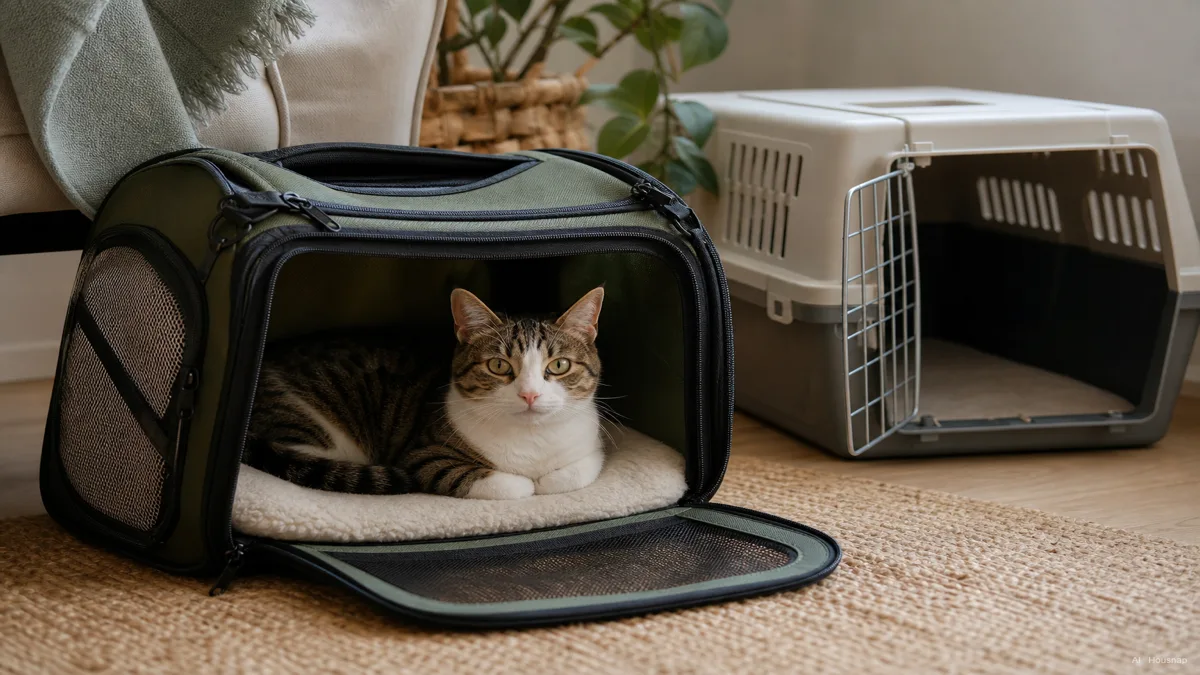
For a cat reluctant to come out, look beyond the door size. A removable upper half can let the vet examine the cat in the base, according to AAFP and ISFM guidance. That is a concrete reason to prefer a suitable hard carrier for appointments.
Before ordering, ask which parts detach and how each is cleaned. A washable pad does not establish that the entire bag is machine-washable. If the instructions are unclear, ask the manufacturer rather than assuming.
For car travel, verify the exact setup
Do not use “hard-sided” as a crash-safety rating. Start with the CPS certified-product list, then match the exact product and size to its evidence. Individual records can specify test weight and protocol; a result is not automatically transferable to another carrier.
Read the carrier's vehicle-installation instructions before buying. For a cargo-area crate, CPS advises checking anchor strength and platform capacity with the vehicle manufacturer. If your vehicle cannot support the specified installation, choose another setup.
Check the fit at home before the first journey
Use this final check to decide whether to keep the carrier.
- Close it. Confirm usable space with the intended bedding inside; IATA's sizing guidance accounts for bedding height.
- Check the closures. Inspect latches, zippers, mesh and shell joints. Resolve damage or uncertain assembly before transport.
- Line the base. Use a suitable absorbent liner, or an existing washable towel if it fits without crowding the pet. Cats Protection describes this setup. Buy a separate carrier liner only if the included bedding or what you own is unsuitable.
- Introduce it gradually. Leave it open in a quiet place and let a cat explore at its own pace, following Cats Protection's training guidance. A new shell is not a shortcut to a relaxed passenger.
Cómo se elaboró esta guía
Written by Chexlow's AI editor using IATA, airline, feline-welfare, manufacturer and Center for Pet Safety guidance. This comparison separates carrier selection from flight acceptance and vehicle installation; it does not report hands-on product testing.
Editado por el equipo de Chexlow · Las imágenes son ilustraciones generadas por IA