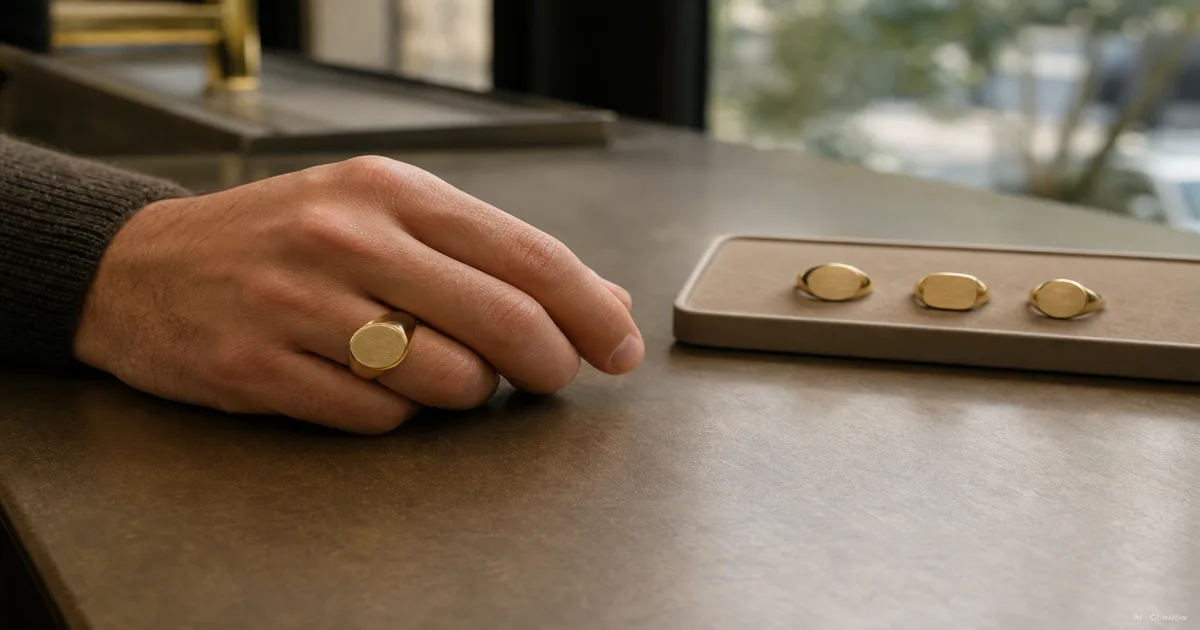
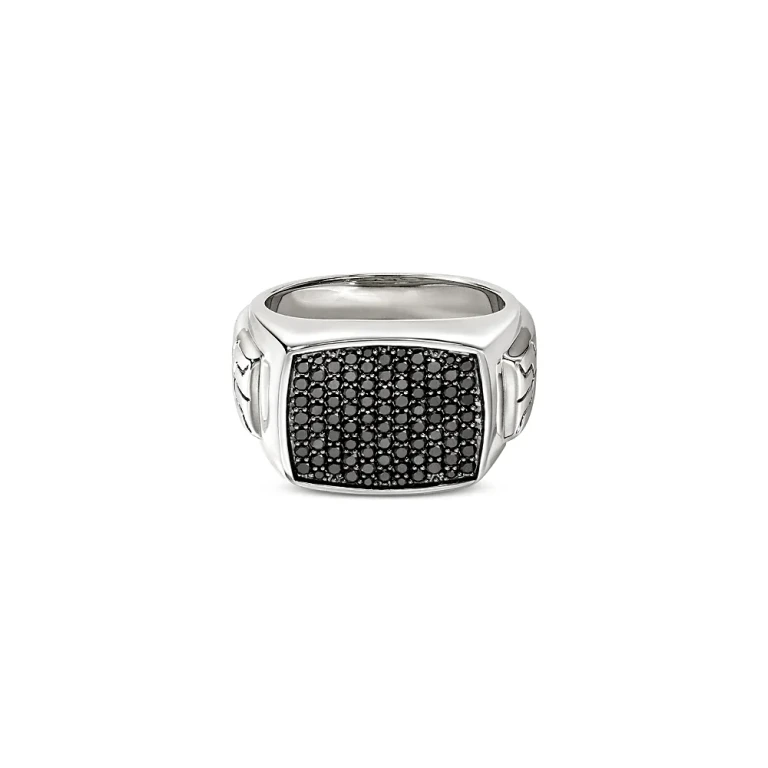
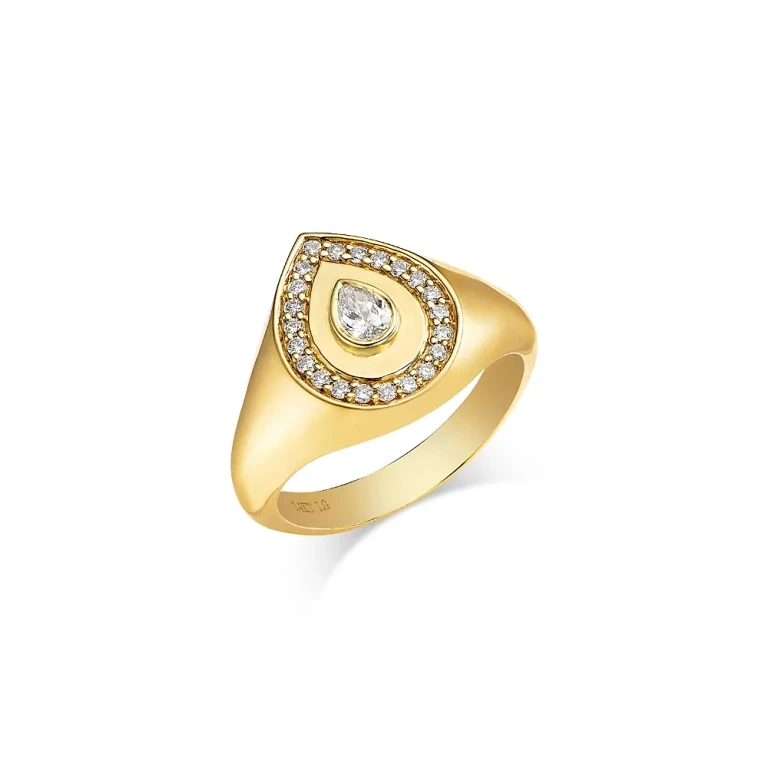
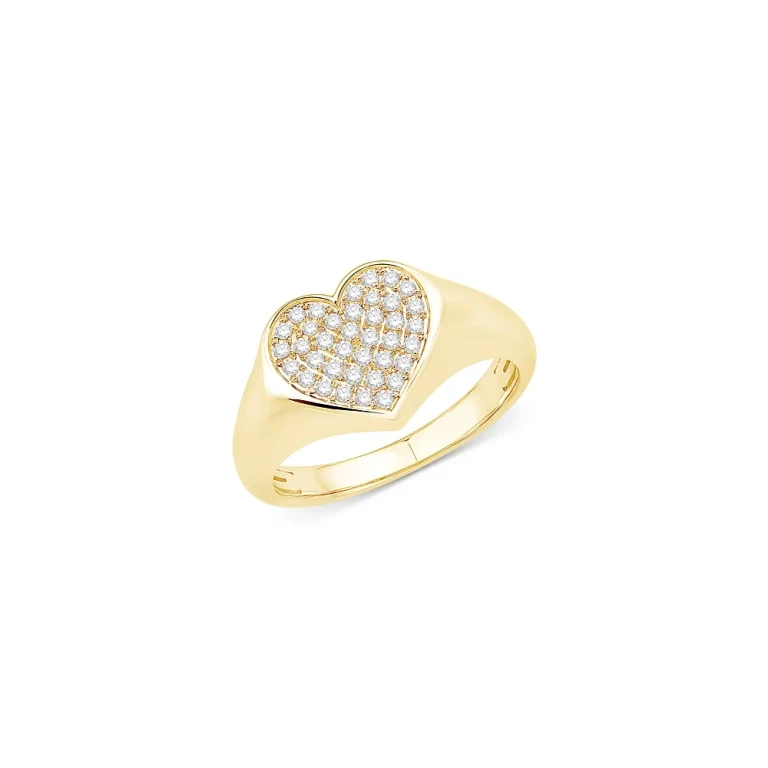
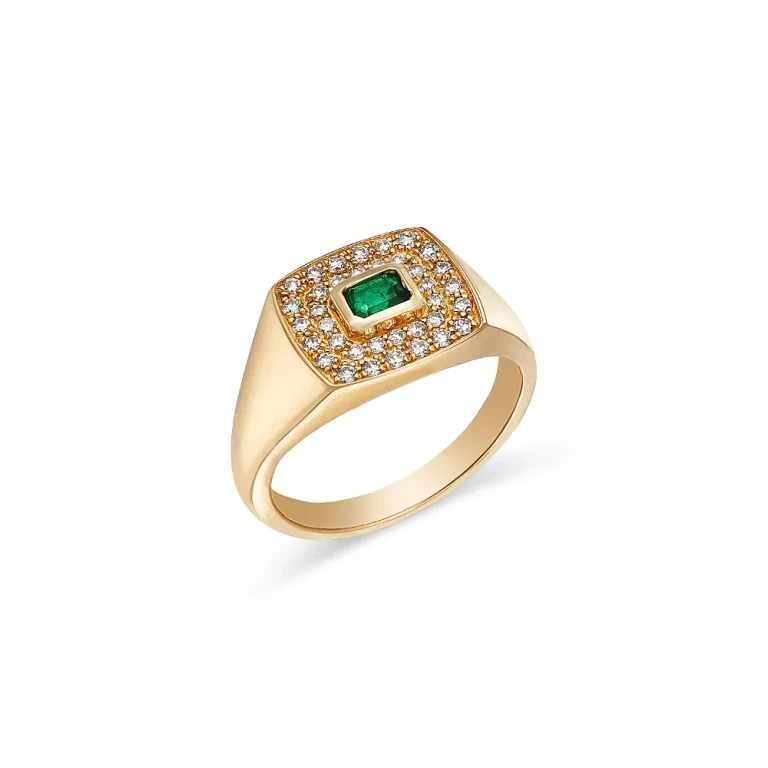
A signet ring looks simple, a flat metal face on a plain band. Then you start shopping and the same page throws out oval, cushion, and round faces, three metals with three different price logics, a debate over which finger and which hand, and two totally different ways to engrave it. It is a lot for one small ring.
Most of that only matters at the point you actually order. Sort out shape, metal, sizing, and engraving in that order, and a signet ring stops being confusing.
What Is a Signet Ring, and Why Buy One
A signet ring is one of the oldest continuous jewelry designs on record. The idea goes back to Mesopotamia around 3500 BC, when cylindrical stone seals were rolled onto wet clay to authenticate a document, the earliest known use of a personal mark as proof of identity (International Gem Society, History of Signet Rings).
Ancient Egypt turned that seal into something worn on the hand. Egyptians were the first to wear signet rings regularly, carving hieroglyphs into hardstone or quartz faces that identified the owner by name or title (International Gem Society). Rome kept the hierarchy visible in the metal itself, senators wore gold signets, while the lower classes wore iron ones, so the ring told you someone's rank before they said a word.
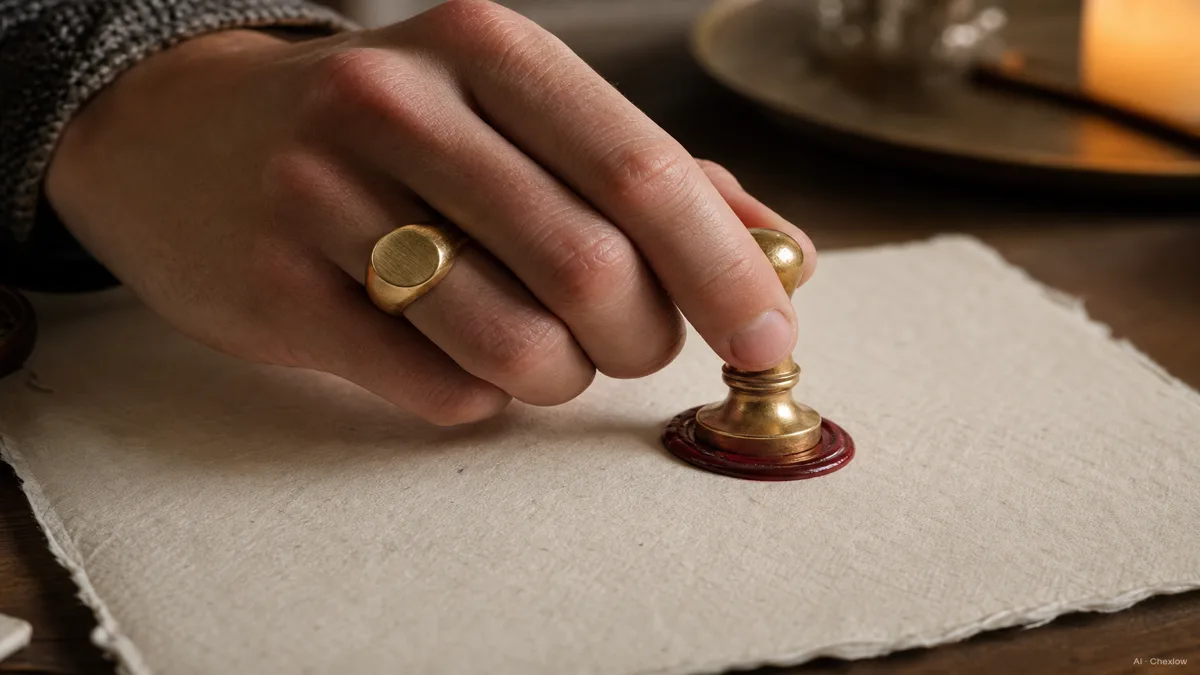
The word signet comes from the Latin signum, meaning sign. For most of history, a wax impression pressed by a signet ring counted as stronger proof of identity than a handwritten signature (International Gem Society). By the Middle Ages, nobility and anyone with legal standing used a signet to seal and authenticate letters and contracts (The History Press, A brief history of signet rings).
None of that history is why most people buy one today. A signet ring now reads as a quiet, personal piece, initials, a family crest, or just a plain polished face, worn daily rather than saved for one signature at a time. The shape stuck around because it still looks intentional on a hand, whether you dress it up or down.
How to Choose Shape, Metal, and Weight
Once the history is out of the way, the actual decision comes down to three things sitting on the same ring, the face shape, the metal, and how solid it is underneath.
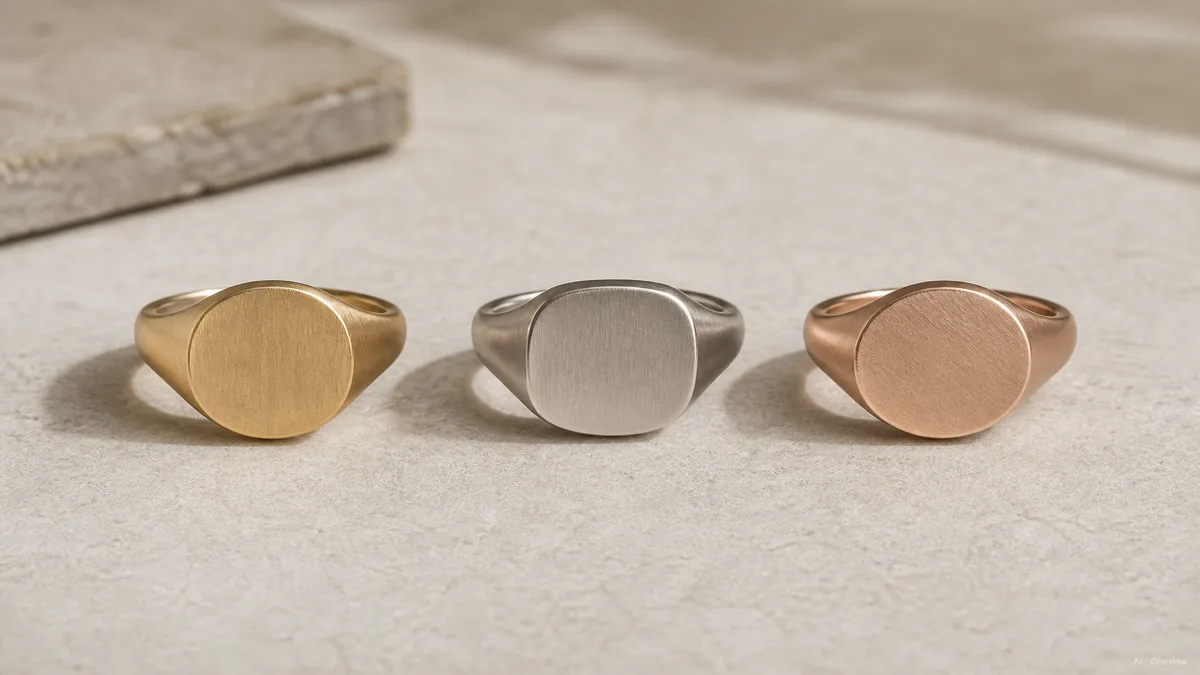
Signet rings come in three main face shapes. Oval is the traditional cut, it sits flat against the finger and reads understated and conservative, which is why it shows up most often in older, inherited pieces. Cushion is a square face with rounded corners, a bolder and more modern look that gives an engraving more room to breathe. Round is the most versatile of the three, casual enough for every day and formal enough for a suit cuff (TheCaratCut, Ultimate Guide to Men's Signet Rings; Ken Walker Jewelers).
Metal decides how the ring wears over years, not just how it looks on day one. Gold is the traditional choice for a reason, it is malleable enough to hold fine detail when engraved, and it resists tarnish well, which matters on a piece meant to be worn daily. Sterling silver costs less and gives a cooler, brighter tone, but it is a softer metal that scratches more easily and tarnishes faster than gold. Platinum sits at the other end, the most durable and tarnish-proof of the three, and priced to match (Ken Walker Jewelers; Celinni, How to Wear a Signet Ring).
One quality check most first-time buyers skip, look at whether the ring is solid or hollow on the back. A hollow cavity traps water and soap against the skin, which is a common cause of the irritation people blame on the metal itself. A solid, comfort-fit back costs more to make, but it wears better for years and skips that whole problem (Red White & Denim, A Guide To Buying A Signet Ring).
Sizing and Which Finger to Wear It On
A signet ring does not follow the same sizing habits as a regular band, mostly because of where people actually wear it.
English tradition puts it on the pinky of the non-dominant hand. That placement was practical, not decorative, it kept the ring clear of manual work and out of the way while writing (Gentleman's Gazette, Men's Signet Rings). Continental European tradition favors the ring finger of the right hand instead, and plenty of modern wearers skip both traditions and just pick whichever finger fits and feels right (Celinni).
Sizing itself needs a bit more care than a standard ring. A signet sits heavier than most bands, and it usually goes on a different finger than the one you already have a size for, so measure the actual finger you plan to wear it on. Temperature also throws sizing off more than people expect, fingers, and the pinky especially, swell and shrink with heat and cold. Measure at a normal body temperature, not right after a hot shower and not on a cold morning, or the size you land on will be wrong for most of the year.
Engraving Options, Surface vs Seal (Intaglio)
Once the ring itself is sorted, engraving is the last decision, and it is really a choice between two different methods.
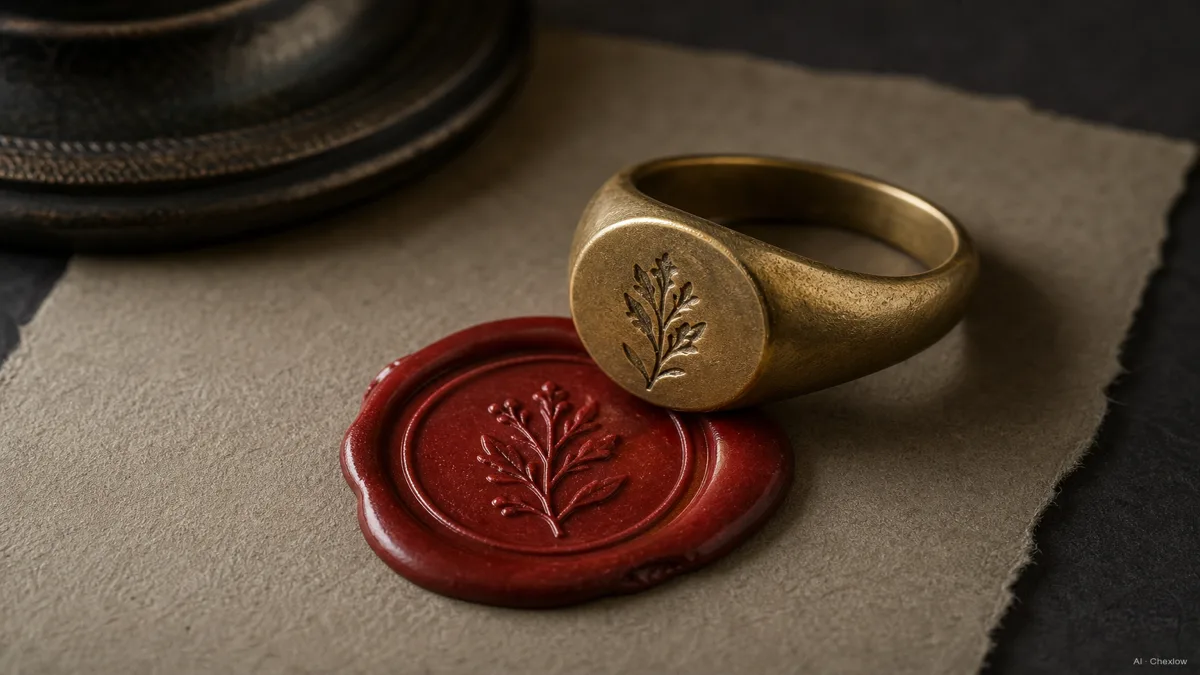
Surface engraving is the lighter, decorative option, the design sits on top of the face and is meant to be seen on the ring itself, on your hand. Deep-seal, or intaglio, engraving is the older, more technical method, the design is carved in reverse into the metal, so nothing about it looks right until you press it into warm wax and read the raised impression it leaves behind (laserengravingservice.co.uk).
Intaglio is the historically authentic version, the one that could actually seal a letter. Most people buying a signet ring today never plan to press it into wax, so surface engraving covers the job fine for a monogram or a small crest you just want visible on the hand. Intaglio is worth the extra cost and depth only if using the ring as an actual seal, now or someday, matters to you.
Budget Tiers, What You Actually Get at Each Price Point
Price on a signet ring tracks metal and construction closely enough that the number on a listing tells you almost everything before you read the description.
- Under $100. Almost always plated or hollow, a thin layer of gold or silver look over a base metal, or a hollow-back build that leads to the irritation problem covered above.
- $200 to $600. Where a solid 925 sterling silver ring from a real workshop typically lands, depending on size, weight, and how much engraving is involved.
- $1,500 and up. Where an engraved 18k gold signet starts, climbing quickly from there depending on weight and detail.
Buyer interest in 2026 has been shifting in a specific direction, strong search demand for solid-gold signet ring styles, a move toward more androgynous and unisex designs, mixed-metal combinations, yellow and white gold worn with silver, for layering, and rising demand for bespoke engraving that reflects a wearer's own identity or heritage rather than a generic crest (Accio, Signet Ring Trends 2026; Forbes, How Men's Jewelry Is Redefining Style In 2026).
Knowing which tier you are shopping in before you start narrows the search fast. A budget under $100 rules out solid metal entirely, $200 to $600 is where a first real sterling silver piece lives, and anything past $1,500 is a gold piece meant to last.
Sources
- History of Signet Rings, International Gem Society — Mesopotamian seals, Egyptian and Roman use, the word signet
- A brief history of signet rings, The History Press — medieval nobility sealing letters and documents
- Men's Signet Rings, What They Are & How To Wear Them, Gentleman's Gazette — English pinky tradition and its practical origin
- How to Wear a Signet Ring, Finger, Style, and Material, Celinni — continental tradition and metal choice
- Ultimate Guide to Men's Signet Rings, TheCaratCut — oval, cushion, and round face shapes
- A Guide To Buying A Signet Ring, Red White & Denim — solid versus hollow back quality check
- Signet Ring Trends 2026, Gold, Personalization & Sustainability, Accio — 2026 gold and bespoke engraving demand
- How Men's Jewelry Is Redefining Style In 2026, Forbes — unisex and mixed-metal design shift
Cómo se elaboró esta guía
This piece started from how confusing a first signet ring purchase gets once you notice the face shape, metal, and two different engraving methods all sitting on one small ring. We traced the ring's history through the International Gem Society and The History Press, checked shape and metal trade-offs against TheCaratCut, Ken Walker Jewelers, and Celinni, and confirmed the solid-versus-hollow quality signal with Red White & Denim. Engraving method came from laserengravingservice.co.uk, and the 2026 price bands and design trend shift were checked against Accio and Forbes. The selection lens sits on Chexlow's signet ring catalog across sterling silver and gold.
Editado por el equipo de Chexlow · Las imágenes son ilustraciones generadas por IA