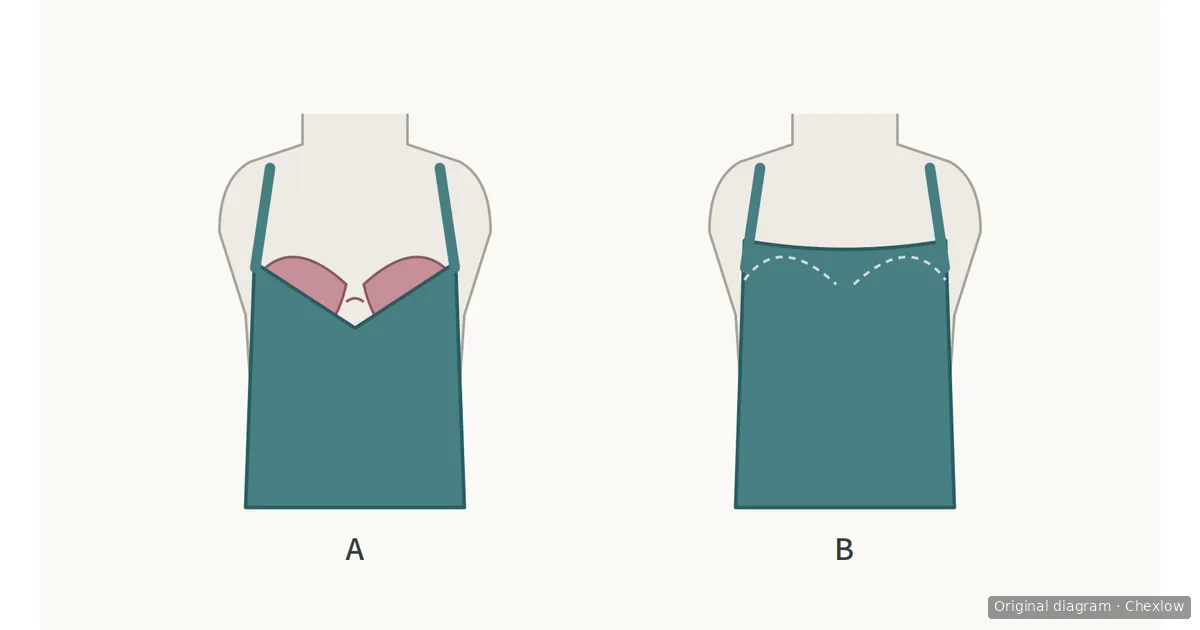
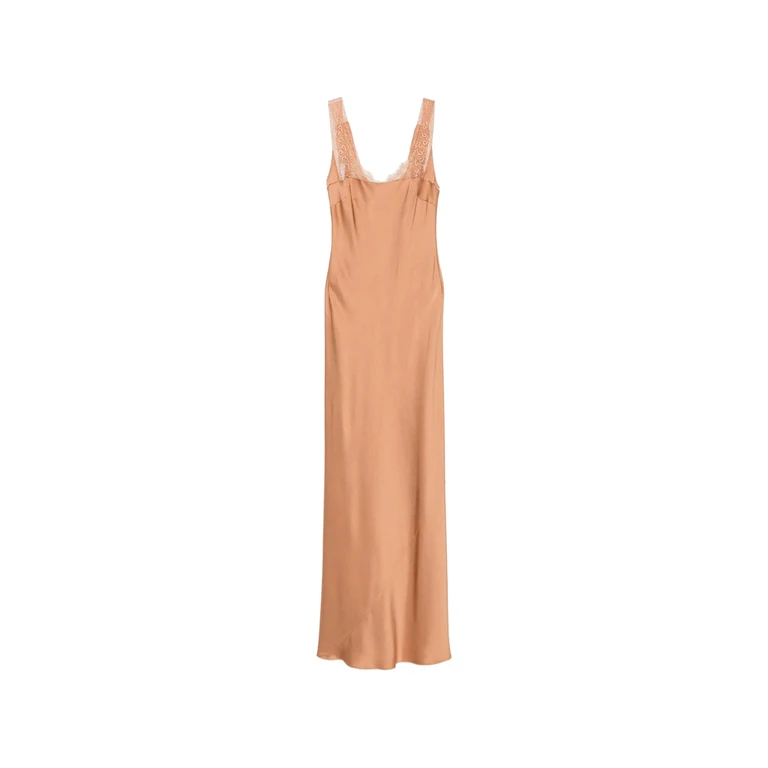

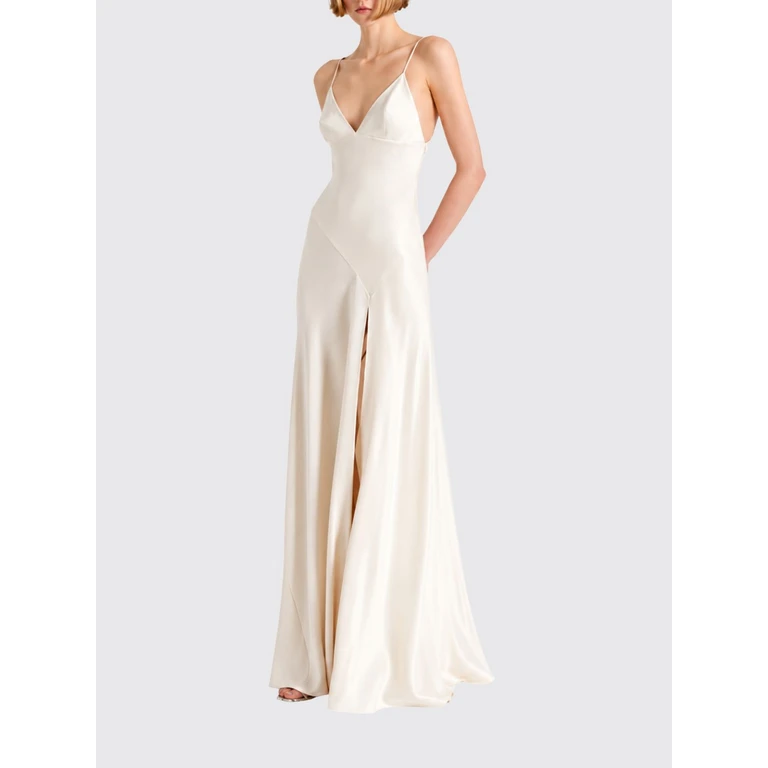
Find the edge that shows
Start with one requirement: do you want your bra completely hidden, or are visible straps part of the outfit? Neither choice needs correcting, but it changes which dresses belong on your shortlist.
With your intended bra on, inspect the front, sides and back separately.
- If only the shoulder straps show, compare where the dress straps attach and how much they cover. A higher front neckline does not answer this question.
- If the cup edge shows at the front, compare the dress opening with that edge rather than choosing by a neckline name.
- If the band shows at the side or back, inspect those openings too. A front photograph cannot settle the whole outfit.
SilkSilky's fit guide explains that V-neck and cowl-neck labels do not specify a fixed depth or guarantee coverage. A cowl is a deliberately draped neckline; distinguish folds you want from an opening that reveals more than you intended.
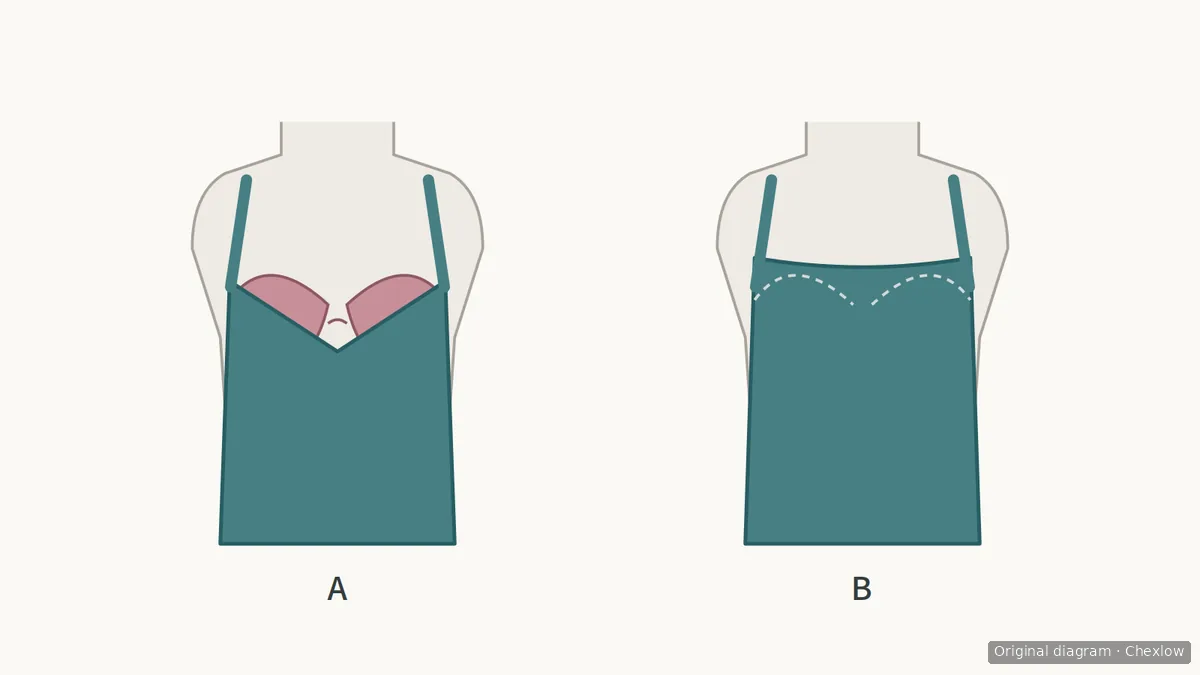
A and B compare front coverage over the same schematic cup shape. The dashed line in B represents an edge behind the dress, not see-through fabric. The drawing cannot establish strap concealment, support or coverage while moving.
Adjust the straps, then move
If the straps are adjustable, change their length within the available range while keeping the bodice comfortable. Stop if raising the neckline creates pulling at the bust or an uncomfortable armhole; a higher edge alone is not a successful fit.
Then sit, walk, raise your arms and reach. Check whether a dress strap moves off its intended position, the neckline changes height, or the cup edge reappears. These movement checks follow SilkSilky's guidance, which also notes that adjustment cannot correct every bust, shoulder or neckline mismatch.
If the front is acceptable only while you hold the straps in place, keep comparing dresses. With fixed straps, ask about their length and attachment positions rather than assuming they can be adjusted after purchase.
Check measurements and lining separately
Before choosing a different size, establish whether the chart describes body measurements or the finished garment. SilkSilky advises measuring the fullest bust over the intended bra or underlayer. Follow the particular seller's instructions; do not compare a flat width directly with a body circumference.
Banded Together's slip-dress chart provides a concrete example: it measures chest width flat at the underarm seam and doubles it, while length runs down the back from the highest shoulder point to the hem. Those definitions belong to that chart, so check the measuring points again for another dress.
Ask separately whether the bodice is lined and where that lining ends. SilkSilky cautions against inferring lining or opacity from silk alone. During an allowed try-on, check the actual underwear beneath the fabric in the light where you expect to wear the dress.
A built-in bra also needs its own description. For example, More Sunday describes its own design as providing light support and says it is not a push-up bra. That is a product-specific distinction, not evidence that an ordinary lining supplies the support you want.
Choose the dress that needs fewer compromises
Keep a candidate when its openings suit your intended underwear, the bodice feels comfortable and the coverage remains acceptable through ordinary movement. Use these checks as your purchase criteria, not as a promise that one construction fits everyone.
- Compare another size when the measurements and try-on suggest that bust room is the unresolved issue. Repeat the neckline and strap checks in that size.
- Compare another cut when the neckline is still too open, the strap positions do not suit the outfit, or adjusting one area makes another uncomfortable.
- Ask the seller before ordering when lining, garment measurements or strap construction would decide the purchase but are missing from the listing.
Check the seller's try-on and return conditions before committing. Do not make an uncertain dress purchase depend on several untried underwear or fastening purchases.
If you genuinely want different underwear, the next question is which bra construction gives you the shape and support you prefer under this dress. If you want to keep your existing bra, return to the dress shortlist instead.
Cómo se elaboró esta guía
This guide was written by AI for Chexlow, using the cited makers' fit guidance, measurement definitions and a product-specific built-in-bra description. It turns those sources into a dress-selection checklist; it does not report original wear testing or guarantee compatibility with a particular bra.
Original SVG diagrams created for Chexlow