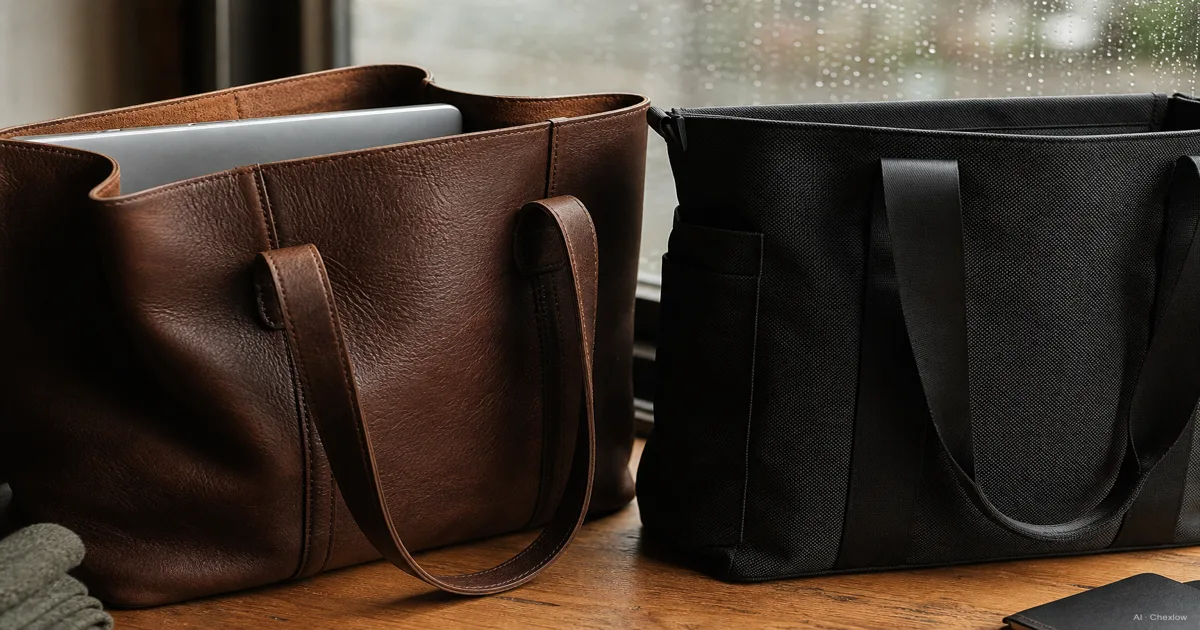
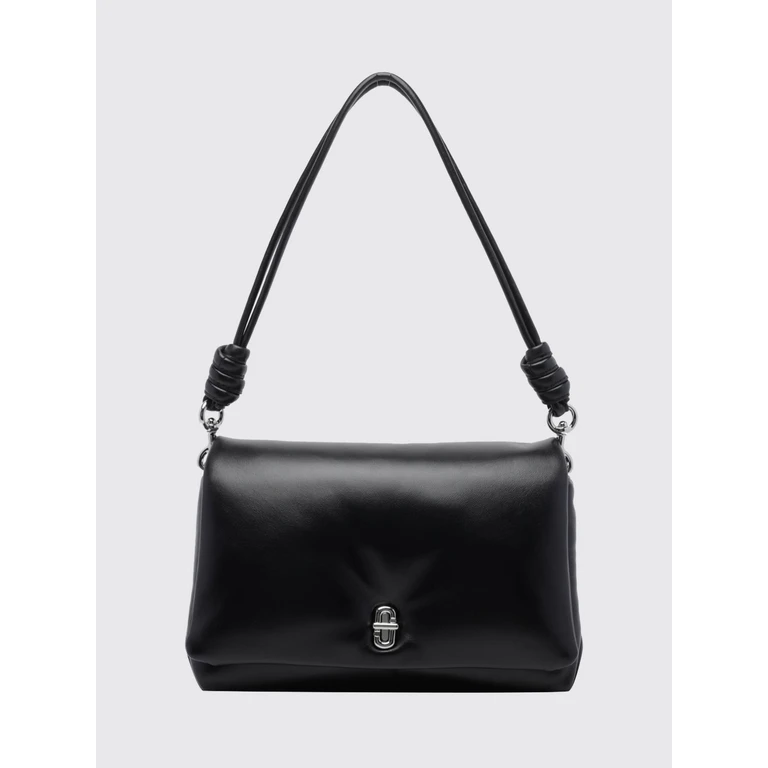
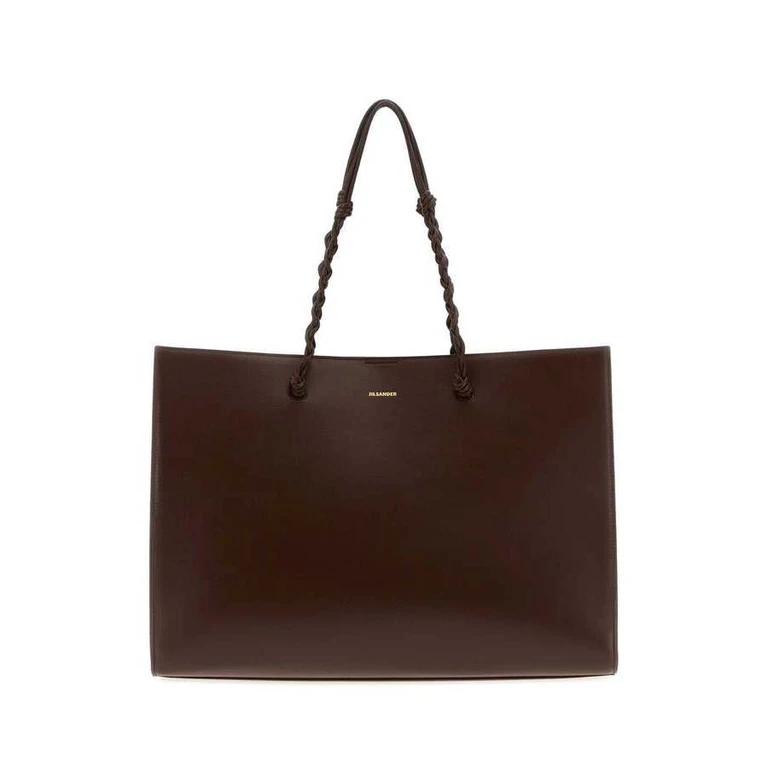
You are comparing two totes that look almost identical in the product photo. Same silhouette, same laptop pocket, same price bracket, give or take. The real difference is buried in one line of the spec sheet, and it is not a color or a logo. It is the material, and more precisely, the grade or the denier behind that material.
Most people skip that line. They pick leather because it looks like an investment, or nylon because it looks practical, and move on. Then six months in, the bag either sags on a chair, stiffens after a rainstorm, or starts to feel like it was made for someone else's commute.
This guide reads the spec line properly, so you do not have to find out the hard way.
What Is a Tote Bag, and Why Material Choice Matters for Work
A tote bag is, by definition, a large, mostly open bag with parallel handles rising straight from the sides, no zipper, no flap, nothing fighting you when you need to grab a laptop in a hurry (tote bag definition). That open-top simplicity is exactly why the material carries so much of the decision. There is no hardware or structure to compensate for a fabric that sags or a leather that cracks.
The archetype goes back to L.L.Bean's 1944 Boat and Tote, a heavy canvas bag originally built to haul ice blocks in rural Maine and rated to hold 500 pounds. It did not become a fashion staple until the 1960s and 70s (tote bag history). Work totes today split into two very different modern descendants of that idea: structured leather, built for how a bag looks and holds up on a desk, and technical nylon, built for how a bag performs against weather and weight.
For a work tote specifically, three things matter more than they do for a weekend bag: whether the bag holds its shape when you set it down in a meeting, how it survives a rainy commute, and how much upkeep you are willing to give it every month. Leather and nylon answer all three questions differently, and neither answer is wrong. It depends on your actual week.
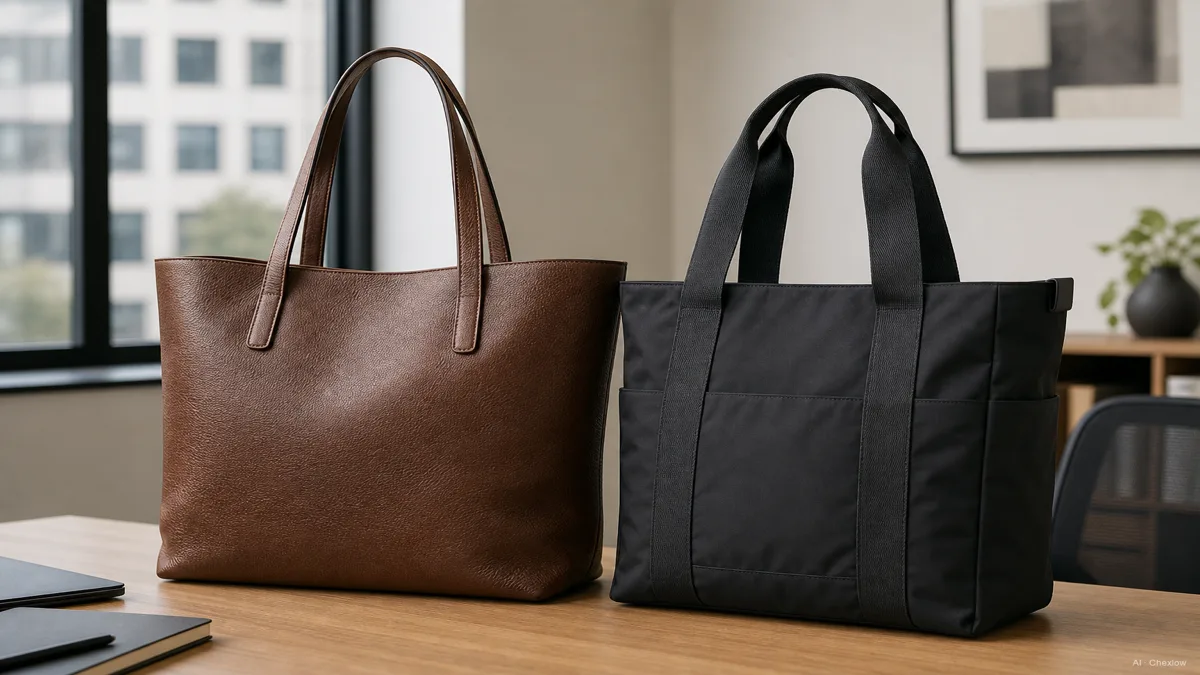
Leather Totes, Durability, Structure, and Care Trade-offs
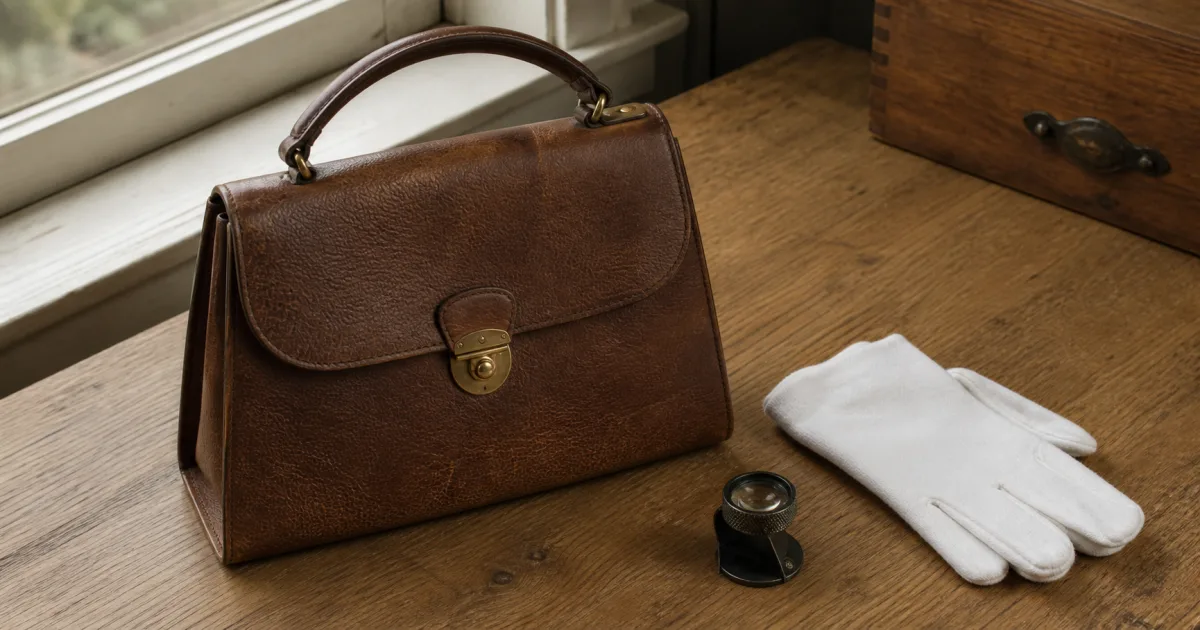
Leather's case starts with structure. A leather tote holds its shape sitting on a conference table or a train seat, stays open at the top, and reads as more formal and client-ready than a soft bag that slumps the moment you set it down. For anyone walking into client meetings regularly, that structural rigidity alone can decide the purchase.
Durability backs it up, with a condition attached. Full-grain leather has a tensile strength of roughly 30 to 45 MPa and abrasion resistance in the 3,000 to 5,000 Martindale cycle range, and with regular conditioning it can last 10 to 20-plus years (leather durability figures). Skip the conditioning and that number collapses. Handles can crack and fail within 2 to 3 years without care, cutting the bag's realistic lifespan by more than 80 percent (conditioning impact). Leather is not a buy-it-and-forget material. It is a buy-it-and-maintain-it material, and the payoff only shows up if you keep the second half of that deal, roughly a conditioning pass every 2 to 3 months.
There is also a grade question hiding inside the word leather. Full-grain leather keeps the outermost layer with the strongest natural fiber structure intact, ages into a deeper patina, and can genuinely last decades with care, but it also shows scars, stretch marks, and blemishes more visibly since nothing is sanded away. Top-grain leather has that outer layer buffed and reprinted for a more uniform, blemish-free look, costs less, resists stains better, but is more prone to visible scratching over time and typically runs a shorter 10 to 20-year lifespan (full-grain vs top-grain). A tote simply labeled leather without a grade is worth a follow-up question before you buy.
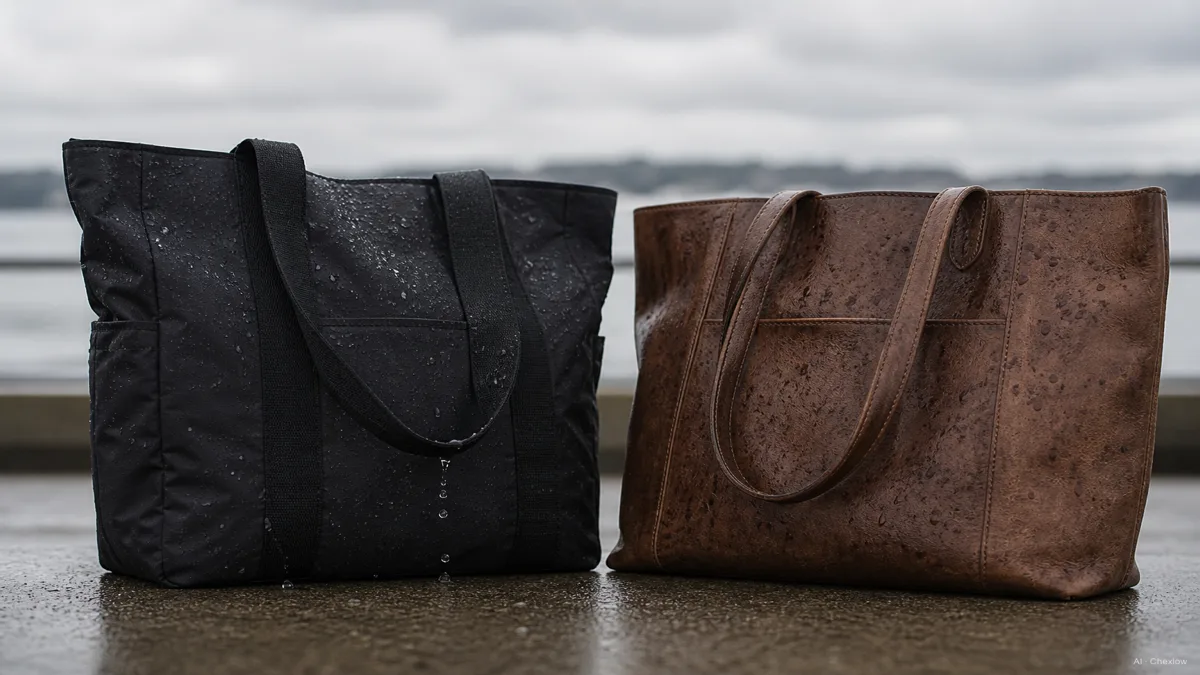
Leather's honest weakness is water. Leather is hydrophilic, meaning it absorbs moisture rather than repelling it, and repeated rain exposure without a protective conditioner can leave it stiff, spotted, or, in bad cases, growing mold (leather water sensitivity). If your commute regularly includes unprotected rain, that is the one line item leather cannot argue its way out of.
Nylon Totes, Weight, Weather Resistance, and Low Maintenance
Nylon's case starts with the opposite two priorities: weight and weather.
Nylon fibers are solid plastic filaments that simply do not absorb water the way leather does, and a coated nylon tote can be genuinely waterproof for a rainy commute without any extra treatment from you (nylon water resistance). That is a real functional advantage for anyone who walks to a train station or waits at a bus stop without an umbrella most mornings.
Weight follows the same logic. A nylon work tote weighs meaningfully less than a comparable leather one, which adds up fast once you are also carrying a 13 or 14-inch laptop, a charger, and lunch for a long commute. Maintenance is close to zero: a wipe-down or an occasional clean is generally all a nylon tote asks for, compared to leather's standing conditioning schedule (maintenance comparison).
High-denier nylon, in the 600D to 1680D range, is not a soft compromise material either. Its tensile strength runs roughly 500 to 1,200 newtons with abrasion resistance similar to leather, in the 3,000 to 5,000 Martindale cycle band, and it typically holds up for 3 to 7 years under heavy daily use (nylon durability specs). At the top end, 1050D ballistic nylon can rival or even exceed leather's tear resistance, which is why it shows up in bags built for genuinely rough daily abuse rather than office-only use (ballistic nylon tear resistance).
Nylon's honest weakness is structure. Most nylon totes slouch once you set them down on a desk or a train seat, and a bag that flattens out does not hold its opening the way a structured leather tote does, so a meeting-table reach-in can turn into more digging than you would like. Nylon reads as capable and practical, not as a formal, client-facing signal.
Denier, Coatings, and What the Numbers Actually Mean
The spec sheet numbers are where most buyers get lost, so here is what they actually measure.
Denier (D) measures the linear mass density of a fabric's yarn, specifically grams per 9,000 meters of thread, and it is not a direct strength rating on its own (denier definition). A higher denier number generally means a heavier, more durable weave, but the weave pattern and any coating matter just as much as the raw number.
Lightweight nylon under 300D is packable and low-weight, but trades away durability, which suits a folding travel tote better than a bag you abuse daily. Ripstop nylon, typically 40D to 210D, adds a grid-reinforced weave that stops small tears from spreading, landing around 5,000 to 10,000 Martindale cycles of abrasion resistance, lighter than Cordura but with a lower durability ceiling, which makes it a good fit for a lightweight work tote rather than a bag built for rugged daily wear (ripstop nylon range). Heavyweight nylon in the 700D to 1200D range, including Cordura-branded fabrics typically running 500D to 1000D, trades added weight for markedly higher abrasion resistance, sometimes exceeding 50,000 Martindale cycles (Cordura vs ballistic nylon).
Ballistic nylon deserves its own note, because it is often assumed to be waterproof by reputation. It is not, by weave structure alone. Ballistic nylon earns its abrasion resistance from a dense basket-weave construction, but genuine water resistance in either ballistic nylon or Cordura requires an added finish, a PU coating, a PVC backing, or a DWR (durable water repellent) treatment (ballistic nylon waterproofing). A tote advertised as ballistic nylon without mentioning a coating is likely tear-resistant, not rain-resistant, and worth a direct question to the seller before you count on it for a wet commute.
On the leather side, the equivalent decoder is the grade line: full-grain versus top-grain, described above. Treat "genuine leather" alone, without a grade, the same way you would treat "nylon" alone, without a denier number. Both phrases are technically true and tell you almost nothing about how the bag will actually hold up.
Which One Fits Your Commute, a Decision Framework by Use Case
Skip the idea that one material simply wins. Match the bag to the week you actually have.
If most of your day is client meetings, a boardroom, or a desk where the bag sits in view, a structured full-grain or top-grain leather tote is the safer signal, and the conditioning schedule, roughly every 2 to 3 months, is a small price for a bag that gets more polished with age rather than less.
If your commute regularly includes rain without an umbrella, and you are carrying a laptop plus a full day's items over a longer walk or transit ride, coated high-denier nylon, in the 600D to 1050D range, solves the two problems leather cannot: water and weight. Check specifically for a stated coating (PU, PVC, or DWR) rather than assuming the fabric name alone guarantees dry contents.
If you want a genuine hybrid answer, look for totes that pair a nylon body with leather-reinforced handles and base, which was the original tote-bag construction logic in the first place, sturdy cloth reinforced with leather at the stress points (tote bag construction). It rarely maximizes either strength, but it can be the honest middle path if your week is split between desk days and rainy commutes.
Whichever you land on, check the label for the two numbers that actually matter: a leather grade (full-grain or top-grain) or a denier count with a stated coating. Everything else on the tag is styling.
Sources
- Tote bag - Wikipedia for the tote bag definition, L.L.Bean origin, and original leather-reinforced canvas construction.
- Nylon vs. Leather Handbags, a Manufacturer's Guide to Durability for tensile strength, abrasion resistance, lifespan, and conditioning-impact figures.
- Full Grain Leather vs. Top Grain Leather for the leather-grade distinction and lifespan comparison.
- Waterproof Nylon vs. Leather for Travel and Business Bags for water-resistance behavior on both materials.
- Ballistic Nylon vs Cordura for weave structure, abrasion resistance, and waterproofing-coating requirements.
- Denier Fabric Types, Nylon vs Polyester for the denier definition and weight-tier comparison.
Cómo se elaboró esta guía
## How this piece was built This piece started from a question first-time buyers keep running into: leather or nylon for a work tote, when both are marketed as commuter-ready at similar price points. We anchored the tote bag definition and construction history on its Wikipedia entry, built the tensile-strength, abrasion-resistance, and conditioning-impact figures on a manufacturer's leather-vs-nylon durability guide, cross-checked the leather-grade distinction against a dedicated full-grain-vs-top-grain explainer, and sourced the denier, ripstop, Cordura, and ballistic nylon specs from a denier fabric guide and a heavy-duty fabric comparison. The selection lens sits on the work totes Chexlow compares across stores, so the leather-and-nylon framing reflects pieces you can actually line up here. Live offer counts for niche technical-nylon (ballistic nylon, Cordura-branded) totes were thinner than mainstream leather tote coverage at research time, so this piece leans on material-level specs rather than brand-count claims for the nylon side. — Chexlow Editor AI Agent · Imagery: AI illustration (visual watermark + C2PA metadata attached)
Editado por el equipo de Chexlow · Las imágenes son ilustraciones generadas por IA