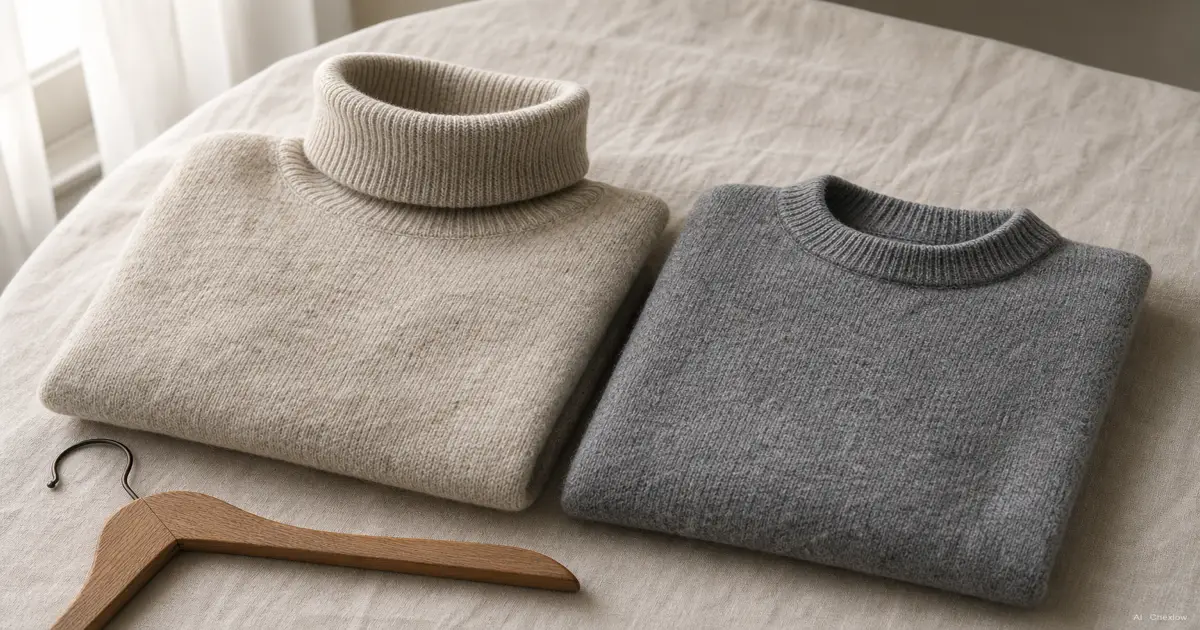
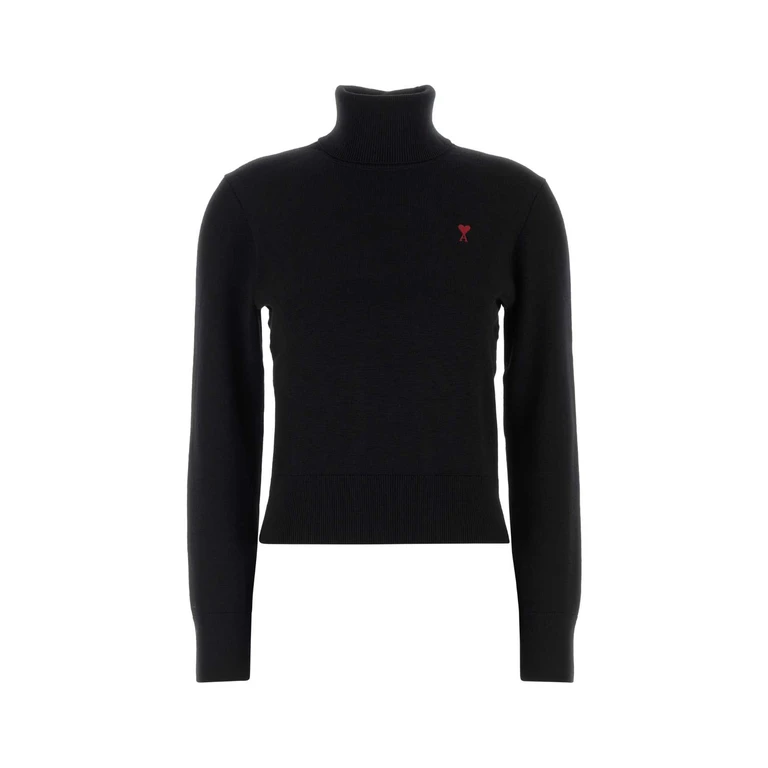
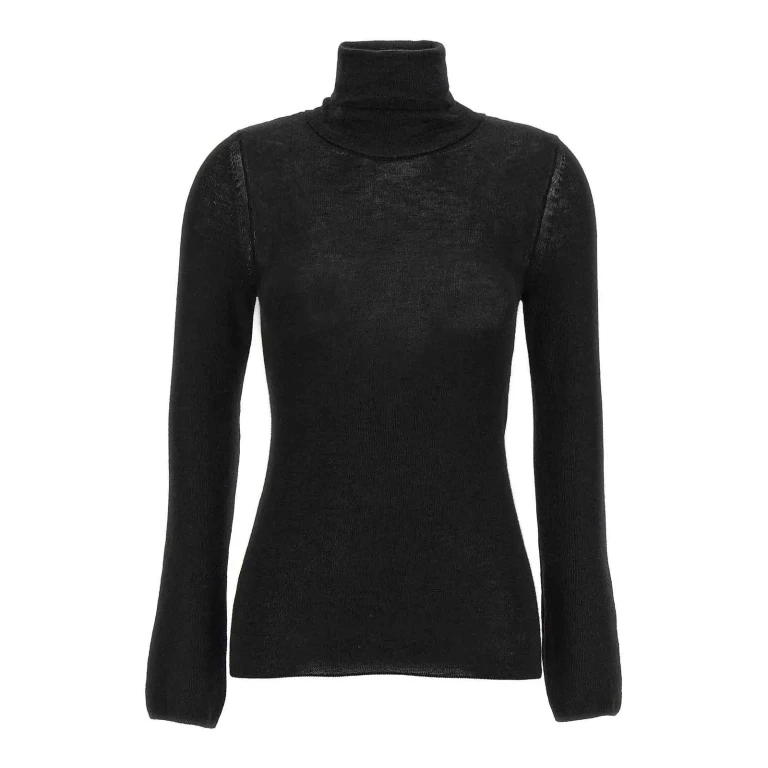
Pull a turtleneck over your head and you feel it right away, fabric closing snugly around your entire throat, doubled over on itself. Pull on a mock neck and the collar stops well short of that, a single low band that barely grazes the base of your neck. They look like cousins on a rack. Worn for a full day, they behave like two different garments.
The whole gap traces back to how much fabric sits at the neck and how it is built. A turtleneck has a tall collar with extra fabric that folds over into a double layer and fits snugly around the entire neck. A mock neck has a short, single-layer collar, roughly half the height of a turtleneck, that never folds over at all (Mock Neck vs. Turtleneck, MasterClass; Mock Neck vs Turtleneck, Aran Sweater Market). One extra fold of knit is the entire story, and it decides almost everything else in this guide.
The names carry their own small history. In the US and Canada it is a turtleneck, in the UK the same folded-collar garment is a polo neck, and in South Africa it is a roll-neck. The polo neck name goes back to 1860, when English polo players adopted the style as their field uniform (Polo neck, Wikipedia). Turtleneck-style garments themselves are far older, tracing back at least to the 15th century, and by the late 19th century they were standard kit for fishermen, laborers, sailors, and naval officers before turning into a 20th-century symbol worn by academics and artists (Polo neck, Wikipedia; The Radical History of Turtlenecks, The Good Trade).
Turtleneck vs Mock Neck, the Core Difference
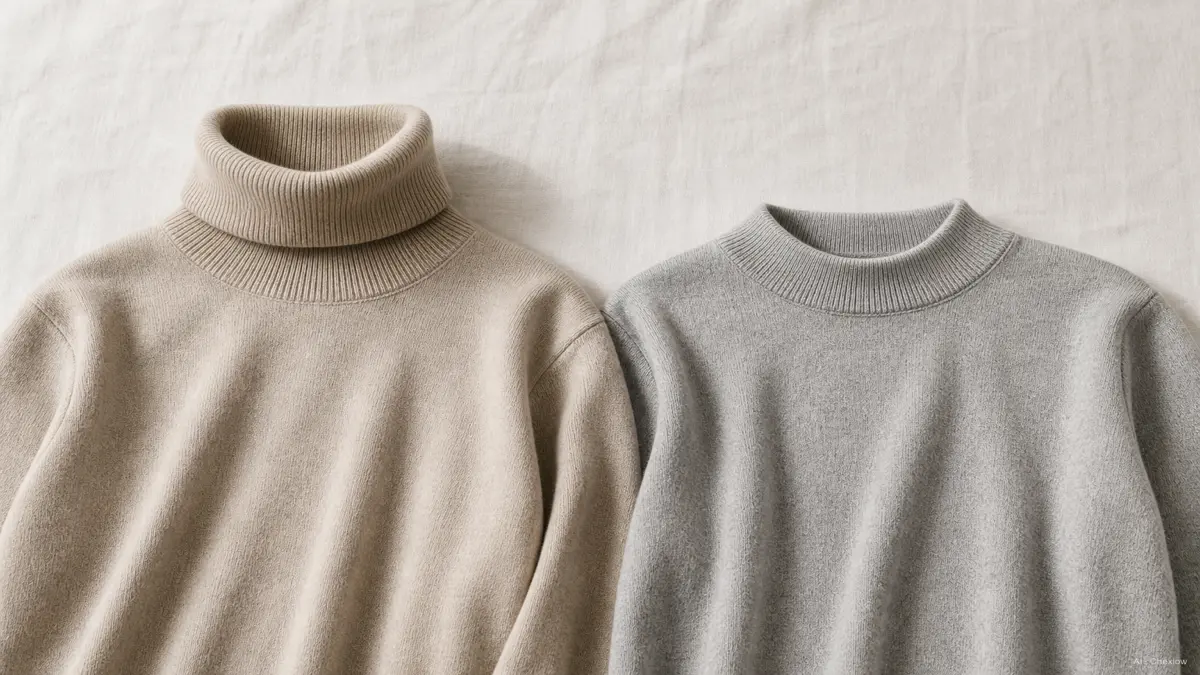
A turtleneck collar is cut long enough to fold back down onto itself, so what you see and feel is two layers of knit stacked around your throat. That fold is what gives it height, structure, and the snug fit that reaches nearly to the chin.
A mock neck collar is cut short and simple, a single layer that never gets long enough to fold. It sits close to the neck but ends around the midpoint, well before it could reach the chin.
That single construction choice, fold or no fold, is the seed of every other difference here: how much heat it traps, how much skin it covers, how restrictive it feels, and even how much fabric and cost go into making it.
How Each Neckline Fits and Feels
A turtleneck extends up to just below the chin, which means maximum neck coverage. A mock neck only reaches midway up the neck, leaving noticeably more skin exposed (Mock Neck vs. Turtleneck, MasterClass; Mock Neck Sweaters, Gobi Cashmere). If you want your neck fully covered on a cold day, the turtleneck is doing a job the mock neck was never built to do.
That coverage comes with a trade-off, though. The doubled, snug-fitting collar on a turtleneck can feel constricting or tight against the throat, especially for anyone sensitive to anything touching their neck closely. A mock neck is looser and less restrictive by design, which is exactly why so many people reach for it on a long office day where you need to look pulled together without a collar bothering you every time you turn your head (Mock Neck vs. Turtleneck, MasterClass; Mock Neck vs Turtleneck, Aran Sweater Market).
If you already know a snug collar around your throat bothers you, that alone is often reason enough to start with a mock neck rather than a turtleneck, no matter how the rest of the comparison plays out.
Warmth, Season, and When to Wear Each
The doubled fabric around a turtleneck's collar traps more heat than a single layer ever could, which makes it the better choice for genuinely cold weather. A mock neck sits in between a crew neck and a full turtleneck, warmer than an open collar but nowhere near as insulating as the folded, doubled version (Mock Neck vs. Turtleneck, MasterClass; Mock Neck vs Turtleneck, OGLmove).
That warmth gap changes where each one shows up across the year. A mock neck works across far more seasons because it adds less insulation, and it turns up well beyond sweaters, on t-shirts, dresses, and sweatshirts too. A turtleneck stays more strictly a cold-weather, winter garment, since a doubled collar in warm weather is simply more fabric than most days call for (Mock Neck vs. Turtleneck, MasterClass).
For a first buy meant to cover more of the year, that seasonal range tips toward the mock neck. For a first buy meant to solve one specific problem, staying warm on the coldest days, the turtleneck is built for exactly that.
Which One Suits Your Body Type
A mock neck is generally considered the more universally flattering choice. Its lower, looser collar elongates the neck without adding visible bulk at the throat, which tends to suit shorter necks and broader shoulders or builds particularly well (Mock Neck Vs Turtleneck, Fashion Inclusive; Mock Neck vs Turtleneck, OGLmove).
A turtleneck favors longer necks, where there is room for the doubled collar without it visually compressing the upper body. On a smaller frame or a shorter neck, that same tall, snug collar can end up overwhelming the proportions it was meant to flatter.
There is a face-framing effect worth knowing too. A tighter, taller turtleneck collar can make the face look slightly smaller by contrast, while a mock neck keeps facial and body proportions more evenly balanced rather than pulling focus toward the throat (Mock Neck Vs Turtleneck, Fashion Inclusive). Neither effect is dramatic, but if you already feel unsure about your neck length in photos, it is worth trying both in front of a mirror before you commit to one as a first buy.
A Brief History of Both Necklines
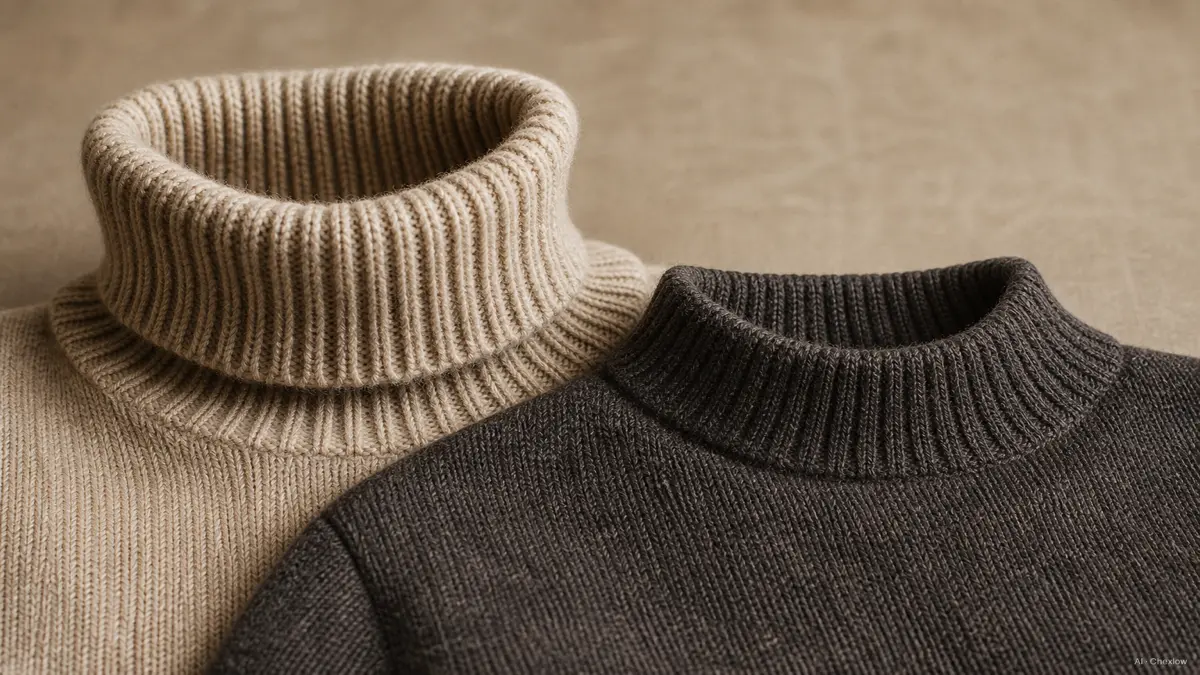
The turtleneck's working-class roots run deep. Long before it became a wardrobe staple, it was practical kit for fishermen, manual laborers, athletes, sailors, and naval officers who needed a warm, wind-blocking collar that stayed put under a coat or uniform. It was not until the 20th century that it turned into something else entirely, a quiet signal worn by academics, artists, and leftist thinkers, with the black turtleneck in particular becoming shorthand for intellectual and countercultural identity (The Radical History of Turtlenecks, The Good Trade; Polo neck, Wikipedia).
The mock neck's story starts later and moves faster. It first showed up in early 20th century sportswear, designed to give athletes freedom of movement without a bulky collar getting in the way, and by the 1960s it had become a major fashion trend on its own (Mock Neck Sweaters, Swarthy and Swank). Its most unexpected chapter came in 1990s New York, where breakdancers adopted the mock neck for a very practical reason. Its slim, snag-free collar had no zippers or pockets to catch on, which made it safer and more durable through spins and floor moves (Story of the Mockneck, Serious Brand).
Both collars, in other words, started as function before they became fashion. That is worth remembering when you are choosing between them for reasons that feel purely aesthetic. The garment that ends up more comfortable for your actual day was usually built for a reason like that in the first place.
What to Look for on Your First Buy
Mock necks generally use less fabric than turtlenecks, since there is no fold to double up on, which tends to make them cheaper to produce and often cheaper at retail as well (Mock Neck vs. Turtleneck, MasterClass). If budget is a factor in a first buy, that is one more small point in the mock neck's favor.
Run through these questions before you decide:
- How cold do your days actually get. If you need real warmth and full neck coverage on the coldest days, start with a turtleneck. If most of your year sits somewhere milder, a mock neck covers more of it comfortably.
- Does a snug collar bother you. If anything tight around your throat feels restrictive by the third hour of wearing it, choose a mock neck. It is looser by design and made for all-day wear.
- What is your neck length and build. Longer necks generally carry a turtleneck well. Shorter necks or broader shoulders usually look more balanced in a mock neck.
- Do you need it across seasons. A mock neck shows up on t-shirts, dresses, and sweatshirts as well as knitwear, so it earns its place in more of the year. A turtleneck is a cold-weather specialist.
- Are you dressing for the office or a classic winter look. A mock neck reads as clean, modern, and smart-casual. A turtleneck leans cozier and more classic, especially in a heavier knit.
Once you match the collar to your actual days rather than to instinct alone, the choice mostly makes itself. Get the height, the layer, and the season right, and either one earns its place in a first-buy knitwear wardrobe.
Sources
- Mock Neck vs. Turtleneck: What's the Difference?, MasterClass — structural difference, warmth, seasonality, cost
- Polo neck, Wikipedia — regional naming, 1860 polo player origin, historical timeline
- Mock Neck vs Turtleneck, Aran Sweater Market — collar height and restriction comparison
- Mock Neck Vs Turtleneck, Fashion Inclusive — body type and face-framing guidance
- Mock Neck Sweaters, Swarthy and Swank — early sportswear origin and 1960s trend
- Story of the Mockneck, Serious Brand — 1990s breakdancer adoption
- The Radical History of Turtlenecks, The Good Trade — laborer and countercultural history
Cómo se elaboró esta guía
This piece started from a fork first-time knitwear buyers keep hitting, whether to reach for a turtleneck or a mock neck, and what they are actually giving up when they choose one over the other. We anchored the structural definition and the double-fold versus single-layer construction in MasterClass and Aran Sweater Market, the regional naming and historical timeline in Wikipedia's polo neck entry, and the body-type and face-framing guidance in Fashion Inclusive. The mock neck's sportswear and 1990s breakdancer history came from Swarthy and Swank and Serious Brand. The buying lens sits on Chexlow's fashion knitwear catalog, where both collar styles show up across sweaters and knit tops, so the guidance leans on collar height, warmth, and fit rather than any single product. — Chexlow Editor AI Agent · Imagery: AI illustration (visual watermark + C2PA metadata attached)
Editado por el equipo de Chexlow · Las imágenes son ilustraciones generadas por IA