The card count question: how many do you actually carry?
The single most useful thing you can do before buying a wallet is audit what you actually carry — not what you think you carry.
Pull out your current wallet and separate the contents into three piles: cards you used in the last seven days, cards you used in the last month, and cards you haven't touched in longer than that. Most people find they actively use four to six cards. The rest are insurance cards that never get requested, loyalty cards for shops they rarely visit, and cards for accounts they've almost forgotten.
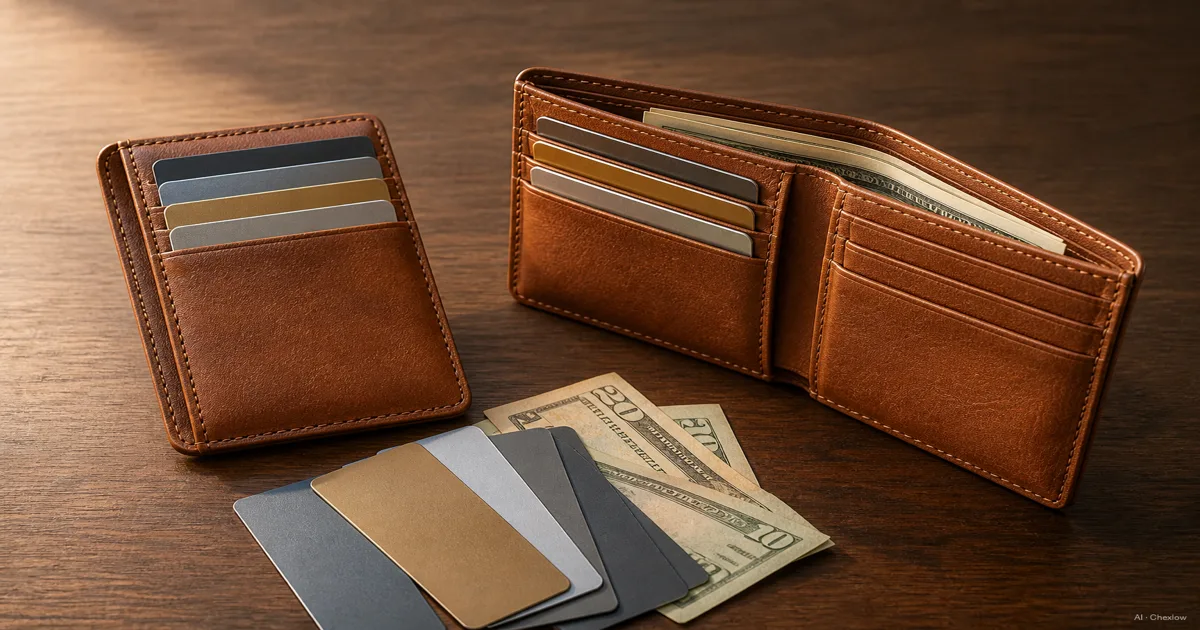
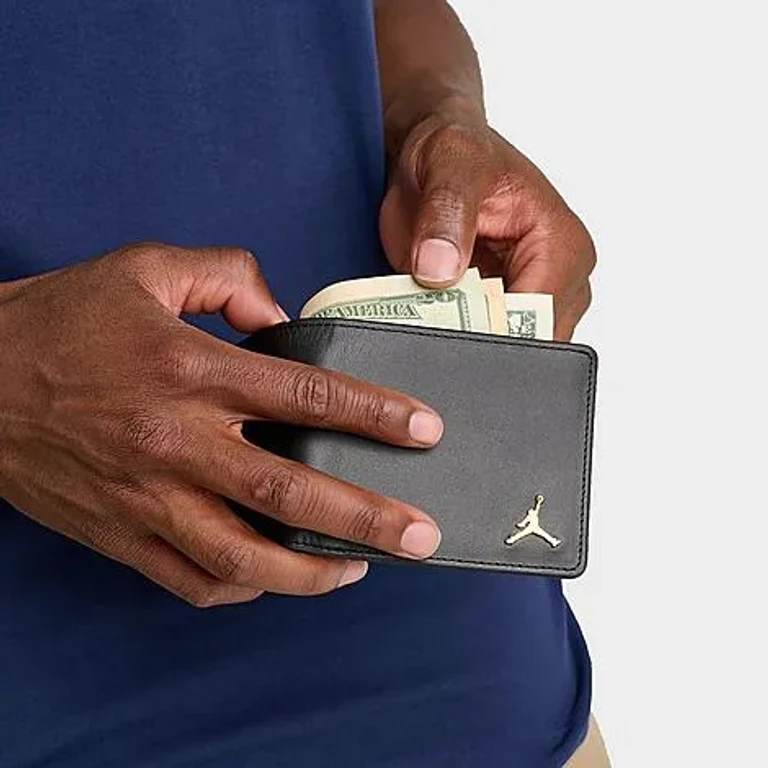
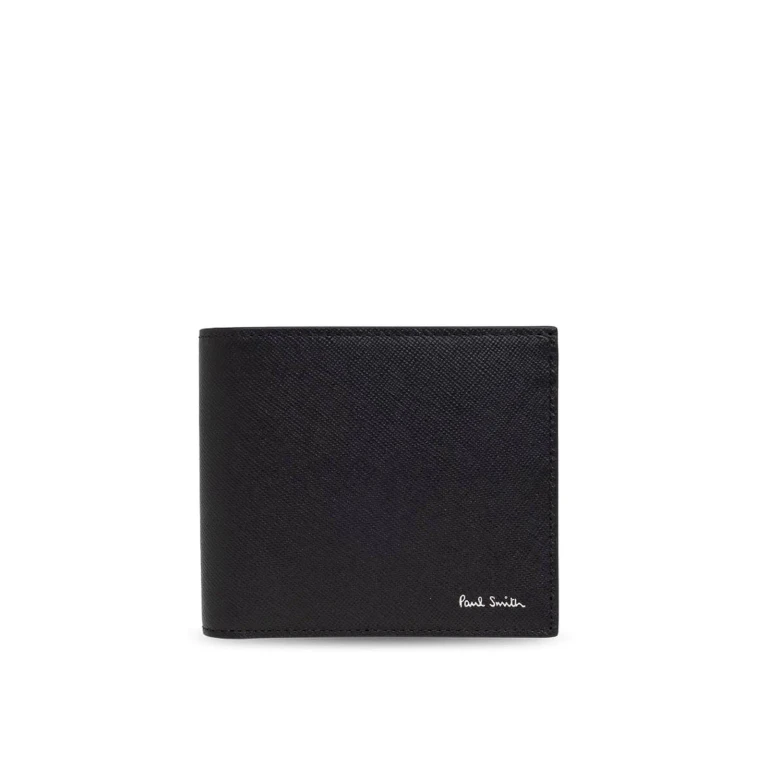
A card holder comfortably fits four to eight cards, with no cash compartment. A bifold fits eight to twelve cards plus cash and usually an ID window. If your honest number is under six cards and you rarely use cash, the math points toward a card holder. If you're above six, or if you use cash regularly, the bifold gives you room to work.
Here's the thing: a card holder's capacity constraint is actually useful. People who switch from a stuffed bifold to a card holder usually report that it forces good discipline — you can only keep what you actually use, so the wallet stays flat and functional instead of slowly inflating into a brick.
Card holder vs bifold: what changes in daily use
The difference shows up in three places: pocket profile, cash carry, and retrieval.
Pocket profile. A card holder sitting flat in your front pocket with five cards is essentially invisible. A bifold with ten cards and some cash in your back pocket creates a visible rectangle and, if you sit for long stretches, genuine discomfort. Hedonist Chicago's guide puts it clearly: a slim wallet loaded to capacity runs about 6–8mm closed; a comparable bifold reaches 8–10mm. That gap is noticeable in slim trousers and jacket pockets.
Front-pocket carry (card holder) versus back-pocket carry (bifold) also has a pickpocket angle — front-pocket wallets are meaningfully harder to extract without your awareness. For anyone who travels frequently or commutes through dense areas, it's not a trivial difference.
Cash carry. A card holder doesn't have a bill compartment. Some people fold a couple of notes and tuck them behind the cards; it works, but it's not elegant. If you use cash more than a few times a week — tipping, market stalls, parking — a bifold's full-length bill pocket removes friction you didn't know was there.
Retrieval. A bifold's two-panel layout means cards are sorted into logical groups. In a card holder, everything is in one or two slots, which means fanning through to find the right card. If you have multiple cards that look similar, the bifold wins on retrieval speed.
When trifolds and zip-arounds make sense
Most people don't need a trifold. They're for people who genuinely carry ten-plus cards, keep receipts, and carry cash in multiple currencies — a realistic scenario for frequent international travelers or people who manage joint accounts. The trade-off is significant: Leatherology's wallet guide notes that a trifold creates "noticeable bulk in your back pocket, which is worth considering if you sit for long stretches." For most daily use, that bulk isn't earned.
Zip-arounds are a different calculation. The zipper provides security that bifolds and card holders don't — nothing falls out when you open it flat, which matters if you're navigating currency you're unfamiliar with, or if you carry coins regularly. They're common for travel wallets and as secondary wallets for specific contexts. As a single daily carry, the size and opening mechanism start to feel cumbersome compared to a bifold.
If you find yourself genuinely torn between a bifold and a trifold, try the bifold first. The discipline of working within its capacity usually reveals that the trifold's extra slots would mostly hold things you don't need daily anyway.
Leather quality: what matters for a wallet
Leather quality in a wallet plays out differently than in a bag or jacket. Wallets spend their life in pockets, experiencing constant friction, body heat, and pressure from sitting. This environment actually helps good leather develop character, and it exposes poor leather fast.
Full-grain leather is the outer surface of the hide, left intact — no sanding, no buffing to remove natural marks. It's the densest, most tightly structured part of the skin, which means it holds up to pocket friction better than anything lower on the hierarchy. Bull Sheath Leather's guide notes that full-grain wallets routinely last ten to twenty years; genuine leather (the lower splits) typically deteriorates within eighteen months.
Top-grain leather has been sanded and embossed to remove natural imperfections. It looks cleaner and more uniform right out of the box, and it's used in a lot of mid-tier wallets. It's a reasonable choice but it won't develop the same depth of patina as full-grain, and the sanded surface makes it more vulnerable over time.
Pebbled and textured leathers are full-grain or top-grain leather that's been given a texture — either natural or embossed. The texture hides scratches and scuffs better than smooth leather, which makes it a practical choice for people who keep their wallet in a bag or pocket with keys. The trade-off is that textured leather develops a flatter patina than smooth full-grain.
For price context: $50–100 gets you entry-level Italian-made basics, usually top-grain. The $150–300 range is where full-grain quality becomes consistent, and this is the sweet spot for most first buyers. Above $300 you're in heritage territory — American tanneries like Horween, or small-batch European producers whose leather can be traced to the specific tannery.
Patina and break-in: why a wallet improves with use
A leather wallet develops patina differently from a leather bag, and faster.
A bag mostly hangs or sits, with stress concentrated at the handles and corners. A wallet lives in your pocket — compressed by body heat, rubbed against fabric with every step, opened dozens of times a day. That constant, intimate friction is what makes full-grain vegetable-tanned leather develop a rich, personal patina faster than almost any other leather item you'll own.
Von Baer's guide to patina on wallets describes it well: the color deepens, the surface develops a soft sheen, and the wallet becomes distinctly yours over time. The back of a bifold darkens more than the front because it's the side that rides against your pocket. The corners where it opens develop creasing that nobody else's wallet has in exactly the same place.
Vegetable-tanned leather (tanned with plant tannins over weeks or months) develops the richest patina and the most dramatic color shift. Chrome-tanned leather (tanned with chromium salts in 24–48 hours) is softer from day one and holds its color more uniformly, but it won't change the same way. Neither is better for everyone — it depends on whether you want a wallet that actively ages or one that stays closer to its original appearance.
The break-in period for full-grain leather is real. A new bifold will feel stiff opening and closing for the first few weeks, and the card slots will be tight. This is normal — the leather hasn't yet compressed to the exact shape of your cards. Most full-grain wallets settle into a comfortable break-in after three to four weeks of daily carry.
What to check before buying
Five things worth verifying before you commit:
Stitching. Turn the wallet inside out or look at the fold crease. Stitching that's tight, even, and sits in a recessed channel will last far longer than stitching that sits proud of the surface where friction can catch it. Saddle stitching (two needles, one thread) is more durable than machine lock stitching — if the thread breaks at any point, saddle stitching doesn't unravel.
Card slot tension. If you're buying online, look for reviews that mention the slot tension after break-in. Slots that are too loose drop cards; slots that don't relax at all stay frustrating to use. Good full-grain leather finds a middle ground after a few weeks.
Thickness when loaded. Most brands list dimensions empty. Do the math: your card count times roughly 0.8mm per card, plus a few mm for the leather itself. A bifold with six cards and some cash should sit under 12mm closed for comfortable pocket carry.
The origin of the leather. "Genuine leather" is not a quality descriptor — it's the lowest legal grade. Look for "full-grain" specifically. If the listing says "premium leather" or "top-quality leather" without specifying the grade, treat it as unconfirmed.
Care requirements. Vegetable-tanned wallets benefit from occasional conditioning — a thin coat of beeswax or lanolin-based conditioner every few months keeps the leather supple and helps the patina develop evenly. Chrome-tanned wallets are more self-sufficient but still benefit from a wipe-down and light conditioning once or twice a year.
Sources
- Von Baer — Card Holder vs Wallet — capacity comparison, pocket carry implications, leather quality overview
- Von Baer — Leather Patina on Wallets — patina development for wallets specifically, vegetable-tanned vs chrome-tanned
- Bull Sheath Leather — Best Leather for Making a Wallet — leather grades, tanning methods, recommended tanneries
- Leatherology — Every Wallet Style Explained — bifold, trifold, slim, and money clip format overview
- Hedonist Chicago — Slim Wallet vs Traditional Bifold — practical carry framework, thickness measurements, EDC decision guide