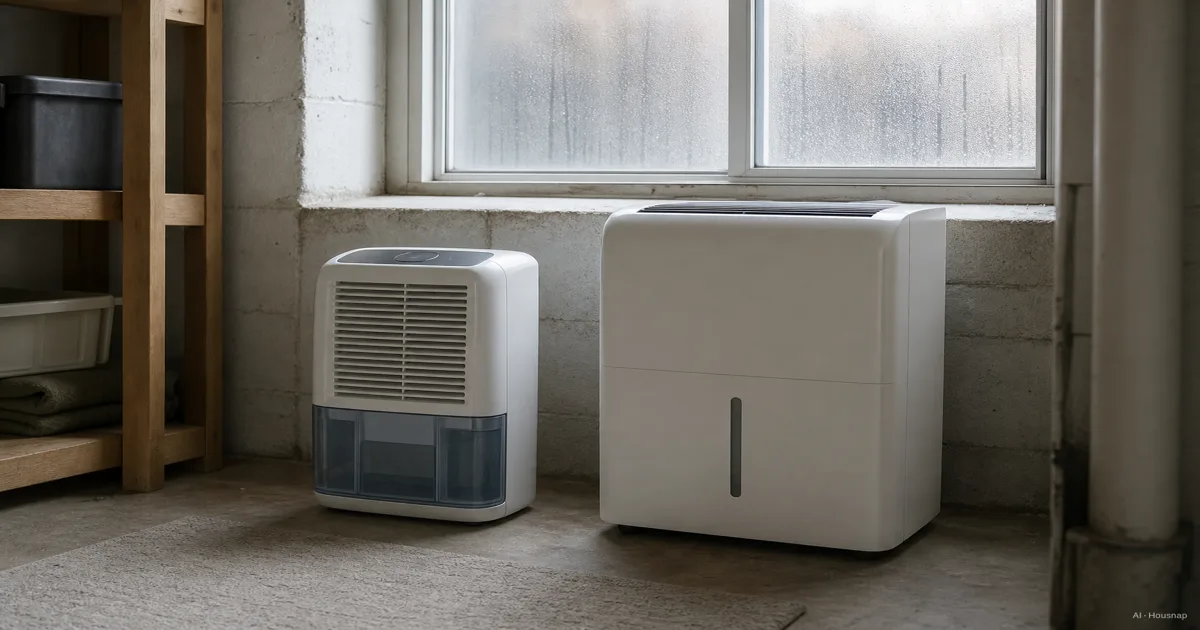
Measure the room before choosing the machine
Record temperature and humidity where the machine will run, including when the heating is off. A thermometer-hygrometer is useful if you lack those readings; a hygrometer measures relative humidity, shown as %RH. Also investigate leaks and moisture sources rather than expecting a machine to resolve them. ENERGY STAR buying guidance
Use these starting points from Meaco’s comparison, then check the candidate’s specifications:
- Below 10°C: shortlist desiccant units.
- 10–15°C: compare both types using low-temperature extraction data.
- Warmer rooms: start with compressor options and compare energy use.
These are shopping guidelines, not universal operating limits. The Meaco DD8L, for example, specifies 1–40°C. “Suitable for cold rooms” does not mean suitable below freezing.
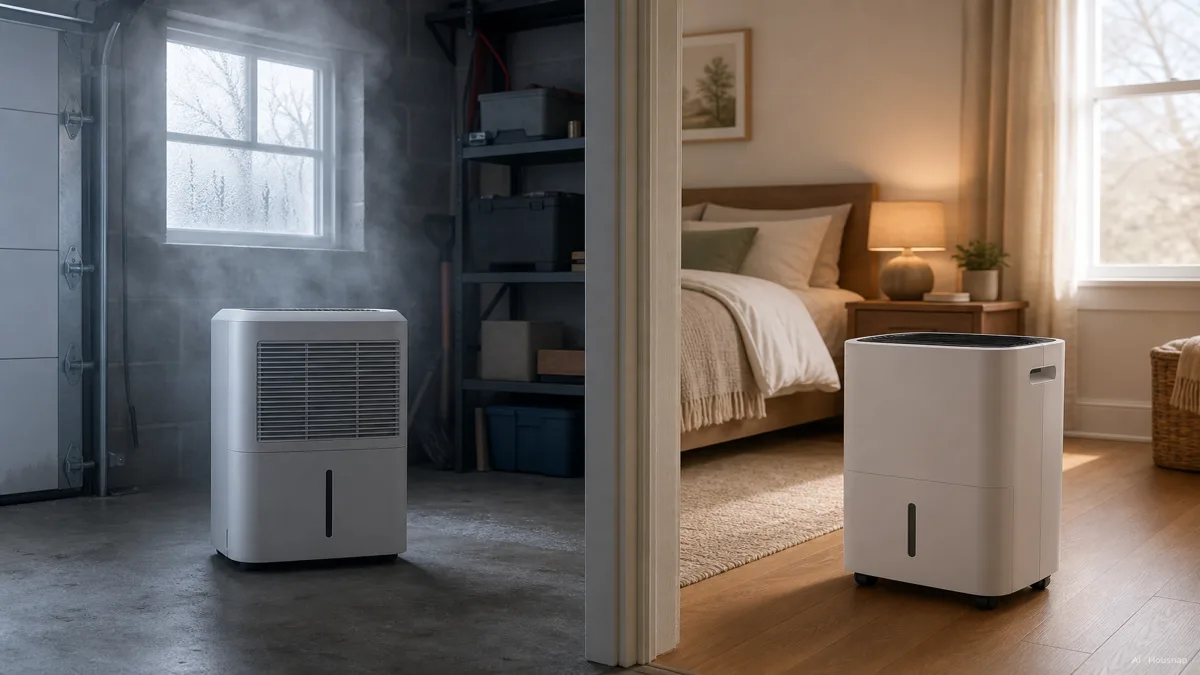
The frosty scene illustrates the buying question, not permission to operate either machine outside its specified range.
Decide whether extra warmth and noise suit you
A compressor condenses moisture on a cold coil. A desiccant uses moisture-attracting material; a heater regenerates it for reuse. That explains why desiccant models generally use more power and send out warmer air. Meaco · EcoAir
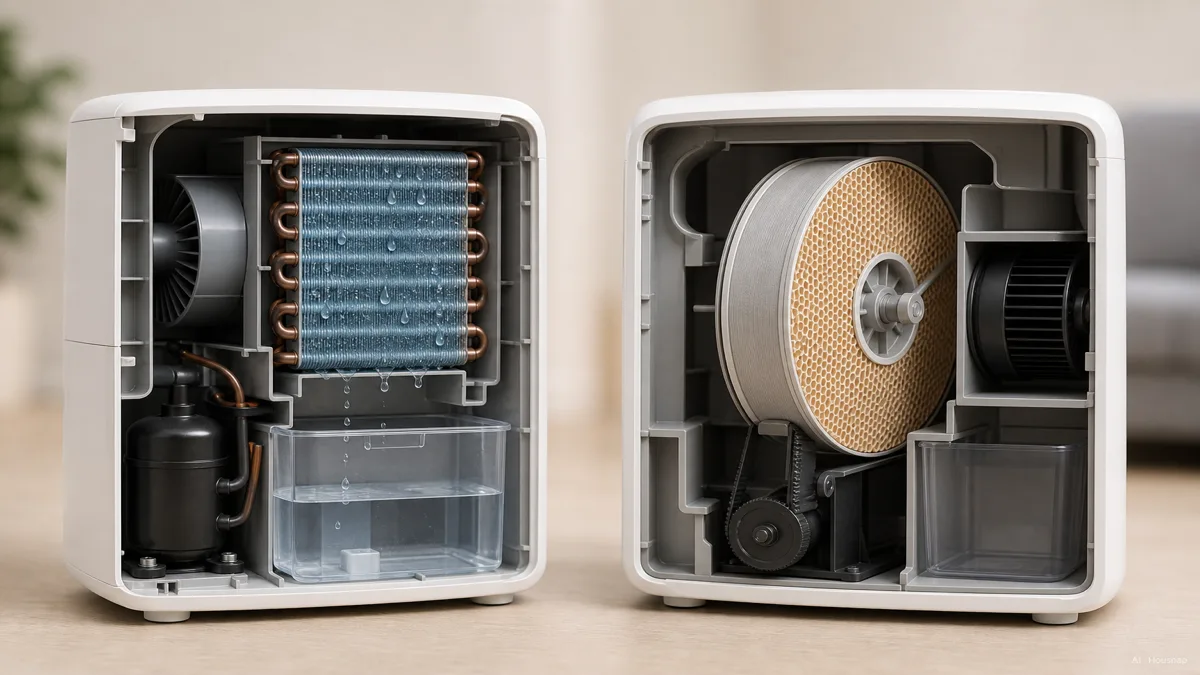
Treat the cutaway as a simplified comparison, not a parts guide for every model. Decide whether extra warmth is welcome in your chosen room. If keeping yourself warm is a separate priority, explore ceramic versus infrared heaters before choosing a dehumidifier mainly for its warm exhaust.
For a bedroom, compare the sound rating at the mode you would actually use. Compressor does not automatically mean louder: the Arete One 12L lists 35 and 38 dB(A). Ask about fan speed and measurement conditions, and avoid treating one minimum figure as a promise of undisturbed sleep.
Compare extraction and electricity on equal terms
Put the specification sheets side by side and look for the test temperature and humidity. Daily extraction is water removed under those conditions, not tank capacity. Where IEF is supplied, it means liters removed per kWh, including off-cycle energy. ENERGY STAR testing guidance
- Capacity: choose against room size and dampness; there is no universal “50-pint first buy.” ENERGY STAR sizing guidance
- Efficiency: compare ratings from the same test method. Do not rank two machines just because one advertises more liters per day.
- Your bill: calculate kWh used × your electricity tariff. For a rough constant-power estimate, watts ÷ 1,000 × running hours gives kWh; cycling changes the result. Energy-cost calculation
If a seller cannot provide extraction data near your room conditions, keep that uncertainty in the comparison rather than assuming the headline rating applies.
Check the tank, filter and placement before paying
Check that you can remove the tank in the intended spot. If you want continuous drainage, confirm the connection and drainage route in that model’s manual before ordering a hose.
Neither type is maintenance-free. The EcoAir DD1 Classic MK6 manual requires filter and tank care. Use the candidate’s instructions to check cleaning access, required clearance and shutdown procedure.
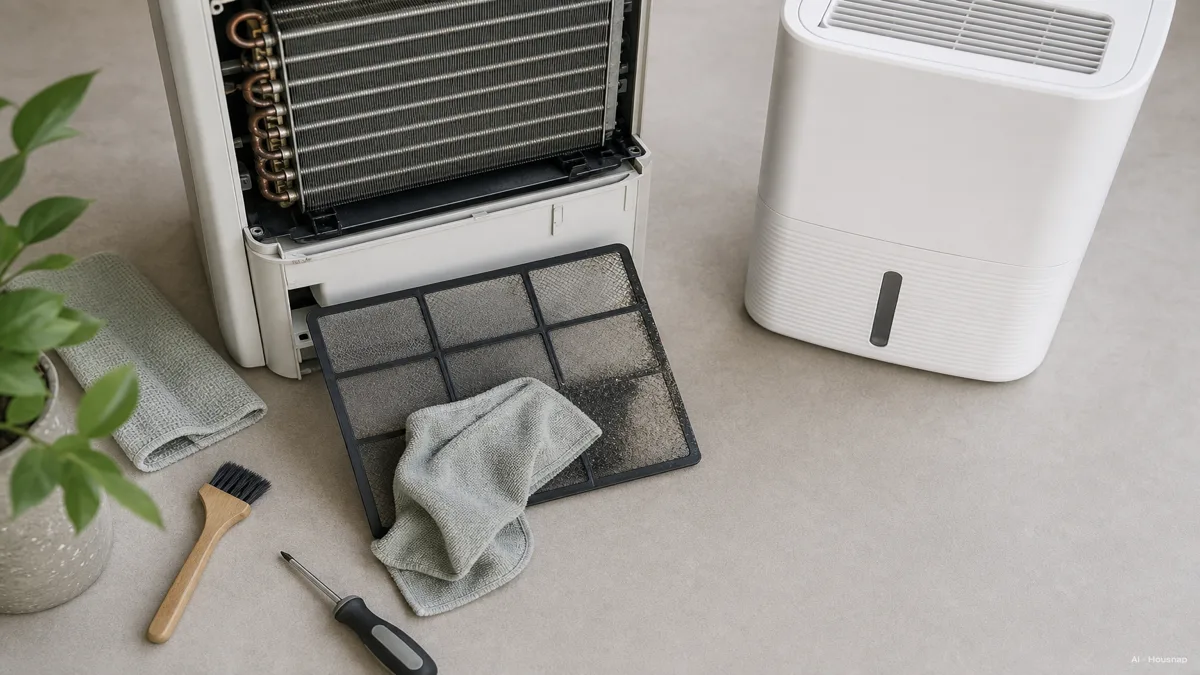
This illustration is not a cleaning procedure: the untouched desiccant still needs care, and the exposed coil does not authorize dismantling. Follow the manual’s cooldown and unplugging instructions before cleaning; leave internal service to the appropriate service provider.
Your shortlist is ready when each candidate has a suitable temperature range, relevant extraction data, acceptable noise and a workable emptying or drainage arrangement. Resolve any missing item before paying.
Sources
- Meaco technology comparison
- EcoAir technology comparison
- ENERGY STAR testing and capacity
- ENERGY STAR buying guidance
- EcoAir DD1 Classic MK6 manual
- Meaco DD8L specifications
- Meaco Arete One 12L specifications
- Energy-cost calculation
Comment ce guide a été conçu
AI wrote this guide for Chexlow using manufacturer explanations and specifications, an EcoAir manual and ENERGY STAR guidance. It focuses on choosing a portable dehumidifier for the room’s conditions; the comparison criteria are editorial guidance, not hands-on product testing.
Rédigé par l’équipe Chexlow · Les images sont des illustrations générées par IA