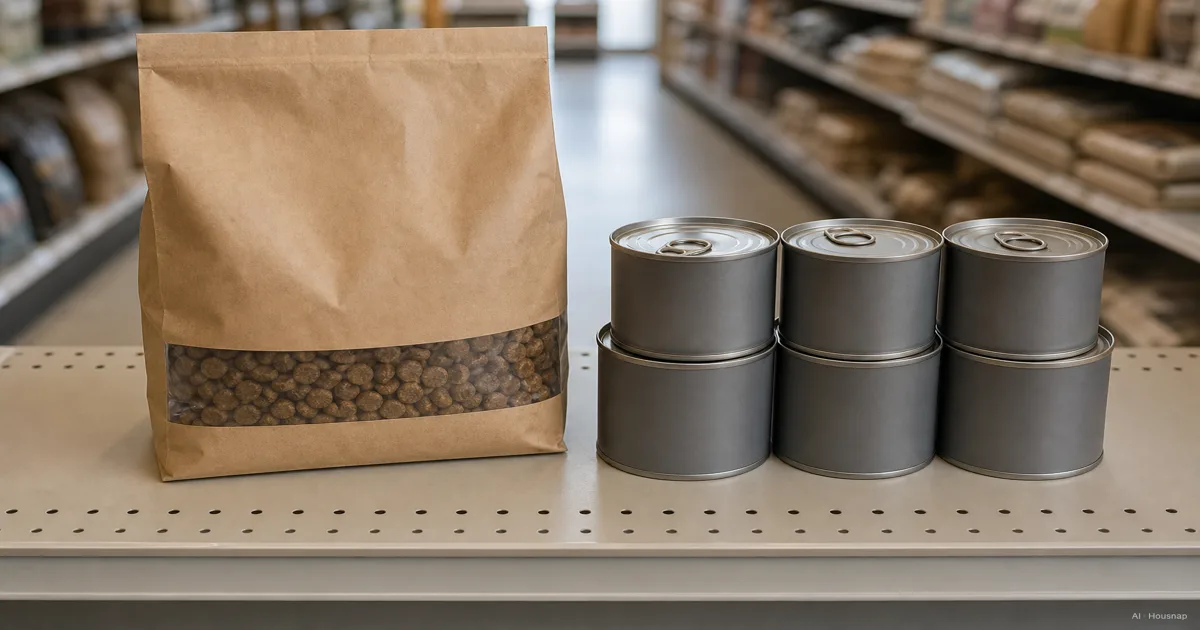
Check that it can be the main meal
Before choosing a format, check the nutritional adequacy statement: is this food intended as a complete diet for dogs at your dog’s life stage? A product labeled for supplemental or intermittent feeding is not the same thing. AAFCO’s selection guide explains the distinction.
For US labels, look for an AAFCO nutrient-profile or feeding-trial statement. That does not mean the product is “AAFCO approved”: AAFCO does not approve individual foods. If your dog is still growing, settle the puppy versus adult food question before comparing formats.
Choose the format you can feed consistently
- Start with dry if easy portioning and a lower feeding cost matter most.
- Consider wet if you want more water in the meal or your dog prefers its texture. Include refrigeration and unfinished portions in the decision.
- Combine them if you want some wet food without making it the whole diet. The portions need recalculating.
These are practical trade-offs, not a nutritional ranking. VCA’s food-format guide describes the convenience of kibble and the water content, preferences and cost considerations of canned food.
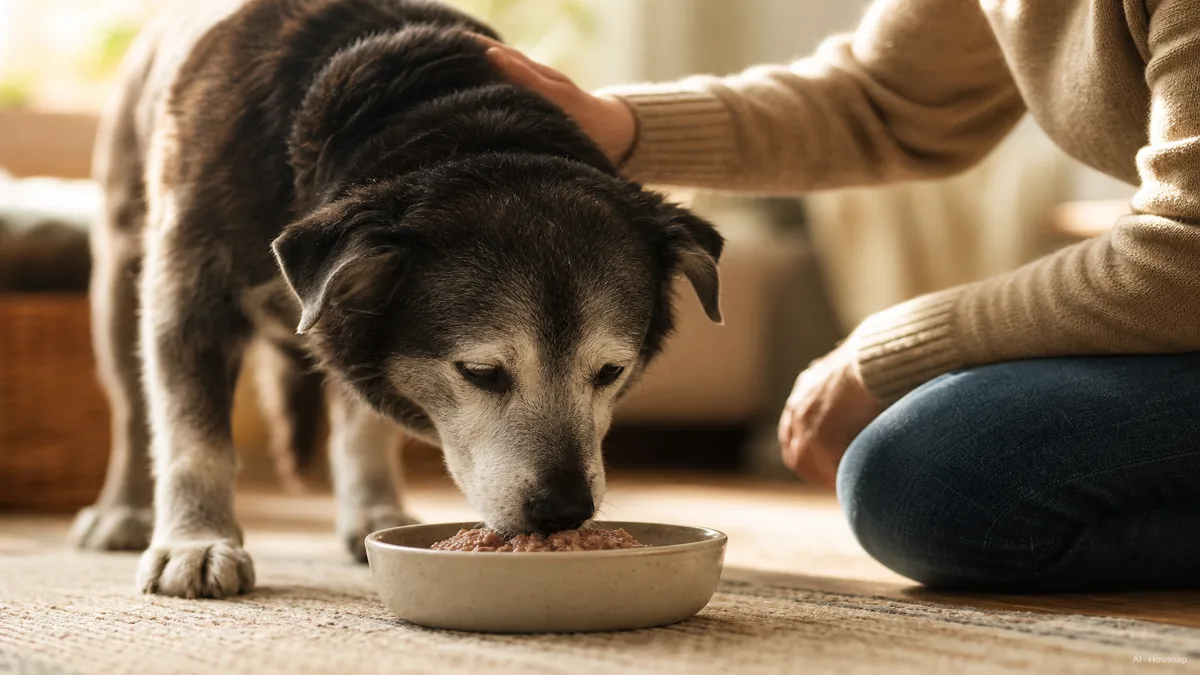
Soft food can be easier to eat, but a dog that has started avoiding food or seems painful needs a veterinary assessment, not just a tastier can. VCA explains why medical causes should be checked before calling a dog picky.
Do not choose ordinary kibble as a substitute for toothbrushing. Dental diets are a separate category; VCA’s dental guidance also notes that mixing one with other food can reduce its effect.
Compare daily cost and protein on different bases
For cost, find kcal, the food-energy unit, per kilogram or can. AAFCO’s calorie guide explains these label units. Divide the package price by its total kcal, then multiply by the daily kcal you plan to feed from that food. Account for any food you will discard; package weight alone is a poor comparison.
Protein needs a different calculation because the percentages include water. The illustration’s roughly 10% versus 75% moisture is an example, not a specification for every food.
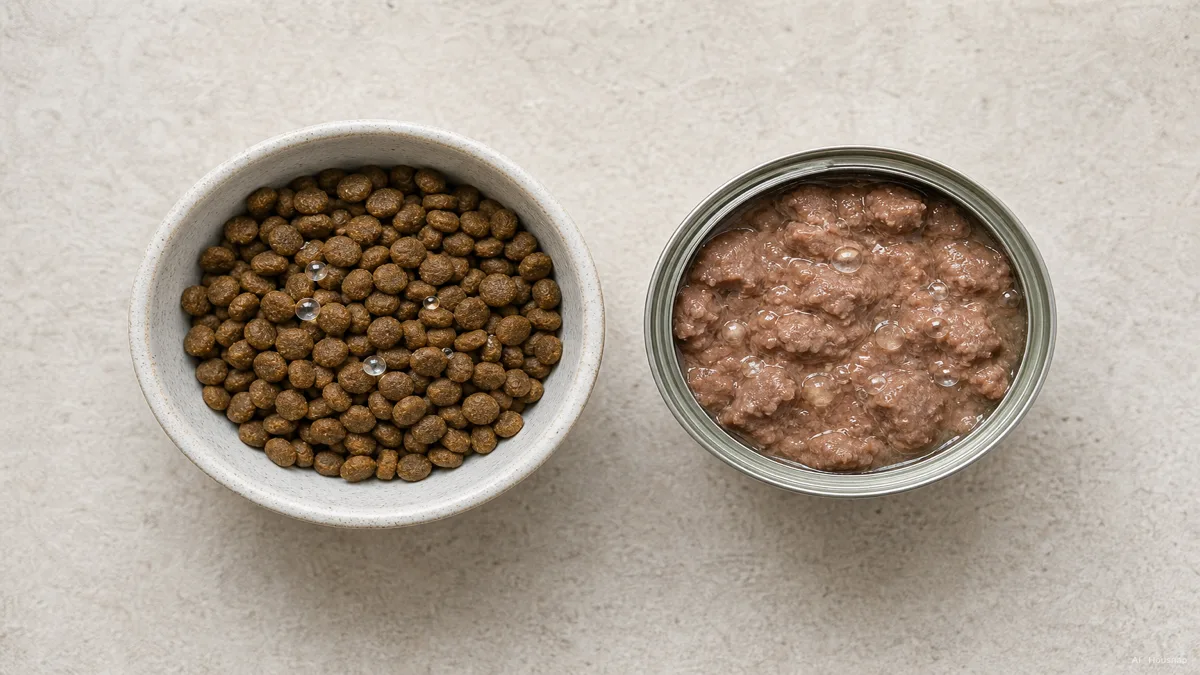
The FDA’s dry-matter method removes water from the comparison: protein % ÷ (100 − moisture %) × 100.
- Example wet label: 10% protein and 75% moisture gives 40%.
- Example dry label: 24% protein and 10% moisture gives about 26.7%.
These are illustrative label-based calculations, not measured recipes or a quality ranking. Higher protein alone does not establish the better diet.
Mix by calories, not equal scoops
Choose two complete foods suitable for the same dog and life stage. Replace part of the dry ration with wet food; do not add both packages’ full daily servings. Purina’s mixed-feeding guidance makes this distinction.
For an arithmetic example only, suppose the food allowance is 600 kcal a day, after accounting for treats, and you allocate 25% to wet food:
- Wet portion: 150 kcal. At an assumed 1 kcal/g, that is 150 g.
- Dry portion: 450 kcal. At an assumed 4 kcal/g, that is 112.5 g.
Use your own labels and your dog’s agreed calorie allowance. Neither 600 kcal nor the 25% split is a prescription. If your dog has a prescribed diet, ask the veterinary team before mixing or replacing it.
Buy a manageable pack and plan the change
A useful first purchase is a pack you can use within its stated storage guidance, with enough existing food left for a gradual change.
Keep dry food in its original bag, including when using a storage bin. Promptly refrigerate unused wet food or discard it, and follow its opening instructions. FDA storage guidance explains why retaining the packaging matters.
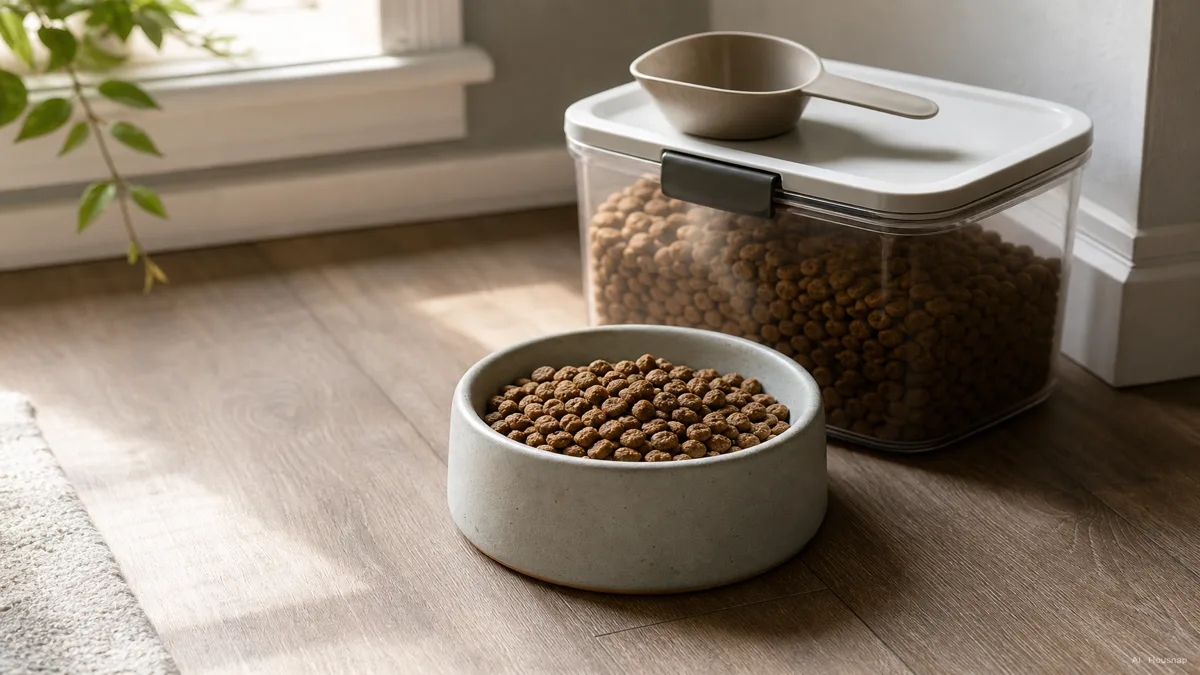
Purina suggests changing food over about 7–10 days, increasing the new food gradually. Slow down and seek advice if appetite or digestion deteriorates. Follow a veterinarian’s specific transition plan when one has been given.
If scheduled meals are your next problem, compare automatic feeder types and food compatibility after choosing the food.
Comment ce guide a été conçu
Written by the Chexlow AI Editor. This guide draws on FDA and AAFCO label guidance, VCA veterinary education and Purina feeding advice to explain food-format selection and portion calculations. The numerical examples are illustrative; no products were tested.
Rédigé par l’équipe Chexlow · Les images sont des illustrations générées par IA