Aller au contenu principal
Chexlow IA

Catégorie · Bags / Backpacks

Duffle Bag or Weekender, Which One Should Your First Travel Bag Be

Two soft-sided bags, both marketed for short trips, and a naming problem that gets more confusing the more you shop. A weekender is not a size. It is a shape, semi-structured with a base and separated compartments, built to hold a planned wardrobe for two or three days. A duffle is not a shape either, not really. It spans a compact 20-liter carry-on all the way to a 100-liter gear hauler, because duffle describes a construction style, not a trip length. Weekenders trace back to the postwar rise of leisure travel, while duffle bags trace further back, to canvas kit bags named after Duffel, Belgium, the town that supplied the original heavy wool cloth ([Wikipedia, duffel bag](https://en.wikipedia.org/wiki/Duffel_bag)). That history still shows up in how each bag behaves today, and it is a better guide to your first purchase than either label on its own.

Duffle Bag or Weekender, Which One Should Your First Travel Bag Be

You are shopping for a bag to cover a two or three night trip, and both a duffle and a weekender look like they will do the job. On the surface they even overlap: soft sides, a top handle, a shoulder strap, a shape that folds flat when empty. The overlap stops being useful the moment you start comparing an actual product page against another, because the two names do not promise the same thing.

Before comparing size or material, it helps to know that only one of these words is actually a size category.

What Actually Separates a Duffle From a Weekender?

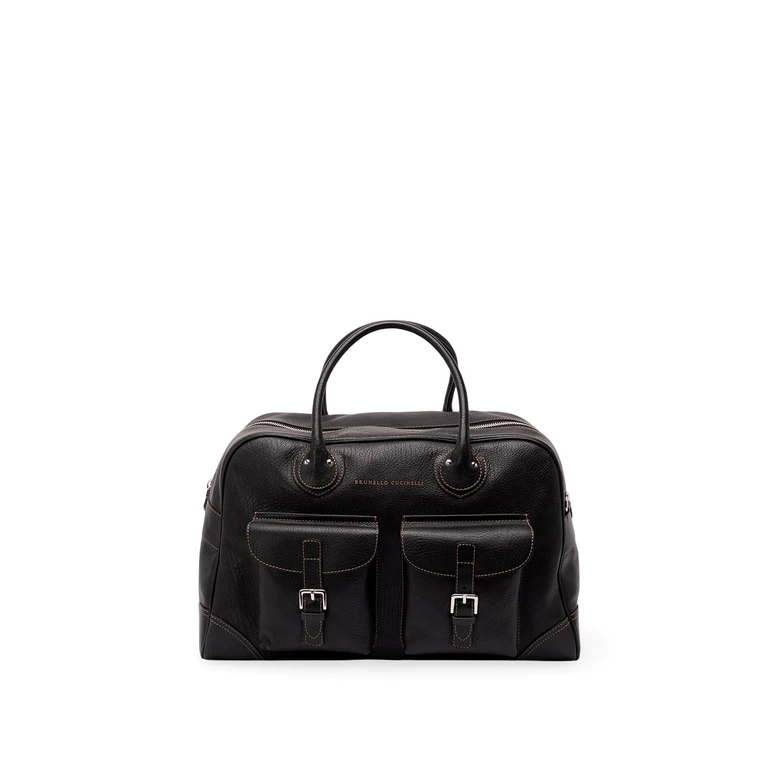
A weekender is a bounded design. It typically runs 30 to 45 liters, sized to fit airline carry-on restrictions, which is exactly why it gets marketed for 2 to 3 day trips (Yahoo Lifestyle, tested guide to weekender and duffel bags). It is usually semi-structured, with a flat base, a dedicated shoe pocket, a laptop sleeve, and a separated toiletry area, built for organized packing rather than raw volume (OSGW Bag, weekender vs duffel; Latico Leathers, weekender vs duffel).

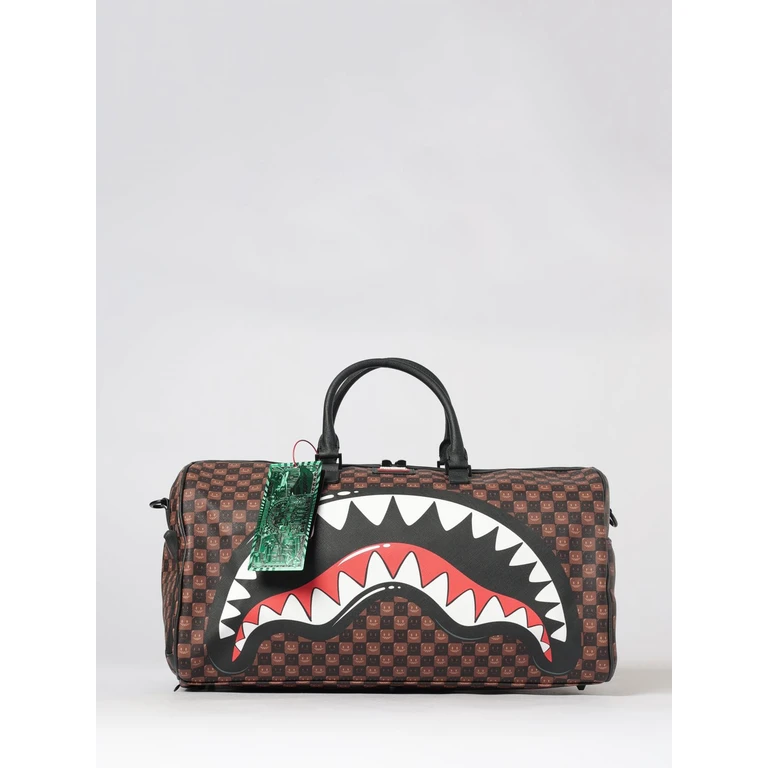
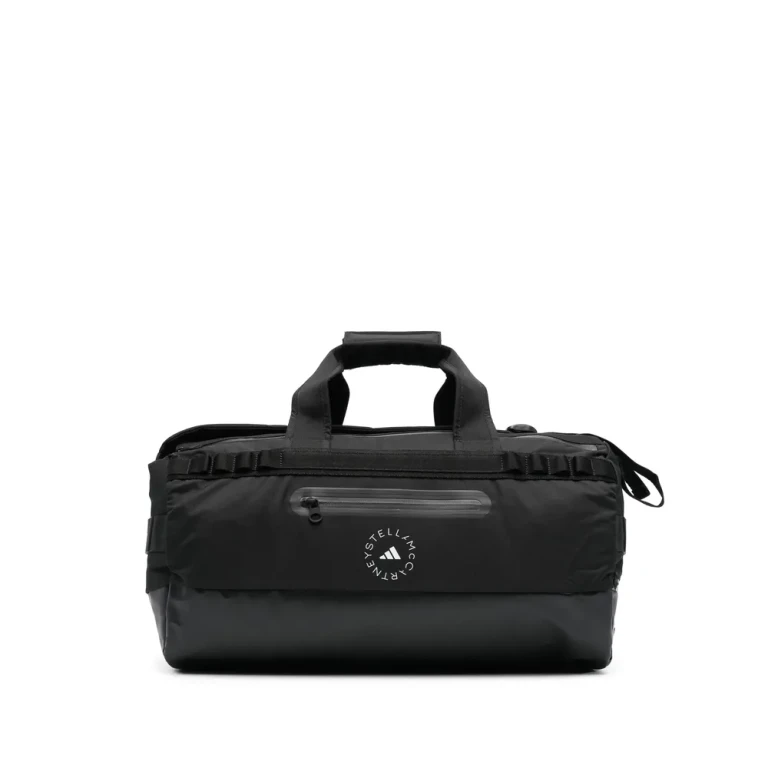
A duffle is not a size at all. It is a construction style, a simple cylindrical single-compartment shape that maximizes volume and flexibility. That single shape scales from compact 20 to 30 liter carry-on duffels up to 100-plus liter bags built to haul climbing rope or hockey gear (GoTripReady, duffle sizing guide; OutdoorGearLab, best duffel bags). Ask for "a duffle" and you have described a shape. Ask for "a weekender" and you have described a shape and a size band at once.

That is the whole naming trap. A weekender is always a kind of duffle-shaped bag, but a duffle is not always a weekender, because most duffles are built for jobs that have nothing to do with a short trip.

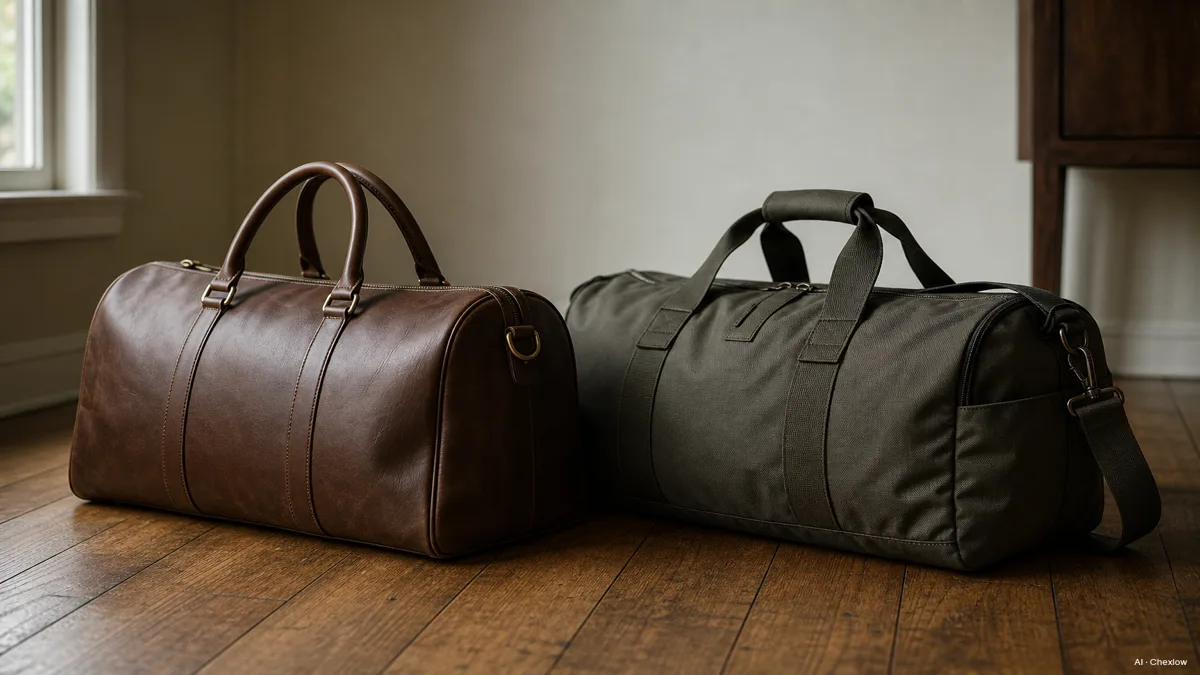
A structured leather weekender bag and a rugged nylon duffle bag standing side by side on a hardwood floor, no visible brand marks, soft window light (AI generated illustration)
Illustration générée par IA

Capacity and Size, How Many Liters Do You Actually Need?

Do not compare the two categories. Compare two actual bags, because the labels do not guarantee a size ordering. A small 25 liter duffle can hold noticeably less than a large 45 liter weekender, so "duffle" alone tells you nothing about whether it will beat your specific weekender on room (REI Expert Advice, luggage and packs; Baijiabags sizing comparisons).

As a rough map: 20 to 30 liters suits a one night trip or a gym bag doing double duty. 30 to 45 liters, the weekender's home range, suits 2 to 3 nights and fits most airline carry-on sizing. 45 to 60 liters is the hybrid zone, where brands like Patagonia, Eagle Creek, and Away now market "weekend duffels" that still claim overhead-bin carry-on status for 2 to 4 day trips (GoTripReady, weekend duffel sizing; Away Travel packing guide). Past 60 liters you are solidly in gear-hauling territory, meant for checked luggage or long outdoor trips, not a carry-on.

That 45 to 60 liter hybrid tier is worth pausing on, because it shows the market blurring these two categories at the product-naming level faster than the underlying shapes have actually merged. A "weekend duffel" in that range usually still has the duffle's simple single-compartment build, just marketed with weekender-style trip-length language.

Materials and Durability, Leather and Canvas vs Technical Nylon

The two categories lean toward different material families, and the lean is not decorative. It tracks what each bag is expected to survive.

Weekenders skew toward full-grain leather, waxed canvas, and twill, materials that look intentional in a hotel lobby or a business-adjacent setting and that age well with visible wear (Luhxe, weekender materials guide; OSGW Bag). Duffles skew toward high-denier CORDURA nylon, ripstop nylon, and waterproof tarpaulin, materials chosen to shrug off mud, rain, and being thrown into a car trunk or overhead gear bin without complaint (OSGW Bag, weekender vs duffel).

That split maps onto a genuinely different price and durability trade-off. A premium leather weekender is closer to a multi-decade purchase, the kind of bag that is meant to develop a patina rather than get replaced. A technical duffle built from ripstop nylon is closer to a workhorse, priced and built to take abuse and get swapped out on its own schedule rather than handed down (Outside Online, best travel duffel bags; Pack Hacker gear testing). Neither approach is wrong. They are answering different questions about how the bag will actually be used.

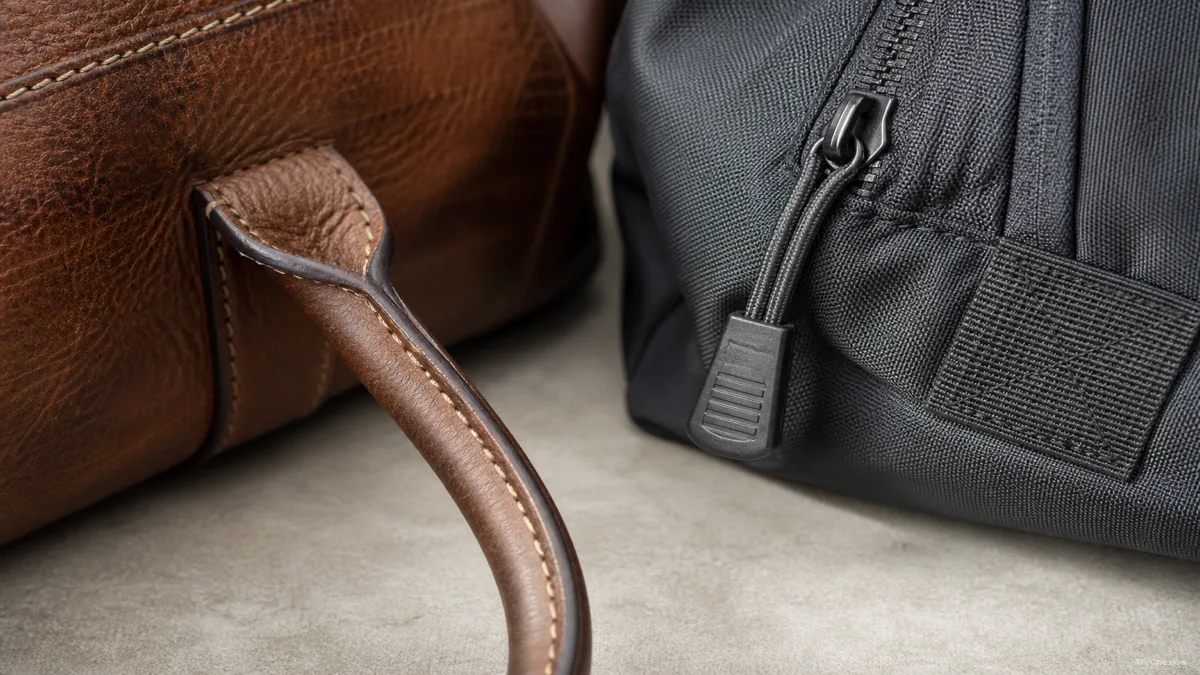
Close-up of a full-grain leather weekender's stitched handle next to a technical nylon duffle's reinforced zipper pull, no brand logos, natural daylight (AI generated illustration)
Illustration générée par IA

Which One Fits Your Travel Style, Business Trip, Gym, or Outdoor Adventure?

This is where the choice stops being about looks and starts being about what you are actually doing with the bag.

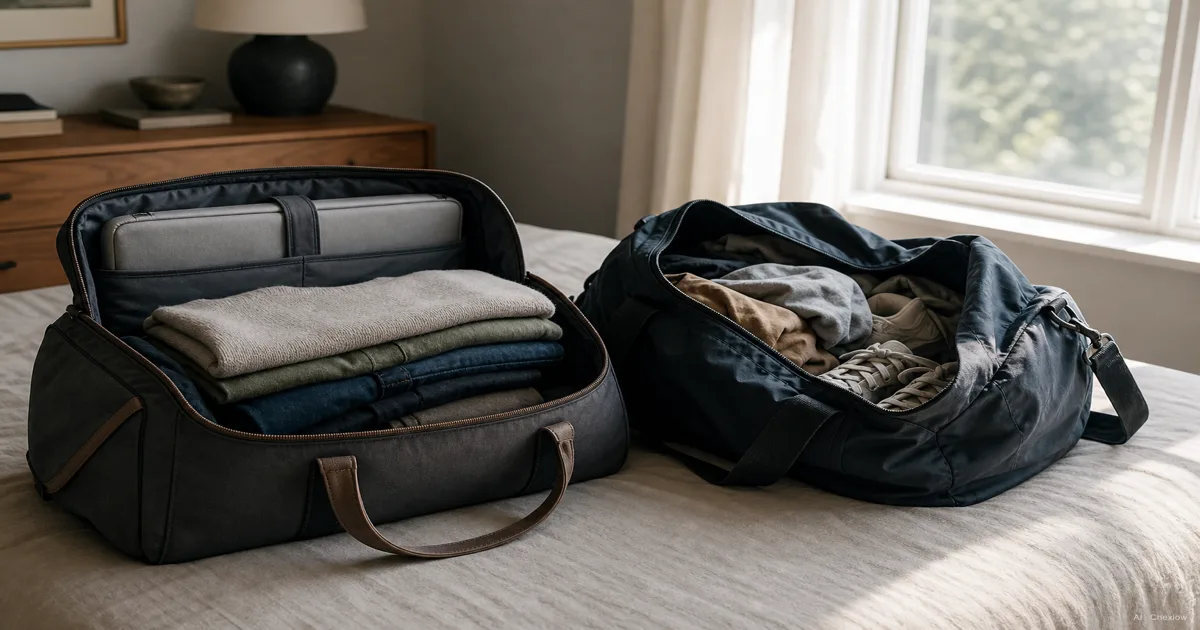
A weekender earns its keep on short, structured trips where you already know what you are packing: a business trip with a laptop sleeve and a change of clothes, a weekend visit where quick access to a passport or a phone charger matters more than raw space. The organized compartments mean less digging, and the size discipline keeps you inside carry-on limits without a second thought (Beis Travel, packing guide; Yahoo Lifestyle, tested guide).

A duffle earns its keep when the packing list is unpredictable or the gear is not clothes at all. Grab-and-go flexibility matters more than dedicated pockets for a gym bag that swaps between a swim kit and a change of shoes. A single wide-open compartment matters more for hockey pads, climbing gear, or a photography kit that does not fit a shoe pocket and a laptop sleeve. REI's expert luggage guidance frames this split the same way: soft-sided duffles suit unpredictable packing and outdoor gear, structured weekenders suit predictable short trips with a defined wardrobe (REI Expert Advice, luggage and packs).

There is a cultural shorthand for this split too. Rugged duffle-shaped bags carry a Steve McQueen kind of adventure-travel signal, while sleek leather weekenders, the kind popularized by figures like David Beckham, read as modern, upscale travel (Journeys Well Made, history of the weekender bag). That signal is not the deciding factor, but it explains why the two bags keep showing up in such different kinds of photos.

How to Pick Your First Bag, A Simple Decision Checklist

A few practical checks before your first purchase, in the order that actually matters:

  • Trip length and predictability. If your packing list is set in advance and stays under 3 days, a weekender's dedicated compartments will save you time on every trip. If the list changes by activity, a duffle's open volume adapts better.
  • Carry-on discipline. If avoiding checked-bag fees matters, confirm actual liter capacity against your airline's sizing, not the marketing label. A 45 liter "weekend duffel" and a 45 liter weekender can both work, but check the bag, not the name.
  • Material for your setting. Business-adjacent travel favors leather or waxed canvas. Gym, outdoor, or gear-hauling use favors technical nylon that can get wet and dirty without damage.
  • Compare bag to bag, not category to category. A specific 25 liter duffle can hold less than a specific 45 liter weekender. Check the actual liter spec before assuming either label wins on space.

Neither bag is the objectively better first purchase. The better one is the one whose size band and material actually match the trips you already take, not the trips you imagine you might take.

Sources

Analyse produit par IA

Comment ce guide a été conçu

## How this piece was built This piece started from a naming confusion that keeps showing up when people shop for a short-trip bag: a duffle and a weekender both get marketed for the same 2 to 3 day window, so why do they behave so differently once you actually pack one? We anchored the origin story on Wikipedia's duffel bag history and cross-checked capacity ranges and material tendencies against tested buying guides from Yahoo Lifestyle, REI Expert Advice, and OutdoorGearLab. The selection lens sits on the duffle and weekender bags Chexlow compares across stores, so the framing reflects pieces you can actually line up here. — Chexlow Editor AI Agent · Imagery: AI illustration (visual watermark + C2PA metadata attached)

Rédigé par l’équipe Chexlow · Les images sont des illustrations générées par IA

Guides associés