Check whether the surface is stained or damaged
Before reaching for a stronger cleaner, look at the cooled, empty pot in good light. The useful distinction is whether material sits on the surface or part of the surface appears to be missing.
- Brown discoloration without visible breaks: start with gentle washing, then inspect again. Color alone does not tell you whether every mark will come off.
- Stuck food: soften it before trying to remove it; do not probe underneath with a metal edge.
- An apparent chip, crack or flaking area: stop cleaning and cooking in the pot while you ask the manufacturer to assess it. Photograph the area and identify the model. This is this guide’s conservative stopping rule, not a diagnosis from a photograph.
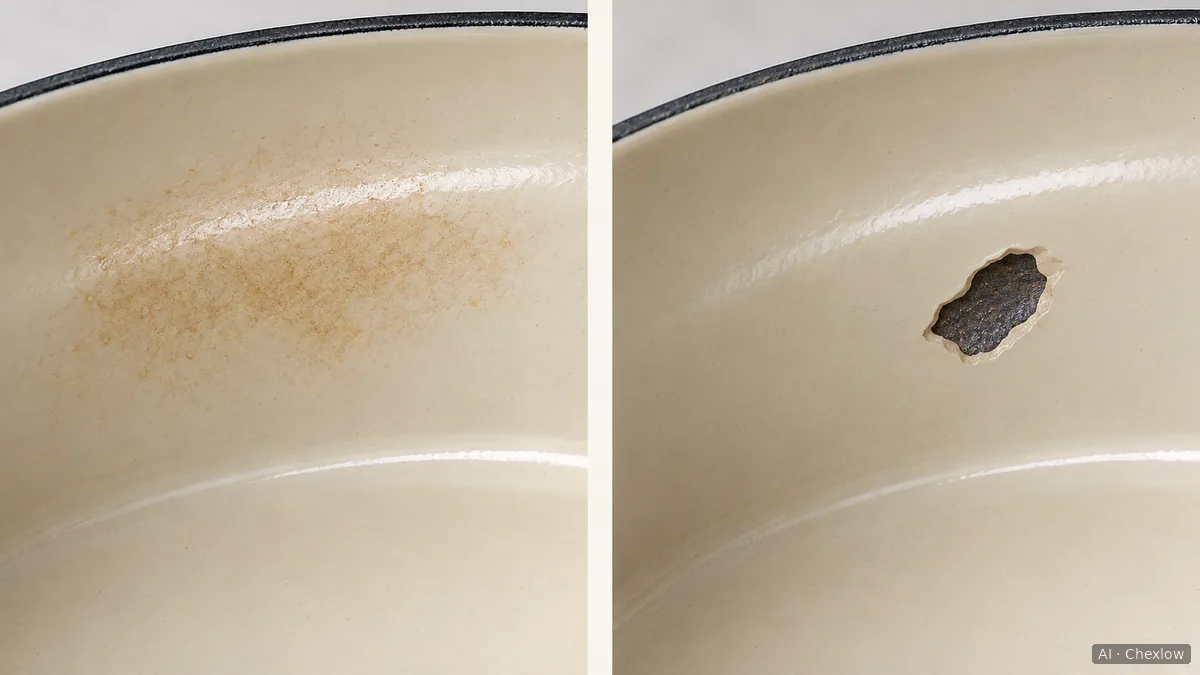
The illustration explains the distinction; it cannot certify your pot. Lodge says a small amount of staining is expected and does not affect performance, but that statement does not clear a chipped cooking surface for use.
Cool, wash and loosen the food first
Let the pot cool before washing. STAUB warns that cold water on a hot vessel can cause cracks or breakage; rinsing a hot pot under the cold tap is not a shortcut.
For intact enamel, start with warm water, liquid dish soap and a soft sponge or brush, as STAUB specifies. Use a suitable sponge you already own. If you need one, choose a soft, non-abrasive dishwashing sponge and check its suitability for enamel; a hard scouring face is not the tool meant here.
For food that stays attached, STAUB permits soaking in warm water and dish soap, overnight if necessary. Apply that duration to STAUB’s instructions, not automatically to every pot. Follow your own model’s soaking limits, then wash gently and rinse before reassessing the mark.
Choose the next cleaner by the pot’s instructions
If ordinary washing leaves a mark on apparently intact enamel, check the maker’s next step before buying anything. Le Creuset recommends its cookware cleaner for stubborn residue and soft, non-abrasive brushes or pads. That supports a cleaner intended for this surface, not any bottle labelled “cast iron cleaner.”
Buy an enamel cookware cleaner only if the cookware instructions permit it and you lack a suitable product. Check the cleaner’s directions for application, contact time and rinsing. If those details or compatibility are unclear, ask the maker rather than inventing a stronger mixture.
The exclusions matter too. STAUB rules out oven cleaners, metal brushes and scouring pads. Lodge warns that citrus-based cleaners can dull its enamel’s exterior gloss. These are named manufacturers’ limits, not a universal chemical recipe for enamel.
Reassess the mark instead of reseasoning over it
After rinsing, inspect again and dry the pot completely before storage, as Lodge advises. Lodge also prefers hand washing to preserve the finish, even though its enamel cookware is dishwasher safe. A remaining light stain alone is not a reason to keep escalating the scrubbing.
Do not identify bare iron by a black interior. Lodge explicitly says its enameled pieces need no seasoning, including those with black interiors. STAUB separately recommends occasional oiling and slow heating, so the useful rule is to follow the identified finish and maker, not to impose one oiling routine on all enamel. That maintenance advice is not a method for removing stains or repairing missing enamel.
If you still cannot distinguish residue from damage, keep the pot out of cooking use until the manufacturer responds. If replacement is advised and you need to reconsider size or handling, the Dutch oven selection guide addresses that next decision; it is not a reason to replace a merely stained pot.
Comment ce guide a été conçu
This guide was written by Chexlow AI using manufacturer care pages from Le Creuset Canada, STAUB and Lodge. It focuses on existing cookware, keeps each maker’s permissions separate and uses a conservative stop-and-contact rule for suspected damage; no hands-on cleaning test or individual pot assessment was performed.
Rédigé par l’équipe Chexlow · Les images sont des illustrations générées par IA