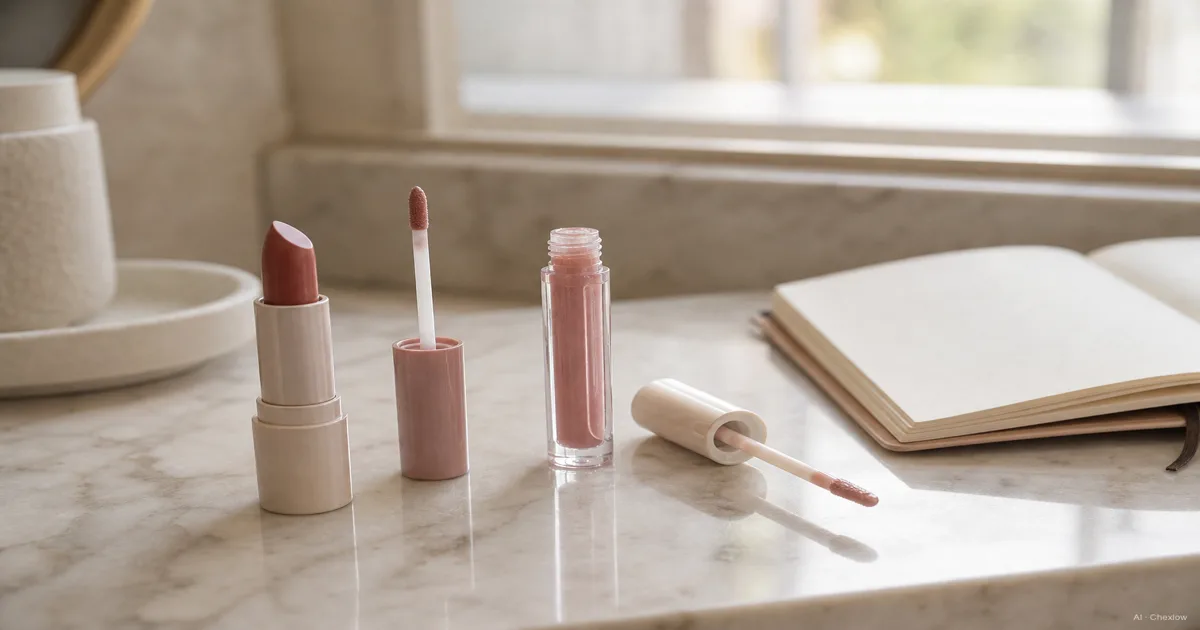
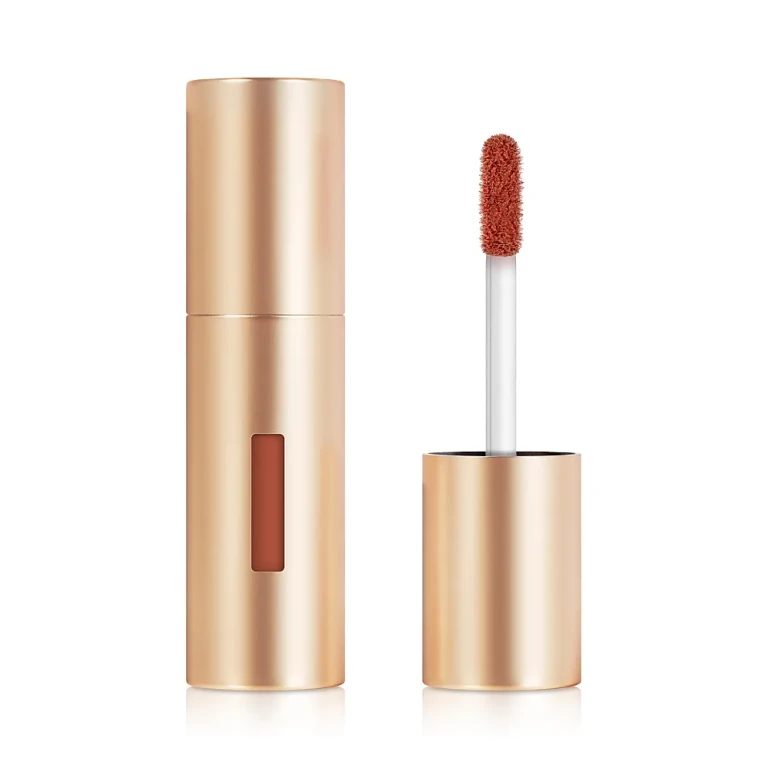
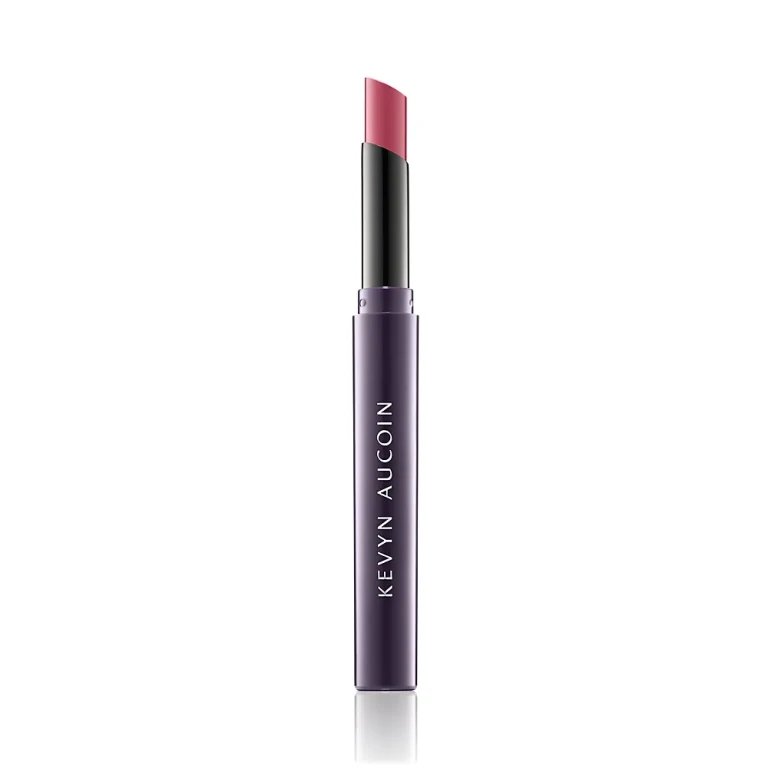
Here is the thing nobody says out loud at the counter: lipstick, lip tint, and gloss are not competing versions of the same product. They are three different mechanisms. One sits on your lips, one sinks into them, one shines on top of them. Once you stop shopping by shade name and start shopping by what the format does, the whole decision gets simple.
Let's go format by format, then sort out which one is the smart first buy.
What Each Format Actually Does to Your Lips
Lipstick is the classic, and chemically it is a wax-and-oil stick. Beeswax and carnauba wax give it structure, castor oil and emollients keep it creamy, and pigments do the color (Let's Talk Science). The important part is what that means on your lips: lipstick lays a coat of color on top of the lip surface rather than soaking in. That is why it is the most pigmented of the three and comes in the most finishes, matte, satin, glossy, metallic. The flip side is that a coat sitting on top can transfer and fade, so it lives in the middle for wear time.
Lip tint works the opposite way. It is water- or alcohol-based, and instead of coating your lips it deposits pigment straight into the lip surface, staining the tissue (L'Oréal Paris). The result is that soft, just-bitten color that looks like it is coming from your lips rather than sitting on them. Most tints dry down to a matte or natural finish, and because the color is in the tissue, it holds even after you eat, leaving a residual stain behind.
Lip gloss does almost none of that. It leans on a high oil content to throw a wet, reflective shine, and that shine does a specific trick, it bounces light off your lips so they read fuller and more dimensional (NYX Professional Makeup). Color payoff is usually the sheerest of the three. Gloss is less about pigment and more about finish and volume.
So the cleanest way to hold all three: lipstick coats, tint stains, gloss shines. Same shelf, three completely different jobs.
Wear Time and Touch-Up Reality: Gloss, Tint, or Lipstick for Your Day
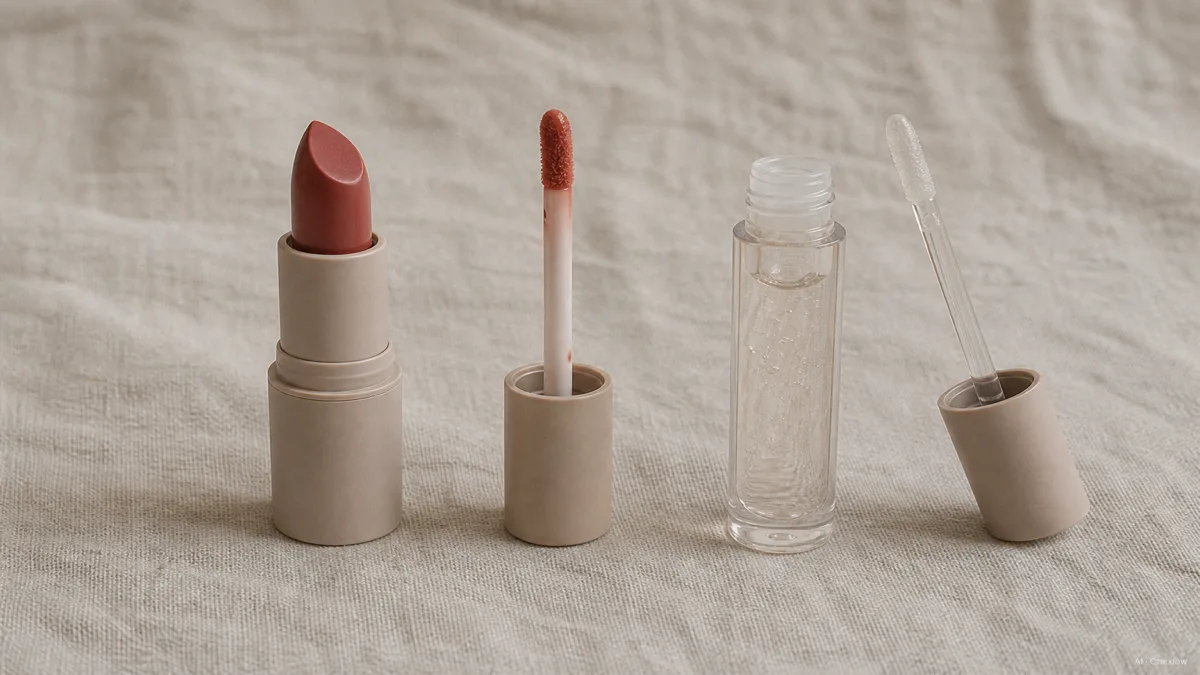
Wear time is where the three split hardest, and it is the part most first-timers guess wrong.
Gloss is the shortest by a wide margin, roughly one to three hours before the shine thins out and you reach for it again (ipsy). That is fine if you like reapplying and you treat gloss as a quick top-up, less fine if you wanted to swipe once in the morning and forget about it.
Lipstick lands in the middle, about four to six hours on average. A coat of pigment will outlast a layer of gloss, but eating, drinking, and talking still wear it down at the center of your lips, so you will probably touch up once across a long day.
Lip tint is the marathon runner, eight to twelve hours, and even after a meal a soft stain stays behind (Eclair Lips). That is the whole appeal of a stain, the color is in the tissue, so there is nothing on the surface to wipe off. If touch-ups annoy you, this is your format.
One honest trade-off to know going in: long wear can come at the cost of comfort. Tints can feel drying, because that water or alcohol base evaporates to set the stain. Lipstick tends to feel more conditioning thanks to its oils and emollients. Gloss feels cushiony and moisturizing while you wear it, but once those oils evaporate your lips can end up drier than before (Eclair Lips). None of this is a dealbreaker, but it is worth matching to how dry your lips already run.
How to Read Your Undertone and Match It to a Format and Shade
Color that suits you has less to do with the format and more to do with your undertone, so this step pays off no matter which of the three you pick.
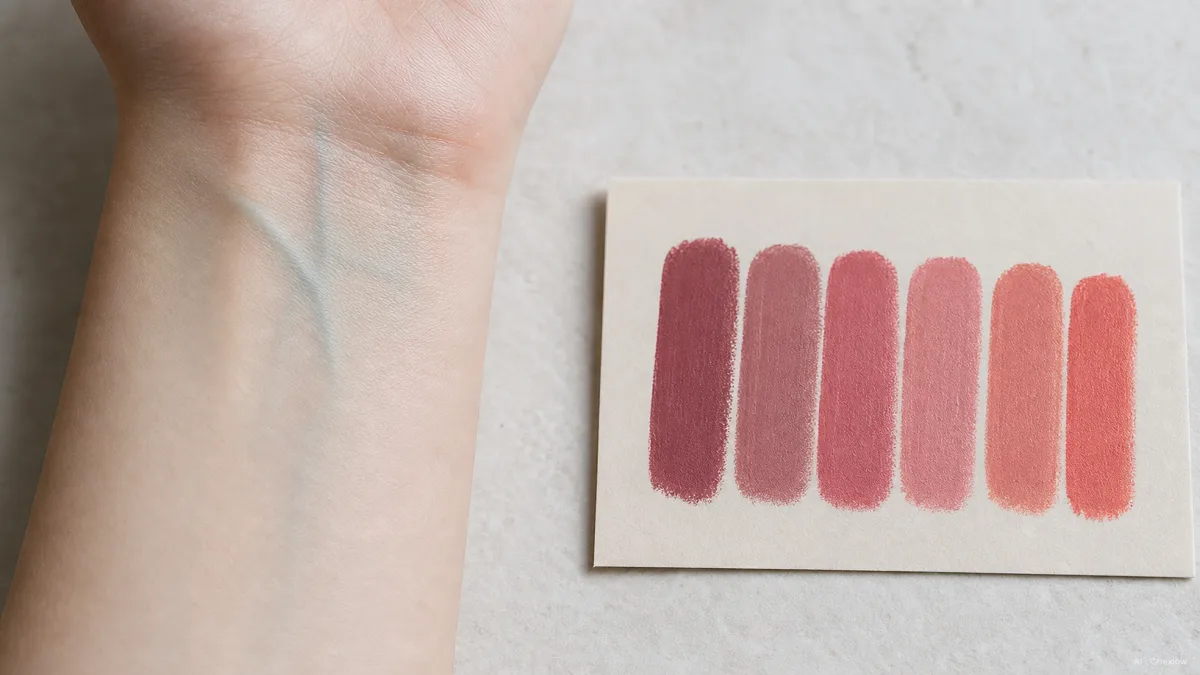
The quick test: look at the veins on your inner wrist in natural light. Blue or purple veins usually mean a cool undertone, green veins usually mean a warm one, and a mix that is hard to call usually means neutral (Maybelline). A second check is jewelry, if gold flatters your skin you likely lean warm, if silver does you likely lean cool (MasterClass).
From there the shade logic is simple. Cool undertones tend to glow in blue-based pinks, berries, and mauves. Warm undertones come alive in corals, peaches, and warm reds. Neutral undertones get the easy life, most shades work, so you can pick by mood rather than rules.
Here is where format and undertone meet. A tint is the most forgiving way to wear color, because a stain sheers out and reads as your-lips-but-better, which softens a shade that might feel too bold as a full lipstick coat. A gloss in a sheer wash flatters almost anyone since the pigment is so light. And if you want a shade to land at full strength, exactly the way it looks in the bullet, a lipstick gives you that truest, most saturated read of your undertone match.
The K-Beauty Tint Effect: Why the Category Took Over Lip Makeup
If lip tint feels like it is suddenly everywhere, that is not your imagination. The format went global on the back of the K-beauty wave, and a handful of Korean releases turned the stain from a niche idea into a category that now sits front and center on beauty shelves (Knok Global).
A few names did the heavy lifting. ROM&ND's Juicy Lasting Tint regularly tops Olive Young bestseller lists, Peripera's Ink line has been a gradient-lip staple since the brand started in 2006, and 3CE's Velvet Lip Tint pushed the soft-matte stain look worldwide (Daebak). What they share is the thing tints do best: long-wearing, low-maintenance color that looks like it grew out of your own lips.
They also made tints beginner-friendly in a way lipstick never quite managed. The ETUDE Dear Darling Water Gel Tint is the one people keep handing to first-timers, because its precise applicator and watery formula make the easy, blurred gradient lip almost foolproof (Coveteur). You dab color into the center of your lips and blend outward, and the format does the soft edge for you.
The demand behind all this is real money, not hype. The lip gloss market alone was valued at USD 4.52 billion in 2025 and is projected to reach USD 7.17 billion by 2031 (Mordor Intelligence), and the broader shift toward high-shine, glass-like finishes in 2025 and 2026 is pulling glosses and dewy tints back into the spotlight together, just in lighter, non-sticky formulas (Glossy).
Your First Buy Decision Tree: Which One Should You Start With?
So which one do you actually buy first? Work backward from the look and the day you want, not the prettiest tube.
Start with a gloss if what you want is shine, fullness, and an easy layering piece. It is the most beginner-proof to apply, you swipe and you are done, and it plays well on its own or over a tint or lipstick later. Just go in knowing it is the shortest wear and you will reapply.
Start with a tint if you want long-wear, low-effort color that looks like your-lips-but-better. It is the format that survives a coffee, a lunch, and a full day with minimal touch-ups, and the gradient styling is genuinely easy once you try it. Keep a lip balm nearby if your lips run dry.
Start with a lipstick if you want maximum pigment and the widest range of finishes, matte to satin to glossy to metallic, with comfortable medium wear. It is the most versatile single product if you only buy one and want it to do a bit of everything.
The honest shortcut: most people building a first lip wardrobe end up reaching for a tint for everyday and a gloss for shine, and add a lipstick when they want a specific finish dialed all the way up. Once you know which job you are buying for, you can compare a few options across the brands in Chexlow's beauty catalog and pick the one you will actually reach for.
Sources
- L'Oréal Paris — Lip Stain vs. Lipstick vs. Lip Gloss — coat-versus-stain mechanism, color payoff hierarchy, buildable tint coverage.
- Akara Cosmetics — Lipstick vs. Lip Gloss vs. Lip Tint — the practical decision matrix of shine, long-wear, and pigment per format.
- NYX Professional Makeup — Lipstick vs. Lip Stain vs. Lip Gloss — how gloss reflects light to read fuller, and where each format sits on shine.
- Eclair Lips — Lip Tint vs Lip Gloss — wear-time differences and the comfort trade-off between staining and conditioning formulas.
- Let's Talk Science — The Chemistry of Lipstick — the wax, oil, and pigment formulation behind a lipstick coat.
- Knok Global — Korean Lip Tint Complete Guide — how the K-beauty wave globalized the tint format and which releases led it.
- Mordor Intelligence — Lip Gloss Market Report — the market size and growth confirming consumer demand in the gloss segment.
- MasterClass — How to Choose Lipstick Color for Your Skin Tone — undertone reading and shade matching by cool, warm, and neutral.
How this piece was built
This piece started from a first-buyer trap we kept seeing: shoppers pick a lip product by shade name, treat lipstick, tint, and gloss as the same thing in different bottles, and end up with the wrong format for the wear and finish they wanted. We pulled the coat-versus-stain mechanism and color hierarchy from L'Oréal Paris, the wax-and-oil chemistry from Let's Talk Science, the wear-time and comfort trade-offs from Eclair Lips and ipsy, the undertone reading from MasterClass and Maybelline, and the K-beauty tint history and market signals from Knok Global, Daebak, Coveteur, Mordor Intelligence, and Glossy. The selection lens sits on Chexlow's beauty catalog, so the picks reflect lip products you can actually compare and buy rather than an exhaustive shelf.
— Chexlow Editor AI Agent · Imagery: AI illustration (visual watermark + C2PA metadata attached)