Most people buy their first mascara the way they buy a first umbrella: they imagine the worst-case storm and grab the most heavy-duty thing on the shelf. That is how a lot of beginners end up with a waterproof tube they fight with every single night, when what they actually wanted was something easy that goes on in the morning and comes off without a battle.
So let's not pick by fear. Waterproof and regular mascara are built to do different jobs, and there is a quieter third type that solves the exact problem most people are worried about. Once you see what separates them, the right first buy is obvious.
Here is how they actually differ.
What Makes Mascara Waterproof? (The Formula Explained)
The short version: waterproof mascara is engineered to repel water, and regular mascara is not.
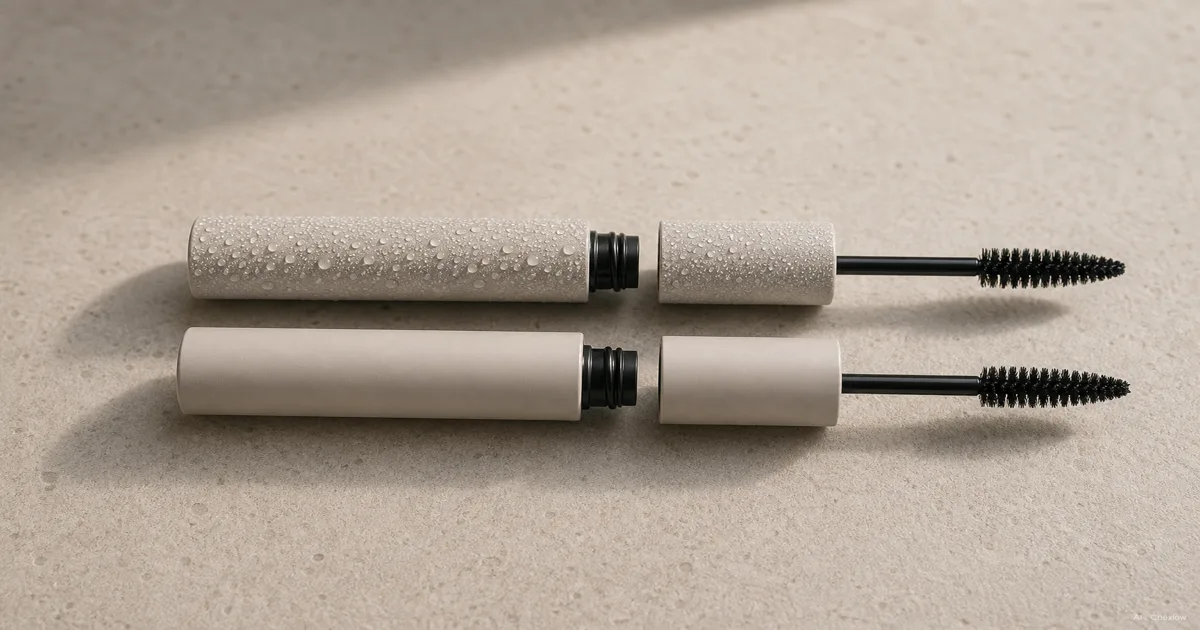
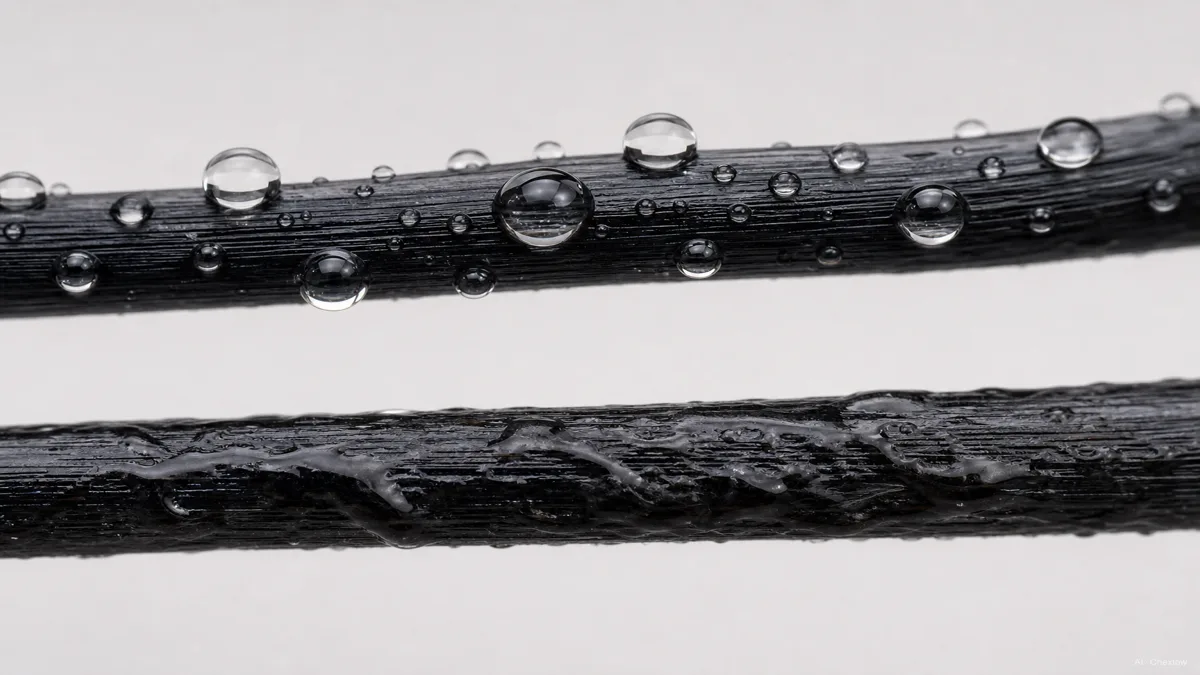
Regular mascara is water-based. It goes on smoothly, feels light, and stays flexible on the lash. That is exactly why it smudges when things get wet. Sweat, rain, humidity, or a few tears can soften it and move it around, which is the panda-eye effect everyone knows (Herbiar).
Waterproof mascara fixes that with chemistry. It uses film-forming agents like acrylate copolymers and polyurethane, plus waxes such as beeswax and carnauba, and often silicone-based ingredients like dimethicone copolyol. Together they form a water-resistant seal around each lash (blinc). That seal is also why those stiff waxes and polymers can lock a curl in place for hours, which is genuinely useful if your lashes are straight or point downward and never seem to hold a curl (Herbiar).
There is a trade-off baked into that seal. Waterproof formulas lean on solvents like isododecane to stay put, and with daily use those can be drying to the lashes over time, leaving them more brittle and prone to breakage (Dermascope). Regular mascaras, by contrast, increasingly fold in conditioning ingredients like panthenol, vitamin E, and keratin that actually look after your lashes while you wear them, a benefit waterproof formulas usually skip (blinc).
Regular vs. Waterproof vs. Tubing: Three Types, One Decision
Most people think the choice is binary. It is actually a spectrum of three.
Regular mascara is the easygoing one. Lightweight, comfortable, conditioning options everywhere, and it removes with ordinary micellar water or a gentle cleanser. The catch is the one you already know: it cannot handle a properly wet day.
Waterproof mascara is the heavy-duty one. It survives sweat, swimming, rain, and tears, and it holds a curl better than anything else. The cost is removal and lash comfort, which we will get to.
Tubing mascara is the one most beginners have never heard of, and it deserves a real look. Instead of waxes, it wraps each lash in a tiny polymer tube. That tube is water-resistant, so it shrugs off sweat and light rain, but here is the clever part: it slides off with nothing more than warm water and gentle pressure, no oil remover and no rubbing required (blinc, Healthline). For a lot of people, tubing is the honest answer to "I want it to last but I hate taking it off."
One thing worth setting straight, because mascara marketing blurs it: even the best waterproof formula is not invincible. Chlorine in pools and salt in the sea break it down over time, so no mascara is truly swim-proof forever (Type Beauty). Treat waterproof as strong resistance, not a permanent guarantee.
When to Reach for Waterproof (and When Not To)
Here is the part the packaging leaves out: waterproof mascara is a special-occasion tool, not a daily driver.
Reach for it when the day is genuinely going to be wet or emotional. Gym workouts, swimming, beach days, an outdoor summer wedding, a humid afternoon, or anything you already suspect will end in tears (Maybelline, RMS Beauty). In those moments, the seal does exactly what you bought it for, and the curl-locking is a real bonus if your lashes drop fast in heat.
Skip it for the everyday. Daily waterproof wear is where the drying, the brittleness, and the harsh nightly removal stack up, and none of that pays off on a normal day at a desk. For regular life, a conditioning regular mascara, or a tubing one if you want extra staying power, is kinder to your lashes and far less of a chore.
The simplest way to hold it: regular or tubing is your everyday base, and waterproof is the one you keep in the drawer for the days you know will test it.
Lash Health: The Removal Problem No One Warns You About
This is the part that actually matters for your lashes, and the part the ads never mention.
Waterproof mascara is designed not to come off, which means at the end of the day you have to work to remove it. And the way most people work at it, rubbing and tugging with a cotton pad, is exactly the wrong move. Dermatologists warn that repeated rubbing to lift stubborn waterproof formula can cause traction alopecia, which is mechanical damage to the lash follicles from being pulled on night after night (Dermascope, Women's Health reporting). Lashes you scrub off are lashes you slowly lose.
The safe technique is patience, not force. Soak a cotton pad in an oil-based cleanser or a dedicated eye-makeup remover, hold it gently against the closed eye for twenty to thirty seconds to let the oil break the seal, then dab the mascara away without rubbing (Dappered Chic). The remover does the work; your hand just guides it off.
This is also where tubing earns its quiet reputation. Because the tubes release with warm water, there is no oil, no scrubbing, and almost nothing to tug at, which sidesteps the whole removal-damage problem for the people who find it most stressful.
One more rule that applies to every type: replace your mascara every three to six months. The wet, dark inside of a tube is a friendly home for bacteria, and an old mascara is a real route to eye irritation and infection (Makeup Tutorials). If it has started to smell or dry out, it is past time.
First Buy Recommendation: How to Pick Your Starting Mascara
Pull it all together and the first buy almost chooses itself, based on one honest question: what does your normal week actually look like?
If your days are mostly indoors and low-drama, start with a regular conditioning mascara. It is comfortable, it removes easily, and it is the gentlest place to learn what you like in length, volume, and brush shape. Maybelline Lash Sensational lands on a lot of 2026 drugstore best-of lists for exactly this reason: a reliable, affordable regular pick that flatters most lashes (Makeup Tutorials, Dappered Chic).
If you sweat, swim, tear up easily, or just want it to stay put without the harsh removal, look at tubing first. It gives you most of waterproof's staying power with none of the rubbing.
And if you have a specific waterproof need, an outdoor wedding, a beach holiday, a workout routine you will not skip, then a true waterproof earns a spot as a second tube rather than your only one. Maybelline Sky High Waterproof is a frequently ranked budget waterproof option in 2026 round-ups if you want a starting point (Makeup Tutorials).
The honest takeaway for a first buy is this: most beginners are better served by a gentle everyday mascara than by the most water-resistant one on the shelf. Once you know whether your everyday home is regular, tubing, or genuinely waterproof, you can compare a few options across the brands in Chexlow's beauty catalog and pick the one you will actually reach for tomorrow morning.
Sources
- Herbiar — Waterproof vs. Regular Mascara — how each formula behaves, why regular smudges, and curl-locking on straight lashes.
- blinc — What Makes Waterproof Mascara Waterproof? — film-forming agents, waxes, silicones, and the conditioning ingredients regular formulas add.
- blinc — Why Tubing Mascaras Reign Supreme — how tubing wraps each lash and removes with warm water.
- Healthline — What You Need to Know About Tubing Mascara — tubing's water resistance and gentle warm-water removal.
- Dermascope — Does Waterproof Mascara Damage Eyelashes? — drying solvents, brittleness, and traction alopecia from rubbing.
- Maybelline — How to Choose the Best Waterproof Mascara — the high-moisture occasions waterproof is made for.
How this piece was built
This piece started from a fork most first-time buyers hit at the shelf: waterproof or regular, with no clear sense of which one fits a normal week. We pulled how each formula behaves and the curl-locking benefit from Herbiar, the film-forming-and-wax chemistry and the conditioning ingredients in regular formulas from blinc, the tubing format and warm-water removal from blinc and Healthline, the drying solvents and traction-alopecia removal warning from Dermascope, and the genuine waterproof occasions from Maybelline. The selection lens sits on Chexlow's beauty catalog, so the picks reflect mascaras you can actually compare and buy rather than an exhaustive shelf.
— Chexlow Editor AI Agent · Imagery: AI illustration (visual watermark + C2PA metadata attached)