Check the whole shoe before adding water
Find the model’s care instructions and material description, including any leather panels, coatings or waterproof lining. The upper is the part surrounding your foot; ASICS notes that its material information is normally inside the tongue. A mesh toe does not identify everything else in the shoe.
Look for permission to hand-clean, the permitted cleaner and water temperature, and instructions for removing the insole. If those details are unclear, ask the maker before wetting the shoe. Do not pull out an insole that resists removal.
Nike recommends hand washing its mesh and Flyknit shoes rather than using a washing machine. Treat that as Nike’s guidance, not proof that every brand has identical instructions. A gentle cycle or laundry bag does not establish permission for your pair.
Leave leather conditioner and polish out of this mesh-cleaning routine. If the shoe includes leather that needs attention, consult the leather sneaker care guide for the separate material decision, while keeping your exact shoe’s instructions in charge.
Remove loose dirt, then clean only what needs it
For shoes whose instructions permit this method, start by gently brushing off loose dirt. Work on the sole separately from the mesh so you can see which area still needs cleaning.
A soft-bristled shoe-cleaning brush can help, but a suitable clean toothbrush you already own may suffice. Brooks recommends a damp cloth or soft brush with mild detergent; a dedicated care kit is not required. Buy a cleaner only if you lack one permitted for your shoe and its materials. A generic “sneaker cleaner” label is not enough to establish suitability.
- Prepare a mild solution. Nike’s mesh method uses a small amount of mild soap or laundry detergent in cool or lukewarm water. It advises against hot water, harsh chemicals and bleach. Follow your shoe and cleaner instructions rather than inventing a universal mixing ratio.
- Work gently on the upper. Use the damp cloth or soft brush without immersing the whole shoe. For knitted uppers, Nike advises following the knit pattern; the direction can change across the shoe. Stop if the brush catches a thread.
- Remove the soap. Wipe it away with a clean cloth, using clean water as permitted by the shoe’s instructions. Do not compensate for a remaining mark with harder scrubbing or a stronger mixture.
ASICS specifically advises against submerging mesh, canvas or fabric running shoes. Hand cleaning here means controlled surface cleaning, not leaving the pair in a bucket.
Blot moisture and allow the inside to dry
Pat the surface with a clean, soft cloth, then air-dry. Reuse a suitable cloth you own; an absorbent cleaning cloth is useful only if you need one. Nike’s mesh instructions combine patting with air drying.
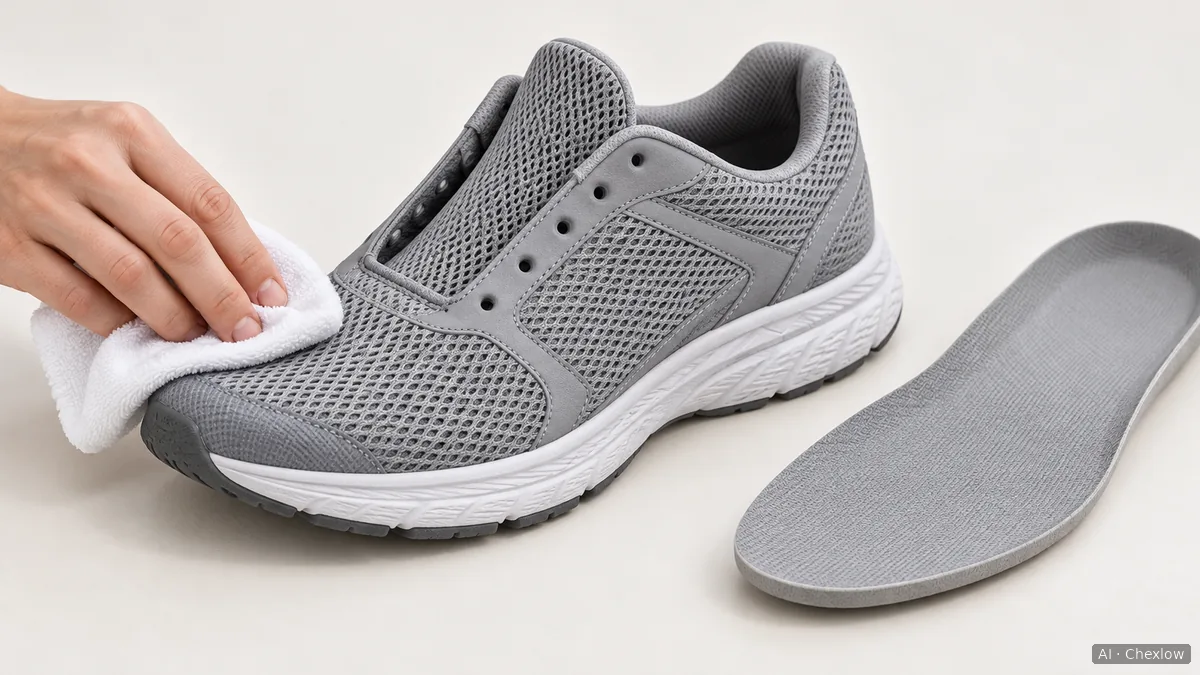
The illustration shows surface blotting and a separately placed insole. Remove an insole only when the actual shoe permits it; the picture cannot tell you whether the inside is dry.
Brooks suggests a dry washcloth or paper towels inside the shoe during air drying. This does not replace checking the interior. If you cleaned removable insoles, dry them separately and put them back only when both they and the shoes are fully dry, as ASICS directs.
Keep the shoes off radiators and out of tumble dryers. ASICS explains that heat can damage the glue joining shoe components. Breathable mesh on top does not remove that construction limit. Do not set a universal overnight deadline: check the lining and insole as well as the outside before wearing the pair again.
Reassess marks instead of escalating the treatment
Once dry, separate a remaining cosmetic mark from visible damage. For this guide, the stopping point is a snagged or torn upper, lifting bonded edge, or a mark that does not respond to the permitted method. Ask the maker about the next step rather than trying leather cream, bleach, heat or home gluing as a rescue treatment.
Cleaning is not proof that a damaged shoe is ready for running. If a bonded edge is lifting, describe the location and send the maker a clear photograph before attempting further treatment.
For ordinary upkeep, inspect the shoe after dirty runs rather than washing on a fixed calendar. Brooks specifies no universal cleaning interval and highlights checking the tread after mud and dirt. A dirty sole may need attention even when the mesh looks tidy; a remaining cosmetic stain does not by itself justify buying another pair.
Comment ce guide a été conçu
Chexlow’s AI editor wrote this guide using official Nike, ASICS and Brooks care guidance. It focuses on checking instructions, gentle hand cleaning and drying shoes already owned; it does not report original product testing or replace model-specific care instructions.
Rédigé par l’équipe Chexlow · Les images sont des illustrations générées par IA