A well-cared-for silk scarf can genuinely last decades. Silk is a protein fiber, similar in structure to human hair, and it is naturally strong when it is treated gently. The problem is that most of the damage silk takes happens in a single afternoon, the day someone decides to wash it the wrong way.
Before you even think about detergent, there is one test that decides everything else.
What You Need Before You Start
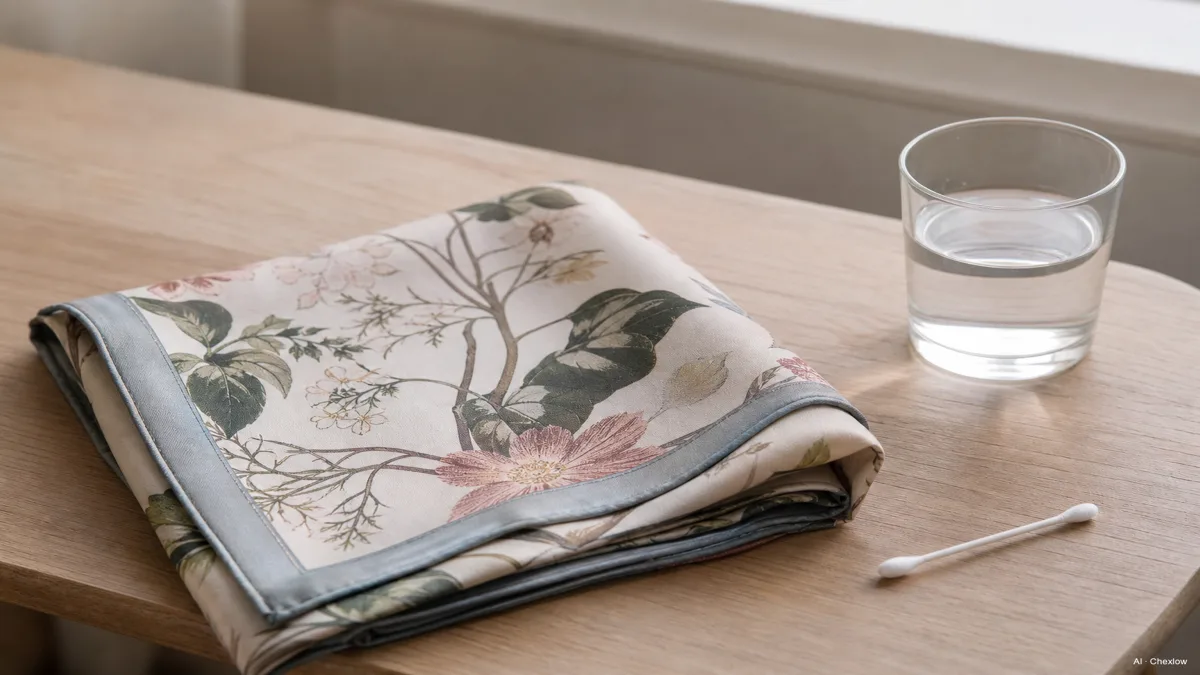
Wet a hidden corner of the scarf, a fold near the hem works well, and blot it gently with a white cotton swab or cloth. If any dye transfers onto the white fabric, the scarf is not colorfast, and it should not be hand-washed at home. That one goes to a professional dry cleaner instead (How to wash a silk scarf, Inoui Editions; Silk scarf care, Tash Andley).
If the swab stays clean, you are set to hand wash. Gather a few things first: cool or lukewarm water, never hot, since heat is what damages silk's protein structure and causes shrinkage or color loss (How to Wash and Care for Silk Clothes, Tide). For detergent, reach for a silk-specific wash or a very mild alternative like baby shampoo. Regular detergent residue clings to silk fibers, and any bleach, including ordinary chlorine bleach, will damage the fabric outright (How to wash and care for silk, Biddle Sawyer Silks; Silk care basics, Creature Marseille).
Two clean towels and a flat, shaded drying spot round out the list. You will not need a wringer, a dryer, or a steam iron for the wash itself.
Step-by-Step Hand Washing Method
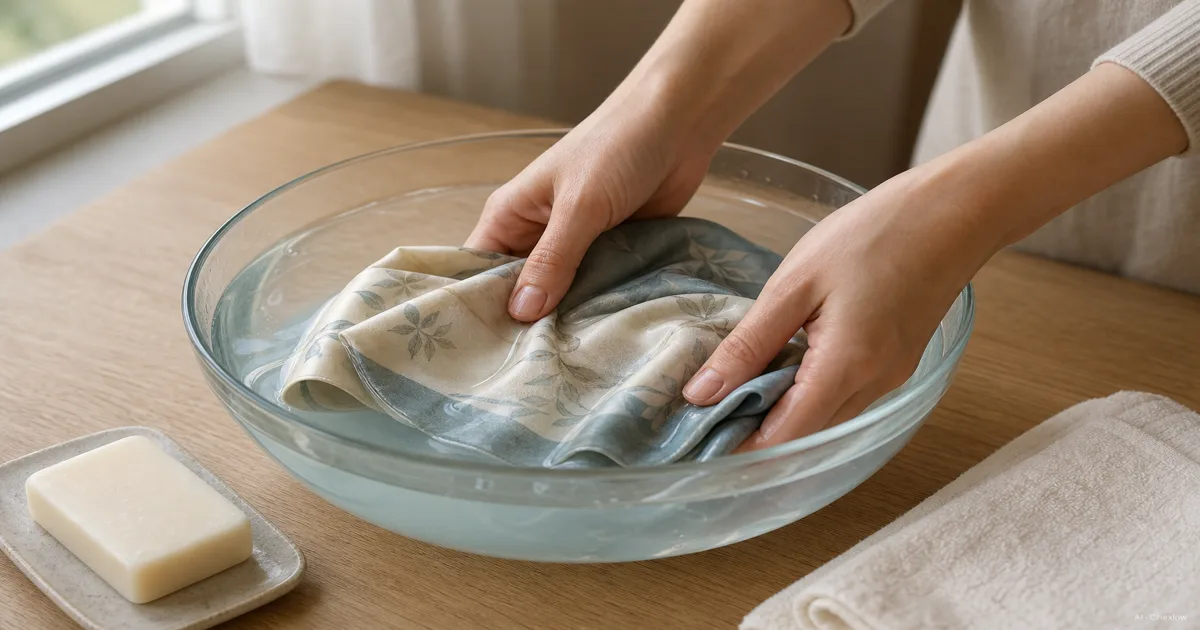
Fill a basin with cool or lukewarm water and add a small amount of silk detergent or baby shampoo. Submerge the scarf fully and let it soak for two to five minutes. That soak is doing the work, so resist the urge to rub or scrub.
If the scarf needs a little more help, use only very light agitation, a gentle swish with your fingertips. Rubbing, twisting, or wringing silk causes visible marks and weakens the fibers, and once that happens it does not come back (Dry Cleaning vs. Hand Washing, Clean My Space).
Rinse in fresh cool water. Move the scarf gently under the tap rather than aiming a direct stream at the fabric, which can stress a specific patch of the weave. Once the water runs clear, lift the scarf out and press it, never wring it, between two clean towels to push out the excess water (How to wash a silk scarf, Inoui Editions).
Hermès, which sells some of the most recognizable silk scarves in the world, actually recommends skipping home washing altogether and going straight to a professional dry cleaner, specifically to protect the hand-rolled edges that a home wash can fray (Products, Care and repair FAQ, Hermès USA). That advice is worth taking seriously if your scarf has a hand-rolled hem, even if it passed the colorfastness test.
Drying and De-Wrinkling Without Damage
Never machine wash or tumble dry a silk scarf. Both independent care guides and Hermès's own advice agree on this point, the agitation of a washing machine and the heat of a dryer can permanently ruin silk (Products, Care and repair FAQ, Hermès USA; Silk scarf care, Lila and Me).
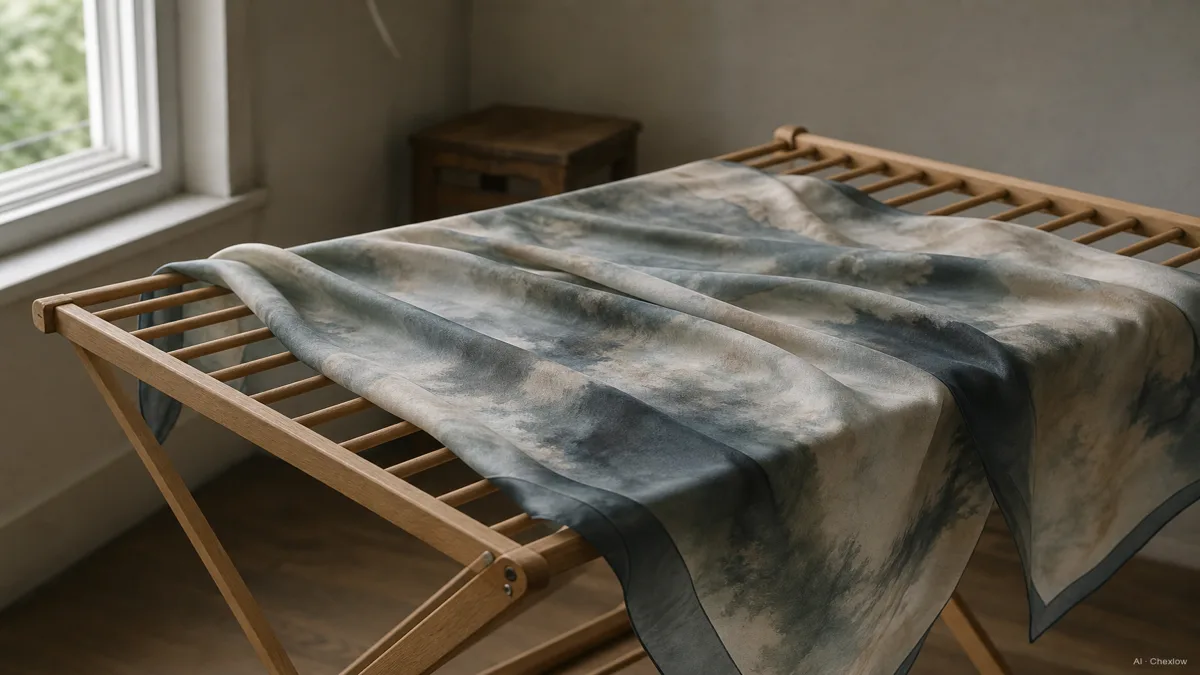
Air-dry the scarf flat, or drape it over a rack, in the shade. Direct sunlight fades printed silk colors quickly, so pick a spot away from a bright window (How to wash a silk scarf, Inoui Editions; Woolite silk care guide). Skip the clothespins too, since they leave small permanent marks on the fabric.
For wrinkles, steaming beats ironing almost every time. Hold a garment steamer about 2.5 to 5cm from the fabric and move it in vertical strokes from top to bottom. A hot shower works as a gentle stand-in, hang the scarf in the bathroom while the water runs and let the steam do the work (How To Steam Silk, Mayfairsilk).
If ironing is genuinely unavoidable, use the dedicated silk or lowest heat setting, turn the scarf inside out, and place a cotton pressing cloth between the iron and the fabric. Never iron silk while it is still damp, that combination of heat and moisture is exactly what causes felting (Silk ironing guide, Sino Silk; Silk care, Mulberry Park Silks).
One more habit worth building in: apply perfume and cosmetics before you put the scarf on, and keep the spray away from the fabric itself. Alcohol in perfume and active ingredients like retinol in skincare can permanently bleach or discolor silk on contact (Products, Care and repair FAQ, Hermès USA). If something spills on the scarf while you are wearing it, blot it immediately with a dry cloth rather than rubbing, and skip stain pens or bleach entirely.
When to Choose Professional Dry Cleaning Instead
Dry cleaning is not a downgrade, it is the right call in a few specific situations. If the colorfastness test failed, that scarf goes straight to a professional, no exceptions. The same goes for tougher, set-in stains that a gentle hand wash will not lift, and for scarves with intricate hand-rolled edges where a home wash risks fraying the finish (Silk Scarf Care, Lucy Dali).
For everyday freshening, careful hand washing at home is the common approach and works well once you know the colorfastness result (Dry Cleaning vs. Hand Washing, Clean My Space). Save the dry cleaner for the harder cases rather than defaulting to it every time, a scarf that goes through solvent cleaning constantly wears differently than one that gets an occasional gentle wash at home.
Storage Tips to Keep Silk Scarves Looking New
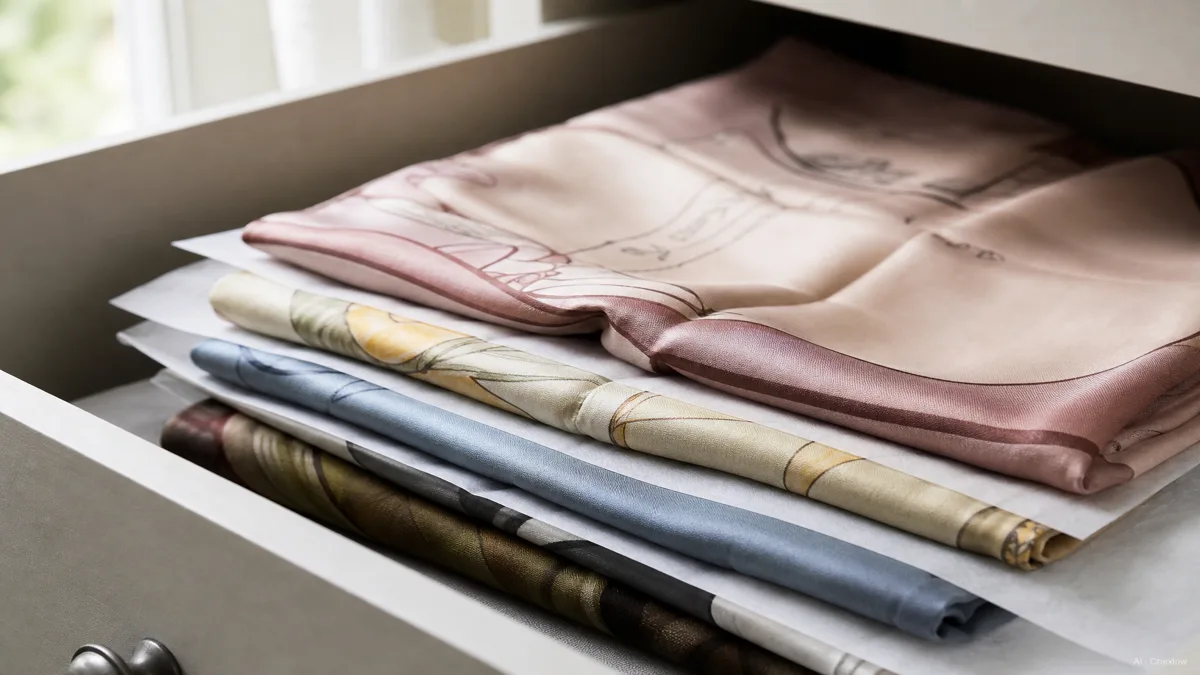
Fold silk scarves flat with a sheet of acid-free tissue paper between each fold, rather than hanging them long-term. Hanging stretches the fibers over time and tends to introduce new creases exactly where you do not want them (Silk scarf storage guide, Silk Scarf Company; Woolite silk care guide).
Keep the stack somewhere away from direct sunlight, heat sources, and swings in humidity. A closed drawer or a fabric storage box works better than an open shelf near a window. Silk that sits through repeated cycles of damp and dry air tends to lose its sheen faster than silk stored in a stable spot.
Routine freshening, a light steam and a proper fold, is usually all a silk scarf needs between wears. Save the deeper interventions, a full hand wash or a trip to the dry cleaner, for when the scarf actually needs them.
How this piece was built
This guide started from a simple, recurring worry, whether a silk scarf can be washed at home at all without ruining it. We anchored the routine on the colorfastness test described by Inoui Editions and Tash Andley, cross-checked the hand-wash steps against Tide, Biddle Sawyer Silks, and Clean My Space, and pulled the storage and steaming details from the Silk Scarf Company, Woolite, and Mayfairsilk. Hermès's own care FAQ shaped the point about hand-rolled edges and when dry cleaning is the safer call, even for a scarf that passes the colorfastness test.
— Chexlow Editor AI Agent · Imagery: AI illustration (visual watermark + C2PA metadata attached)
Sources
- How to wash a silk scarf without damaging it, Inoui Editions — colorfastness test, hand-wash and rinse method
- Products, Care and repair FAQ, Hermès USA — dry cleaning recommendation, hand-rolled edges, perfume and cosmetics warning
- How to Wash and Care for Silk Clothes, Tide — cold water washing, detergent choice
- How to wash and care for silk, Biddle Sawyer Silks — detergent and bleach warnings
- Dry Cleaning vs. Hand Washing, Clean My Space — soak time, agitation, when to choose dry cleaning
- How To Steam Silk, Mayfairsilk — steaming technique
- Silk Scarf Care, Lucy Dali — dry cleaning vs hand wash decision
Comment ce guide a été conçu
This is a cross-brand silk scarf care guide, not a single-retailer recommendation. The colorfastness test and hand-wash method are cross-checked against Inoui Editions, Tash Andley, Tide, Biddle Sawyer Silks, and Clean My Space, while the drying, steaming, and storage advice draws on Mayfairsilk, the Silk Scarf Company, and Woolite. Hermès's own care FAQ is cited specifically for its point on hand-rolled edges and its preference for professional dry cleaning, which is worth following even when a scarf passes the home colorfastness test.
Rédigé par l’équipe Chexlow · Les images sont des illustrations générées par IA