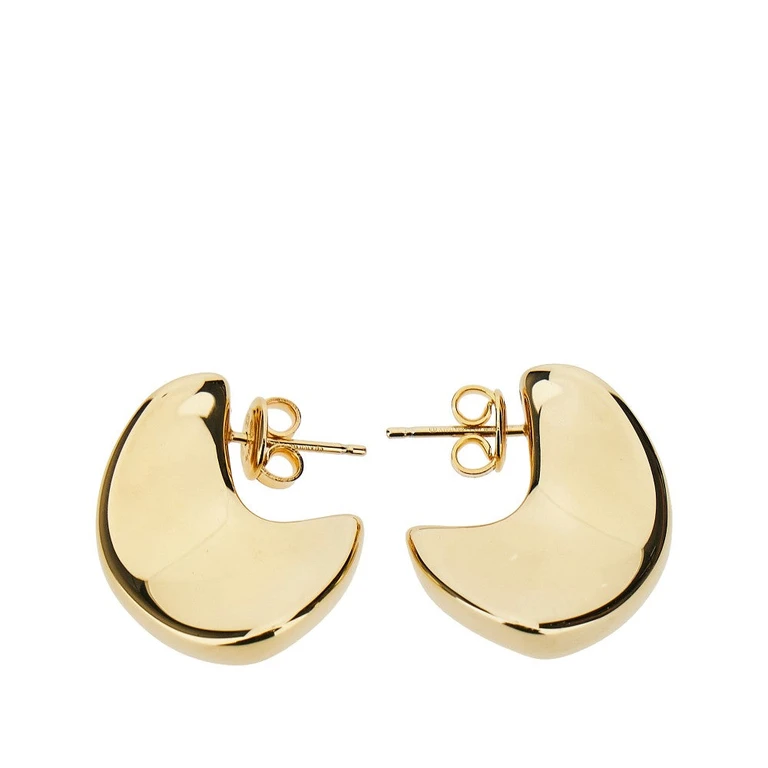
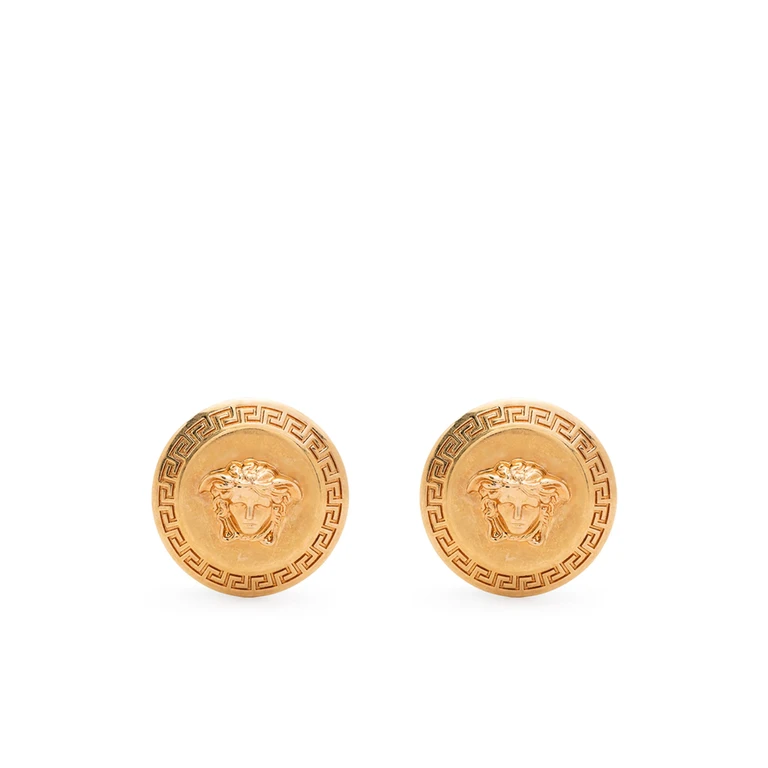
Every earring buying guide jumps straight to style. Round face, wear a drop. Square face, soften it with a hoop. But if the piercing is brand new, none of that matters yet. The lobe is still healing, and the wrong shape can slow that down or make it worse.
Studs and hoops solve different problems. One sits still. One moves with you. Knowing which job each one does makes the first purchase a lot easier.
Studs vs hoops, the core difference
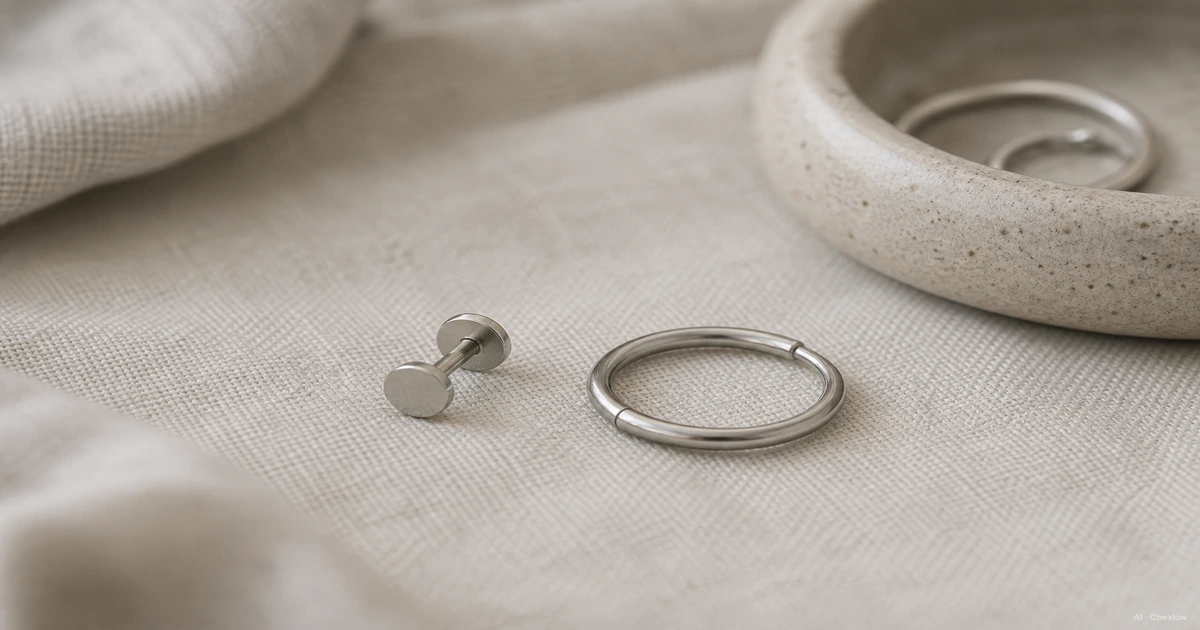
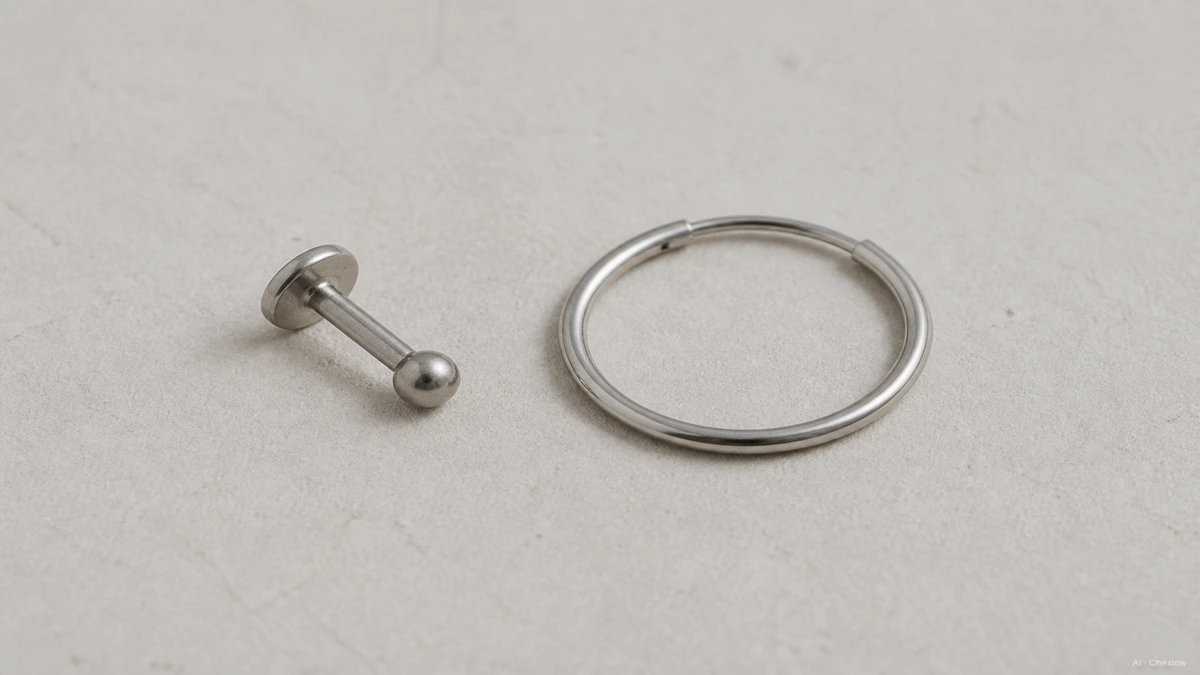
A stud has a straight post that goes through the lobe and locks with a flat back or a butterfly clutch behind the ear. It does not swing, rotate, or hang. Once it is in, it stays exactly where you put it.
A hoop is a closed or near-closed ring that threads through the piercing and curves around the lobe. Even a small hoop has some motion built in, since the shape itself sits away from the ear rather than flush against it.
That single difference in geometry explains almost everything else in this guide: why one snags on a hood zipper and the other does not, why one is fine to sleep in and the other is not, and why jewelers keep publishing "studs vs hoops" comparisons in the first place (Hoop Earrings vs. Stud Earrings, EAMTI Jewelry).
Which is better for a first, or healing, piercing
Earlobe piercings usually close up on the outside in six to eight weeks, but the tissue underneath can take four to six months to fully settle (How Long Does it Take for Ear Piercings to Heal, adorn512). Most piercers ask you to wait at least six weeks before swapping in a new pair of starter jewelry, healed or not (How Long to Wait to Change Earrings After Piercing, Mantra Tattoo & Piercing).
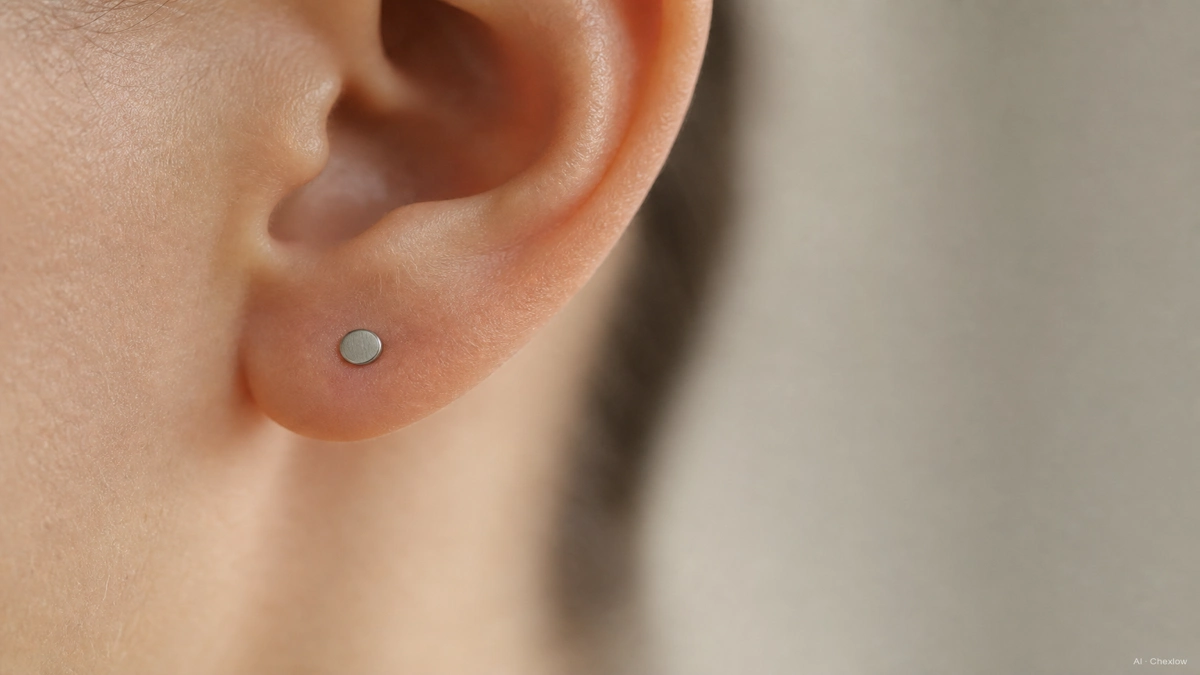
During that window, low-profile flat-back studs are the safer pick. They sit flush against the lobe, so there is nothing sticking out to snag on a hoodie or get tugged while brushing your hair. They are also the shape most piercers clear for sleeping in from day one, since there is no loop for a pillow to catch (Best Earrings for Newly Pierced Ears, Diamondrensu; 8 Earring Trends for 2026, Molly Jewelry).
Hoops are not off-limits forever, just not yet. A healing lobe is more sensitive to the small tugs a hoop invites, and any extra motion in that first stretch can irritate tissue that is still closing up.
For post size, most piercers recommend an 18 to 22 gauge post at around a quarter to half an inch long for the lobe. That gives the piercing room to breathe through any swelling without the earring sitting so loose that it flops around (Earring Gauge Guide, Leonids Jewelry).
Materials that matter, hypoallergenic metals and gauge
The shape is only half the decision. The metal is the other half, and it matters even more for a healing piercing.
Implant-grade titanium, 14K or 18K solid gold, platinum, and ASTM F138 surgical stainless steel (often labeled 316L) are the materials piercers actually recommend for new jewelry. They resist corrosion, do not react with skin oils or sweat, and carry a low risk of triggering a reaction while the piercing is still open (Earrings for Sensitive Ears, Blue Nile; Best Earrings for Newly Pierced Ears, Diamondrensu).
Brass, copper, and even sterling silver are worth avoiding for the first several weeks. Sterling silver oxidizes with air and moisture, and that tarnish sitting against healing tissue is not what you want in an open wound (Are Hoop Earrings Better for Sensitive Ears, Meideya Jewelry). If your ears have ever reacted to cheap jewelry before, nickel is almost always the reason, and that is exactly what implant-grade titanium and surgical steel are built to avoid.
Once you move past studs into your first hoops, the wire gauge matters too. A thicker gauge holds its round shape and does not bend out of round with normal wear, while thin, flimsy wire tends to warp and can dig into the piercing channel (Are Hoop Earrings Better for Sensitive Ears, Meideya Jewelry).
Comfort, lifestyle, and everyday wearability
Past the healing window, the studs vs hoops decision becomes about how you actually live day to day.
Studs are the low-maintenance option. You can sleep in them, work out in them, and hold a phone against your ear all day without noticing they are there. That is why so many people land on a simple stud as their everyday, forget-you-are-wearing-it pair (Comparing Hoops Vs. Stud Earrings, With Clarity).
Hoops need a bit more attention. Long hair catches on them, scarves catch on them, and a toddler's grabby hands really catch on them. Larger hoops in particular are more prone to bending or snagging during normal movement (Hoop Earrings vs. Stud Earrings, EAMTI Jewelry).
That trade-off is exactly why jewelers so often suggest a simple order of operations when you are starting an earring collection: buy a pair of studs first as the non-negotiable everyday basic, confirm the metal and size that actually work for your ears, and add hoops once you know both (Diamond Studs vs. Hoops, Ritani).
Once your lobes are fully healed, hoops in surgical steel or titanium breathe well and sit comfortably for daily wear, as long as the wire is not too thin (Are Hoop Earrings Better for Sensitive Ears, Meideya Jewelry).
Choosing by face shape and personal style
Once healing and comfort are settled, style is worth a look, since the same pair can read very differently depending on your face.
Round faces tend to benefit from longer, more angular drops or elongated studs, which add definition where a round hoop would only echo the curve already there. Square faces are softened by curved shapes, so hoops or oval studs work in your favor. Oval faces can wear almost anything, which is the lucky answer most people want to hear. Oblong or longer faces are balanced out by wider, bolder hoops that add width rather than length (Earrings for Every Face Shape, All Cotton and Linen).
Trend-wise, both shapes are having a moment right now, just in different lanes. Minimalist, barely-there studs remain the everyday default for a lot of people, while hoops have come back with a thicker, more 90s-leaning silhouette, sometimes dressed up with small charms. Search interest backs that up too, with "gold hoop earrings" up 28% year over year in 2026 (Spring 2026 Jewelry Trends, HyraMode; 8 Earring Trends for 2026, Molly Jewelry).
Put it together and the order is simple. If a piercing is new or still healing, a hypoallergenic flat-back stud is the safer first pair. Once healed, add a hoop in a hypoallergenic metal, sized and styled for how you actually want to wear it.
Sources
- Hoop Earrings vs. Stud Earrings: Which Is Better for You?, EAMTI Jewelry — core shape difference and everyday wearability
- Comparing Hoops Vs. Stud Earrings, With Clarity — low-maintenance case for studs
- Best Earrings for Newly Pierced Ears, Diamondrensu — flat-back studs for healing piercings
- Are Hoop Earrings Better for Sensitive Ears, Meideya Jewelry — hypoallergenic materials and hoop wire gauge
- Earrings for Sensitive Ears, Blue Nile — safe metals for sensitive and healing ears
- How Long to Wait to Change Earrings After Piercing, Mantra Tattoo & Piercing — healing timeline and first swap window
- How Long Does it Take for Ear Piercings to Heal?, adorn512 — outer vs internal healing timeline
- 8 Earring Trends You Need to Know for 2026, Molly Jewelry — 2026 style trends
- Diamond Studs vs. Hoops: Which Should You Buy?, Ritani — building an earring collection in order
- Earrings for Every Face Shape, All Cotton and Linen — face shape styling guide
Comment ce guide a été conçu
This piece started from a question that comes up constantly right after a new piercing: can I wear a hoop yet, or does it have to be a stud. We cross-checked healing timelines and starter jewelry guidance across piercer and jeweler references, including adorn512 and Mantra Tattoo & Piercing on healing windows, Diamondrensu and Molly Jewelry on flat-back studs for new piercings, and Meideya Jewelry and Blue Nile on hypoallergenic metals and nickel risk. Face-shape and 2026 trend framing came from All Cotton and Linen and HyraMode. The selection lens sits on Chexlow's earring and fine jewelry catalog across both shapes.
Rédigé par l’équipe Chexlow · Les images sont des illustrations générées par IA