
Choose the stone before comparing prices
Start with what you want to buy: natural diamond, laboratory-grown diamond or moissanite. Natural and laboratory-grown diamonds have essentially the same material properties; their origin differs. Appearance alone cannot reliably establish that origin. GIA explains the distinction.
- Natural diamond. Keep this as your starting point if natural origin matters to you. Ask the seller to document that origin.
- Laboratory-grown diamond. Include it if you want diamond and are comfortable with laboratory growth. Compare complete bracelet quotations with the same metal and dimensions.
- Moissanite. Consider it if you like its appearance as a stone in its own right. It is not diamond and produces stronger rainbow flashes, known as fire. GIA compares diamond simulants.
Set a spending ceiling before adding carats. If the natural-versus-laboratory choice is still unresolved, read the diamond origin comparison before narrowing the bracelet shortlist.
Separate wrist fit from total carat weight
Measure your wrist first. An existing soft tape is enough; alternatively, use Tiffany's printable ruler, printed on A4 at 100% with its scale checked. Record the circumference against your skin, then consult the candidate bracelet's sizing instructions.
Ask for both finished length and width in millimetres. During a fitting, check movement as well as appearance: GIA advises some freedom to move without excessive sliding. Its bracelet fit guidance is a starting point, not a universal length allowance.
CTW means total carat weight, not the width of the bracelet or the weight of one stone. Carats measure weight, not visible size. GIA's carat guide explains why those numbers differ.
For an arithmetic example, 3.00 CTW divided among 60 diamonds averages 0.05 ct each; divided among 30, it averages 0.10 ct. Neither calculation tells you the finished bracelet width. Compare length, width, stone count and stone dimensions together, especially across different stone types.
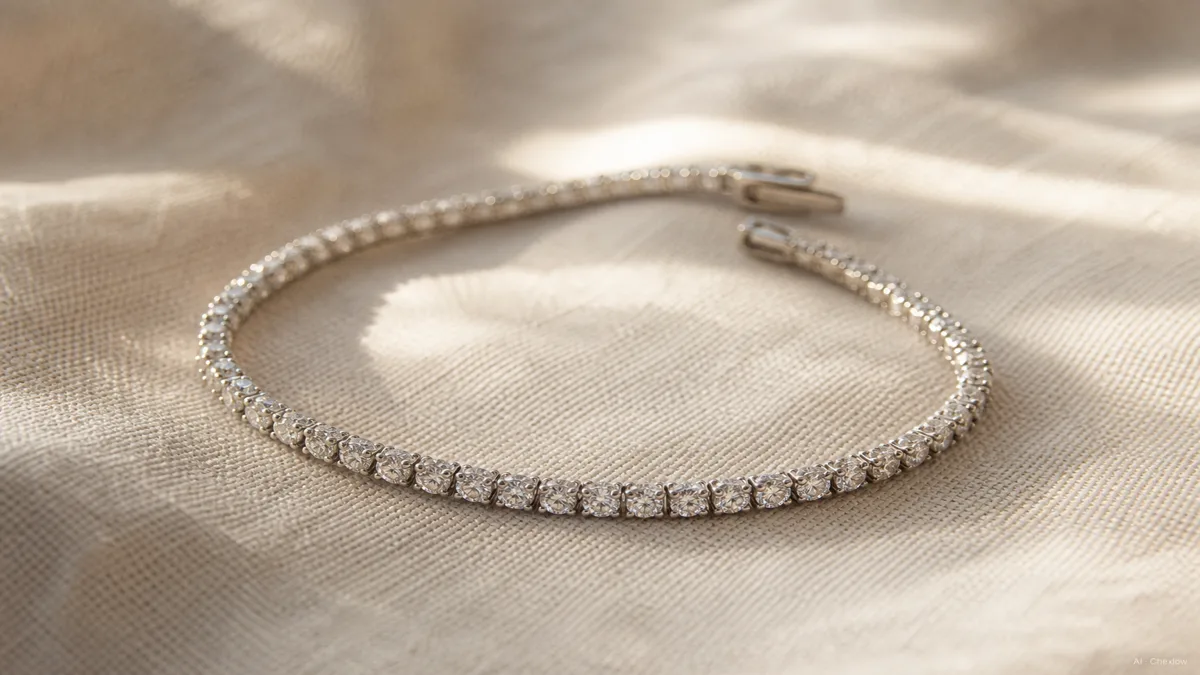
Rather than assigning a carat range to your wrist size, try two widths at a suitable length. Choose the one you want to see on your wrist, then ask what that specification costs.
Inspect the whole line and ask what the paperwork covers
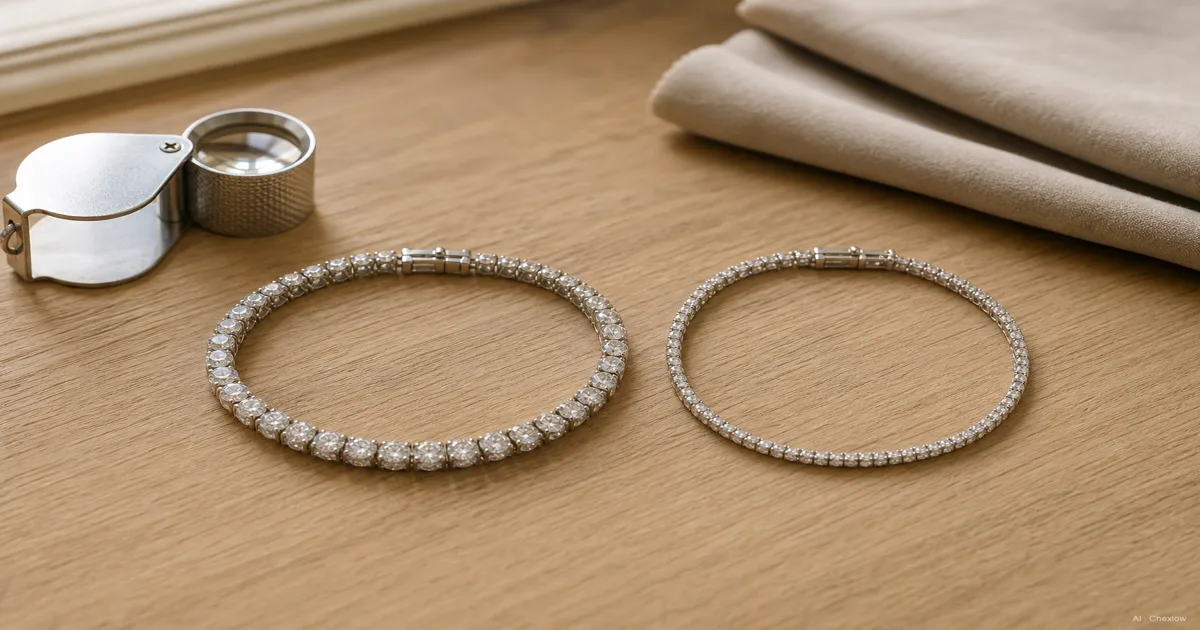
Request a view of the entire bracelet and close-ups in more than one lighting condition. Look for a stone that appears noticeably darker, warmer or differently sized than its neighbours. This is a practical comparison of appearance, not a way to authenticate the stones.
For diamonds, cut affects light performance. But GIA's overall cut grade is specific to round brilliants, not every shape. GIA's cut explanation is a reason to ask who assigned an advertised “Excellent” grade and exactly what it describes.
Clarity describes inclusions and surface blemishes. A reassuring word like “certified” is not enough. Ask to see the actual document and which stones or finished item it identifies. For eligible natural-diamond jewelry, GIA reports can state estimated weights and color/clarity ranges, with grading limited by the mounting. GIA describes that scope.
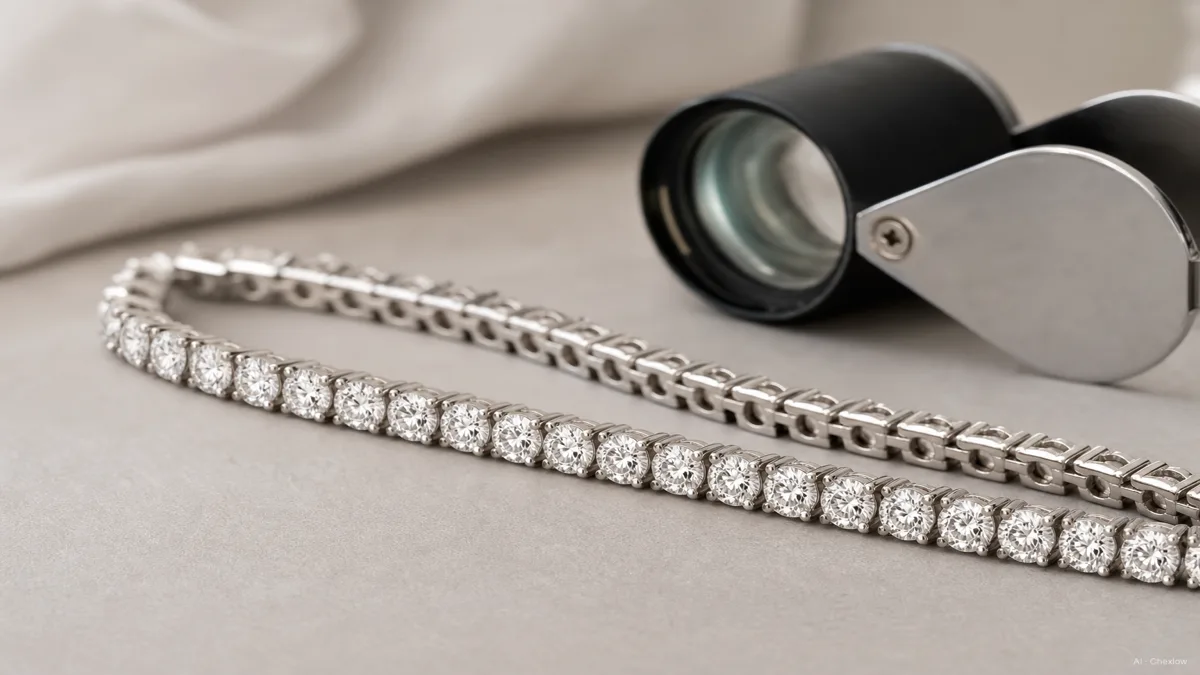
Do not buy a loupe just to settle the origin question yourself. Ask the seller how identity was checked and have an independent gemologist resolve any uncertainty before purchase.
Choose the metal, then try every part of the clasp
Ask for the actual metal alloy and whether the finish is plated. White gold is often rhodium plated, and that coating can need renewal as it wears. GIA explains white gold finishes. Ask who would do that work and what it would involve.
Platinum can develop a patina, so choose it with that change in finish in mind. GIA's bracelet guide describes this surface change. For yellow or rose gold, request the gold purity and compare the actual color on your skin rather than choosing by the material name alone.
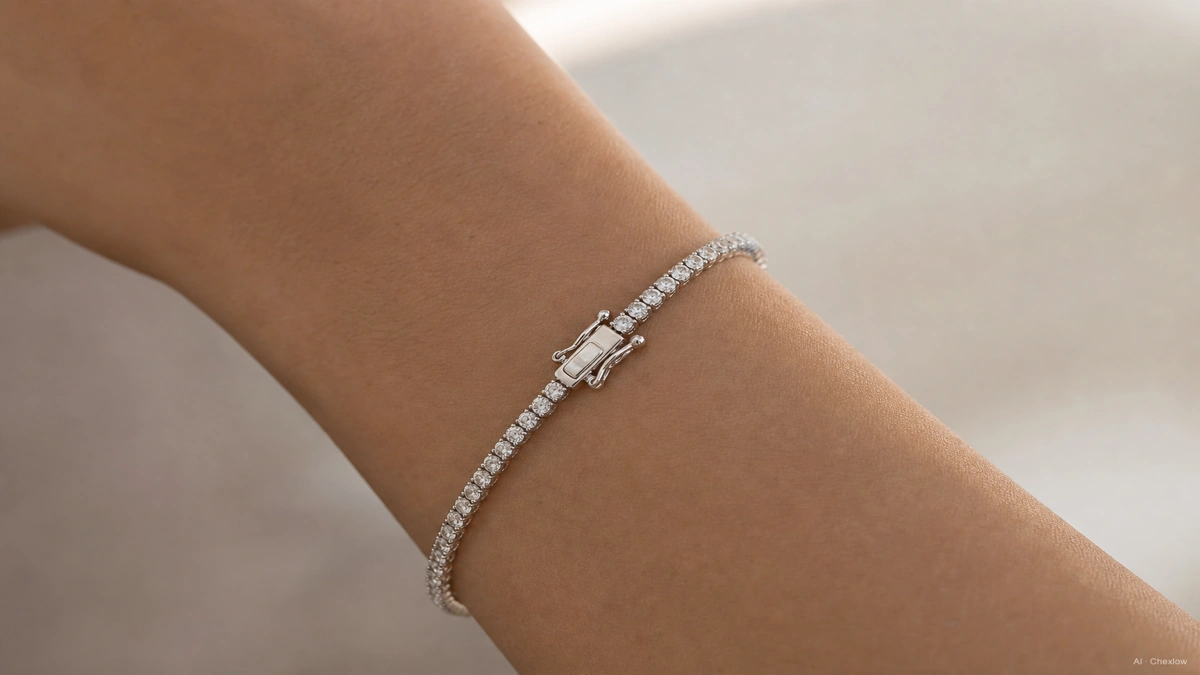
Then put the bracelet on and fasten it yourself. A safety latch supplements the main clasp; a double latch uses two safety latches. Ross-Simons shows the different mechanisms.
- Ask for a demonstration. Identify the main closure and each safety catch, then repeat the sequence without forcing anything.
- Check the fit while fastened. Move your wrist and try it with the sleeve you expect to wear. Ask the jeweler to examine any catching or uncomfortable edge.
- Pause if closure is uncertain. A click alone is not your purchase decision. If a catch will not stay engaged, have the jeweler assess it before buying.
Make the final choice with a written specification
Keep two candidates and ask each seller for the same information: stone identity, total weight, stone count, bracelet length and width, metal and finish, clasp operation and the documents supplied. Then request the complete quotation, including any sizing work.
Before paying, confirm the return terms, whether alterations affect returns, and who handles clasp or setting repairs. These are questions for the seller, not services to assume are included.
- Choose it when the dimensions work, you like the whole line, you can use the clasp and the written description matches what you saw.
- Wait when origin, measurements or document coverage remain unclear. Resolve the missing information instead of accepting a larger carat number as reassurance.
- Reconsider the style if you would rather wear metal without a line of stones. The chain bracelet and cuff comparison helps you examine that alternative before committing.
Comment ce guide a été conçu
Written by AI for Chexlow, using GIA's material and grading guidance, Tiffany's measuring instructions and Ross-Simons' clasp explanations. The comparison sequence and purchase questions are editorial guidance for a first tennis bracelet; they do not represent product testing or authentication of a particular piece.
Rédigé par l’équipe Chexlow · Les images sont des illustrations générées par IA