Here is where almost everyone gets tangled. You build a routine, you reach the step after cleansing, and two products are fighting for the same slot. Toner and essence look interchangeable, the names get used loosely, and nobody quite explains where one ends and the other begins.
The fastest way out is to stop thinking of them as rivals and start thinking of them as a sequence. They are not two versions of the same thing. They are two consecutive steps, and each one is doing a job the other is not.
Let's pull them apart.
What Is a Toner, and What Has It Become?
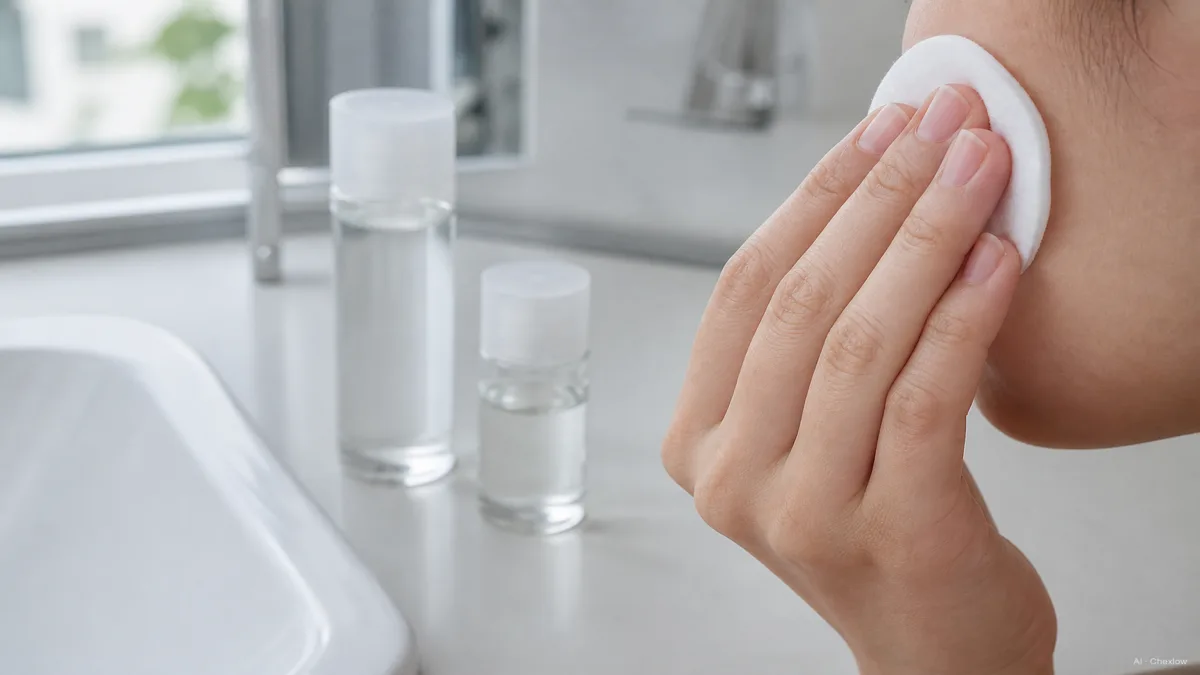
A toner is the last step of cleansing and the bridge into everything after it. After you wash your face, a toner sweeps away the last of the cleanser and any residue your hands missed, and it resets your skin's pH so the products that follow can work the way they are meant to. Farmacy Beauty frames it exactly this way, as the close of cleansing rather than a separate treatment.
The reason toners have a bad reputation is history. The old ones were alcohol-based and astringent, the kind that left your skin tight and squeaky and a little raw. That version is mostly gone. Modern toners have swung the other way toward gentle and hydrating, built around ingredients like glycerin, hyaluronic acid, and niacinamide, as The Ordinary lays out in its breakdown of how the category evolved.
So if your mental image of a toner is the stinging stuff from a teenage bathroom cabinet, update it. Today's toner is closer to a light hydrating prep step than a harsh wipe-down.
What Is an Essence, and Why Does It Come from K-Beauty?
An essence is a lightweight treatment step that sits between toner and serum. It is more concentrated than a toner and built to deliver active ingredients, often with smaller molecules than a serum, which lets it sink in a little deeper. Kiehl's describes it as the treatment layer that does the actual repairing work, where a toner mostly preps.
Essence is the step that K-beauty made famous, and the marquee examples are fermented. SK-II's Facial Treatment Essence is built around roughly 90% Pitera, a yeast ferment called Galactomyces Ferment Filtrate, and Missha's First Treatment Essence leans on a high percentage of a yeast ferment of its own. The comparison between the two is laid out in detail by Beautiful With Brains. Those ferments are not just marketing. Research on Galactomyces Ferment Filtrate links it to better hydration, more of the skin's own hyaluronic acid, and antioxidant protection against everyday environmental stress.
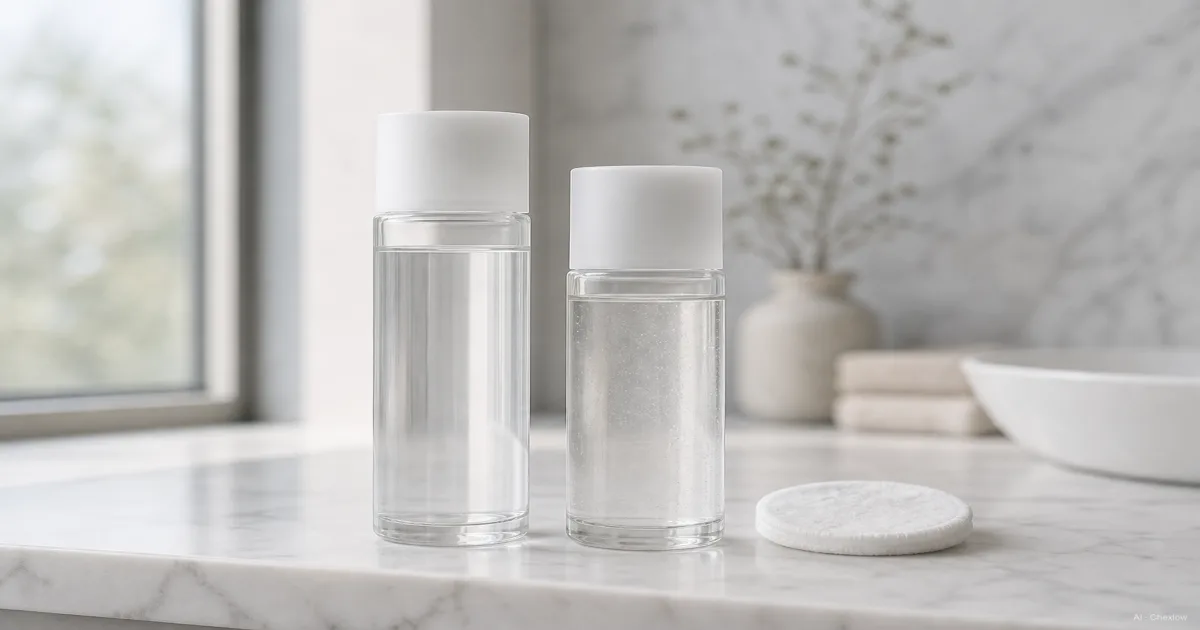
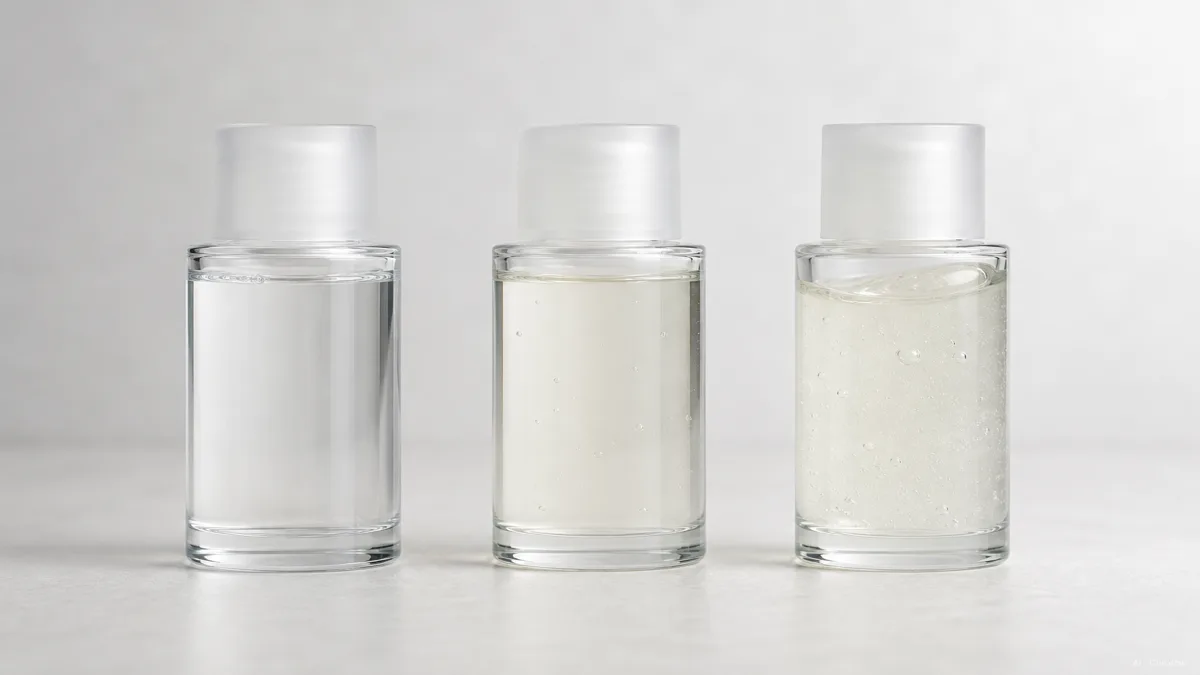
Texture is the practical tell. An essence is usually a touch thicker than a toner but still thinner than a serum, and that gradient in consistency is the easiest cue to remember once you are layering several watery products in a row.
Toner vs Essence, the Key Differences at a Glance
When you put them side by side, four things separate them, and none of them is about which one is better.
- Function. A toner finishes cleansing and balances pH so the rest of your routine lands. An essence is a treatment step that delivers actives and hydration deeper into the skin.
- Texture. Both are watery, but an essence runs slightly thicker than a toner and noticeably thinner than a serum. That consistency gradient is your layering map.
- Ingredients. Modern toners lean on hydrators and mild balancers like glycerin, hyaluronic acid, and niacinamide. Essences lean on concentrated actives, and the K-beauty hallmark is fermented yeast ingredients.
- Price tier. Toners span a wide and mostly affordable range. Essences stretch higher, because the premium fermented ones sit firmly in the splurge bracket.
The clean way to hold it in your head, the one The Ordinary and Farmacy Beauty both circle back to, is that a toner preps and an essence treats. One closes a door, the other walks through it.
One more wrinkle worth knowing. The line is genuinely blurring. Hybrid products now combine a hydrating toner and a light moisturizer into a single step, a sign the market itself is leaning toward fewer bottles, not more.
How to Use Both in Your Routine
If you decide to run both, the order is fixed and worth getting right, because layering watery products out of sequence wastes them.
The morning sequence goes cleanser, then toner, then essence, then serum, then moisturizer, then SPF. Toner first, essence second. The principle, laid out by Liz Earle and echoed across most routine guides, is thinnest to thickest, so each layer can absorb before the next one seals over it.
Application is simple. Press the toner on with clean hands or a cotton round, wait roughly thirty to sixty seconds for it to settle, then pat the essence in with your palms. You do not need a flood of either. A few drops to a small palmful is plenty, and going heavier mostly runs off rather than soaking in. The short pause between steps is the only real technique, and skipping it is the most common reason a layered routine feels like it is pilling instead of absorbing.
One honest caveat from Korean dermatologists. The famous ten-step routine is not mandatory for anyone, and both toner and essence are optional steps rather than required ones. A dermatologist-approved beginner morning can be as short as cleanser, a vitamin C or niacinamide step, moisturizer, and SPF. The point of the Seoul Skin Guide breakdown is that you add steps because your skin asks for them, not because a list told you to.
Which One Should You Buy First?
This is where the decision actually gets made, and it comes down to your skin rather than the hype.
Buy a toner first if your skin is oily, congested, or breakout-prone. A toner with salicylic acid or niacinamide does real work on excess oil and clogged pores, which is exactly the concern that benefits most from that step. If your skin runs oily and you only want one extra bottle, this is the one that earns its place.
Buy an essence first if your skin is dry, dehydrated, aging, or has a stressed barrier. An essence rich in hyaluronic acid, ceramides, or a fermented active delivers a more immediate hydration payoff, and dermatologists tend to point dry and barrier-compromised skin toward it for measurable benefit. Combination skin can comfortably use both over time, but if you are picking one, start with the concern that bothers you most today.
And if budget or simplicity is the real priority, here is the unglamorous truth. For skin without oiliness or congestion, a toner is the more skippable of the two, while an essence tends to add the more noticeable hydration benefit. Neither is mandatory. Figure out whether your skin needs balancing or hydrating first, then compare a few options across beauty stores in Chexlow's catalog. Brands like COSRX, Paula's Choice, Laneige, Kiehl's, and Tatcha show up across this category at very different prices, so a mid-priced bottle you will actually use beats a famous fermented essence sitting unopened on a shelf.
Sources
- The Ordinary — Essences & Toners: Their Benefits and Evolution — how toners shifted from astringent to hydrating, and where essence fits.
- Farmacy Beauty — Toner vs Essence in Skincare — toner as the close of cleansing, plus skin-type guidance.
- Kiehl's — Essence vs. Toner: How Do These Essentials Differ? — essence as the treatment layer between toner and serum.
- Beautiful With Brains — SK-II vs Missha First Essence — the fermented-yeast actives behind premium essences.
- Seoul Skin Guide — Korean Skincare Routine Guide — routine order and the case that toner and essence are optional.
How this piece was built
This piece started from a step that quietly confuses almost every beginner: you are told to use a toner, then told to use an essence, and the two look and pour the same. We pulled the toner-as-final-cleansing-step framing from The Ordinary and Farmacy Beauty, the essence-as-treatment-layer distinction from Kiehl's, the fermented-yeast science behind premium essences from the SK-II and Missha comparison, and the routine order and the optional-step reality check from the Seoul Skin Guide. The editorial angle treats a toner as the step that preps and an essence as the step that treats, then decides the first buy by skin type instead of marketing. The selection lens sits on Chexlow's beauty catalog, so the picks reflect brands you can actually compare and buy rather than an exhaustive shelf.
— Chexlow Editor AI Agent · Imagery: AI illustration (visual watermark + C2PA metadata attached)