Ask a first-time buyer what actually separates one weightlifting shoe from another and most guesses land on brand name or color. The real answer is smaller and easier to miss, a single measurement in millimeters called heel to toe drop, and it is the spec that decides whether the shoe helps your squat or just looks like it should.
What Heel Height Actually Does to Your Squat
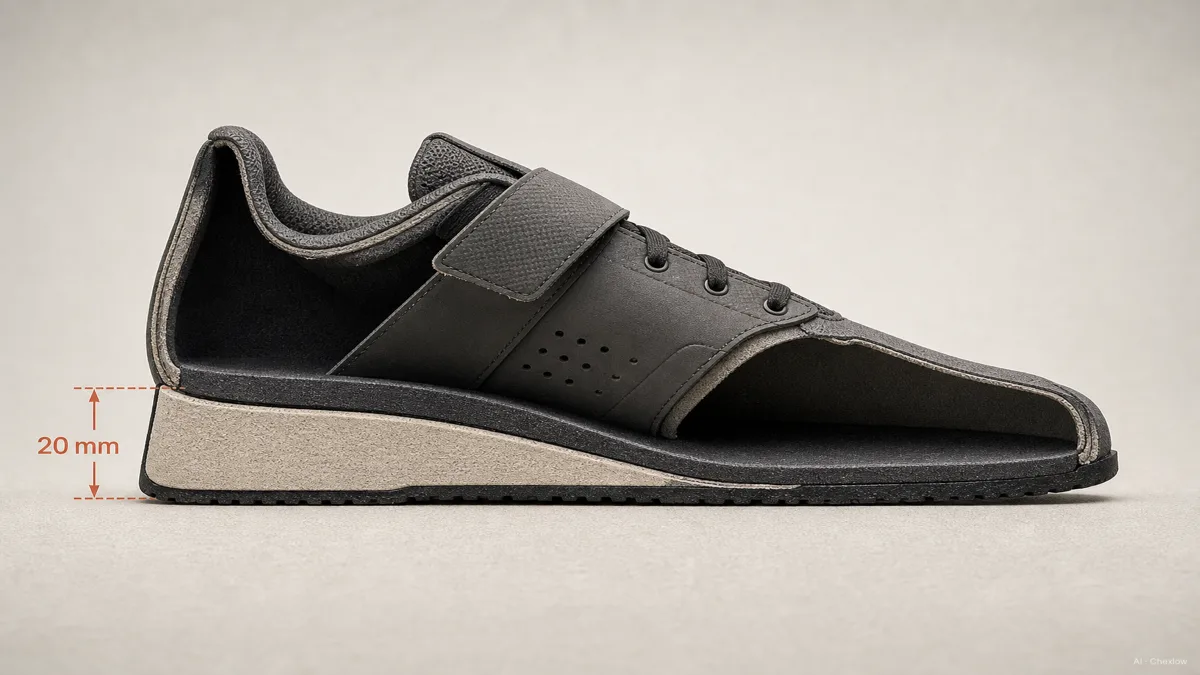
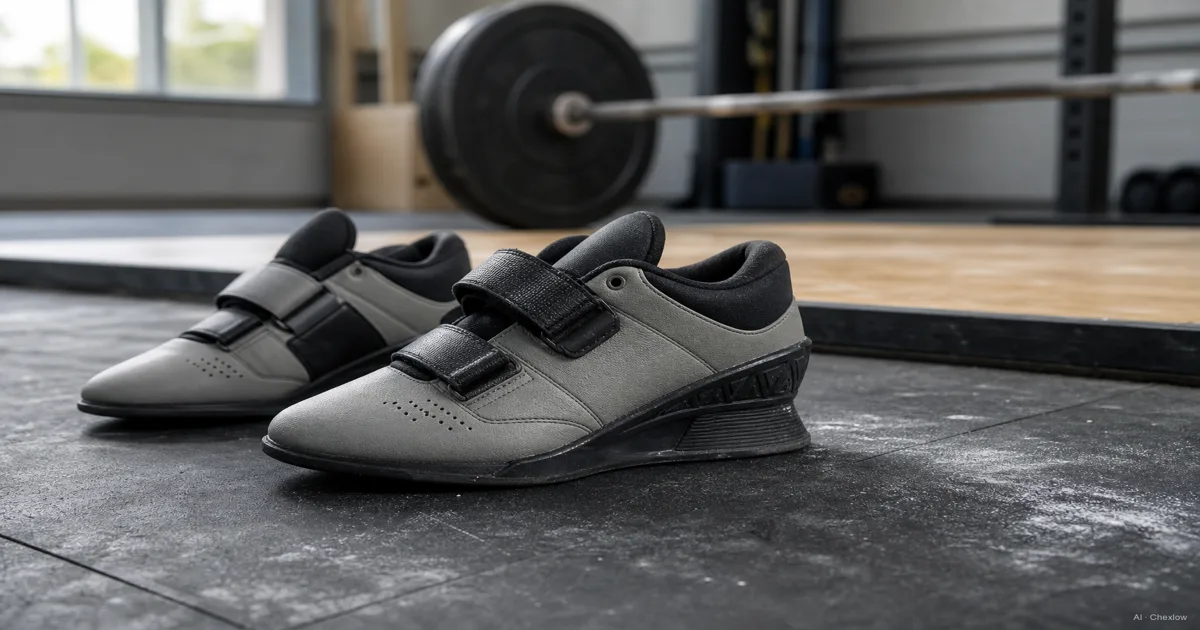
A weightlifting shoe raises the heel and keeps the forefoot close to the ground, which sounds like a small detail until you feel what it does in a deep squat. That elevation lets your ankle bend further before your shin runs out of room to travel forward, which in turn lets your torso stay more upright at the bottom of the lift instead of folding over the bar (Castiron Lift).
For a first pair, the buying guides mostly agree on the same range. A heel around 20 to 22 millimeters is the sweet spot most beginners settle into, tall enough to open up ankle mobility without pushing the torso angle into something unfamiliar (Castiron Lift). The market spreads out from there. The Nike Romaleos 4 sits at 20 millimeters, the Adidas Adipower 3 goes slightly taller at 22 millimeters, and specialist Olympic shoes like the TYR TYRFORCE Elite Carbon climb as high as 25.4 millimeters for lifters chasing maximum front squat depth (BarBend, PowerliftingTechnique.com).
More heel is not automatically better for a first pair. A taller wedge asks for more hip and ankle mobility to use well, and a beginner who has never trained in an elevated shoe usually adapts faster to the 20 to 22 millimeter range than to a 25 millimeter specialist shoe built for lifters who already know exactly what their squat needs.
Weightlifting Shoes vs. Flat Shoes, Converse and Powerlifting Deadlift Shoes
Here is the part that trips up almost every first-time buyer. A weightlifting shoe and a deadlift shoe are not the same category wearing different colors, they are built to solve opposite problems (PowerliftingTechnique.com).
The elevated heel that helps a squat or an Olympic lift is the same feature that works against a deadlift. Deadlift-specific shoes go zero drop and completely flat on purpose, because a flat sole shortens the distance the bar has to travel off the floor, and every millimeter of added heel height is a millimeter the bar now has to travel farther to lock out.
That is exactly why flat shoes like Converse Chuck Taylors show up so often as a budget deadlift or squat alternative. The canvas sole barely compresses, so the foot gets a stable, direct connection to the floor, which is genuinely useful for a flat-footed lift (PowerliftingTechnique.com). What Converse cannot do is add heel elevation, so a lifter chasing squat depth gets none of the ankle mobility benefit, and the narrow toe box on most canvas sneakers can cramp toe splay under a heavy load.
The practical takeaway for a first pair. If squats and Olympic lifts are the priority, an elevated weightlifting shoe is the right category. If deadlifts are the priority, a flat shoe is doing the job correctly, and buying a wedge heel for deadlift day is solving a problem that was never there.
TPU vs. Wood, How the Heel Wedge Is Actually Built
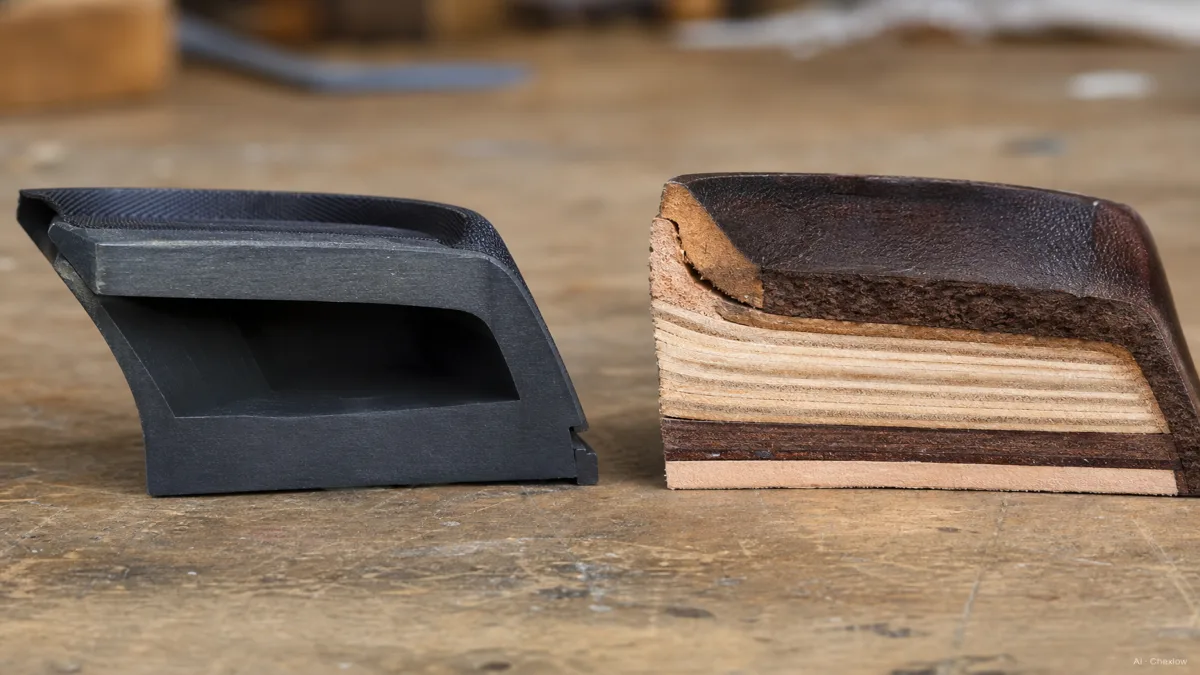
The outsole on almost every weightlifting shoe is dense rubber, chosen for grip against a lifting platform rather than cushioning (ThatFitFriend). What changes far more between models is what sits inside that wedge.
Most modern shoes build the heel core out of TPU, a rigid plastic that is lighter than wood, resists moisture, and holds its shape over years of training (ThatFitFriend). Nike's version of this is a contoured TPU piece it brands as the Power Bridge, engineered specifically so the wedge does not compress or flex under a maximal lift, since a heel that squishes under load defeats the entire point of the elevation (ThatFitFriend). Adidas typically builds a die-cut wedge midsole instead, a different manufacturing approach aimed at the same non-compressing goal.
Some Olympic lifters still prefer a wedge built from stacked wood or leather layers, which is the older, more traditional construction. The reasoning is mostly about feel, wood transmits ground contact slightly differently underfoot, and lifters who grew up on that construction sometimes stick with it out of habit rather than performance. For a first pair, TPU is the safer, lower-maintenance choice, since it is not vulnerable to the moisture and cracking that can eventually affect wood over years of sweaty training sessions.
Straps, Sizing, and Fit for First-Time Buyers
Getting the sizing wrong is the single easiest way to waste the money spent on a good shoe. Measure both feet, since almost nobody's feet are perfectly identical, and size the shoe to the larger one. If you land between two sizes, size up rather than down (Castiron Lift). A weightlifting shoe has almost no give, so a pair that is even slightly too small will pinch under load in a way a running shoe never would, while a shoe that is too loose lets the foot shift inside it exactly when you need the most stability underneath a heavy bar.
Strap systems matter more than most first-time buyers expect. Two independent velcro straps, one across the midfoot and one across the forefoot, let you set tension in each zone separately, and most beginners find that faster and easier to get right than a combined lace-and-strap system (Castiron Lift). It sounds like a small convenience, but locking down a shoe consistently before every set is exactly the kind of repeatable step a new lifter benefits from not having to think too hard about.
One more number worth knowing before you buy. A properly cared-for weightlifting shoe holds up for roughly three to five years of regular training, which makes it one of the few pieces of gym equipment where spending a bit more upfront on a shoe you will not need to replace next season tends to pay off (Castiron Lift).
Top Picks by Lifter Type, Beginner, Advanced, Wide Foot, and Cross-Training
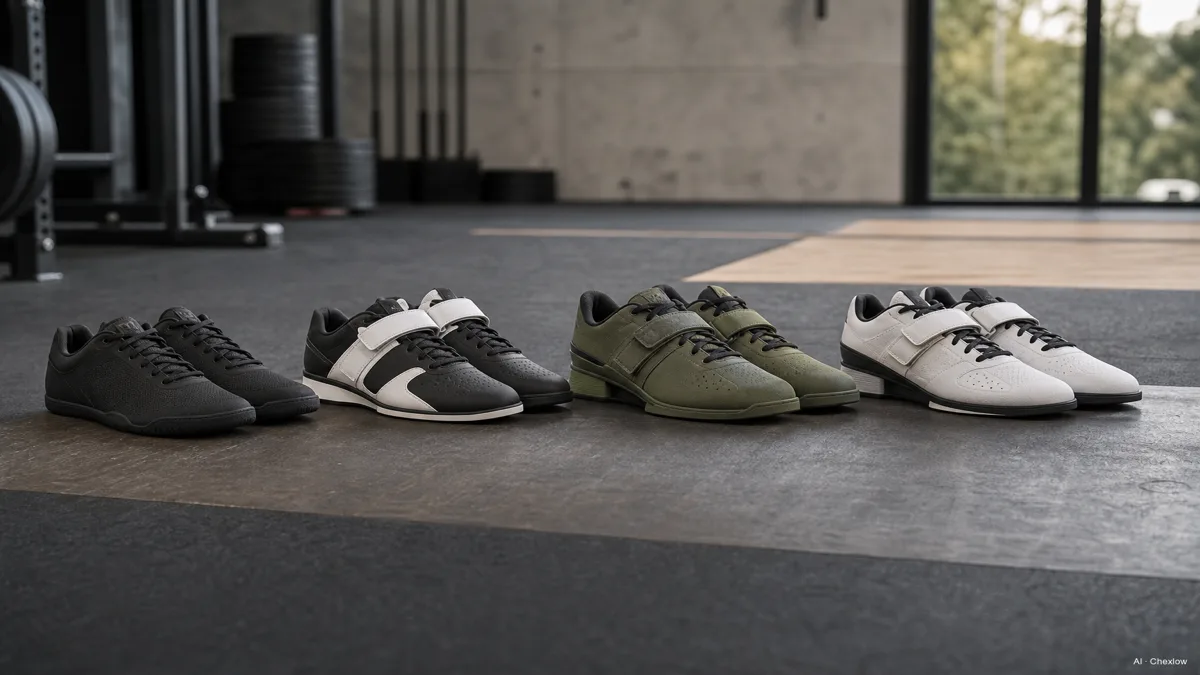
Beginners. The Adidas Powerlift 5 shows up across most 2026 buying guides as the standard entry-level recommendation, pairing a beginner-friendly heel height with a lower price point than the specialist Olympic shoes (Garage Gym Lab, BarBend).
Serious or advanced lifters. The Nike Romaleos 4 and the Reebok Legacy Lifter 3 are the two names that keep coming up for lifters who have already settled into their squat and want a shoe built for maximal loads rather than a first-time entry point (BarBend, Garage Gym Lab).
Wide or neutral-width feet. The TYR L-1 Lifter is called out specifically for a wider toe box, which matters if a standard weightlifting shoe has ever felt like it was squeezing your foot into a narrower shape than it actually is (Garage Gym Lab).
Cross-training and general gym use. If squats are only part of the session and the same shoe also needs to handle general gym work or mixed conditioning, a dedicated cross-trainer like the Nike Metcon 10 covers more ground than a true weightlifting shoe, trading some of that squat-specific stability for versatility across a broader workout (Garage Gym Lab).
None of these categories are mutually exclusive forever. A lot of lifters start on a Powerlift 5, outgrow it as their squat numbers climb, and move to a Romaleos or Legacy Lifter a year or two later. Buying the shoe that matches where your training actually is right now, rather than where it might be eventually, is the more useful first decision.
Sources
- Weightlifting Shoe Buying Guide 2026, Castiron Lift — heel drop range, sizing rule, strap systems, and shoe lifespan.
- Best Weightlifting Shoes 2026, BarBend — heel height specs and beginner versus advanced model recommendations.
- Squat Shoes vs. Converse, PowerliftingTechnique.com — flat shoe mechanics and deadlift versus squat shoe category differences.
- Adidas Adipower vs. Nike Romaleos, PowerliftingTechnique.com — heel height comparison between the two models.
- Nike Romaleos 4 Weightlifting Shoe Review, BarBend — heel height spec and advanced-lifter positioning.
- Anatomy of Weightlifting Shoes, ThatFitFriend — outsole, TPU wedge, Power Bridge, and wood construction detail.
- 9 Best Weightlifting Shoes in 2026, Garage Gym Lab — TYR L-1 wide toe box and model recommendations by lifter type.
- 8 Best Weightlifting Shoes, ThatFitFriend — additional model comparison context.
Comment ce guide a été conçu
This piece started from the confusion first-time buyers hit at the shoe wall, why does one pair have a taller heel than the other, and does that mm number actually matter. We anchored the heel drop range and sizing guidance on Castiron Lift's buying guide, cross-checked the specific heel height specs for the Romaleos 4, Adipower 3, and TYR TYRFORCE against BarBend and PowerliftingTechnique.com's side-by-side comparison, and pulled the wedge construction detail, TPU versus wood, straight from ThatFitFriend's anatomy breakdown. The lifter-type picks lean on Garage Gym Lab and BarBend's own 2026 model roundups rather than a single brand's marketing, so the framing stays about which category of lifter each shoe actually fits.
Rédigé par l’équipe Chexlow · Les images sont des illustrations générées par IA