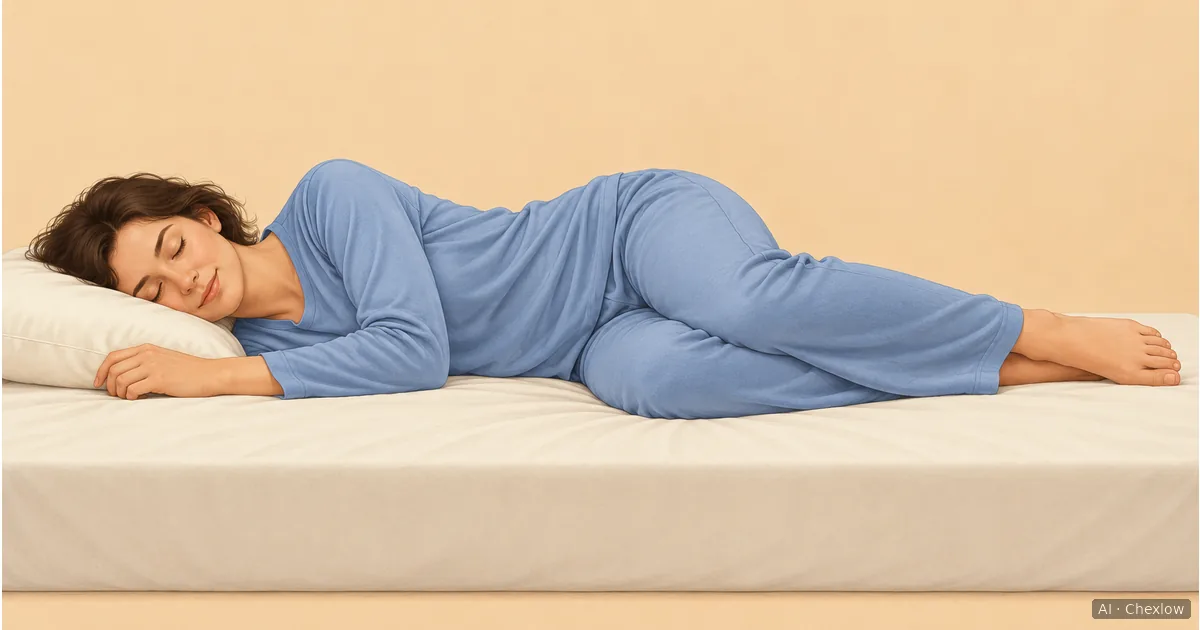

Check construction, not just the word “soft”
For adult sleepwear, separate three questions: what the yarn is made from, how the fabric is constructed, and how much room the garment gives you. “Cotton” or “soft” alone does not answer all three.
CottonWorks explains that knitted fabric uses intermeshing loops, and that most knits have natural stretch suited to movement. Jersey is a useful term to look for; single jersey has small V-shaped stitch legs on its face. That detail helps explain the structure, but a product photograph cannot tell you how far the finished pajamas will stretch.
Woven fabric interlaces two sets of yarns. Plain, twill and satin are weave designs, so “satin” is not a fibre specification. Read the composition separately.
There is an important exception to the usual stretch comparison: CottonWorks documents mechanically stretchy woven cotton made without synthetic fibres. That does not establish the construction of your shortlisted pajamas. Ask whether the actual fabric stretches rather than assuming every woven is rigid or every knit equally stretchy.
Try the movement you actually make in bed
A standing mirror check is only the beginning. Where the seller’s try-on conditions allow, sit down, bring your knees up comfortably, reach forward and then lie in your usual sleep position on a clean surface. These are practical fitting suggestions, not a sleep-performance test.
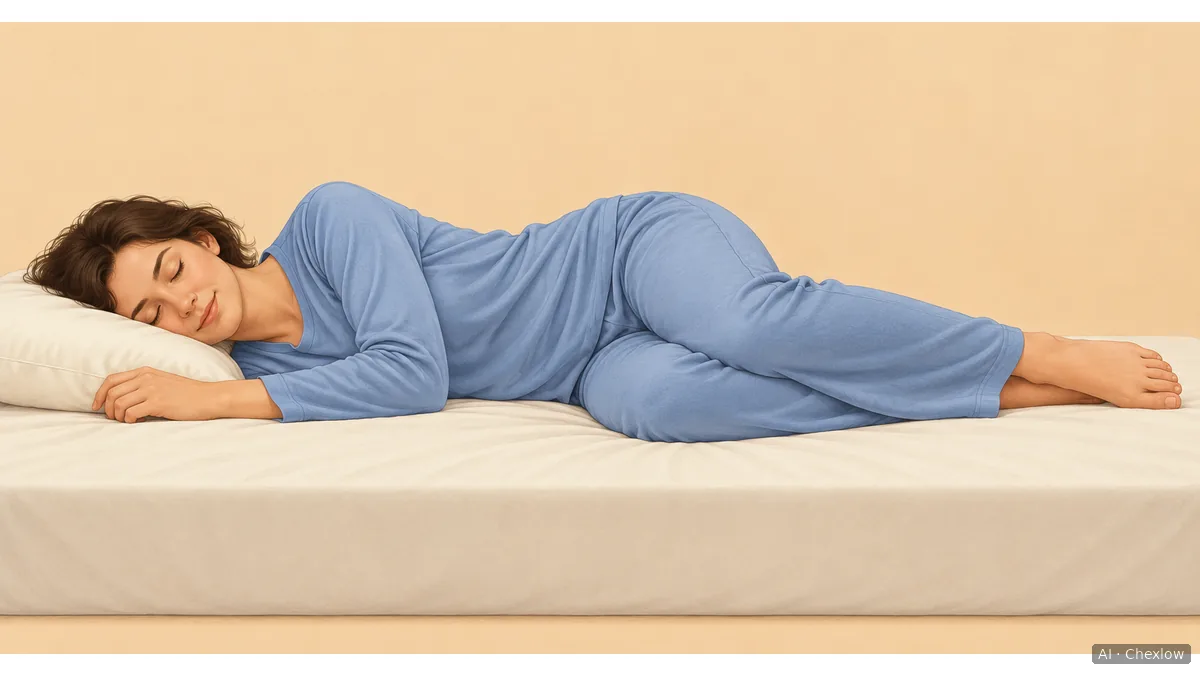
The illustration shows one position to try, not a recommended sleeping posture or proof of a particular fabric’s stretch. Use your own usual position and notice what happens to the clothing.
- At the shoulders and seat: does the garment pull when you reach or bend, or can you move without readjusting it?
- At the knees: can you bend comfortably without the trouser legs pulling hard against you?
- When you turn: does the fabric stay comfortable, or do you keep stopping to free a sleeve or rearrange a fold?
For a less stretchy woven, judge the available room especially carefully. For a knit, do not treat the ability to stretch over your body as a reason to size down. Keep the version that feels comfortable during these movements.
Check the waistband and buttons separately
Fabric construction does not describe the whole garment. One Lands’ End cotton poplin set, for example, combines a full-button-front top with trousers that have an elastic waistband and adjustable drawstring. Its specification lists 100% cotton and machine washing. Those are details of that set, not rules for all woven pajamas.
Fasten the candidate as you would wear it. Adjust a drawstring if present, then sit and lie down again. If loosening the cord leaves the elastic uncomfortable, the adjustment has not solved the problem.
Notice whether a button, knot, seam or pocket edge presses against you in your preferred position. If the fabric moves well but a fastening bothers you, compare a different closure or cut. Switching from woven to knit is not, by itself, an answer to a badly placed button.
Choose the pair that passes, then resolve the unknowns
- Start with stretch-knit when fabric give is your priority and the actual pair stays comfortable as you bend and turn.
- Choose woven when you like that fabric and the cut gives you enough room without relying on stretch that the listing has not established.
- Keep looking when either choice pulls, presses or needs repeated rearranging. You do not have to buy both constructions to settle the question.
Before ordering, confirm the fabric construction, composition, garment measurements, waistband arrangement, care instructions and return conditions. If information is missing, ask: “Does this fabric stretch, and in which direction? Are these body measurements or finished-garment measurements? Is the waist elastic, adjustable, or both?”
For a shirt-style pajama top, if the chart mixes body dimensions with flat garment widths, use the guide to comparing body and shirt measurements. It explains the measurement distinction; it does not supply a universal pajama allowance.
If the top fits but the bottoms do not, pause the set purchase and ask about separate sizes. Fabric stretch should not be used to excuse a fit problem in one half of the set.
Comment ce guide a été conçu
This article was written by AI for Chexlow, using CottonWorks textile guidance and Lands’ End product specifications. The movement and fastening checks are editorial fitting suggestions for adult pajamas, not original wear tests or claims of better sleep.
Rédigé par l’équipe Chexlow · Les images sont des illustrations générées par IA