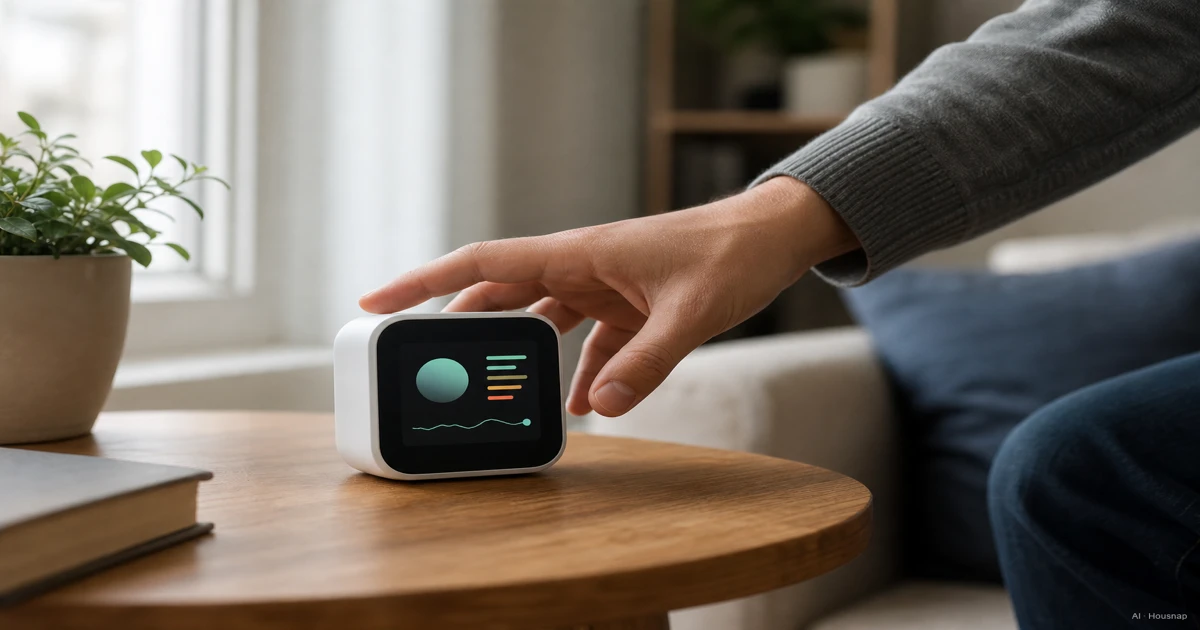
Start with the question you want answered
Before comparing devices, finish this sentence: “I want a reading that helps me decide whether to…” Your answer narrows the sensor list.
- Check particles from cooking or assess filtration. Look for PM2.5 readings, which track fine airborne particles.
- Investigate ventilation in an occupied room. Look for CO2 measurement. If particles also matter, choose a monitor that measures both independently.
- Follow changes in airborne chemicals. A VOC reading can add context, but check what its output means before paying extra.
A monitor only detects what its sensors support. More measurements do not provide a complete assessment of the air. That limitation is central to the EPA’s guidance on indoor monitors.
Compare the manual before choosing the monitor
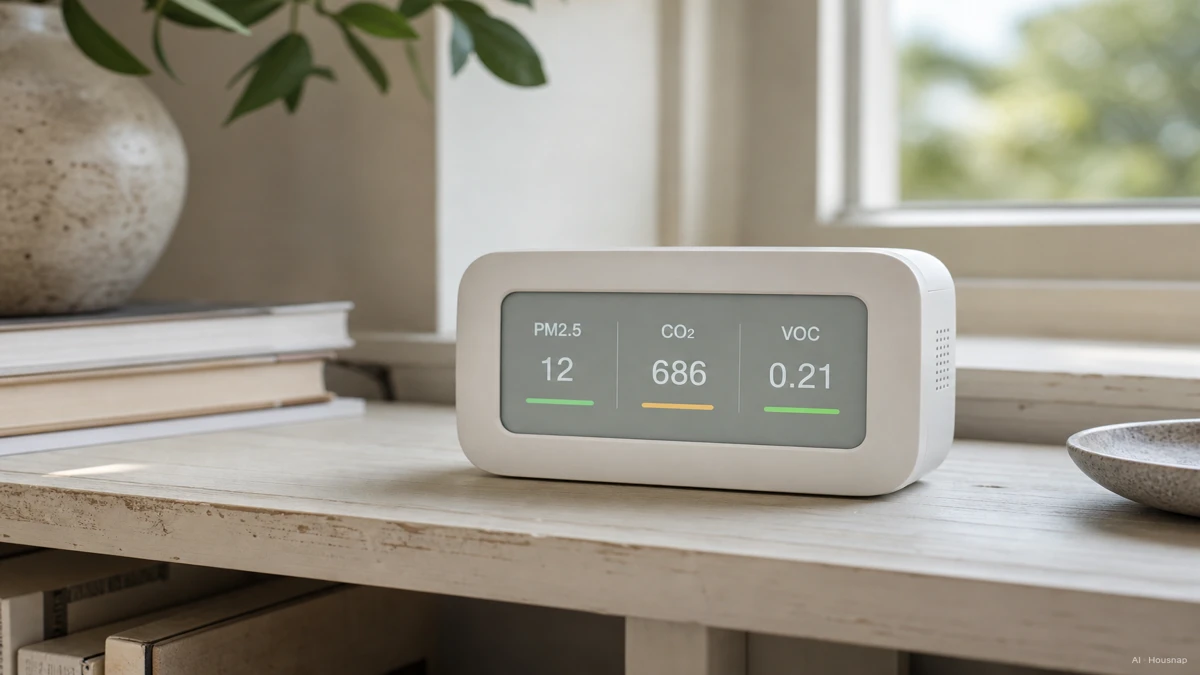
For a ventilation-focused purchase, require a documented CO2 measurement method. HSE identifies NDIR, or non-dispersive infrared, monitors as suitable portable devices for workplace ventilation checks. Use that as a starting point when comparing home monitors, rather than assuming a general “air quality” label includes CO2 measurement.
Use these questions to compare your shortlist:
- Can you see each measurement and its unit, rather than only a combined score?
- Does the manufacturer publish accuracy specifications, calibration instructions and setup requirements?
- Can you review the period you care about, such as an occupied afternoon or overnight, without leaving your phone connected?
- What power supply, account or network connection does that recording require?
Check sampling and app updates separately. For example, Airthings documents different sampling and upload intervals for View Plus, with PM sampling affected by its power setup. A delayed graph is not automatically a faulty sensor.
Only make automation a buying requirement if you have a specific use for it. Verify that the exact monitor, platform and appliance support the measurement and action you need.
Make the numbers comparable
Choose a representative position and follow the calibration instructions. For CO2, HSE advises keeping monitors away from openings and more than 50 cm from people. Note occupancy and compare repeated readings, not a single breath near the sensor.
Then identify what each number represents:
- PM2.5 concentration. Check the unit and averaging period. The EPA’s 9.0 µg/m³ annual standard is not a pass/fail test for one instant indoors.
- VOC output. Check whether the manual describes a concentration or an index, and how to interpret it. Avoid applying a universal “safe” cutoff: EPA notes that manufacturers set alerts and most indoor pollutants lack widely accepted concentration limits.
- Relative humidity. The EPA advises below 60%, ideally 30–50%. Use this to investigate moisture separately from particles or ventilation.
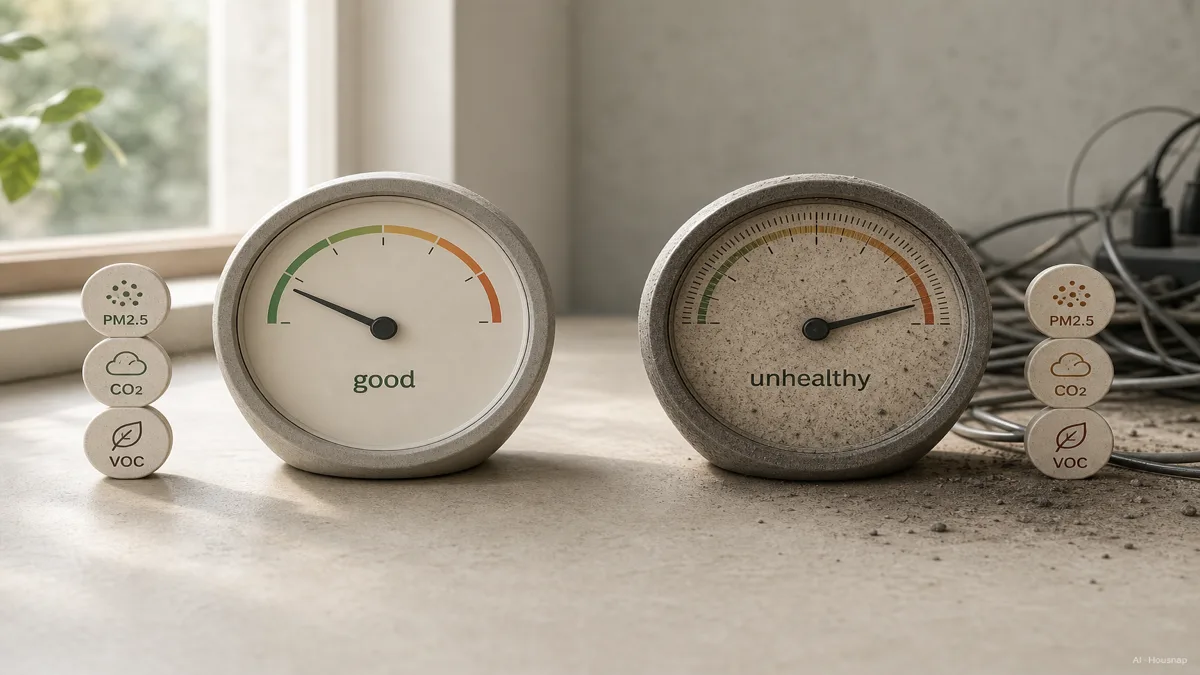
The illustrated colored gauges are a reminder to inspect the underlying measurement, not a universal scale shared by every monitor.
Decide what to change before buying another device
Particles keep rising. Address their source first. Filtration can supplement source control and ventilation with clean outdoor air, as the EPA explains. If a room purifier is the next step, use the guide to CADR, filters and room size to choose it.
CO2 rises while people use the room. Investigate ventilation. A particle purifier does not remove CO2, so a cleaner particle reading does not settle that question. HSE explains this distinction.
A VOC reading changes after an activity. Record what happened and investigate the source. Check the manufacturer's description before drawing conclusions about a particular chemical. Keep the same monitor and setup when comparing before and after.
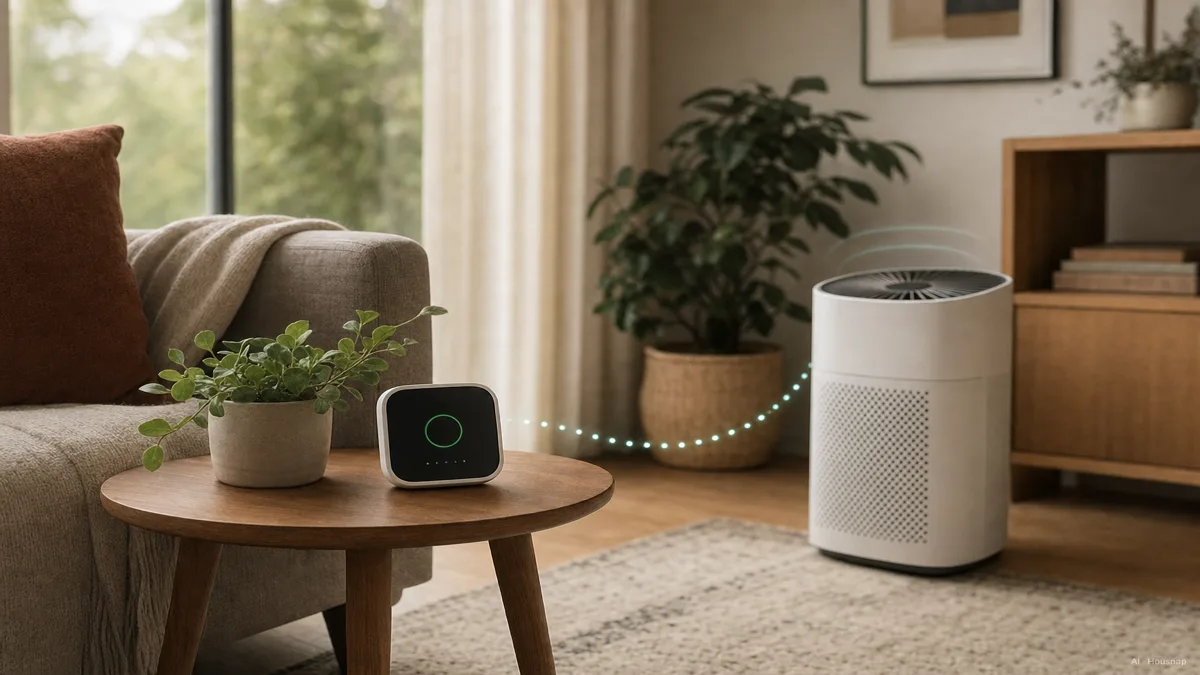
The illustration shows complementary devices; connection depends on the particular products. Also keep certified smoke and carbon monoxide alarms: an ordinary air quality monitor does not replace their emergency warning function.
Come è stata costruita questa guida
Written by Chexlow’s AI editor using EPA and HSE guidance and manufacturer documentation from Airthings. The article explains how sensor capabilities, reading limitations and recording features inform a first household monitor purchase.
Curato dal team Chexlow · Le immagini sono illustrazioni generate dall’IA