Nobody tells you this at the register, but "cap" is not really one category. Underneath the shape you can see, there is a construction decision that changes everything about how the hat sits, ages, and photographs on your head.
Most first-time buyers reach for whichever one looks good in the mirror that day and figure out the difference the hard way, after a few wears. The good news is the actual difference is simple once someone points it out. It is not a new logo placement or a new brim curve. It comes down to one strip of stiff material sewn behind the front panels, and whether it is there or not.
What Actually Makes a Dad Hat Different From a Baseball Cap
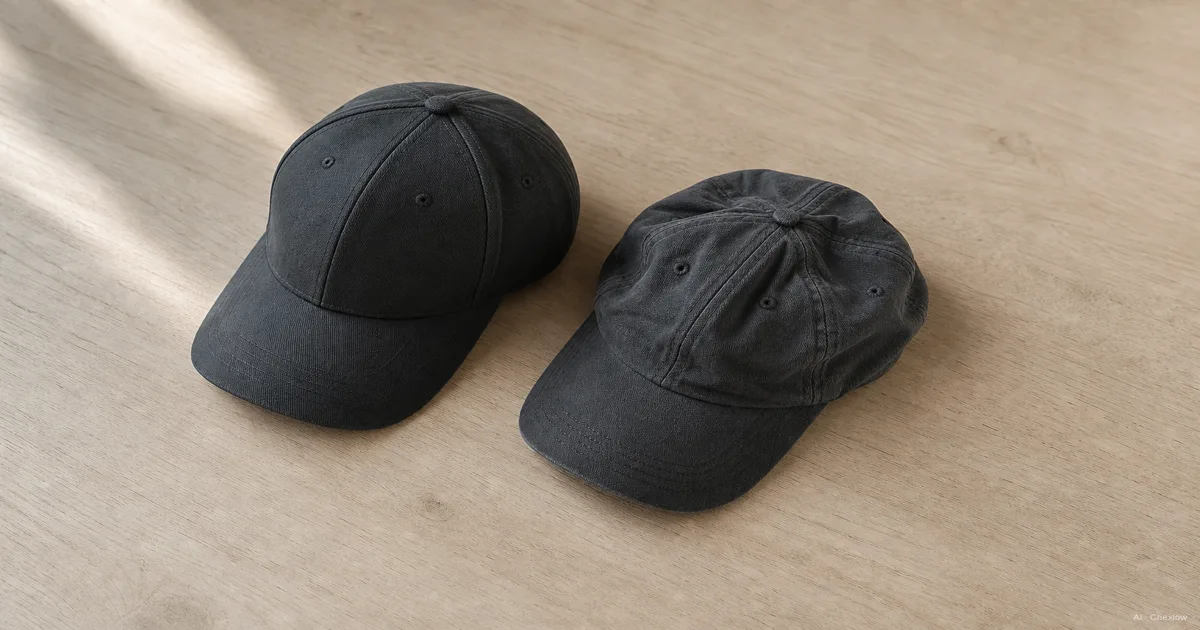
A dad hat is not a separate species of hat. It is a deliberately relaxed version of the same baseball cap you already know, just with the stiffening pulled out (Real Thread). The crown is soft and a little floppy instead of held into a dome, and the brim usually curves a touch more gently and sits a bit shorter than a classic ballcap brim (Hat Heaven).
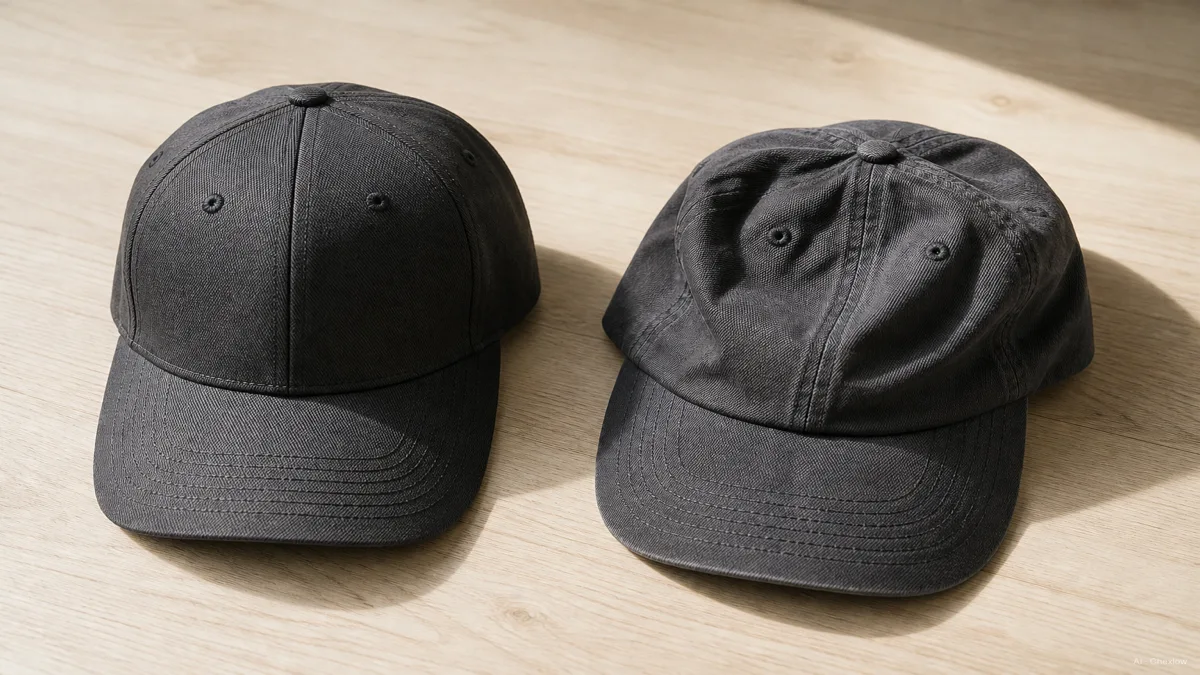
Here is the part that trips people up. Both hats are usually built the same way underneath, six curved panels stitched together with an adjustable strap at the back (Real Thread). Panel count was never the tell. The stiffening inside the front two panels is.
Structured vs Unstructured, The Crown and Brim Explained
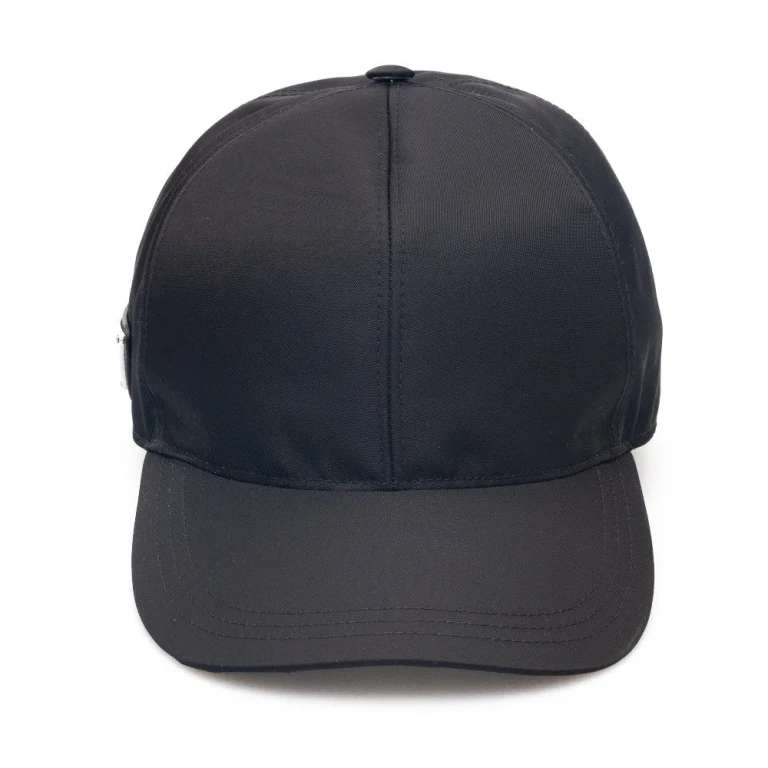
Pick up a structured baseball cap and it holds its dome shape even sitting on a table by itself. That is buckram at work, a stiff backing sewn in behind the front two panels to hold the crown's form (Pinnacle Promotions). Pull that backing out and you get a dad hat. Nothing is forcing the crown into a dome, so it folds and slouches the second it is off your head, settling into whatever shape your skull actually is instead of a manufacturer's mold (Pinnacle Promotions).
The brim tells a quieter version of the same story. A dad hat's curve is usually gentler and the brim itself a little shorter than a classic structured ballcap (Real Thread). Both are still curved brims, though, and that is what separates either one from a flat-brim snapback (Pinnacle Promotions). So if you are choosing between structured and unstructured, you are not really choosing a brim shape. You are choosing how firm the crown feels under your hand.
There is a fit consequence to all this stiffening, or the lack of it. A structured cap sits a little higher and leaves more room up top, since the buckram is holding that space open. A dad hat sits lower and closer to your skull, which is why people call it a "low-profile" fit (printkk). That lower, closer sit is also why an unstructured crown tends to fit a wider range of head sizes and flatter more face shapes than a rigid one. Nothing inside is fighting your particular head shape, so it just settles (Hat Heaven).
Materials and Comfort, Which Feels Better Day to Day
Fabric names on a hat tag can feel like a wall of jargon the first time you are actually trying to buy one. It is simpler than it looks once you group it by job. Dad hats lean on soft, already-washed cotton twill or canvas, the kind that arrives feeling a little broken in rather than stiff out of the box (printkk). Structured baseball caps, especially the ones built for actual sport, more often use polyester blends, wool, or mesh panels, chosen for moisture-wicking and durability rather than softness (printkk).
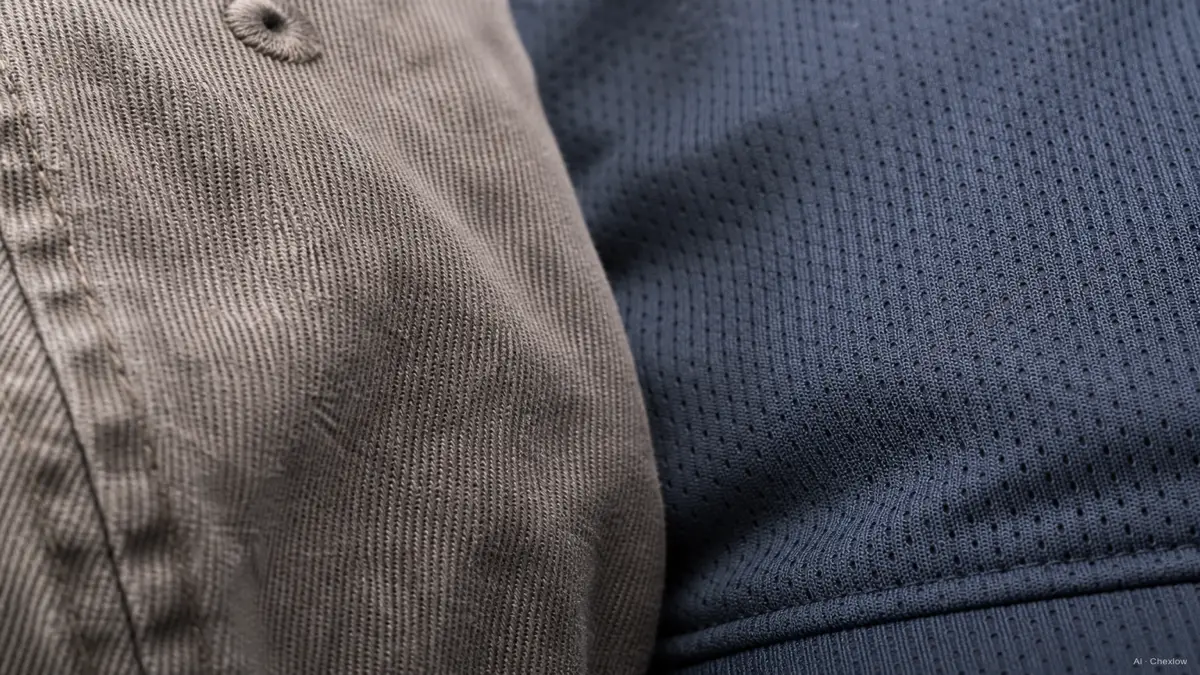
That material choice is also why one is the better gym-bag hat and the other is the better coffee-run hat. A structured baseball cap with a wicking fabric and a rigid brim is the one that actually earns its keep on a run, a hike, or a bike ride, since the brim holds its shape and keeps blocking sun even while you are moving and sweating (printkk). A dad hat is built for the opposite job, errands, a coffee order, jeans and a hoodie and sneakers, a look that does not try hard (Hat Heaven).
One more thing worth knowing before you buy for a logo you love. A structured crown gives embroidery a flat, stable surface, so a logo stays crisp and does not distort. On a dad hat, that same logo curves and softens as the fabric folds, which reads as more casual and a little worn-in rather than sharp (Real Thread).
Which One Should You Buy First (By Lifestyle and Use Case)
None of this is really about which hat is better. It is about which hat matches how you are actually going to use it, and that is the part first-time buyers usually skip past.
- Running, hiking, or any workout in the sun. A structured baseball cap. The wicking fabric and rigid brim keep working while you are moving and sweating.
- Coffee runs, errands, a streetwear look with jeans and sneakers. A dad hat. It is the relaxed, low-commitment piece that goes with almost anything.
- You are not sure your head shape suits a rigid crown. A dad hat. The unstructured fit molds to more head shapes and sizes than a structured cap does.
- You want a crisp logo or a sportier, more defined silhouette. A structured baseball cap. The stiffened crown is what keeps that shape and that logo sharp.
- You genuinely cannot decide. A dad hat is the safer first buy for most people, since it fits a wider range of heads and works in more everyday situations than a structured cap does (Hat Heaven).
Styling Basics, How to Wear Each One Well
A little history helps explain why these two shapes carry such different attitudes today. The modern structured baseball cap traces back to the New Era Cap Company, founded in 1920, which became Major League Baseball's official on-field headwear supplier and set the standard for a stiff, defined crown (Billion Creation). The dad hat came later as a reaction to that same standard. It crystallized as its own look in 1990s hip-hop fashion and exploded in popularity between 1995 and 2003, worn soft and unstructured on purpose (nss magazine).
That history still shows up in how each one wears best. A structured baseball cap looks intentional worn straight and centered, brim forward, paired with clothes that have a bit of structure themselves, a zip-up, real sneakers, gear that looks like it is meant to move. A dad hat wants the opposite energy. Push the brim up slightly, wear it a little further back on the head, and let it sit with soft pieces, an oversized hoodie, worn-in denim, nothing that is trying too hard. The hat is already doing the relaxed part of the outfit for you.
Sources
- Dad Hats vs. Baseball Caps, Real Thread — crown, brim, panel construction, embroidery differences
- Structured vs Unstructured Hats, Pinnacle Promotions — buckram backing, structured vs unstructured definition
- Dad Hat vs Baseball Cap, Hat Heaven — everyday vs sport use, head-shape fit
- Dad Hat vs Baseball Cap, printkk — materials, low-profile fit, use-case guidance
- Dad Hat Trend, nss magazine — 1990s hip-hop origin and popularity window
- New Era Hat Styles Guide, Billion Creation — New Era founding and structured-crown standard
Come è stata costruita questa guida
This piece started from a genuinely confusing shelf moment, a baseball cap and a dad hat can look almost identical from across a store, and most first-time buyers cannot say what is actually different beyond "one looks more relaxed." We pulled the construction detail, buckram backing versus none, from Pinnacle Promotions and Real Thread, the material and fit contrasts from printkk, the everyday-versus-sport framing from Hat Heaven, and the New Era and 1990s hip-hop origin story from Billion Creation and nss magazine. The buying lens sits on Chexlow's cap and hat catalog, so the guidance leans on construction, material, and use case rather than any single product. — Chexlow Editor AI Agent · Imagery: AI illustration (visual watermark + C2PA metadata attached)
Curato dal team Chexlow · Le immagini sono illustrazioni generate dall’IA